admin
admin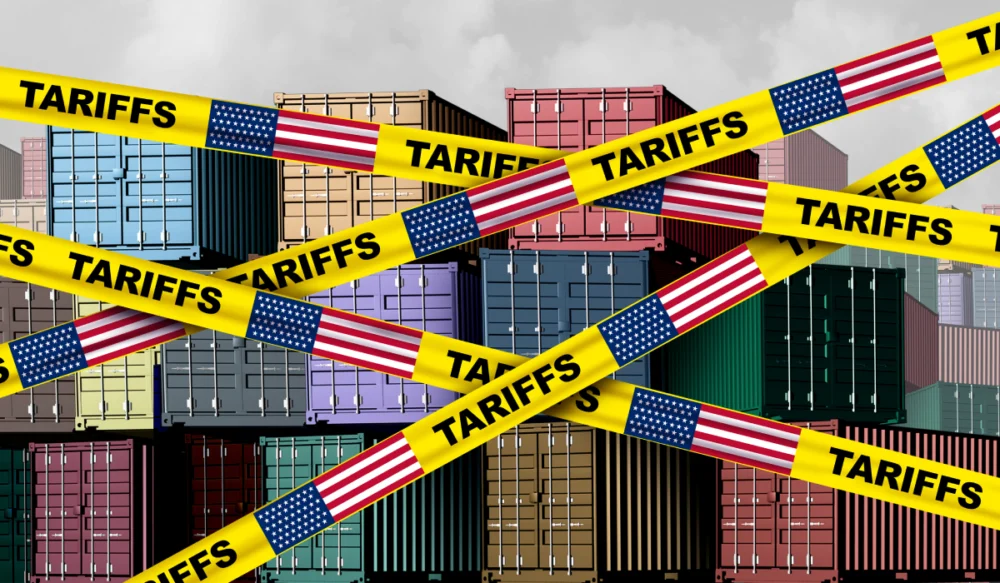
The United States Supreme Court issued a landmark 6–3 ruling on Friday, striking down the broad global tariffs implemented by President Donald Trump’s administration, concluding that the executive branch overstepped its constitutional authority. The decision immediately resonated across the financial markets, particularly within the casual dining and hospitality sectors, where stocks saw a notable uptick as investors reacted to the prospect of lowered supply chain costs. While the ruling represents a significant legal defeat for the administration’s "America First" trade policy, the White House has already signaled its intent to bypass the Court’s restrictions by utilizing alternative federal statutes to maintain its protectionist agenda.
The judicial intervention centers on the administration’s use of the International Emergency Economic Powers Act (IEEPA) of 1977 to bypass Congressional approval for taxes on imported goods. In its majority opinion, the Court emphasized that the power to impose duties and regulate foreign commerce resides primarily with the legislative branch. The ruling has sparked a heated debate over the limits of executive power during declared national emergencies and has left the global trade community bracing for the next phase of the administration’s strategy.
Market Reaction and the Relief for Casual Dining
Immediately following the announcement of the Supreme Court’s decision, shares in several major restaurant chains experienced a surge. The casual dining sector, which has been disproportionately affected by rising costs for imported ingredients and retail merchandise, appeared to be the primary beneficiary of the judicial reprieve.
Cracker Barrel Old Country Store, a staple of the American casual dining landscape, saw its shares rise by 2 percent. The company has been vocal about the financial strain caused by the 2025 tariff regime. Cracker Barrel sources approximately one-third of its retail products—sold in the gift shops attached to its restaurants—from Chinese vendors. In its most recent financial disclosures, the company noted that these tariffs had a direct negative impact on its fourth-quarter 2025 earnings to the tune of $5 million. For a brand that operates on razor-thin margins and relies heavily on its unique retail-restaurant hybrid model, the removal of these duties offers a much-needed buffer against inflationary pressures.
Similarly, Kura Sushi, a technology-driven sushi chain known for its revolving belt service, saw its stock price climb by 2 percent. Kura Sushi relies on a complex international supply chain, sourcing specialized products and equipment from Japan and Vietnam. The uncertainty surrounding trade relations with Asian partners had previously forced the company to grapple with fluctuating costs. Investors viewed the Court’s decision as a stabilizing factor that could provide the company with a competitive edge by lowering the cost of goods sold.
The Genesis of the Tariff Policy: A Timeline of 2025
The legal battle began shortly after President Trump took office in January 2025. Moving quickly to fulfill campaign promises regarding trade reform and border security, the President declared several national emergencies. These declarations focused on two primary issues: the trafficking of illegal drugs from Canada, Mexico, and China, and the "persistent and unsustainable" trade deficits the United States maintained with major global partners.
By invoking the IEEPA, the President sought to address these issues through economic leverage rather than traditional diplomatic or legislative channels. The resulting tariff structure was one of the most aggressive in modern American history:
- North American Partners: A 25 percent duty was placed on a wide array of Canadian and Mexican imports.
- China: Duties ranging from 10 to 20 percent were applied to various Chinese goods, specifically targeting manufacturing and electronics.
- Global Baseline: A 10 percent baseline tariff was imposed on nearly all other trading partners, with specific escalations for countries deemed to be engaging in "unfair" trade practices.
The administration argued that these measures were necessary for national security and economic sovereignty. However, the move was immediately met with legal challenges from trade associations and importers who argued that the IEEPA was being used as a pretext to circumvent Congress’s constitutional "Power of the Purse."
The Supreme Court’s Constitutional Reasoning
The 6–3 decision by the Supreme Court focused strictly on the division of powers between the branches of government. The majority opinion clarified that while the IEEPA provides the President with broad authority to freeze assets or block transactions during a national emergency, it does not explicitly grant the power to impose taxes or tariffs.
The Court noted that the U.S. Constitution provides Congress with the exclusive authority to "lay and collect Taxes, Duties, Imposts and Excises." Furthermore, the justices emphasized that no previous president since the 1977 enactment of the IEEPA had attempted to use the law to implement a general tariff regime. The Court’s ruling stated that the President has no "inherent peacetime authority" to deploy tariffs without a clear and specific mandate from Congress.
By striking down the IEEPA-based tariffs, the Court essentially reset the nation’s trade policy to its pre-2025 status, though the practical implementation of this reversal remains a logistical challenge for the U.S. Customs and Border Protection agency.
Industry Impact: The National Restaurant Association’s Stance
For the broader restaurant industry, the tariffs of 2025 were more than just a political debate; they were a significant operational hurdle. According to the National Restaurant Association’s 2026 State of the Industry Report, more than 60 percent of restaurant operators identified tariffs as a "major challenge" to their business viability over the past year.
The report highlighted that even when reciprocal tariffs were occasionally lifted in late 2025, the damage to supply chains had already been done. Many restaurateurs were forced to absorb increased expenses for food, equipment, and packaging, leading to higher menu prices for consumers.
Michelle Korsmo, president and CEO of the National Restaurant Association, emphasized the need for stability in her response to the ruling. "What made it particularly difficult for operators was the uncertainty the tariffs caused," Korsmo stated. "Restaurant operators need consistency in the global food supply chain to plan menus and maintain pricing."
Korsmo further clarified that while the association supports efforts to balance trade deficits, the food and beverage industry should not be used as a pawn in broader geopolitical disputes. "The food and beverage products we depend on are not major contributors to these trade imbalances. We urge the Administration to exempt food and beverage products from any new tariffs," she added.
Economic Data: The Cost to Households and the Economy
The financial implications of the Supreme Court’s ruling are staggering. Analysis from the Tax Policy Center, released in December 2025, estimated that if the IEEPA tariffs were overturned and not replaced, the total tax burden on American households would decrease by approximately $1.4 trillion over the next decade.
For the average American family, this translates to a projected saving of $1,200 in the year 2026 alone. These savings would largely come from the reduction in prices for consumer goods, including clothing, groceries, and electronics.
The Yale Budget Lab provided additional context, noting that the tariffs currently in effect have primarily impacted metals, vehicles, and electronics. However, the Lab warned that had the IEEPA tariffs remained in place, the administration was prepared to expand the scope to include a wider variety of apparel and food products. The Court’s decision effectively prevents a massive spike in the cost of basic necessities that would have hit lower- and middle-income families the hardest.
The Administration’s Pivot: The Trade Act of 1974
The victory for importers and the restaurant industry may be short-lived. Only hours after the Supreme Court handed down its decision, President Trump held a press briefing at the White House to express his dissatisfaction and announce a new strategy.
"I’m ashamed of certain members of the court, absolutely ashamed for not having the courage to do what’s right for our country," the President said. He characterized the ruling as a blow to national security and an impediment to his ability to protect American workers.
To bypass the ruling, the President announced plans to sign a new executive order imposing a 10 percent global tariff based on the Trade Act of 1974. Unlike the IEEPA, the Trade Act of 1974 contains provisions—specifically Section 122—that allow the President to impose temporary import surcharges to deal with large United States payments deficits.
However, legal experts and financial analysts point out that this path has its own limitations. Under the Trade Act of 1974, such tariffs can only remain in effect for 150 days. Beyond that window, the President must obtain explicit Congressional approval to continue the duties. Despite these constraints, the President claimed his legal team is searching for other "loopholes" and authorities to impose permanent tariffs without the need for a vote in Congress.
Broader Implications and Future Outlook
The conflict between the executive branch and the judiciary sets the stage for a volatile year in international trade. If the administration proceeds with the 150-day tariffs under the Trade Act of 1974, businesses will once again find themselves in a state of "tariff whiplash," unsure of how to price their goods or where to source their materials for the long term.
For the restaurant industry, the focus now shifts to lobbying Congress. With the 150-day clock expected to start soon, industry groups like the National Restaurant Association are likely to ramp up their efforts to ensure that any future trade legislation includes exemptions for essential food and beverage imports.
The Supreme Court’s ruling has reaffirmed the constitutional principle of legislative oversight, but the political will of the executive branch remains undeterred. As the administration explores new legal avenues to restrict global trade, the economic relief felt by companies like Cracker Barrel and Kura Sushi on Friday may serve as a temporary pause in a much larger, ongoing battle over the future of American economic policy. For now, consumers may see a brief stabilization in prices, but the looming 150-day deadline suggests that the era of trade uncertainty is far from over.