admin
admin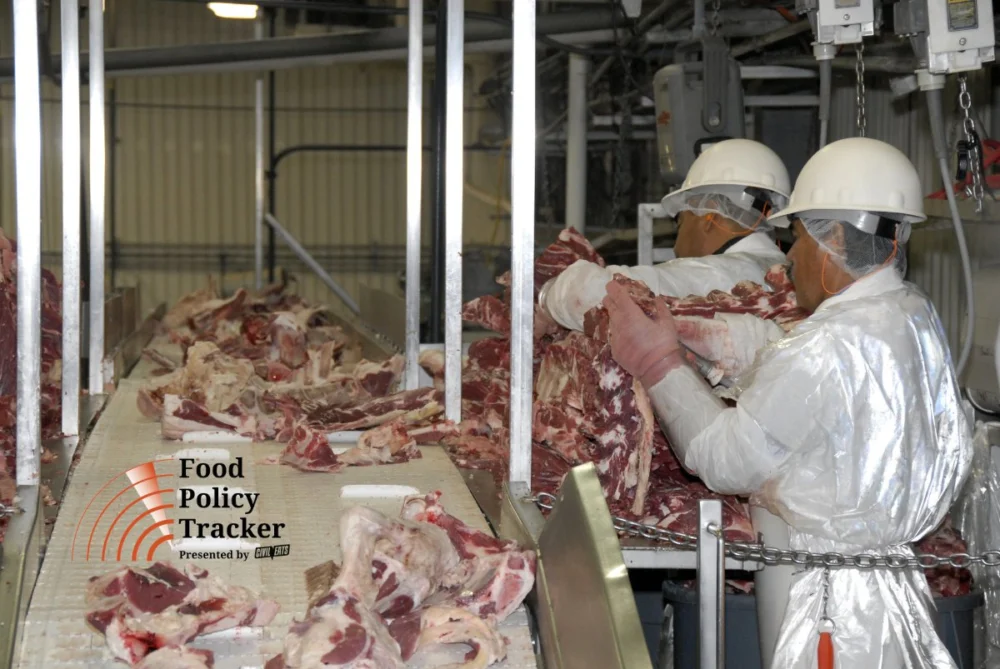
The U.S. Department of Agriculture (USDA) announced a suite of proposed rules on Tuesday, February 18, 2026, that would significantly increase line speeds at poultry and pork production facilities nationwide, a move the administration claims will enhance efficiency and reduce consumer food prices but which has immediately drawn sharp criticism from worker safety advocates, public health organizations, and animal welfare groups. These proposals represent a significant shift in federal oversight of meatpacking operations, raising profound questions about the balance between industrial productivity and the well-being of workers, animals, and the consuming public.
Under the new regulatory framework put forth by the USDA’s Food Safety and Inspection Service (FSIS), maximum chicken slaughter line speeds could surge from the current 140 birds per minute (bpm) to an unprecedented 175 bpm. Similarly, turkey processing lines would see an increase from 55 bpm to 60 bpm. Perhaps the most drastic change within the proposals is the complete removal of any maximum line speed limit for pork processing facilities. Compounding these changes, the agency also seeks to eliminate requirements for annual worker safety reports, a measure that critics argue would further obscure critical data on workplace hazards in an already dangerous industry.
Administration’s Rationale: Efficiency and Consumer Savings
In a press release accompanying the announcement, the administration articulated its primary justification for these sweeping changes, framing them as a necessary step to remove "outdated bottlenecks" that impede productivity within the nation’s meat supply chain. The underlying premise is that by allowing plants to operate at faster paces, producers can increase output, leading to greater supply and, consequently, lower food prices for consumers. This rationale aligns with a broader economic agenda often championed by the current administration, which prioritizes deregulation and industrial efficiency as key drivers of economic growth and affordability.
Proponents of the rule changes, primarily representing the meatpacking industry, are expected to echo the administration’s claims, emphasizing the competitive pressures faced by U.S. producers in a global market and the need for operational flexibility. They argue that modern processing technologies and enhanced monitoring systems can mitigate risks even at higher speeds, asserting that current regulations are overly restrictive and do not fully account for technological advancements within the sector. The argument posits that increased throughput is essential for meeting growing consumer demand, particularly in an era where global food security remains a paramount concern.
A History of Deregulation and Industry Pressure

The proposed rules are not an isolated initiative but rather a culmination of efforts that began during the first Trump administration. For years leading up to these formal proposals, the USDA had granted waivers to select pork and poultry producers, allowing them to operate at line speeds exceeding the then-established limits. This policy of granting exemptions served as a de facto pilot program, providing the industry with a taste of the operational freedom now being proposed for universal adoption. In March of the previous year, the Trump administration explicitly extended these waivers, signaling a clear intent to pursue permanent rulemaking that would enshrine these elevated speeds into federal regulation. This consistent trajectory underscores a sustained commitment to loosening regulatory constraints on the meatpacking industry, a sector that has historically wielded significant economic and political influence.
The debate over line speeds is not new. It has been a recurring flashpoint in discussions about food policy for decades, often pitting industry’s quest for efficiency against concerns for worker safety, public health, and animal welfare. Past administrations have grappled with similar pressures, sometimes tightening regulations in response to documented harms, and at other times, yielding to industry demands for greater operational latitude. The current proposals represent a significant leaning towards the latter, potentially unwinding decades of incremental regulatory safeguards.
Alarm Bells from Advocacy Groups: Worker Injuries, Food Contamination, and Animal Welfare
The immediate and forceful backlash from a broad coalition of advocacy groups underscores the profound anxieties these proposed rules have triggered. Critics contend that the administration’s economic arguments fail to adequately account for the substantial human and societal costs associated with accelerated production.
-
Escalating Worker Injuries: Meatpacking remains one of the most dangerous occupations in the United States. Data from the Bureau of Labor Statistics consistently shows injury rates in meat and poultry processing far exceeding those in other manufacturing sectors. Workers in these facilities face a constant barrage of hazards, including sharp knives, heavy machinery, slippery floors, extreme temperatures, and repetitive motion tasks performed at breakneck speeds. Advocates, including labor unions and worker rights organizations, argue that increasing line speeds directly correlates with a surge in injuries. Faster lines demand quicker, more forceful, and more repetitive movements, exacerbating the risk of musculoskeletal disorders, carpal tunnel syndrome, lacerations, amputations, and falls. The mental and physical toll on workers, already operating under immense pressure, is expected to intensify, potentially leading to higher rates of burnout, turnover, and long-term disability. Furthermore, the proposal to eliminate annual worker safety reports is seen as a deliberate attempt to obscure the true impact of these changes, making it harder to hold corporations accountable for workplace hazards.
-
Heightened Risk of Food Contamination: Public health experts and consumer safety advocates warn that faster line speeds pose a direct threat to food safety. The meticulous process of inspecting, dissecting, and separating meat parts requires precision and sufficient time. When lines move faster, the ability of both human inspectors and automated systems to identify and remove contaminated products—such as those carrying fecal matter, abscesses, or other defects—is severely compromised. The potential for pathogens like Salmonella, E. coli, and Campylobacter to escape detection and enter the food supply increases significantly. A single lapse can lead to widespread foodborne illness outbreaks, imposing massive healthcare costs, eroding consumer trust, and causing significant economic disruption through product recalls and damaged brand reputations. Organizations like Food & Water Watch have historically been vocal critics of such deregulation, citing numerous instances where faster processing has been linked to compromised food safety.
-
Deteriorating Animal Welfare Standards: Animal welfare organizations have voiced grave concerns, arguing that higher line speeds inevitably lead to increased animal suffering. In the fast-paced environment of a slaughterhouse, animals are often subjected to cruel and inhumane treatment, including improper stunning, mishandling, and botched slaughter procedures. When production lines accelerate, the margin for error shrinks, and the pressure on workers to maintain speed can lead to corners being cut in animal handling protocols. This can result in animals being improperly stunned, remaining conscious during dismemberment, or experiencing undue stress and pain throughout the processing sequence. These practices not only raise ethical questions but can also negatively impact meat quality due to stress-induced physiological changes in the animals.

The Crucial Role of Regulatory Oversight and Inspector Burden
The USDA’s Food Safety and Inspection Service (FSIS) is the primary regulatory body responsible for ensuring the safety of the nation’s meat, poultry, and egg products. FSIS inspectors are present in processing plants to verify compliance with federal regulations, monitor hygiene, and identify unfit products. The proposed increase in line speeds places an immense and potentially unmanageable burden on these frontline inspectors.
Critics argue that even with current staffing levels, inspectors already struggle to keep pace with existing line speeds. Accelerating these lines without a commensurate increase in adequately trained inspection staff, or without fundamentally rethinking inspection methodologies, could render their oversight ineffective. The agency’s ability to fulfill its mandate of protecting public health would be severely hampered, effectively shifting more responsibility for food safety onto the companies themselves, whose primary incentive is profit maximization. This concern is amplified by the proposed removal of worker safety reporting requirements, which could remove a vital source of data that previously informed regulatory adjustments and enforcement actions.
Economic Implications Beyond Price Reductions
While the administration champions the potential for lower consumer prices, a more comprehensive economic analysis reveals a complex web of trade-offs. For the meatpacking industry, increased line speeds could translate into higher profits through greater throughput and potentially reduced labor costs per unit of production, assuming the same number of workers can process more animals. This could strengthen the industry’s competitive position both domestically and internationally.
However, these potential gains must be weighed against significant economic externalities. The costs associated with increased worker injuries, including medical expenses, lost wages, workers’ compensation claims, and reduced productivity due to high employee turnover, can be substantial. Similarly, foodborne illness outbreaks carry staggering economic burdens, encompassing healthcare costs, lost productivity from illness, costs of product recalls, legal liabilities, and damage to brand reputation. Studies have estimated the annual cost of foodborne illnesses in the U.S. to be in the tens of billions of dollars. If these proposed rules lead to even a modest increase in such incidents, the purported savings for consumers could be dwarfed by these broader societal costs. Moreover, the environmental impact of intensified animal agriculture, while not directly addressed by line speed rules, is an ever-present consideration in discussions about the sustainability of the food system.
A Call to Action: The Public Comment Period

The USDA’s proposed rule is now open to a 60-day public comment period, providing a critical window for individuals, organizations, and stakeholders to voice their opinions, submit data, and influence the final decision. This period is a cornerstone of the democratic rulemaking process, allowing the agency to gather diverse perspectives and evidence before finalizing any regulatory changes. Given the profound implications for worker safety, public health, animal welfare, and the broader economy, advocacy groups are expected to mobilize extensively, urging the public to submit comments articulating their concerns. The volume and substance of these comments could play a crucial role in shaping the ultimate fate of these controversial proposals.
Broader Implications and the Path Forward
The USDA’s move to accelerate line speeds in meat and poultry processing plants represents more than just a technical adjustment; it signifies a broader ideological stance on regulation and the role of government in balancing economic interests with societal well-being. If implemented, these rules could set a precedent for further deregulation across other sectors of the food industry, signaling a shift towards greater industry self-regulation and potentially diminishing federal oversight.
The coming months will be critical, as the debate intensifies. The outcome will depend not only on the administration’s resolve but also on the strength of opposition from consumer groups, labor unions, and public health advocates, as well as any legal challenges that may arise. The fundamental question at the heart of this controversy remains: at what speed can the nation’s food be produced without compromising the safety and dignity of those who produce it, the health of those who consume it, and the welfare of the animals involved? The proposed rules force a reckoning with these complex ethical and practical dilemmas, shaping the future landscape of the American food system.