admin
admin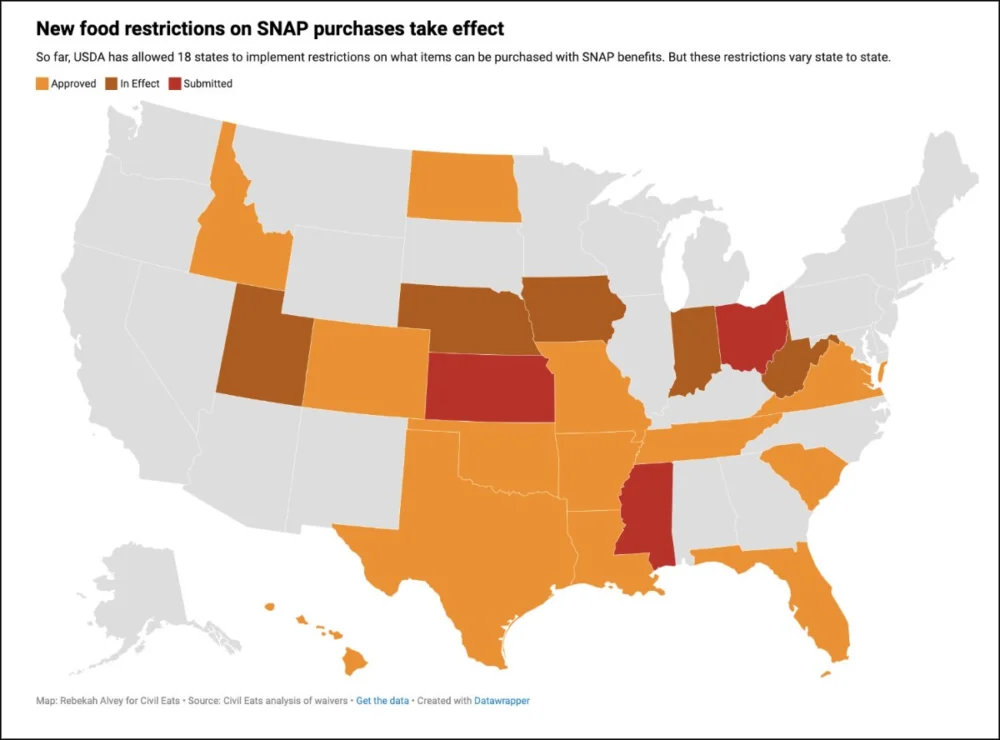
Five states have already implemented bans on soda and candy through federal food assistance programs, with over a dozen more set to take effect this year, plunging beneficiaries and retailers alike into a state of widespread confusion and mounting economic strain. These new restrictions, championed by the increasingly influential Make America Healthy Again (MAHA) movement, mark a significant departure from long-standing federal policy, fundamentally altering how millions of Americans access vital nutritional support. While proponents hail the measures as a step towards healthier eating habits for Supplemental Nutrition Assistance Program (SNAP) recipients, anti-hunger advocates, small business owners, and policy experts warn of administrative chaos, increased stigma, and potentially devastating consequences for vulnerable communities already grappling with food insecurity. The initial rollout has revealed a complex tapestry of state-specific rules, technological glitches, and a stark lack of clear communication, leaving families like Adam and Beth Bedway in West Virginia questioning the future of their livelihood and their ability to put food on the table.
The Genesis of Restriction: A Policy Reversal and the Rise of MAHA
The current wave of SNAP restrictions represents a dramatic shift in federal food assistance policy. Historically, the U.S. Department of Agriculture (USDA) has resisted such categorical bans, citing concerns about complexity, cost, and the potential for increased administrative burdens on both states and retailers. As recently as 2007, the agency explicitly determined that SNAP restrictions could complicate the program, drive up operational expenses, and would not necessarily prove effective in altering purchasing patterns. This stance was rooted in the program’s foundational principle of providing broad food access, allowing beneficiaries to make their own choices within a framework designed to ensure sufficient calories and basic nutrition.
However, the political landscape has dramatically evolved. The "Make America Healthy Again" (MAHA) movement, spearheaded by figures such as Health and Human Services (HHS) Secretary Robert F. Kennedy Jr., has gained significant traction within the federal government. MAHA advocates argue that taxpayer dollars should not subsidize "unhealthy" foods like soda and candy, contending that SNAP recipients should prioritize fresh, nutritious options. This philosophy underpins the push for waivers that grant states the authority to restrict certain purchases. In a pivotal moment in June 2025, U.S. Agriculture Secretary Brooke Rollins, flanked by prominent state leaders including Arkansas Governor Sarah Huckabee Sanders and Indiana Governor Mike Braun, signed the first three new SNAP food choice waivers for Idaho, Utah, and Arkansas. This act signaled a decisive reversal of the USDA’s previous position, opening the floodgates for more states to follow suit. The movement’s momentum was further amplified by Secretary Kennedy Jr.’s public endorsements, where he actively urged states to submit their own waiver requests, effectively transforming a long-debated policy concept into a tangible reality.

Life Under the New Rules: Voices from the Front Lines
For families like Adam and Beth Bedway, who own and operate a ceramics studio in Wheeling, West Virginia, these policy shifts are not abstract debates but immediate threats to their stability. Since 2018, the entrepreneurial couple has relied on SNAP to supplement their income, allowing them to invest precious revenue back into their business and provide good-paying jobs in their community. "We try so hard to bring arts and culture and experiences to our area, but without that security, what happens then?" Beth Bedway articulated, her voice laced with apprehension. "The only reason that we’ve been able to grow the way we have and have all the offerings that we have with our business is because we had that little bit of security." The recent restrictions, which went into effect in West Virginia on January 1, 2026, have eroded that sense of security. Adam, for instance, finds caffeine in soda helpful in managing his ADHD, a small personal choice now deemed ineligible. "So many people are going to argue, ‘Oh it’s so silly, it’s just soda,’" Beth added, "But it’s just this for now." The fear is that these initial bans are merely the thin end of the wedge, foreshadowing more extensive restrictions on the horizon, especially with West Virginia Governor Patrick Morrisey’s vocal backing of the MAHA movement.
Similar anxieties are echoed by Hunter Starks, a graduate student in West Virginia who intermittently uses SNAP benefits to balance her budget while raising her 9-year-old daughter. Shortly after the waiver took effect, Starks attempted to purchase flavored water with her EBT card at a gas station, only to have the transaction denied. A week later, at the same station, the identical product was accepted. "There’s just confusion too about what qualifies," Starks lamented, highlighting the inconsistent enforcement and the lack of clear guidance from state agencies. Instead, she, like many others, relies on informal Facebook groups of SNAP recipients to navigate the bewildering new landscape of permissible purchases.
In Nebraska, Eric Savaiano, food and nutrition access program manager at Nebraska Appleseed, reported instances where essential beverages, often used for medical conditions, are now off-limits. One individual, who relies on caffeine from energy drinks or soda to stay awake and maintain employment due to chronic fatigue, can no longer purchase these items. Another, accustomed to drinking probiotic-rich beverages like Olipops for digestive health, finds them prohibited under the state’s new waiver. These personal accounts underscore a critical implication: policies intended to promote "health" can inadvertently compromise individual well-being and autonomy, stripping away the dignity of choice for those already facing significant challenges. "People not knowing what to expect when they get to the grocery store and being surprised when they get to check out, and then frustration when they can’t get what they’re used to getting," Savaiano observed, encapsulating the pervasive confusion and distress.
A Patchwork of Prohibitions: State-Specific Confusion
The implementation of these SNAP restrictions has created a dizzying patchwork of regulations, with definitions and eligible items varying wildly from state to state. Anti-hunger advocates like Luke Elzinga, policy and advocacy manager at the Des Moines Area Religious Council, describes Iowa’s waiver as "the most restrictive" and "also the most confusing." Iowa’s policy uniquely links SNAP eligibility to the state’s sales tax on food and beverages. This means that any item subject to sales tax is automatically ineligible for SNAP purchases.

The practical implications are often illogical and arbitrary. Beyond banning traditional sodas, Iowa’s policy also prohibits zero-sugar sodas, lemonade, Capri Sun, and sweet tea. The definition of "candy" is equally convoluted; a granola bar or a fruit bar can be considered candy unless it contains flour, yet a Twix bar, precisely because it contains flour, remains an acceptable purchase. When it comes to prepared foods, the complexities escalate: eligibility can hinge on whether a retailer has a microwave available, if a prepared salad comes with dressing, if a slice of cake was baked in-store, or even if a cup of fruit is served with or without a spoon. For guidance, the Iowa state Health and Human Services website astonishingly directs visitors to the state Department of Revenue’s sales tax page, underscoring the bureaucratic labyrinth SNAP participants are now forced to navigate. This lack of clarity and consistency places an immense burden on shoppers, who often discover restrictions only at the checkout, leading to embarrassment and frustration.
Retailers on the Brink: Administrative Burdens and Financial Strain
The ripple effects of these restrictions extend far beyond SNAP recipients, creating significant challenges for retailers, particularly small businesses and convenience stores that serve as crucial food access points in many communities. Margaret Hardin Mannion, director of government relations at the National Association of Convenience Stores (NACS), highlighted the "real concern that it’s going to lead to many, many retailers being pushed out of the program, even if they are trying their best to comply with the new requirements."
The USDA’s enforcement guidelines, issued in late 2025, outline a strict penalty system. After a 90-day grace period following a state’s implementation date (meaning enforcement began April 1 for the initial states), retailers receive one warning for incorrectly applying the restrictions. A second error can result in involuntary removal from the SNAP program, stripping them of the ability to accept EBT cards. This looming threat, combined with the ambiguous definitions and inconsistent rules, places an undue burden on store owners and their staff. Retailers must now meticulously review individual items to determine eligibility, a process that is time-consuming, labor-intensive, and requires constant system updates and shelf signage changes—all adding significant operational costs.
An analysis by NACS, the National Grocers Association, and the Food Industry Association (FMI) projects the total up-front cost of these SNAP restrictions to be a staggering $1 billion for convenience stores, $11.8 million for small-format stores, and $215.5 million for supercenters. These costs, retailers warn, are likely to be passed on to consumers, meaning the impact of these restrictions could inadvertently raise food prices for everyone, not just SNAP households. "These SNAP restrictions are increasing food prices for everyone, and the high cost of healthy food is the No. 1 reason people on SNAP can’t eat healthier," stated Luke Elzinga, underscoring the counterproductive nature of the bans.

A significant concern is the "border bleed" phenomenon. In Iowa, for example, one in three SNAP participants—over 800,000 people—reside in border counties. If these individuals opt to shop in neighboring states without restrictions, Iowa stands to lose approximately $23 million per month in economic activity. While the Bedways in West Virginia are fortunate enough to have easy access to Ohio or Pennsylvania for unrestricted shopping, many rural communities are "four hours from the border," as Adam Bedway pointed out, leaving them with limited options and exacerbating existing challenges in food access. Beth Bedway also highlighted that much of West Virginia already struggles with access to clean water and fresh produce, often relying on convenience or dollar stores that may not stock healthy options or price them prohibitively high. The potential for retailers to withdraw from SNAP due to compliance costs or penalties would only worsen these existing food deserts.
Adding to the complexity, retailers and the entire SNAP system are bracing for more policy changes. The USDA recently proposed a rule that would require SNAP retailers to increase the variety of foods from three to seven in each of the four staple food categories (animal protein, dairy, grains, fruits, and vegetables), a measure Secretary Rollins suggested could be finalized in weeks. This impending requirement, designed to enhance healthy food access, will further increase compliance costs and administrative burdens, leading Mannion to conclude, "I think we’re concerned that this is just the tip of the iceberg."
The Broader Assault on SNAP: OBBB and Fraud Allegations
These targeted food restrictions are unfolding against a backdrop of broader, more sweeping changes to the federal food assistance program. In 2025, Republicans passed the "One Big, Beautiful Bill" (OBBB), a comprehensive legislative package that included drastic cuts to federal SNAP spending, projected to total almost $187 billion by 2034. Many provisions of the OBBB have already taken effect, including expanded work requirements, which have historically led to decreased program participation. Other components, shifting more program costs onto states, are slated to begin next year, adding immense pressure to already strained state budgets.
The Trump administration and Republicans in Congress have also intensified their focus on alleged fraud within the program. This narrative has been amplified by the USDA itself, which launched a social media campaign urging citizens to "REPORT FRAUD NOW," accompanied by images of overflowing grocery carts. This rhetoric, while ostensibly aimed at accountability, risks increasing stigma and distrust around a program designed to alleviate hunger. States are now facing pressure to recertify SNAP households and release more data on participants, measures that raise privacy concerns and add to the workload of already overburdened SNAP caseworkers.

The financial implications for states implementing these restrictions are also significant. Nebraska, for example, has estimated it will spend $2 million on implementation, a substantial sum for a state grappling with a $471 million budget shortfall. Gina Plata-Nino, SNAP director at the Food Research and Action Center, noted that it’s unclear how states will fund these new administrative burdens, especially after the OBBB cut the federal SNAP-Ed program, which provides nutrition education. Nebraska, she points out, plans to use leftover SNAP-Ed funding for waiver administration, effectively diverting resources that could have been used for outreach and education to help recipients navigate the new rules. This further compounds the confusion and ensures that beneficiaries remain largely uninformed, reliant on informal networks for crucial information.
Stigma and Shrinking Participation
The combined effect of increased scrutiny, fraud allegations, and restrictive purchasing rules creates a powerful deterrent for eligible individuals. "When program stigma is higher, it has a dampening effect on participation," Elzinga explained. This concern is already manifesting in real numbers. In Iowa, SNAP enrollment is nearing an 18-year low, even as food banks and pantries report continuously breaking records for visits. This paradox suggests that while the need for food assistance remains acute, the barriers and social implications of participating in SNAP are pushing families towards emergency food aid, which is often less consistent and comprehensive. The irony is stark: policies ostensibly designed to promote healthier eating may instead be driving more people into deeper food insecurity by eroding trust and participation in the most effective anti-hunger program.
An Uncertain Future: More Restrictions on the Horizon
Despite the widespread confusion, administrative challenges, and vocal concerns from anti-hunger advocates and retailers, the movement to expand SNAP restrictions shows no signs of abating. Iowa Governor Kim Reynolds, a Republican, publicly called on the state legislature to keep the federal waiver "moving forward" in a speech on January 13, less than two weeks after the restrictions took effect. Already, Kansas, Mississippi, and Ohio have submitted their own waivers for USDA approval, and several states with existing restrictions are reportedly discussing expanding the list of prohibited foods. As state legislatures reconvene, many are expected to consider legislation to request their own SNAP food restriction waivers, indicating a continued national trend.
For families like the Bedways, who have relied on SNAP for nearly a decade, the future is unsettlingly uncertain. "It’s unsettling," Beth Bedway concluded, "It makes me question what is the future for us in this state, what is the future for the SNAP program? At what point are we just going to be kicked off of any assistance without warning?" Her words encapsulate the profound anxiety gripping millions of Americans as federal food assistance, a critical safety net, undergoes its most radical transformation in decades, trading broad support for a restrictive and often confusing vision of "health" that carries significant social and economic costs.