admin
admin
In the competitive landscape of the American craft beer industry, where over 9,500 breweries now vie for consumer attention, the traditional taproom model is undergoing a significant evolution. As the novelty of local beer matures into a standard market commodity, brewery owners are looking toward innovative land-use strategies to diversify revenue and deepen customer loyalty. One of the most prominent trends to emerge in the post-pandemic era is the integration of on-site camping and RV accommodations, transforming breweries from simple production facilities into comprehensive travel destinations.
For Ryan Roberts, owner of R&R Brewing in Mount Olive, North Carolina, the decision to pivot toward hospitality was born of economic necessity. Despite the brewery’s location in a town famous for its pickle production, Roberts noticed that while visitors would frequent food trucks in his fenced yard, many were hesitant to enter the brewery itself. Observing that he was paying taxes on underutilized land, Roberts sought a way to maximize the value of his property’s "dirt." In late 2020, he partnered with Harvest Hosts, a membership-based network that connects self-contained RV travelers with private landowners. The initial investment was minimal—approximately $60 for signage—but the returns were immediate. By providing flat ground for overnight stays, R&R Brewing tapped into a captive audience of travelers who, grateful for a safe alternative to traditional parking lots, spent an average of $80 per stay on pints and merchandise.
The Economic Intersection of Craft Beer and Outdoor Recreation
The synergy between the craft beer industry and the camping sector is supported by robust consumer data. According to the 2024 camping reports from The Dyrt, a leading camping platform, nearly half of all campers (45 percent) bring beer on their trips, and 37 percent of those beer-drinking campers specifically prefer craft varieties. This overlap in demographics has created a lucrative niche for "beercations," where the accommodation is as much of a draw as the beverage.
The rise of brewery camping is also a response to the increasing difficulty of securing reservations at state and national parks. As public campgrounds reach capacity months in advance, private landowners—including farmers, vintners, and brewers—have stepped in to fill the void. Kevin Long, CEO of The Dyrt, notes that breweries possess an "untapped resource" in their physical acreage. For the consumer, the appeal is logistical: the ability to enjoy several high-gravity IPAs without the necessity of driving home offers a safety and convenience factor that traditional taprooms cannot match.
Diverse Operational Models: From Wilderness to Urban Parking
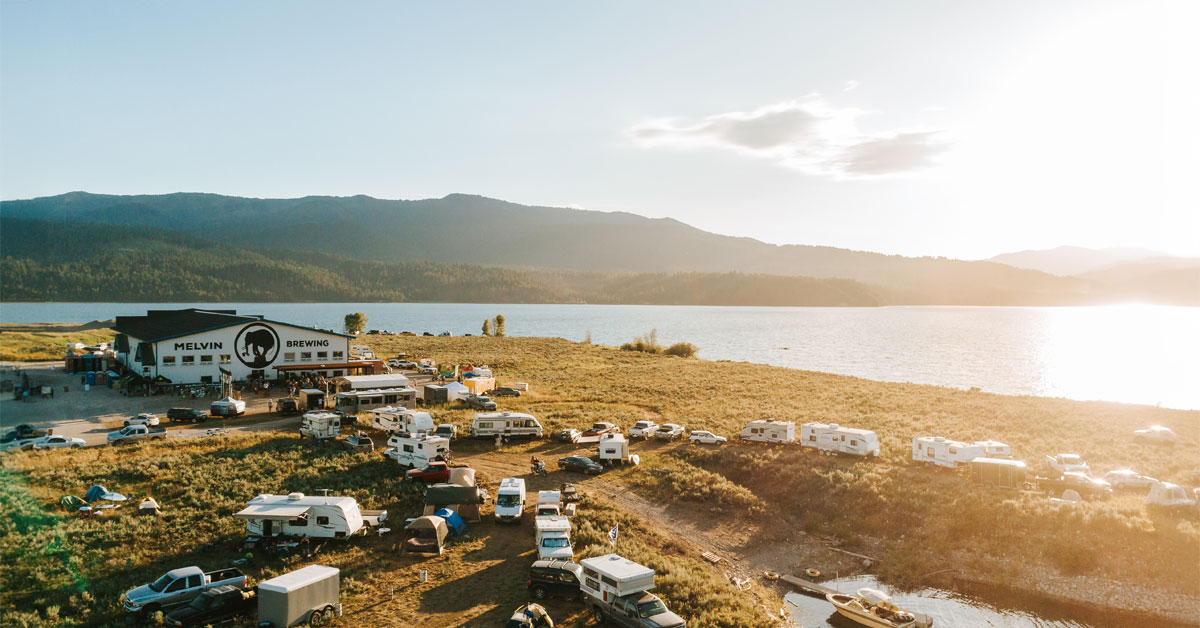
The implementation of brewery camping varies significantly based on geography and available infrastructure. In Alpine, Wyoming, Melvin Brewing leverages its proximity to the Palisades Reservoir and Bureau of Land Management (BLM) property. The brewery offers a "wild" experience, where campers utilize no-frills, first-come, first-served dispersed campsites. According to Molly Reilly, Vice President of Marketing for Melvin’s parent company, Pure Madness Group, the draw is the combination of high-quality IPAs and the "total dark skies" of the Wyoming wilderness.
In contrast, Golden Grove Farm & Brew in Piedmont, South Carolina, utilizes its 100-acre estate to offer a more structured recreational experience. Located near the heavily trafficked Interstate 85, where roughly 50,000 vehicles pass daily, the brewery features an 18-hole disc golf course alongside its camping facilities. Co-founder Andrew Brown reports that even non-drinking campers contribute to the bottom line through merchandise sales, and the brewery is currently expanding its electrical infrastructure to accommodate 20 additional RV spots.
The trend has also reached urban environments. In Colorado Springs, Mash Mechanix Brewing utilizes its paved parking lot to host Sprinter vans and truck-bed campers. By reserving space for overnight guests, co-owner and head brewer Leif Anderson has successfully broadened his customer base, attracting tourists who visit based on recommendations from the national Harvest Hosts community.
Chronology of the Camping-Brewery Integration
The timeline of this industry shift highlights the pandemic as a primary catalyst for growth:
- Pre-2018: Early adopters like Boothbay Craft Brewery in Maine began integrating RV sites into their business models, focusing on "boutique" hospitality.
- 2018-2019: The number of U.S. breweries surpasses 8,000, leading to market saturation and a need for differentiated "experience-based" marketing.
- 2020: The COVID-19 pandemic triggers a massive surge in RV sales and outdoor recreation. Platforms like Harvest Hosts and Hipcamp see record growth as travelers seek socially distanced vacations.
- 2021-2022: Breweries like R&R Brewing and Melvin Brewing formalize their camping offerings to capture the "captive audience" of the camping boom.
- 2023-2024: Professionalization of the sector increases. Entrepreneurs like Doug Olsen begin purchasing existing campgrounds (Indian Lake Adventures) specifically to install breweries (Camp Brewing) as a secondary amenity.
Operational Challenges and Regulatory Hurdles
Despite the high return on investment, the marriage of brewing and lodging is not without significant logistical hurdles. Operating a campground requires a different set of permits, insurance coverages, and staffing skill sets than running a production brewery.
Doug Olsen, who operates Camp Brewing in Huntsville, Ohio, notes that managing the two entities requires clear boundaries. While campers are permitted to bring their own beverages to their campsites, state liquor laws often prohibit the consumption of outside alcohol within the brewery’s licensed taproom. Conversely, breweries must ensure they have the production capacity to meet the demands of both local distribution and a seasonal influx of on-site campers. To manage this, Olsen’s operation utilizes contract brewing to maintain inventory levels for popular offerings like "Pitch a Tent Pilsner" and "Into the Woods Wheat."
Zoning laws also pose a challenge. Many urban and suburban breweries are located in industrial zones that may not be permitted for overnight residency. Success in these areas often depends on specific "overnight parking" allowances rather than formal "campground" designations.
The Role of Festivals and Immersive Experiences
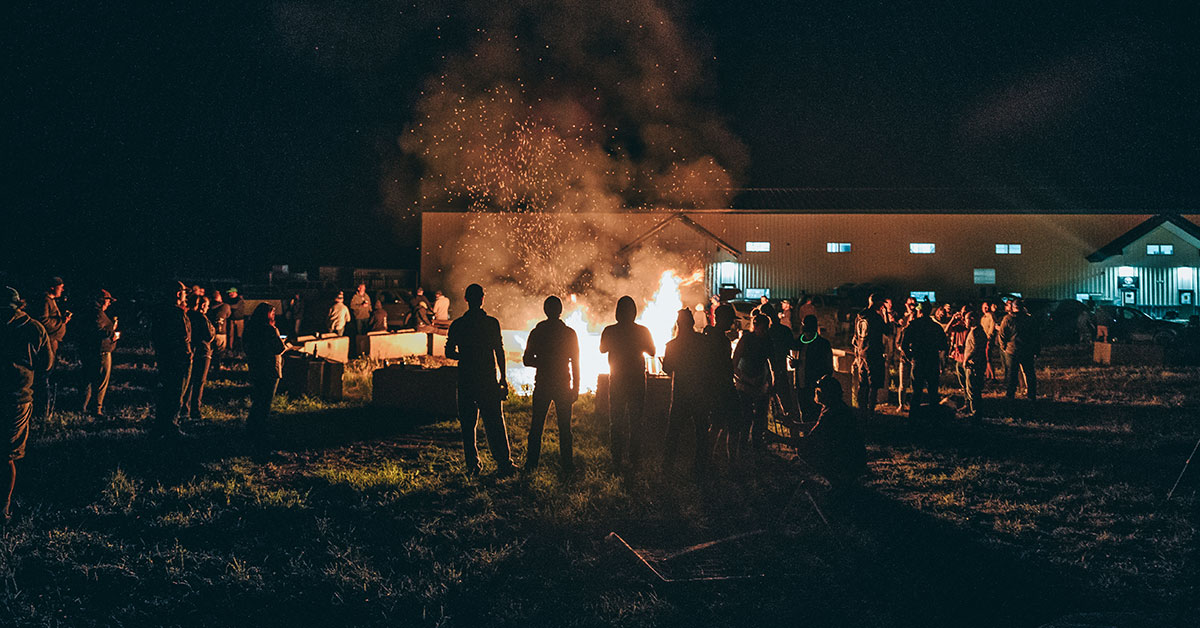
Beer festivals are also evolving to include camping as a core component of the attendee experience. For rural breweries, providing on-site lodging is a safety measure that mitigates the risks associated with impaired driving in areas where rideshare services like Uber and Lyft are unavailable.
The Burning Foot Beer Festival in Muskegon, Michigan, utilizes its beachfront location on Lake Michigan to offer 300 campsites. This model allows the festival to sell out despite limited local hotel capacity. Similarly, Brewery Ommegang in Cooperstown, New York, has historically used its former hop farm grounds to host the "Belgium Comes to Cooperstown" festival, where camping fosters a communal environment characterized by bottle shares and live music.
However, the volatility of the event industry remains a concern. In a recent development, Brewery Ommegang announced the cancellation of its 2024 festival, citing lower-than-projected ticket sales. The brewery stated that the decision was necessary to maintain the "high-quality event and experience" expected by guests, highlighting the financial risks associated with large-scale, hospitality-focused beer events.
Impact and Industry Implications
The integration of camping into the brewery business model represents a broader shift toward agritourism and experiential retail. As the craft beer market continues to stabilize, the breweries that thrive will likely be those that offer more than just a product on a shelf.
Industry analysts suggest that this trend provides a dual benefit: it allows breweries to monetize "dead" land assets while providing a steady stream of high-margin taproom customers. Furthermore, it builds a national brand presence through word-of-mouth within the highly connected RV and camping communities. For owners like Win and Lori Mitchell of Boothbay Craft Brewery, the transition to a "boutique RV park" has created a self-sustaining marketing loop. "Campers who come here tell other campers," Lori Mitchell observes, noting that personal recommendations remain the most effective form of advertisement in the craft beer world.
As climate-conscious travel and "slow tourism" continue to gain traction, the brewery-campground model offers a compelling template for sustainable, local-first business growth. By transforming a simple parking space into a destination, craft brewers are ensuring that their "dirt" is just as valuable as the beer they produce.