admin
admin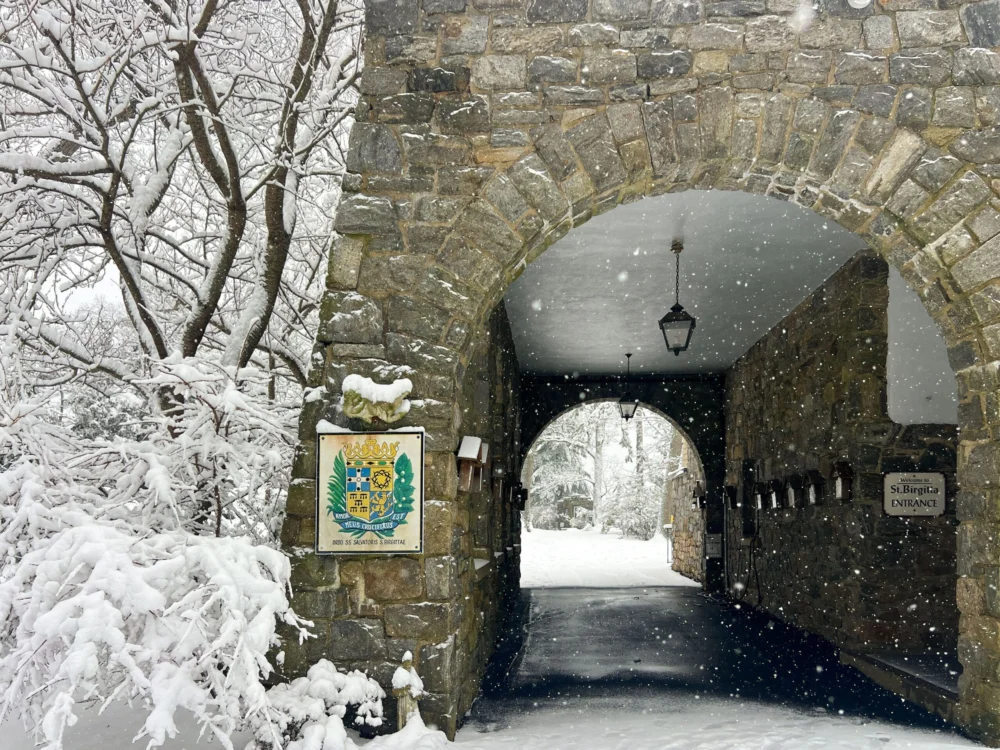
On a crisp December Sunday, the first snowfall of the month descended upon the Convent of St. Birgitta in Darien, Connecticut, blanketing the serene grounds in a pristine layer of white. The hushed atmosphere was palpable as Father David Blanchfield, leading morning mass to a small congregation, observed, “The world is cloaked in beauty today.” His words resonated with the dozen or so attendees, their presence marked by the muffled sounds of puffy parkas and the gentle rustle of thick scarves as they gathered for the service.
For many, the arrival of snow evokes a sense of spiritual renewal, a feeling of purity delivered from above. This sentiment is deeply felt within the walls of Vikingsborg Guest House, the operational name for the Convent of St. Birgitta, a place that has for decades offered refuge not only to the devout but also to those seeking quiet contemplation, regardless of their personal beliefs. The convent’s unique ethos, an embrace of spiritual hospitality, has drawn a diverse array of guests, from artists and writers to local residents in search of respite from the clamor of modern life.

A Haven of Hospitality: The Bridgettine Order
The Convent of St. Birgitta in Darien is part of the global Bridgettine order, officially known as the Order of the Most Holy Savior of Saint Bridget. Founded in the 14th century by Saint Bridget of Sweden, the order’s mission has always been deeply rooted in hospitality and prayer. With 58 convents spanning 19 countries, including the mother house in Rome and other notable locations in Estonia, Finland, and Switzerland, the Bridgettines have cultivated a reputation for offering a unique brand of sanctuary.
The Vikingsborg Guest House stands as the order’s sole establishment in the United States that is specifically designated and available for overnight stays by the general public. This openness to both believers and non-believers is a cornerstone of the Bridgettine vocation, earning them the affectionate moniker, “the order of hospitality.” The retreat offers a modest yet comfortable accommodation, with nine bookable guest rooms. For a nominal fee of $150 per night, guests receive not only a place to rest but also three meals a day, a stark contrast to the often exorbitant costs associated with wellness retreats in the contemporary market.
An Unconventional Retreat
The guest rooms at Vikingsborg are not designed to emulate the plush amenities of a luxury hotel. Instead, they evoke a comforting, almost ancestral, familiarity, reminiscent of a cherished grandmother’s home. Antique wooden dressers adorned with delicate lace doilies, and cozy, floral-upholstered armchairs invite guests to settle in and feel cared for from a distance. The main foyer, particularly during the holiday season, is a testament to this welcoming spirit, featuring twinkling crystal chandeliers, a towering Christmas tree, and festive decorations that imbue the space with a warm, inviting glow.

This deliberate simplicity is a key aspect of the convent’s appeal. As one frequent guest, Lynn, a resident of a nearby town who requested anonymity, shared, “People find great comfort and peace and welcome here that you don’t get someplace else. But it’s not for everybody either.” This sentiment underscores the convent’s distinct character, which eschews the transactional nature of many hospitality establishments in favor of a more profound sense of shared humanity and spiritual calm.
A Legacy of Solace
The convent’s 10-acre estate, nestled along the tranquil shores of Long Island Sound, has been a sanctuary since 1957. Its meandering woodland paths and rugged gardens offer a natural haven for introspection. The estate’s history is as rich as its landscape. The main building, once a private summer home, was constructed in the late 1800s by a Swedish evangelist, inventor, and explorer. Father David Blanchfield shared that the chapel, now a place of worship, formerly housed the original owner’s hunting trophies, a poignant juxtaposition to the central image of a crucified Christ.
The choice of location, named Vikingsborg, after an island near Stockholm known for its cold climate, reflects a deliberate embrace of a serene, perhaps even austere, environment conducive to contemplation. This intentionality is mirrored in the Bridgettine nuns themselves, who reside in a separate, smaller house on the premises. Their days are a disciplined rhythm of prayer, devotion, and hospitality. Sister Sebastian, one of the six nuns, explained their demanding schedule, which includes six to seven hours of daily prayer, commencing as early as 6:10 a.m., alongside essential hospitality tasks such as grocery shopping, meal preparation, and grounds maintenance.

The Allure of Stillness in a Hectic World
The author’s personal journey to Vikingsborg is framed by a recent period of intense travel and a growing yearning for stillness. Following a demanding schedule of back-to-back trips across California, Montana, and France, the author found themselves questioning the line between engaging with the world and escaping it. Previous attempts at “retreat” had often involved overly structured itineraries at wellness resorts, prioritizing physical rejuvenation over genuine inner redirection.
The concept of retreat, as articulated by Pico Iyer in his book Aflame, a meditation on monastic life, is not merely an escape but a process of “redirection and recollection.” Iyer posits that "You learn to love the world only by looking at it closely, in the round.” This perspective resonates deeply in an era where wellness tourism is a burgeoning multi-billion-dollar industry. The global wellness tourism market is projected to reach $1 trillion by 2028, offering a vast array of options, from high-end Ayurvedic treatments to digital detoxes, often at considerable expense.
The convent’s appeal, therefore, lies in its counter-cultural approach. It offers an antidote to the commodification of spirituality and self-improvement. As Sister Renzy, a nun of 30 years, noted from the library, a space intentionally devoid of modern distractions, “Sometimes we are very busy, and we forget everything. If you have a phone, and the charge is gone, you have to charge it. So we come here and turn off everything.” This deliberate disconnection from the digital realm is a powerful draw for those seeking genuine respite.

A Glimpse into Daily Life
The experience at Vikingsborg unfolds gradually, marked by moments of quiet observation and unexpected connections. The author’s arrival on a Sunday coincided with the first snowfall, setting a serene tone. During morning mass, the presence of fellow guests, including an 82-year-old lawyer-turned-day-trader, Tom Callaghan Jr., a retired accountant, Joe D’Agostin, and Lynn, provided a subtle sense of community.
Meals are communal yet unhurried. A solitary dinner of grilled white fish and mashed potatoes was followed by the comforting sounds of the nuns’ laughter emanating from the kitchen. The festive atmosphere, enhanced by elaborate nativity scenes and Christmas decorations, offered a tangible sense of the holiday spirit. A dessert of green and red Jell-O, prepared by two Sisters from Mexico for the Feast of Our Lady of Guadalupe, added a touch of cultural warmth to the evening.
The author’s guest room, devoid of a lock, contributed to a sense of trust and security. The simplicity of the accommodations, coupled with the profound quietude, facilitated a deep and uninterrupted sleep, a rare commodity in the author’s otherwise hectic life.

Nature’s Unfolding Narrative
The mornings at the convent are heralded by the calls of nature. The author’s second day began with a fiery sunrise and the urgent announcement of a flock of wild geese. This natural alarm clock, described as “harsh and exciting” by poet Mary Oliver, serves as a reminder of the world’s inherent rhythms. The convent grounds, bordering Long Island Sound, offer a landscape that shifts with the winter season. The glassy inlet, nearly frozen over, reflects the low winter sun, a testament to the transformative power of the elements.
Exploring the coastline, the author witnessed the intricate feeding behavior of swans, a scene that, while perhaps not conventionally elegant, was perceived as profoundly divine in its raw authenticity. This observation led to a reflection on the theological argument for an intelligent creator, often citing the “elegance of the universe.” However, the author found a deeper spiritual resonance in nature’s imperfect, yet powerful, manifestations.
Moments of Reflection and Connection
Conversations with fellow guests offer further insight into the convent’s diverse appeal. Tom Callaghan Jr., who has been a regular visitor for over a decade, shared his personal journey of faith, describing himself as “Catholic in name only” for much of his life. Despite a past spent in the high-stakes world of professional poker, he now finds solace in a personal prayer, an abbreviated version of Romans 6:10-11: "within me." This simple yet profound mantra encapsulates a personal connection to a spiritual presence, whether internal or external.

During a quiet afternoon in the library, Sister Renzy offered her perspective on the convent’s purpose. She spoke of the human tendency to become overwhelmed by busyness and the necessity of intentionally disconnecting. “We come here and turn off everything,” she explained, highlighting the convent’s role as a sanctuary from the constant demands of modern life.
The Nature of Prayer and Blessing
The experience culminates in a final morning mass, where the author grapples with the nature of prayer. The ritualistic recitation of prayers, once perceived as a mere checklist, now prompts a deeper inquiry: Is prayer an act of petitioning a higher power, or an internal dialogue? The memory of Tom’s mantra, “within me,” offers a new perspective, suggesting that spiritual messages, like those claimed by Saint Bridget, might originate from within oneself, discoverable through quietude and introspection.
The service concludes with a poem by Jan Richardson, "I Cannot Say What Shape," read by Father David. The poem speaks of blessings arriving in unforeseen forms, urging the listener to “watch for it. Wait for it. This blessing is on its way.” This sentiment underscores the idea that spiritual grace is not always dramatic or overt but can manifest subtly, requiring an attentive heart and mind to perceive.

As the author leaves the convent, the crunching of snow underfoot becomes a singular sound, a stark contrast to the muffled silence of the grounds. The image of the wild geese, momentarily thwarted by frozen water, serves as a final metaphor for the challenges and choices individuals face. Their urgent honks and powerful wingbeats, echoing the author’s own held breath, symbolize a release, a finding of one’s own way forward. The retreat at the Convent of St. Birgitta, bathed in the quiet beauty of winter, offered not an escape from the world, but a profound redirection, a gentle invitation to pay attention, and to be, for a time, simply idle and blessed.