admin
The intersection of Indigenous identity and the Canadian craft beer industry represents a complex landscape defined by historical trauma, economic aspirations, and a movement toward cultural reclamation. In March 2021, a pivotal moment occurred when three Indigenous brewers, operating under the collective name Indigenous Brew Crew (IBC), launched the “Celebrating Sisters” campaign. This initiative aimed to support Indigenous women through the sale of craft beer across Canada. However, the campaign’s reception highlighted a profound internal divide within Indigenous communities, rooted in a legacy of colonial exploitation and the devastating impact of alcohol on First Nations, Métis, and Inuit populations. While the project received significant praise for its visibility and charitable goals, it also faced anguished criticism from those who viewed the promotion of alcohol as antithetical to Indigenous healing.
The controversy centered on the visual and cultural branding of the campaign. Chief Lady Bird, a prominent Anishinaabe artist, designed a label featuring a blackbird with wings spread across a woodland background. While aesthetically celebrated, the label became a lightning rod for debate. Critics argued that associating Indigenous art and womanhood with alcohol ignored the intergenerational trauma caused by substance abuse, while supporters saw it as an act of modern self-determination. The IBC eventually dissolved following the intense public discourse, but the conversation they sparked remains a central theme in the evolving narrative of Canadian craft beer.
The Historical Context of Alcohol and Indigenous Policy
To understand the current tension, one must look at the legislative history of Canada. The Indian Act of 1876 established a framework of "cultural genocide," as later described by the 2015 Truth and Reconciliation Commission. Under this Act and subsequent amendments, Indigenous people were systematically excluded from the alcohol industry. For decades, it was illegal for Indigenous individuals to purchase or consume alcohol, or even to vote on liquor regulations in their own territories. This prohibition was not merely a matter of public health but a tool of social control.
During the late 19th and early 20th centuries, non-alcoholic beverages were often disparagingly referred to as “Indian Beer,” emphasizing the legal divide. Paradoxically, while the law prohibited Indigenous consumption, colonial settlers frequently used alcohol as a predatory tool in trade negotiations to undermine Indigenous systems of governance and land stewardship. This forced introduction, combined with the psychological wounds inflicted by the residential school system and the "Sixties Scoop," created a cycle of dependency and trauma that persists today.
Legislative shifts between the 1950s and 1980s eventually lifted these prohibitions, but the damage was already embedded in the social fabric. Today, the debate over Indigenous participation in the beer industry is split between two primary philosophies: harm reduction through prohibition and the pursuit of economic sovereignty.
The Economic Landscape and Indigenous Entrepreneurship
Despite the fraught history, Indigenous-owned businesses are increasingly carving out a space in the multi-billion dollar Canadian craft beer market. According to data from the Canadian Council for Aboriginal Business (CCAB), Indigenous entrepreneurship is growing at a rate significantly higher than the national average. In the brewing sector, this growth is seen as a way to reclaim the "entrepreneurial spirit" that was suppressed by the Indian Act.
For many Indigenous brewers, the decision to identify their business as Indigenous is a significant responsibility. Melanie MacInnes, a Métis woman and co-owner of Locality Brewing in Langley, British Columbia, exemplifies this journey. MacInnes initially hesitated to accept a nomination for Best Indigenous-Led Business at the 2022 BC Food & Beverage Awards, citing a "visceral response" to the weight of representing her culture in an industry associated with historical pain. However, her eventual acceptance and win marked a turning point, signaling that Métis culture is not only surviving but thriving in modern commercial spaces.

The support for such ventures is bolstered by organizations like the Manitoba Métis Federation and Farm Credit Canada, which provide financial infrastructure specifically designed for Indigenous entrepreneurs. These institutions recognize that self-determination must include the right for Indigenous people to participate in any sector of the economy, including those traditionally used to oppress them.
Case Studies in Sovereignty and Representation
The definition of what constitutes an "Indigenous brewery" varies across the country, ranging from ownership and location to the sourcing of ingredients and the involvement of the community.
Kahnawake Brewing Company
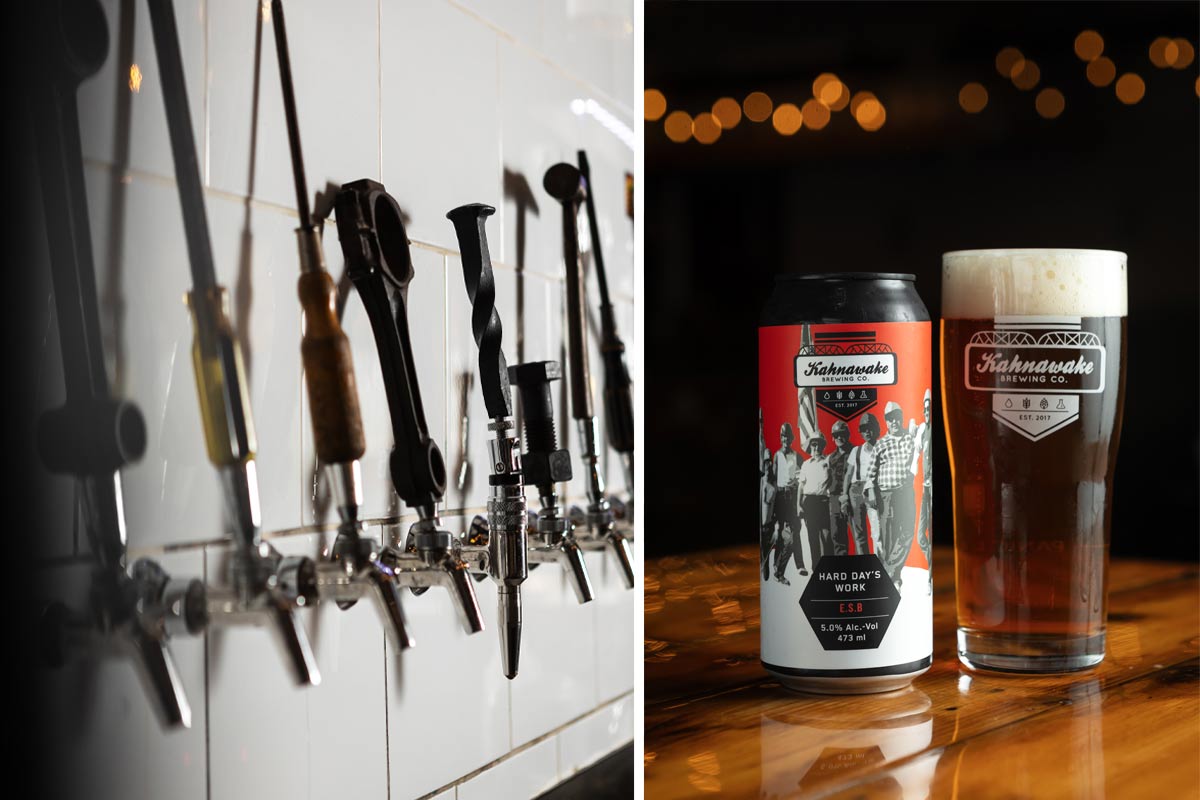
Located in Quebec, the Kahnawake Brewing Company & Black Bridge Taproom holds the distinction of being the first openly Indigenous-owned craft brewery situated on Indigenous land. The brewery draws heavily on local history; its name refers to the Saint-Laurent Railway Bridge, a structure built in 1900 through the combined labor of Mohawk ironworkers and French laborers. Co-owner Fred Leblanc, a former ironworker, has successfully positioned the brewery as a bridge between cultures. The brewery’s success was formalized in 2024 and 2025 when it received multiple medals at the Canada Beer Cup, proving that Indigenous-led breweries can compete at the highest levels of quality.
Nonsuch Brewing Co.
In Winnipeg, Matthew Sabourin of La Brasserie Nonsuch Brewing Co. focuses on the "experience" of beer rather than mass consumption. By hosting events like the "Beer Bannock" experience, where patrons make traditional unleavened bread while learning about Indigenous history, Nonsuch integrates cultural education into the taproom environment. Sabourin emphasizes that the goal is to celebrate moments and community, shifting the focus away from the volume of alcohol consumed.

Red Tape Brewery
In Toronto, Inuit brewer Sarabeth Holden uses her platform at Red Tape Brewery to incorporate ingredients tied to Northern Indigenous life. Her recipes often feature orange pekoe tea—a staple in hunting and fishing camps—and dwarf fireweed (Paunnat), which is harvested seasonally. Holden’s approach demonstrates how the land’s natural elements can be reclaimed as "medicinal" or celebratory ingredients, rather than tools of harm.
Statistical Trends and Industry Implications
The Canadian craft brewing industry has seen a shift toward diversity, equity, and inclusion (DEI) initiatives over the last five years. While specific census data on Indigenous brewery ownership is still being refined, industry reports suggest a marked increase in "land acknowledgments" and partnerships between non-Indigenous breweries and local First Nations.
However, industry experts like Inez Cook, co-founder of the Indigenous restaurant Salmon n’ Bannock, argue that symbolic gestures are insufficient. Cook advocates for direct business-to-business relationships, such as her partnership with Locality Brewing. She suggests that true reconciliation in the industry requires non-Indigenous owners to physically visit tribal nations, introduce themselves, and foster personal relationships. "Actions and changed behavior create reconciliation," Cook states, emphasizing that Indigenous business is built on people-to-people connections rather than abstract corporate contracts.
Broader Social and Political Impacts
The movement toward Indigenous inclusion in craft beer is inextricably linked to the concept of sovereignty. Darnell Stager of Indigenous Tourism BC notes that many Indigenous people still carry "Indian status cards" that technically label them as "wards of the state." In this context, the ability to own and operate a brewery is an act of defiance against a state that once controlled every aspect of Indigenous life.

Niigaan Sinclair, a professor and Anishinaabe scholar, suggests that the path forward involves a fundamental "Anishinaabe teaching": the necessity of figuring out a relationship with all things. While alcohol has been a "violent intrusion," it is made from natural elements—water, grain, and yeast—that belong to the earth. Sinclair argues that sovereignty means making independent decisions about these elements while maintaining a responsibility to avoid causing harm to others.
Conclusion: Breaking the Silence
The future of Indigenous participation in the Canadian craft beer industry remains a delicate balance. The dissolution of the Indigenous Brew Crew in 2021 serves as a reminder that the wounds of the past are still fresh and that the industry must move with caution and respect. However, the success of breweries like Kahnawake, Locality, and Red Tape suggests a new path forward—one defined by transparency, cultural pride, and the reclamation of the land’s resources.
As the industry continues to evolve, the consensus among Indigenous leaders is that inclusion must occur at every level of the supply chain, from hop farming and malting to distribution and ownership. By breaking the silence surrounding the difficult history of alcohol and engaging in honest, often uncomfortable conversations, the craft beer community may find a way to transform a historical "salve" for trauma into a modern tool for economic and cultural sovereignty. The path toward a more inclusive industry is not found in avoiding the past, but in navigating its complexities with kindness, respect for the land, and an unwavering commitment to Indigenous self-determination.