admin
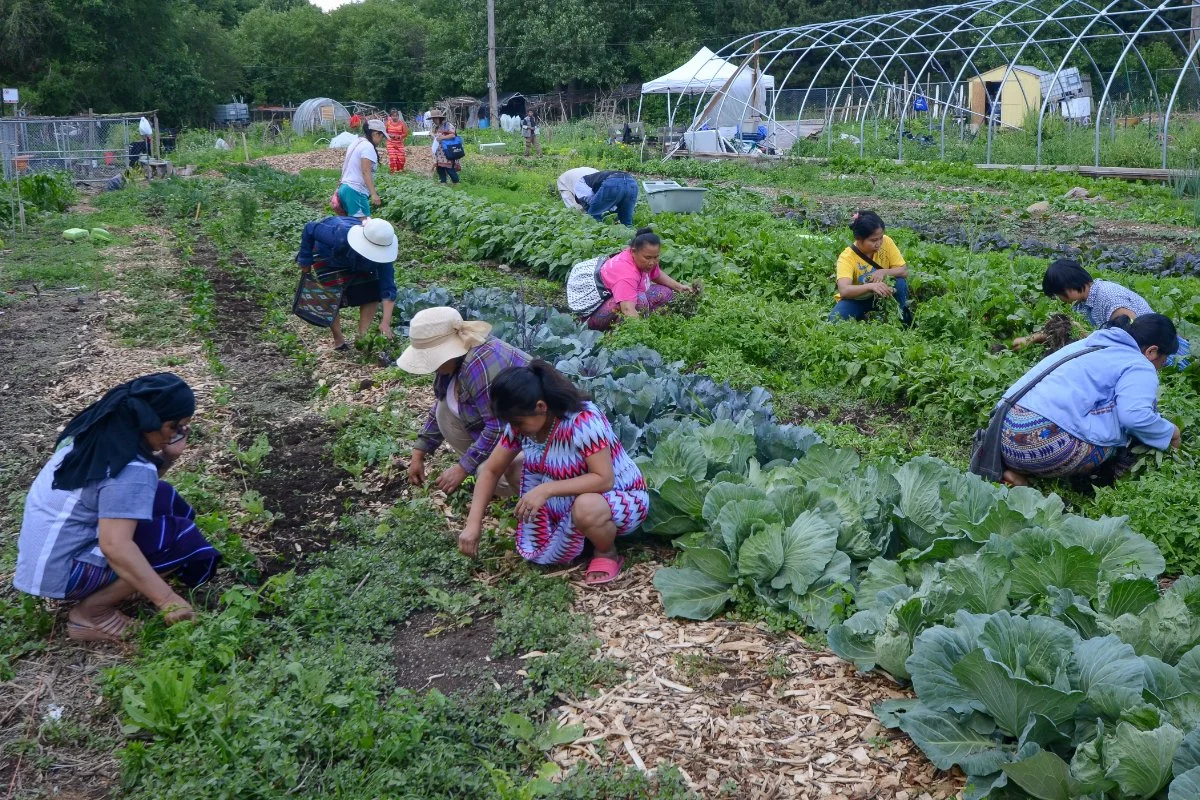
In the heart of Chicago, Global Gardens stands as a vital nexus where diverse cultures converge through the shared act of cultivation, offering a profound sense of belonging and economic stability to refugee communities navigating a complex and often hostile immigration landscape. This innovative urban farm not only provides fresh, culturally significant produce but also serves as a sanctuary and a vibrant cultural exchange hub, fostering resilience and community amidst heightened federal immigration enforcement.
A Verdant Sanctuary in a Concrete Jungle
On a brisk early fall day in 2026, a red umbrella offered Rehena, a refugee from Myanmar, a shield against the persistent rain as she meticulously navigated her narrow garden plot. Her hands, calloused from years of farming, pointed out a bounty of familiar crops destined for local farmers’ markets: crisp lettuce, vibrant chard, hearty kale, plump zucchini, and robust broccoli. With a practiced hand, she plucked a prickly cucumber, its fresh taste a tangible link to her past. Beyond the market staples, her plot yielded an array of vegetables rarely found in mainstream American grocery stores—leafy water spinach, delicate mizuna, and the aromatic holy and Thai basils. Long beans, a staple of many Asian cuisines, dangled gracefully from a trellis, a testament to her husband Shorif’s diligent craftsmanship.
Several times each week, Rehena and Shorif dedicate themselves to their two dense plots, each measuring a modest 3-by-125 feet, within the expansive grounds of Global Gardens. This community of refugee farmers, located in Chicago’s Albany Park, allows them to supplement their income and enrich the daily meals for their five children. The couple, like many others at Global Gardens, requested their full names be withheld, a poignant reflection of the pervasive fear instilled by the current administration’s intensified immigration policies. "It reminds us a lot of our memories with our farmland vegetables," Shorif shared, his voice tinged with a blend of nostalgia and contentment. "Now, we are here enjoying our lives, doing the farm. Growing things can make us happy."

Global Gardens is a microcosm of global displacement and resilience. Three-quarters of its approximately 300 farmers hail from Myanmar, a nation grappling with over 100 distinct languages and ethnicities and ongoing civil conflict. They are joined by individuals who have fled persecution and violence in Burundi, Afghanistan, Cambodia, Bhutan, Ethiopia, the Republic of Congo, the Democratic Republic of Congo, and Ukraine. In a period marked by federal authorities sowing widespread apprehension within Chicago’s diverse immigrant and refugee communities, Global Gardens stands as a beacon of trust, safety, and collective endeavor. Here, refugees can cultivate food, often leveraging agricultural expertise honed over generations in their homelands, providing sustenance and a vital connection to their heritage.
Economic Lifeline and Cultural Preservation
Global Gardens, now in its 14th year of operation, offers 68 plots, a number insufficient to meet the burgeoning demand, evidenced by persistent waitlists for both plots and its Community Supported Agriculture (CSA) program. For nine market farmers and their families, cultivating larger plots at Global Gardens translates into tangible economic benefits, with produce sold at nearby farmers’ markets and through CSA subscriptions. Any surplus produce is generously donated to local food pantries and rescue organizations, extending the farm’s impact beyond its immediate community. The vast majority of the 300 farmers, however, cultivate solely for personal consumption, ensuring food security for their households.
The operation provides invaluable support, offering free land, water, utilities, and seeds to farmers operating on restricted budgets. This financial relief is critical, given the economic challenges many refugees face upon resettlement. Local grants are indispensable to funding Global Gardens’ operations, and the use of land owned by the Chicago Park District provides a degree of stability in an otherwise uncertain environment.
Last season, Rehena and Shorif’s market sales totaled $4,579, a significant sum that primarily covered essential household expenses such as rice and other staples. "It’s a great help for our family because the rent is so high," Rehena affirmed, highlighting the direct economic impact of their farming efforts. Collectively, Global Gardens’ market farmers are projected to earn over $100,000 in 2026, according to executive director Haley LeRand. This revenue underscores the farm’s role not just as a cultural haven, but as a vital engine for economic independence.

Emily Parker, resettlement services senior manager at RefugeeOne, a non-profit organization dedicated to helping refugees build new lives in Chicago, emphasizes the broader significance of the initiative. "What is particularly valuable is that farming can be more than simply a job for someone who has recently arrived in Chicago," Parker states. "For people who grew food in their home countries, it can be a way to use an existing skill, maintain a connection to familiar foods and traditions, and build a sense of community and economic independence here." This sentiment resonates deeply with the experiences of many refugees, for whom agriculture is not merely a livelihood but an integral part of their identity and cultural heritage.
Beyond economic self-sufficiency, the gardeners contribute significantly to wider community food security. They supply fresh, culturally relevant produce to Common Pantry, a local non-profit addressing food insecurity. Morgan Crull, the pantry’s food programs manager, notes, "This allows us to source culturally relevant items that we could not source through traditional vendors. Guests say that the products are the freshest you can find anywhere," often inspiring them to explore new recipes with unfamiliar vegetables, thereby diversifying their diets and culinary experiences.
A Beacon Amidst the Shadow of Immigration Enforcement
The organization’s legal name, Global Gardens Refugee Training Farm, reflects its earlier focus on workforce development. However, as Executive Director LeRand explains, the model has evolved. "We’re translating or uplifting their knowledge to a new environment because they already have generations worth of farming knowledge," she clarifies, emphasizing the shift from teaching basic skills to facilitating the application of pre-existing expertise.
Global Gardens is strategically located in Albany Park, a mere 10-minute drive from West Ridge, both neighborhoods renowned for their large immigrant and refugee populations. This demographic concentration, while fostering vibrant communities, has also made these areas targets for intensified federal immigration enforcement. The past year has seen a distressing escalation of violent federal raids, creating a climate of fear and anxiety. While federal agents have not directly entered the garden, their presence has been felt acutely in the surrounding areas. In October 2025, residents of Albany Park protesting federal agents were met with tear gas, a stark reminder of the volatile situation. Protests continued throughout 2026, including a high school student walkout in February and demonstrations in June following federal agents’ use of a taser during an arrest.

The psychological toll of these crackdowns is palpable. Most of Global Gardens’ growers hold green cards, yet many remain hesitant to speak openly or be photographed, fearing any attention that might attract immigration authorities. This caution underscores the deep-seated apprehension that permeates immigrant communities. Others, however, approach the risk with a profound sense of perspective, acknowledging that their journeys as refugees have exposed them to far greater traumas. "We have suffered a lot of things," Shorif recounted, detailing experiences that included forced labor. "We experienced a lot of things you cannot even imagine."
Shorif’s personal narrative is a testament to extraordinary resilience. The urban plots of Global Gardens are a world away from his family’s former farm in Rakhine State, Myanmar. His family, members of the minority Rohingya Muslim community, cultivated rice and vegetables until their home was burned down in a wave of violence in 2012. This event tragically predated the 2021 civil war, which has since displaced over 3.5 million people and continues to exact a devastating toll. After fleeing with their young son, the family endured a dozen years of transient life in Malaysia, moving from one apartment to another. During this period, as they welcomed another daughter and three more sons, they profoundly missed the agrarian lifestyle that had defined their existence.
Their fortunes shifted in the spring of 2024 when the family secured refugee status with the United Nations and resettled in Chicago with the assistance of the Ethiopian Community Association of Chicago. Shorif learned about Global Gardens soon after their arrival from a new friend, Armand, a fellow grower and refugee from the Republic of Congo. Shorif’s active participation has since inspired many others from the Rohingya community. "Since Shorif and his wife came here, suddenly a lot of Rohingya people want gardens, which I love," LeRand observed. "They see what he’s doing and seem to really want to partake as well." For Rehena, who deeply misses her siblings still grappling with trauma and severe shortages of food and medicine in Myanmar, the Global Gardens community provides an indispensable network of support. "The people are so good here," she expressed, "and they help us in many respects."
A "Third Space" for Cultural Exchange and Healing
Global Gardens transcends its role as a mere agricultural site; it functions as a vibrant "third space"—a place distinct from home and work, where community and culture can flourish. Growers frequently host outdoor cooking classes, sharing traditional recipes from their homelands with visitors and fellow farmers. These classes offer a rare opportunity to experience cuisines like Burmese, which are largely unavailable in Chicago’s restaurant scene, enriching the city’s culinary landscape.

The farm also hosts a semi-regular summer concert series featuring international music artists, with food prepared by the growers, alongside potlucks and fundraisers. The annual Fall Harvest Fest draws a diverse crowd of outside visitors, further integrating the refugee community with wider Chicago society. One dedicated gardener routinely brings groups of 10 or more new refugees to the farm, facilitating cooking, eating, and socializing experiences. LeRand hopes these initiatives encourage new arrivals to view Global Gardens as an inviting haven, equipped with outdoor tables, a washing station, and a cooler—essential amenities for a community that cherishes outdoor communal life.
"These are people who had acres and acres of land, so their entire days revolved around land and food, yet they became completely divorced from that [here]," LeRand muses. "I sort of see this as a coming home. They come here at sunrise." This sentiment captures the profound psychological and emotional reconnection many farmers experience.
Among the early risers is Ka Nay Moo, 40, who grew up as a member of the Karen ethnic group in Myanmar. After fleeing her country, she spent a decade in a refugee camp in Thailand, where space was severely restricted. Yet, inspired by her parents, who had cultivated rice, cucumber, pumpkin, and Thai chili pepper in better times, her family managed to grow beets and a few other vegetables even in the confines of the camp. They also foraged for mushrooms and wild mustard greens in the surrounding forest, maintaining a primal connection to the land. Ka Nay Moo arrived in Chicago in 2010, followed by her extended family in 2011. Meeting others from the Burmese diaspora eventually led her to Global Gardens. "I just came here to relax and chill and meet up with others," she says, emphasizing the social and therapeutic aspects of the farm.
Later, Eh Klu Paw, 19, arrives at Global Gardens on an electric scooter. This market grower, who came to Chicago as a toddler with eight relatives, barely remembers the Thai refugee camp where he was born. Last year, the escalating immigration raids caused his mother considerable worry. "She kept telling me to carry my ID, carry my green card," he recalls. Despite his mother’s anxieties, Eh Klu Paw remained undeterred, increasingly taking over the farmers’ market duties from his parents, managing harvesting, packing, and sales with a growing sense of responsibility and pride.
Eh Klu Paw expresses particular pride in Global Gardens’ commitment to sustainable practices, eschewing synthetic fertilizers and pesticides. Rabbits, a common urban farm challenge, are deterred by chicken-wire barriers. The community embraces waste reduction, repurposing wood pallets and old fence boards to create shade structures and trellises for crops like tomatoes and bottle gourds. The growers also maximize their yield by utilizing entire plants, rather than discarding leaves and stems, and cultivate nutritious greens often regarded as weeds elsewhere, such as amaranth. Eh Klu Paw’s personal favorite crop is water spinach, which he skillfully sautés in oil. "My friends think it’s cool," he shares about his farming responsibilities. "Sometimes they ask me like, ‘Yo, can you give me some vegetables?’ I get to feed people. I think that’s important." His words encapsulate the multi-faceted value of Global Gardens: a place of economic opportunity, cultural grounding, community building, and dignified contribution, even in the face of ongoing challenges.