admin
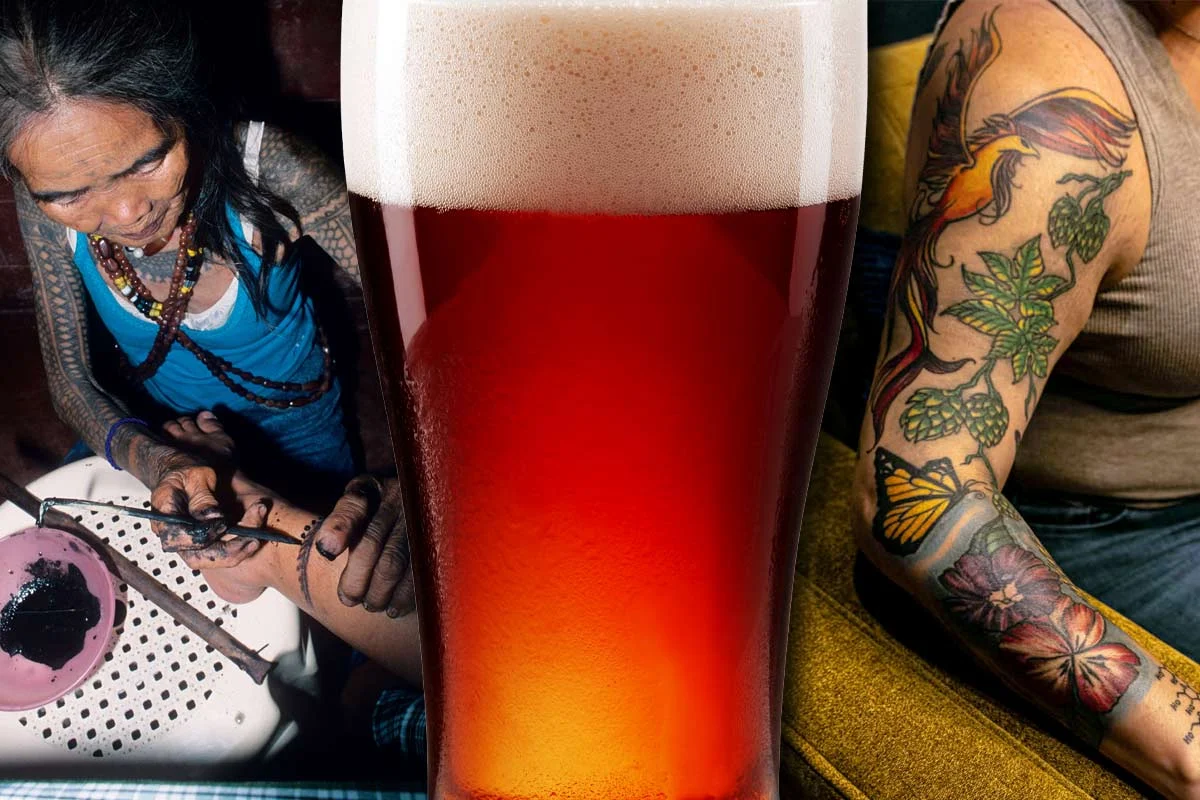
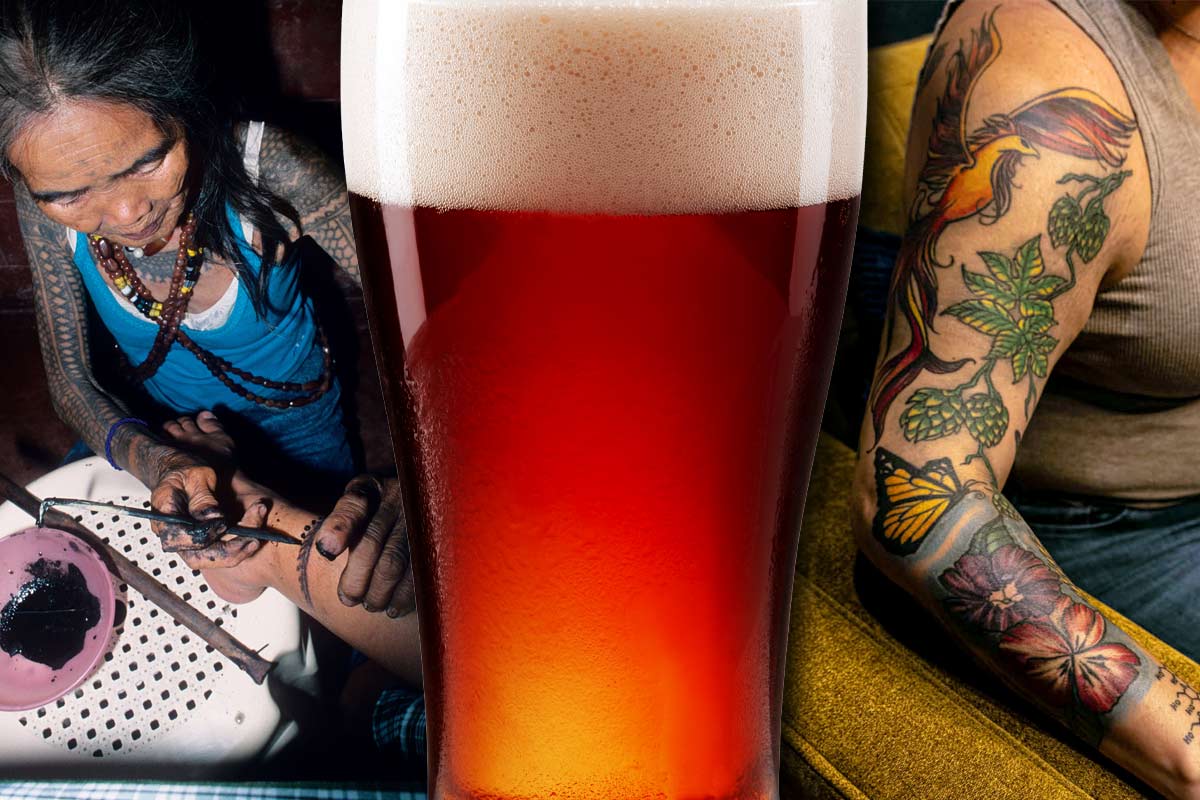
The practices of tattooing and fermentation, while seemingly disparate in modern urban contexts, share a profound and ancient kinship rooted in the transformation of raw materials through human agency, ritual, and a deep-seated relationship with the land. Across the globe, from the subarctic forests of northern Japan to the tropical savannas of the Amazon, these two crafts have historically operated as technologies of continuity. Tattooing inscribes identity, ancestry, and protection onto the skin, while fermentation preserves, nourishes, and binds communities through shared consumption and sacred ritual. Both processes represent a transition from the raw to the refined, creating something greater than the sum of its parts through embodied knowledge passed down through generations.
In cultures ranging from the Ainu and Kalinga to the Makushi and Native Hawaiians, the "grammar of transformation" is visible on the body and shared in the vessel. These intersections are not merely coincidental; they inhabit similar ritual domains where identity and social responsibility are negotiated. By examining these practices through a journalistic and anthropological lens, a pattern emerges: ink and drink serve as vital mediums through which communities maintain conversations with their ancestors, their environments, and their future descendants.
Historical Context and the Centrality of the Hearth
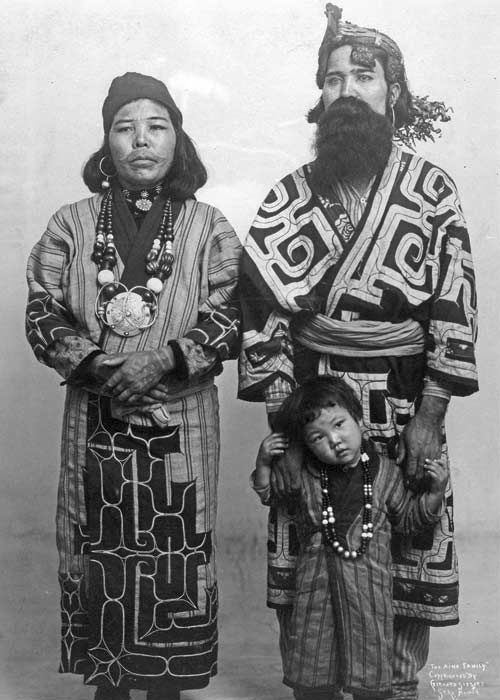
For many Indigenous societies, the domestic hearth serves as the primary site of both physical and spiritual transformation. It is the location where fire facilitates the change of state required for both tattooing and brewing. In the historical record of the Ainu people—the Indigenous inhabitants of Hokkaidō, Sakhalin, and the Kuril Islands—the hearth was the domain of Kamuy Fuchi, the hearth goddess. As the overseer of domestic labor, she governed the preparation of food, the brewing of ceremonial beverages, and the performance of women’s rituals.
Ainu tattooing, a practice performed almost exclusively on women, utilized soot collected from the underside of earthenware cooking pots. This pigment was rubbed into patterned incisions, most notably around the lips, to mark the transition into womanhood and ward off malevolent spirits. Simultaneously, Ainu women were the sole producers of tonoto, a fermented rice-and-millet beer essential for communal ceremonies. The use of hearth soot for ink and the hearth’s fire for brewing created a cosmological loop; the same spiritual authority that blessed the drink also sanctioned the markings on the skin.
This cultural system faced severe disruption in the late 19th century. Following the Meiji Restoration, the Japanese government implemented the Hokkaido Aborigine Protection Act of 1899. This colonial policy sought to forcibly assimilate the Ainu by banning traditional practices, including tattooing and the traditional brewing of tonoto. This suppression stripped the practices of their ethical and mythological contexts, leading to a decline that only began to see a reversal in the late 20th and early 21st centuries through Indigenous-led revival movements.
Technical Intersections: Fermented Pigments of the Kalinga
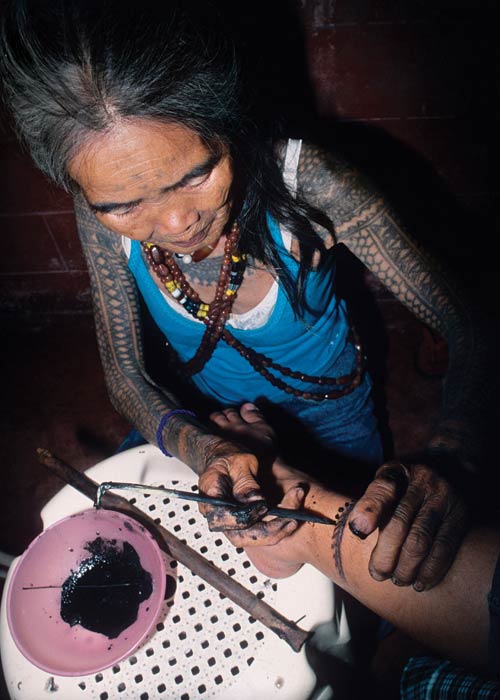
In the rugged Cordillera mountain region of Luzon in the Philippines, the Kalinga people have maintained a hand-tapped tattoo tradition known as batok. Historically, these markings served as a "social skin," signaling a man’s bravery in warfare or a woman’s beauty and maturity. The technical process of batok reveals a direct chemical intersection between tattooing and fermentation.
Traditional Kalinga ink was often composed of soot mixed with water or plant-based carriers. In specific regional variations, sugarcane juice was utilized as the liquid base. When mixed with soot and allowed to rest, the natural sugars in the juice would begin a process of fermentation, converting into alcohol. While the biological adhesion of the pigment into the dermis is a mechanical process, the use of a fermenting medium suggests a cultural preference for substances that have undergone a "living" change.
Today, the most prominent figure in this tradition is Apo Whang-od Oggay, who, at over 100 years of age, is recognized as the world’s oldest practicing mambatok (tattoo artist). Her work has brought international attention to the Kalinga, shifting the perception of tattooing from a localized tribal custom to a globally recognized art form. Despite the modernization of ink production, the ceremonial context remains; fermented beverages like tapuy (rice wine) continue to anchor the social gatherings where tattoos are applied, reinforcing the bond between the drink that fuels the community and the ink that defines it.
The Makushi: Tattoos as Brewing Charms
In the Guiana Shield region of South America, the Makushi people demonstrate a unique functional link between tattooing and fermentation. For the Makushi, the cultivation and processing of cassava (Manihot esculenta) is the cornerstone of social life. The production of parakari, an intricate cassava beer, involves a sophisticated dual-fermentation process using both specialized molds and yeasts.
Historically, Makushi women received kansku markings—tattoos specifically designed as cooking and brewing charms. These tattoos were not merely decorative; they were believed to be active participants in the brewing process. Motifs depicting arthropods like bees or scorpions were intended to imbue the beer with specific qualities, such as the sweetness of honey or a potent "sting" (yekî). In the Makushi language, the term yekî carries a dual meaning, referring both to the physical sting of an insect and the state of being intoxicated.
Anthropological data suggests that these tattoos were a prerequisite for social participation. According to Dr. Lars Krutak, a cultural tattoo anthropologist, a woman’s ability to serve fermented beverages to men was traditionally contingent upon her possessing the correct arm tattoos. This practice embeds the cosmology of the tribe directly into the labor of fermentation, ensuring that the beverage is prepared under the proper spiritual and bodily conditions. Although missionary influence in the 20th century led to a decline in kansku, the legacy of these markings remains a testament to the belief that the body can influence the chemical transformation of food.

Hawaiian Epistemology: Genealogy and Body Sovereignty
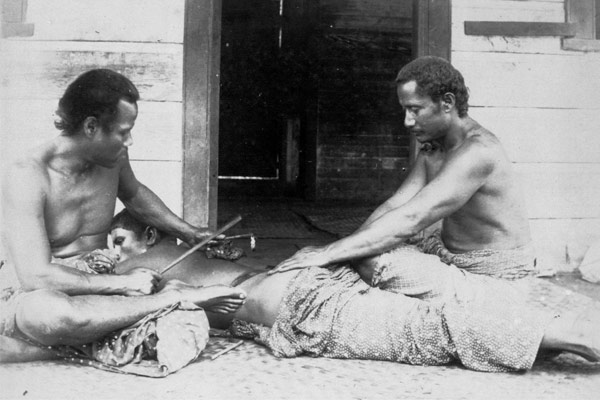
In Hawaii, the relationship between tattooing (kākau) and fermentation (specifically of poi, or fermented taro) is framed through the concept of genealogy. Dr. Lindsay Malu Kido, a scholar of Indigenous body sovereignty, notes that kākau serves as a living record of an individual’s ancestry, inscribed directly onto the skin.
This mirrors the Hawaiian relationship with kalo (taro), the plant used to make poi. In Hawaiian cosmology, kalo is considered Hāloa, the elder sibling of the Hawaiian people. Therefore, the cultivation and fermentation of kalo is not merely food production but an act of kinship. Feeding the community fermented poi is a way of nourishing the family tree, just as kākau is a way of visualizing it.
The revival of these practices in contemporary Hawaii is increasingly viewed as an act of decolonization. By reclaiming the body as a site of ancestral authority and reclaiming traditional foodways, Native Hawaiians are asserting sovereignty over both their physical forms and their nutritional systems. The intersection of ink and drink here is one of resistance—a refusal to allow outside moral or industrial frameworks to dictate the meaning of the body or the bowl.
Contemporary Echoes in the Craft Brewing Industry
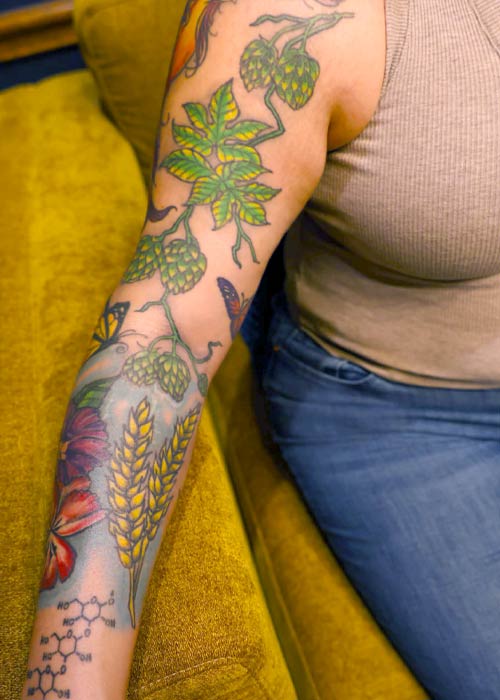
The ancient logic of "ink and drink" continues to resonate in the modern craft beer movement, albeit in a more secular and individualized manner. Today’s brewers frequently use tattoos to express their dedication to the craft, marking their bodies with scientific formulas, hop bines, and yeast cells. While these lack the ancestral protocols of Indigenous traditions, they serve a similar purpose: expressing a personal and professional relationship with the process of transformation.
For many in the industry, these tattoos represent personal milestones or recoveries. Sandra Murphy, owner of Murphy’s Law Brewery & Pizzeria in Texas, utilizes a tattoo sleeve to commemorate her journey through grief following the loss of her daughter. Her ink—incorporating ale yeast chemical formulas, wheat, barley, and a phoenix—symbolizes her rebirth within the brewing profession.
Similarly, Rachael Engel, a brewer at Sound2Summit Brewery, describes her hop-themed tattoos as a manifestation of her identity. For Engel, the process of coming out as transgender and finding her place in the brewing industry were intertwined. Her tattoos serve as a visual narrative of self-actualization, mirroring the transformative nature of the fermentation she oversees in the brewhouse.
Analysis of Broader Implications
The persistent link between tattooing and fermentation across diverse cultures suggests that humans have a fundamental need to mark transitions. Whether those transitions are biological (puberty, aging), social (bravery, marriage), or professional (mastery of a craft), the use of "permanent" ink and "living" ferments provides a sense of stability and continuity.
From a scientific perspective, both fields are currently experiencing a renaissance. Modern microbiology is uncovering the complexities of traditional ferments like parakari and tonoto, while dermatological research is improving the safety and longevity of tattoo pigments. However, the cultural data indicates that the value of these practices lies not just in the chemistry, but in the community.
In a globalized world, the preservation of these Indigenous "technologies of continuity" is essential for maintaining cultural diversity. The work of organizations like the North American Guild of Beer Writers and various Indigenous rights groups highlights the importance of documenting these stories. As these traditions are revived and adapted, they continue to serve as a reminder that the most profound changes often occur at the intersection of the body and the earth, the ink and the drink. Both leave indelible traces of heritage while providing the sustenance needed to imagine future identities.