admin
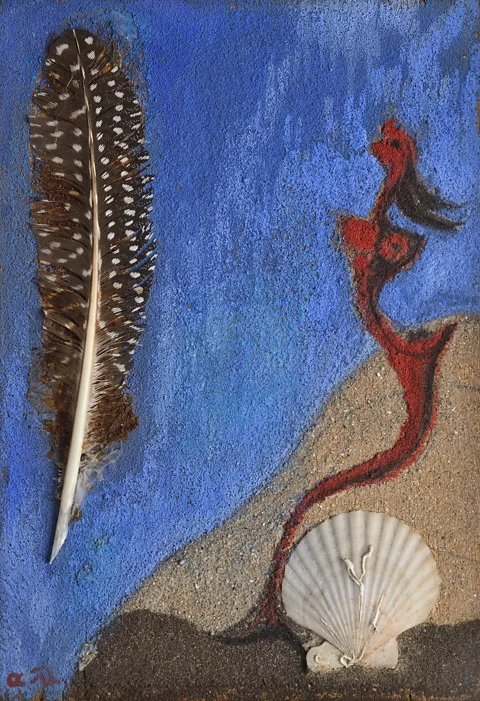
Peggy Guggenheim, born Marguerite Guggenheim in 1898, remains one of the most paradoxical and influential figures in 20th-century art history. Often dismissed during her lifetime as a socialite with a penchant for scandal, Guggenheim was, in reality, a visionary gallerist and collector whose efforts were foundational to the preservation of European Modernism and the rise of the New York School of Abstract Expressionism. While historical narratives frequently emphasize her romantic liaisons and bohemian lifestyle, a contemporary reassessment of her career reveals a woman of extraordinary strategic acumen and bravery. From her early days in London to her heroic efforts in Nazi-occupied France and her final decades in Venice, Guggenheim’s contributions shifted the epicenter of the art world from Paris to New York, ensuring that the works of masters like Jackson Pollock, Mark Rothko, and Vasily Kandinsky reached a global audience.
The Guggenheim Dynasty and the Shaping of a Rebel
To understand Peggy Guggenheim’s trajectory, one must look at the immense wealth and rigid social structures of her family. She was the daughter of Benjamin Guggenheim and Florette Seligman, representing a union of two of the most powerful Jewish banking and mining families in America. However, the trajectory of her life was irrevocably altered in 1912 when her father perished aboard the RMS Titanic. Unlike her uncle Solomon R. Guggenheim, who inherited a massive fortune and founded the Solomon R. Guggenheim Museum, Peggy’s branch of the family was left with a relatively modest inheritance.

In 1937, upon the death of her mother, Peggy received an inheritance of approximately $450,000—roughly equivalent to $5 million in contemporary currency. While substantial, this sum was a fraction of the billions controlled by her relatives. This "poor relation" status fueled her desire to distinguish herself outside the traditional bourgeois conformity of the New York elite.
Her intellectual awakening began at the Sunwise Turn Bookshop in New York, an avant-garde establishment run by Madge Jenison and Mary Mowbray-Clarke. This environment, which functioned as both a bookstore and an art salon, introduced her to the concept of female independence and creative entrepreneurship. It was here that Guggenheim first encountered the burgeoning Modernist movement, setting the stage for her eventual departure for Europe in 1920.
Guggenheim Jeune and the London Avant-Garde (1938–1939)
After nearly two decades of living in Paris and England—marrying and divorcing the Dadaist writer Laurence Vail—Guggenheim decided to open a gallery in London. At the time, the British art scene was notoriously conservative, showing little interest in the radical experiments occurring on the continent. Guggenheim Jeune, located at 30 Cork Street, opened in January 1938 and immediately became a lightning rod for controversy and innovation.

Guggenheim’s approach was internationalist and daring. Her inaugural exhibition featured the work of Jean Cocteau, including drawings on bedsheets that challenged the prevailing standards of decency. Despite the provocative nature of the work, Guggenheim’s gallery provided the first UK solo exhibitions for giants such as Vasily Kandinsky and Yves Tanguy.
A pivotal moment in British art history occurred when Guggenheim attempted to import a collection of sculptures by Jean Arp, Constantin Brâncuși, and Henry Moore for a group show. British customs officials refused to recognize the pieces as art, seeking to tax them as raw stone. The director of the Tate, J.B. Manson, famously declared that the works were not art, a stance that Guggenheim successfully challenged in the House of Commons. This victory not only allowed the exhibition to proceed but also forced a modernization of British cultural policy toward contemporary sculpture.
A Race Against Time: Rescuing Modernism from the Third Reich
With the outbreak of World War II in 1939, Guggenheim’s ambitions transitioned from commercial success to cultural preservation. As the Nazi regime advanced through Europe, labeling Modernist works as "degenerate art" (Entartete Kunst), Guggenheim embarked on a mission to "buy a picture a day." Operating in Paris as the German army approached, she used her inheritance to amass a collection of unparalleled quality, purchasing works by Picasso, Klee, Mondrian, Magritte, and Miró at bargain prices from artists and dealers desperate to flee.

The bravery of this endeavor cannot be overstated. As a woman of Jewish descent, Guggenheim was at extreme risk. When she approached the Louvre to ask if they would hide her collection in their rural storage facilities alongside the national treasures, the museum’s curators refused, claiming the works were too modern to be worth saving. Undeterred, Guggenheim managed to ship her collection to the United States disguised as household goods.
Furthermore, she played a direct role in the survival of several artists. In Marseilles, she funded the escape of numerous intellectuals and creators, including the Surrealist Max Ernst, whom she would later marry. Her efforts ensured that the creative brain trust of Europe was transplanted to the safety of New York, a move that would have profound implications for the post-war art market.
Art of This Century: Defining the American Epoch
Upon returning to New York in 1941, Guggenheim opened the "Art of This Century" gallery on West 57th Street in 1942. Designed by the visionary architect Frederick Kiesler, the gallery featured curved walls and innovative lighting that broke the "white cube" mold of traditional exhibitions. It was here that Guggenheim bridged the gap between European Surrealism and American Abstraction.

Her most significant contribution during this period was the discovery and promotion of Jackson Pollock. Recognizing his raw talent, Guggenheim provided Pollock with a monthly stipend of $150, allowing him to quit his job as a carpenter and focus entirely on painting. She commissioned his first large-scale mural and gave him his first solo show in 1943.
Guggenheim’s influence extended to gender representation as well. In 1943, she organized "The Exhibition of 31 Women," the first all-female art show in the United States. The exhibition included works by Frida Kahlo, Leonora Carrington, and Dorothea Tanning. While the show was a landmark for female artists, it also led to personal strife; Max Ernst eventually left Guggenheim for Tanning, prompting Peggy’s dry observation that she should have limited the show to 30 women.
The Venice Tenure and Global Recognition
In 1947, Guggenheim closed her New York gallery and moved to Venice, a city she felt was the spiritual home of her collection. In 1948, she was invited to show her collection at the Venice Biennale, the first time the prestigious festival had featured such a comprehensive survey of Modernist art. The success of the exhibition cemented her status as a global authority.

She eventually purchased the Palazzo Venier dei Leoni, an unfinished 18th-century palace on the Grand Canal, where she lived and housed her collection. In 1951, she opened her home to the public, creating what is now the Peggy Guggenheim Collection.
As the decades passed, the institutions that had once rejected her began to seek her favor. In 1964, the Tate Gallery—the same institution that had once questioned the validity of her sculptures—hosted a major exhibition of her collection. In 1969, she was invited to show her works at the Solomon R. Guggenheim Museum in New York, reconciling with the family legacy she had once rebelled against.
Chronology of Key Events
- 1898: Born in New York City.
- 1912: Death of her father, Benjamin Guggenheim, on the Titanic.
- 1920: Moves to Paris, entering the expatriate art scene.
- 1937: Receives inheritance from her mother; begins serious collecting.
- 1938: Opens Guggenheim Jeune in London.
- 1939–1940: Massively expands collection in Paris despite the Nazi threat.
- 1941: Flees Europe for New York with Max Ernst and her collection.
- 1942: Opens Art of This Century gallery in New York.
- 1943: Commissions Jackson Pollock’s Mural and hosts "The Exhibition of 31 Women."
- 1947: Moves to Venice.
- 1948: Exhibits collection at the Venice Biennale.
- 1951: Opens the Palazzo Venier dei Leoni to the public.
- 1979: Dies in Camposampiero, Italy; her collection is bequeathed to the Solomon R. Guggenheim Foundation.
Analysis of Impact and Historical Implications
The historical dismissal of Peggy Guggenheim is frequently attributed to the sexism of the mid-20th century. Her 1946 autobiography, Out of This Century, which detailed her personal life with startling honesty, was used by critics to frame her as a "nymphomaniac" rather than a serious patron. However, data-driven analysis of the art market shows that Guggenheim’s "eye" was statistically extraordinary. Of the artists she championed in the 1940s, a vast majority are now considered the most valuable and influential figures of the century.

Her decision to provide stipends to artists like Pollock and Rothko pioneered a model of patronage that focused on long-term development rather than immediate commercial returns. By integrating European Surrealist techniques with American energy, she facilitated the birth of Abstract Expressionism, the first American art movement to achieve global dominance.
Today, the Peggy Guggenheim Collection remains the most visited museum in Venice and a cornerstone of the Guggenheim Foundation’s global network. It serves as a testament to a woman who, through sheer force of will and a refined aesthetic sensibility, saved a generation of art from destruction and redefined the role of the collector in the modern era. As curator Gražina Subelytė notes, Guggenheim was not merely a follower of advice; she was a groundbreaking force who made bold, independent choices that continue to resonate in the art world today.