admin
Washington D.C. – Following a decisive victory in the November 3, 2026, elections that saw a significant "blue wave" sweep Democrats into control of the House of Representatives, the incoming legislative body faces immediate pressure to deliver on its central campaign promise: making food more affordable for American families. With grocery bills reaching unprecedented highs and household budgets strained to breaking point, party leaders, including incoming House Majority Leader Hakeem Jeffries (D-New York), are already outlining their strategies. However, a growing chorus of advocates, economists, and labor organizations argue that any truly effective affordability agenda must move beyond simply reducing food prices and instead confront the systemic issues of poverty wages for food workers, rampant corporate profiteering, and exploitative immigration policies that underpin America’s food system.
The 2026 Election Mandate: Affordability at the Forefront
The 2026 midterm elections were widely seen as a referendum on the economic anxieties of everyday Americans. Exit polls consistently showed that the rising cost of living, particularly the escalating price of groceries, was a top concern for voters across demographics. Democrats successfully capitalized on this sentiment, promising concrete action to alleviate financial pressure on households. Incoming House Majority Leader Hakeem Jeffries, addressing an election night watch party in Washington D.C., acknowledged the clear mandate. "The American people have spoken," Jeffries stated, "They are tired of being squeezed at the checkout line, and they expect us to fight for their financial well-being. Food affordability is not just an economic issue; it is a fundamental human right, and this new Congress will prioritize it."
However, the path to genuine affordability is fraught with complexities. Experts from organizations like the International Panel of Experts on Sustainable Food Systems (IPES-Food) and labor unions contend that the Democratic establishment’s traditional focus on promoting competition and driving down prices, while important, overlooks a critical contradiction: the very people who grow, process, sell, and deliver the nation’s food often cannot afford to feed themselves or their families.
The Paradox of Plenty: Food Workers in Crisis

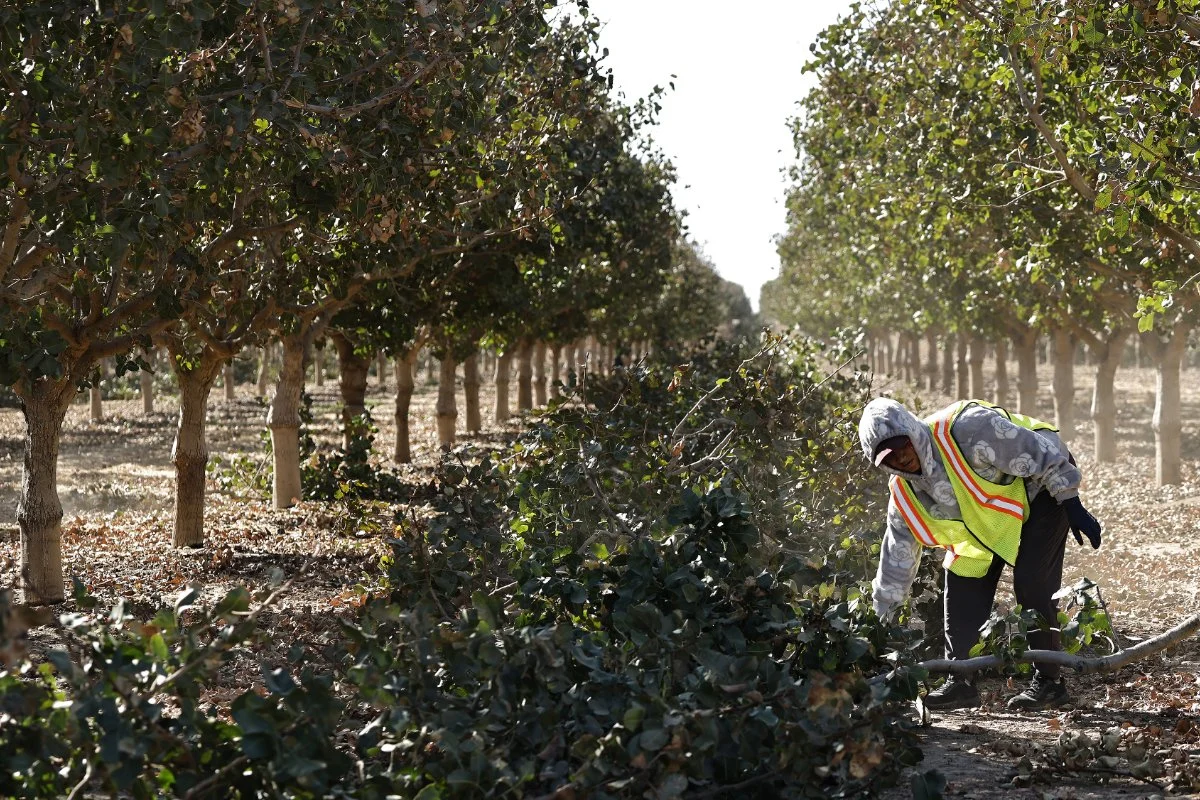
America’s food system, valued at trillions of dollars, relies heavily on a workforce that is among the lowest paid and most vulnerable in the nation. According to the Bureau of Labor Statistics (BLS), seven out of the ten lowest-paying jobs in the U.S. are concentrated within the food and agriculture sector. Farmworkers, meatpackers, grocery clerks, and food delivery drivers often earn wages that fall below the poverty line, forcing many to rely on public assistance programs to survive.
A recent IPES-Food report, "The Global Food Work Report," highlighted the systemic exploitation of food workers worldwide, underscoring that the profitability of the modern food system is often predicated on keeping its essential workforce poor, precarious, and powerless. In the U.S., this reality manifests in a deeply inequitable distribution of wealth, where record corporate profits coexist with widespread food insecurity among those producing the food. "The people growing, processing, selling, and delivering America’s food are squeezed from both sides," commented Raj Patel, a research professor at the University of Texas, Austin, and a member of IPES-Food. "They are paid poverty wages for their work, while they struggle to afford increasingly expensive groceries themselves. Any serious affordability agenda must tackle both sides of that equation."
Dismantling the "Cheap Food, Cheap Labor" Fallacy
For decades, the American food system has operated under an implicit bargain: cheap food for consumers, enabled by cheap labor. This model, however, has demonstrably failed. As grocery prices have soared in recent years, the wages of food workers have largely stagnated, leading to a widening gap between their earnings and their ability to afford basic necessities. This has sparked a renewed debate about what "affordability" truly means.
Critics argue that merely pushing food prices down further without addressing labor costs would exacerbate the exploitation of workers, potentially driving them into deeper poverty. Instead, a more holistic approach is advocated, one that recognizes that sustainable food affordability must include dignified wages and secure working conditions for all. The New Democrat Coalition, a group of 114 House Democrats, has put forward an agenda that includes welcome commitments on wages, the Supplemental Nutrition Assistance Program (SNAP), and tackling corporate price hikes. However, activists contend that its underlying assumption remains that affordability primarily means making food cheaper, rather than fundamentally confronting the corporate power structures that depress wages and inflate consumer costs.
A Call for Economic Justice: Raising Wages

A cornerstone of the proposed new affordability agenda is a significant increase in the minimum wage. Senator Chris Murphy (D-CT) has notably introduced legislation proposing a $25 nationwide minimum wage, a figure that advocates argue would begin to align with the actual cost of living in many parts of the country. This proposed wage increase would apply universally, from farmworkers in the fields to delivery drivers in urban centers, transforming the lives of millions.
Historical analysis supports the argument for a substantial wage hike. Research from the Institute for Policy Studies (IPS) indicates that if the federal minimum wage had kept pace with gains in Wall Street bonuses since 1985, it would be closer to $50 per hour today. This stark comparison highlights the profound disconnect between the financial gains of the wealthiest few and the economic struggles of the working class. Data shows that the top 0.1 percent of Americans have doubled their wealth since 2019, now holding more than six times the wealth of the bottom 50 percent combined.
"The narrative that raising wages will automatically make groceries unaffordable is nothing short of gaslighting," stated a representative from the United Food and Commercial Workers International Union (UFCW). "Food prices are primarily shaped by corporate pricing decisions, market power, and profit margins, not simply the wages of the people producing our food. We have spent decades keeping food workers’ wages low, and that has only resulted in soaring grocery prices, impoverished workers, and corporations funneling billions to shareholders."
Strengthening the Social Safety Net: The SNAP Imperative
Beyond wages, the accessibility and robustness of federal nutrition programs are critical to true food affordability. The Supplemental Nutrition Assistance Program (SNAP), a vital lifeline for millions, has faced significant challenges and cuts in recent years. Between July 2025 and June 2026, SNAP participation plummeted by 5 million people, reaching a 17-year low. This decline is largely attributed to the implementation of deeper program cuts enacted under President Donald Trump’s "One Big Beautiful Bill Act" in 2025, which built upon earlier restrictions imposed by the Biden administration.
The consequences of these cuts are dire. A recent report from Dunnhumby, a consumer data science company, revealed that one in three Americans reported cutting meal sizes or skipping meals entirely in the past year due to an inability to afford enough food. Food banks across the nation are reporting a 15 percent increase in traffic this year, signaling a deepening crisis of food insecurity.

Perhaps the most bitter irony of the current system is the cycle of dependency it creates. America’s largest grocery corporations, such as Amazon, Kroger, Target, and Walmart, are notorious for paying wages so low that many of their employees qualify for and rely on SNAP benefits to survive. These same corporations then profit when those workers spend their meager earnings and SNAP benefits in their stores. Walmart alone accounts for more than a quarter of all SNAP dollars spent nationwide, a stark illustration of how public funds effectively subsidize the low-wage labor practices of highly profitable companies. Anti-hunger advocates are calling on Congress to swiftly pass legislation reversing these harmful policies and to challenge the executive branch to veto such essential measures.
Tackling Corporate Concentration and Profiteering
Voters’ desire for lower costs directly translates into a demand for government action against corporations perceived to be exploiting their market dominance. America’s food system is characterized by extreme consolidation, with a handful of powerful companies controlling vast segments of the supply chain, from seed production and meatpacking to wholesale distribution and retail. This concentration of power allows these firms to dictate prices for consumers, suppress wages for workers, and stifle competition.
Economists and consumer watchdogs have documented how major food businesses have "padded margins" and passed on far more than their actual cost increases to consumers, particularly since the onset of the COVID-19 pandemic. These companies have recorded extraordinary profits, often at the expense of both producers and consumers. Democrats are now urged to launch a sweeping congressional inquiry into profiteering across the entire food supply chain. This would involve subpoenaing CEOs, opening corporate books to public scrutiny, and vigorously pursuing antitrust enforcement against companies found to be engaged in anticompetitive practices. "This isn’t just about market dynamics; it’s about criminal activity," stated Errol Schweizer, a co-author of the original op-ed and a former grocery executive. "The American public deserves to know the extent to which corporate greed is driving up their grocery bills."
Reforming Immigration and Protecting Essential Workers
The exercise of corporate power in the food system extends beyond pricing and wages; it is deeply entrenched in immigration policies that render migrant food workers uniquely vulnerable. These workers, who form the backbone of America’s agricultural and food processing sectors, often operate with precarious immigration statuses, leaving them dependent on employers and fearful of speaking out against exploitation, wage theft, or dangerous working conditions.

The H-2A agricultural visa program, intended to fill seasonal labor shortages, has drawn significant criticism for its structure, which ties migrant workers to individual employers. This arrangement, likened by some to modern-day indentured servitude, makes it extraordinarily difficult for workers to challenge abuse without risking their livelihoods and immigration status. The situation is further exacerbated by the influence of figures like Stephen Miller, President Trump’s hardline immigration czar, who, now serving as White House chief of staff, is expected to push for even more punitive immigration policies.
Immigration rights advocates are demanding an end to Immigration and Customs Enforcement (ICE) raids on farms, factories, and restaurants, which not only terrorize communities but also disrupt essential food production. They call for fundamental reforms to the H-2A visa program and a legislative pathway to citizenship for migrant workers who perform the essential labor that most Americans refuse. "Democrats have been handed a mandate to make life more affordable," emphasized a representative from the National Immigration Law Center. "But they won’t deliver on it by tinkering with grocery prices while leaving the corporate food system untouched and its most vulnerable workers unprotected."
Beyond Tariffs: A Coherent Economic Strategy
Further compounding the affordability crisis, presidential tariffs have needlessly hiked costs for staple food items. These tariffs have often benefited mammoth food companies through refunds, while offering no direct benefits to taxpayers. Congress is now being urged to reject and reverse these tariffs, which have demonstrably contributed to higher consumer prices without achieving their stated economic goals.
The Path Forward: Political Hurdles and Transformative Potential
The ambitious agenda proposed by advocates for a more equitable food system presents significant political challenges for the newly empowered House Democrats. They will need to navigate potential opposition from powerful corporate lobbies, a divided Congress, and the specter of presidential vetoes. However, the mandate from the 2026 elections is clear: Americans are demanding systemic change.

A successful implementation of this comprehensive affordability agenda – one that prioritizes living wages, strengthens social safety nets, curbs corporate power, and protects essential immigrant workers – could usher in a new paradigm for the American food system. It would mean a shift away from a model built on cheap food and cheap labor towards one that ensures everyone has access to healthy, affordable food, and that those who produce it are paid enough to live with dignity. This is not about pitting affordable food against decent wages; it is about recognizing that a truly affordable and just food system must integrate both, placing the public interest firmly ahead of unchecked corporate profits. The coming legislative session will test the resolve of the new Democratic majority to deliver on this transformative vision.