Jia Lissa

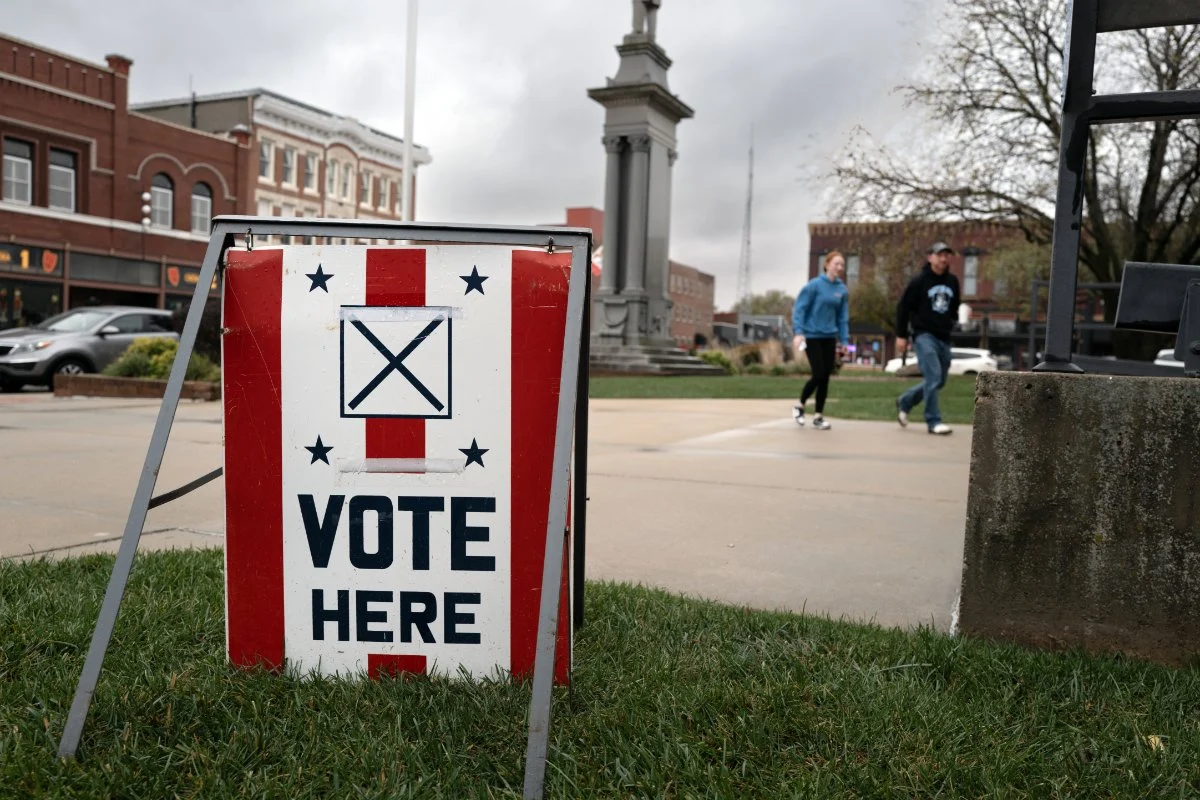
The recent midterm elections delivered a striking message from voters across the United States, none more pronounced than in Michigan’s 7th Congressional District, where newcomer Will Lawrence successfully unseated incumbent Republican Tom Barrett. Lawrence’s victory, achieved in one of the nation’s most expensive House races, was largely predicated on a campaign platform that squarely addressed voter anger over the unchecked proliferation of data centers. This outcome is poised to reshape the discourse around technological infrastructure, elevating local environmental and economic concerns to the forefront of federal policy.
The Unfolding Crisis: Data Centers at the Heart of Community Discontent
Data centers, the colossal physical infrastructure underpinning the digital age—from cloud computing and artificial intelligence to streaming services and social media—have quietly expanded across the American landscape for decades. Originally welcomed for their promise of economic development and high-tech jobs, these facilities have increasingly become flashpoints for local community opposition. The shift in public perception stems from a growing awareness of their significant environmental footprint, the perceived imbalance in economic benefits, and a persistent lack of transparency from developers.
Globally, data centers are estimated to account for roughly 1-3% of total electricity consumption, a figure projected to rise dramatically with the rapid advancements in artificial intelligence. In regions like Michigan, where Lawrence campaigned, proposals for new facilities often project energy demands equivalent to or exceeding the total capacity of local power grids. This immense power consumption translates into substantial carbon emissions, even as many tech companies pledge to transition to renewable energy sources, the sheer scale of demand often outstrips available green power. Beyond electricity, water usage is another critical concern. Data centers rely heavily on water for cooling, with some hyperscale facilities consuming millions of gallons daily, placing considerable strain on local water supplies, particularly in drought-prone areas or regions with already stressed aquatic ecosystems.
Economically, the narrative surrounding data centers has also soured for many communities. While developers often promise job creation, the reality frequently involves a limited number of highly specialized technical roles once construction is complete. More contentious are the substantial tax abatements and incentives offered by state and local governments, often amounting to hundreds of millions of dollars over decades. Critics argue these incentives divert crucial public funds from schools, public services, and other local priorities, effectively subsidizing mega-corporations at taxpayer expense. The impact on property values, noise pollution from cooling systems, and the aesthetic disruption of vast, windowless buildings further fuel community resentment, transforming what were once seen as symbols of progress into emblems of corporate overreach.
Will Lawrence’s Ascent: A Grassroots Movement Takes Root
Will Lawrence, a political newcomer with a background rooted in progressive activism—having been a member of the Democratic Socialists of America and a co-founder of the influential Sunrise Movement—identified the burgeoning anti-data center sentiment early in his campaign for Michigan’s 7th Congressional District. Months before the issue gained widespread media attention or became a central talking point for other candidates, Lawrence made opposition to data center development a cornerstone of his platform. This strategic focus proved instrumental in differentiating him from better-funded opponents in a challenging primary.
Michigan’s 7th Congressional District, encompassing parts of Lansing and its surrounding communities, has been a battleground for data center proposals. The district, historically leaning Republican but increasingly competitive, provided fertile ground for Lawrence’s message. He articulated a clear narrative that resonated with a broad spectrum of voters: data centers represent the epitome of "costs and corruption" in a "rigged economy." He highlighted how these projects benefit "the wealthy few over the many," through extensive tax breaks, massive resource consumption (electricity and water), and threats to residential property values.
Lawrence’s campaign skillfully connected the specific local grievances against data centers to broader themes of economic democracy and accountability. He pointed to instances where Silicon Valley companies challenged local community control and oversight in court, portraying this as an assault on democratic principles. The argument that decisions about local development were being made by "people in Silicon Valley and Wall Street and DC" rather than by the affected communities themselves struck a chord, transforming what might have been viewed as a niche environmental concern into a potent symbol of systemic inequality. The significant financial backing received by his opponent, Tom Barrett—including a substantial $340,000 contribution from Elon Musk’s America PAC—only served to underscore Lawrence’s narrative of fighting powerful corporate interests on behalf of ordinary citizens. His victory, therefore, was not merely a local upset but a national declaration of a growing political force demanding greater scrutiny of tech industry expansion.
Tech Industry’s Evolving Posture and Persistent Public Skepticism
In the wake of escalating public scrutiny and mounting political pressure, major technology companies have begun to recalibrate their approach to community engagement and environmental responsibility. Recent weeks have seen a flurry of announcements from tech giants, including OpenAI, making commitments to enhanced transparency, reduced water usage, and the elimination of non-disclosure agreements (NDAs) that often silence local opposition. These gestures are presented by the industry as earnest efforts to address public concerns and foster more sustainable development practices.
However, for critics like Will Lawrence and the communities directly impacted, these compromises are largely perceived as "completely inadequate." The sentiment on the ground suggests a deep-seated distrust that these voluntary commitments will translate into meaningful, enforceable change. The example of a new hyperscale data center proposed in Delhi Township, south of Lansing, just before the election, illustrates this skepticism. Despite an announcement by a local economic development agency and the would-be developer promising a six-month community engagement process and "protections" for the community, the public reaction was overwhelmingly negative. An emergency township board meeting drew hundreds of overflowing attendees, whose unanimous message was still a resounding "no." This incident underscores the chasm between industry promises and community expectations; for many, the time for dialogue has passed, and only a fundamental shift in approach, backed by robust regulation, will suffice.
Tech companies often frame their initiatives as steps towards "responsible innovation" and "community partnership." They highlight investments in renewable energy projects, water recycling technologies, and local economic contributions. Yet, the perception among affected residents is often that these efforts are reactive and insufficient, failing to address the core issues of resource depletion, environmental degradation, and the perceived erosion of local democratic control. The companies’ historical resistance to stringent oversight and their aggressive legal challenges against local ordinances have cultivated an environment of mistrust that will require substantial, systemic changes to overcome. The "whack-a-mole" approach, as Lawrence describes it—where communities are forced to fight individual projects one by one—highlights the demand for a comprehensive regulatory framework rather than piecemeal corporate concessions.
A Federal Mandate: Lawrence’s Congressional Agenda
Upon taking his seat in Washington, D.C., in January, Will Lawrence intends to translate his campaign’s core message into concrete federal policy, signaling a potentially transformative shift in how technology infrastructure is regulated in the United States. His ambitious agenda includes fighting for a federal data center moratorium and, in parallel, a pause on advanced AI development. Lawrence argues that "the risks simply do not match up to the benefits at this time," necessitating a broad, multi-stakeholder conversation to define an appropriate regulatory framework.
This proposal aligns conceptually with previous legislative efforts, such as those put forth by Senator Bernie Sanders and Representative Alexandria Ocasio-Cortez, who have advocated for pauses contingent on establishing robust AI safety regulations. Lawrence’s approach expands this by explicitly linking data center construction to both AI safety and environmental considerations, asserting that "safety here also means making sure that we’re not sacrificing people and the planet to build data centers." This integrated perspective aims to address the holistic impact of these technologies, from their energy and water footprint to their societal and existential risks.
Beyond moratoriums, Lawrence also plans to leverage congressional oversight and investigatory powers. He draws a stark analogy between the auto industry and the tech sector: "If GM put a car on the market that had a 1 percent chance of exploding on the highway and killing everybody inside, it would never go to market. If it did, they would be sued out of existence." He contrasts this with AI companies that openly discuss products with a "10 percent chance of killing everybody on planet Earth," labeling this "reckless endangerment" by any standard of consumer protection law. This perspective suggests a future where the tech industry, particularly AI developers, could face federal investigations and legal sanctions for developing and deploying technologies deemed public hazards without adequate safeguards. Such a stance could lead to calls for stricter environmental impact assessments for data center projects, federal mandates for resource efficiency, and potentially the application of existing consumer protection and public safety laws to AI development, fundamentally altering the regulatory landscape for technology giants.
Broader Implications and the National Landscape
Will Lawrence’s victory in Michigan’s 7th Congressional District is not an isolated event but rather a significant indicator of a broader national trend. The recent "blue tsunami" that swept across the country on Election Day saw anti-data center sentiment emerge as a potent electoral force in various races. Voters, increasingly aware of the environmental and economic trade-offs, are demanding greater accountability and regulation for these burgeoning digital infrastructures. This collective voice signals a potential paradigm shift, where the unchecked expansion of the tech industry, long a hallmark of economic growth, is now facing unprecedented public resistance.
The implications for the tech industry are profound. With growing federal scrutiny and local opposition, the industry may find its traditional strategies for expansion—relying on generous tax incentives and minimal regulatory hurdles—increasingly untenable. This pressure is already evident in reports of tech companies "scrambling to find other locations," including speculative ventures "in space," as conventional terrestrial sites become politically fraught. This adaptation will necessitate a more proactive and genuinely collaborative approach to community engagement, alongside substantial investments in truly sustainable and transparent development practices.
The movement against data centers is also gaining traction in diverse urban and rural settings. New York City Mayor Zohran Mamdani, for example, has voiced "a real sense of hope" regarding the movement, recognizing its potential to empower communities and reassert local control over economic development. This widespread resonance suggests that the issue transcends partisan lines and specific geographic locales, tapping into a deeper public desire for democratic accountability and environmental stewardship.
Lawrence’s election represents a pivotal moment, signaling that the debate over data centers and their broader technological implications has transcended local zoning boards to become a national political issue. His presence in Washington, advocating for a federal moratorium and robust regulatory oversight, promises to challenge the entrenched power of the tech lobby and force a critical reevaluation of how technology is developed, deployed, and governed in the United States. The era of unquestioning acceptance of tech expansion appears to be drawing to a close, replaced by a demand for responsible innovation that prioritizes people and planet alongside progress.