admin
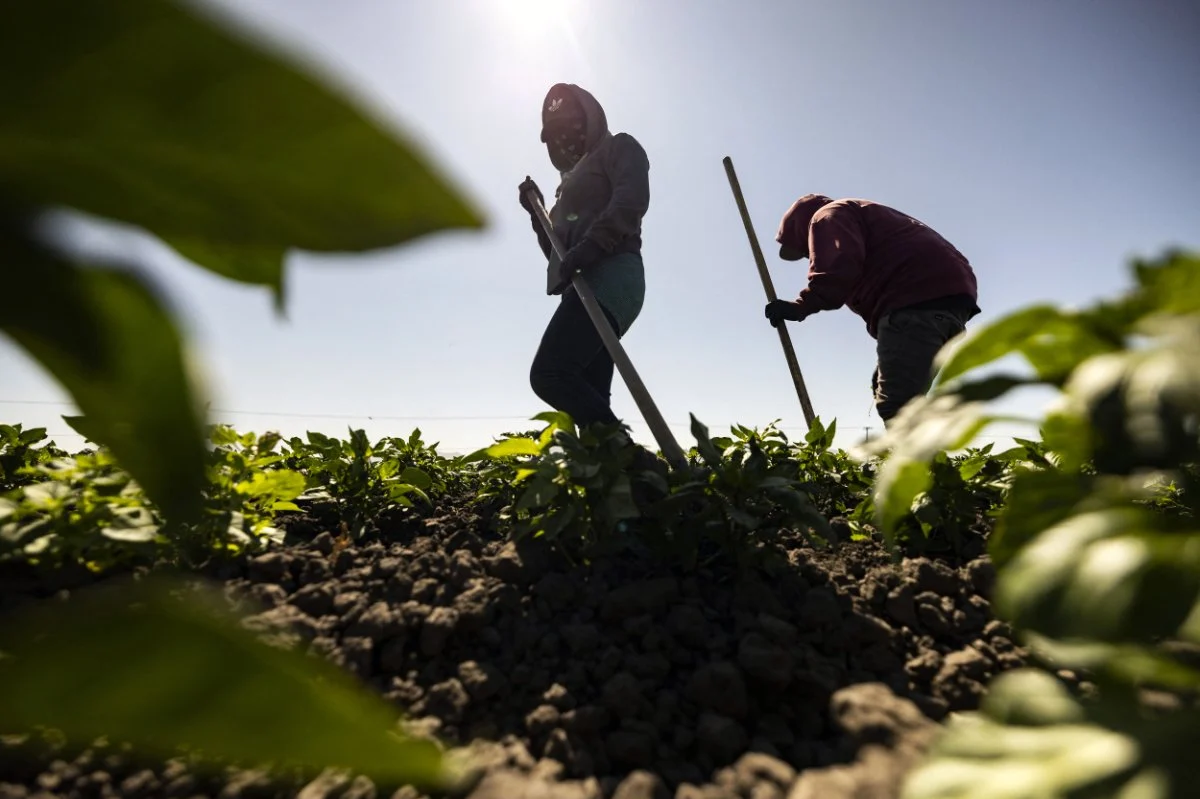
The agricultural landscape in the United States is undergoing a profound transformation, driven by an accelerating frequency of extreme weather events and a complex interplay of scientific consensus, economic realities, and deeply entrenched political and cultural divides. Farmers nationwide are confronting unprecedented challenges, forcing many to fundamentally rethink their practices, advocate for policy change, or find new ways to adapt in a rapidly changing environment. The story of farmers like Gillingham, who transitioned from conventional lowland vegetable farming to raising livestock and tending orchards on higher ground, exemplifies this difficult but necessary evolution.
Gillingham’s personal odyssey began years ago when his low-land vegetable farm became a casualty of climate change’s intensifying impacts. He recounts a harrowing period where multiple events, each historically categorized as a "hundred-year flood," struck within a remarkably short span of just a few years. These deluges were not merely inconvenient; they were catastrophic, wiping out an estimated 70 percent of his farm’s invaluable topsoil, rendering three tractors inoperable, and destroying a significant amount of other essential equipment. For Gillingham, the economic and emotional toll became unsustainable. "It stopped making sense," he stated, reflecting on the grim calculus that forced him to abandon a way of life.
Today, Gillingham operates a diversified farm high on a ridge, strategically located well above the historical flood plain. His current enterprise includes a small orchard and the raising of resilient livestock breeds: Icelandic sheep and Scottish Highland cattle. This strategic shift not only provided a path to economic recovery but also transformed him into an outspoken advocate for climate action within the agricultural sector, frequently lending his voice to critical discussions and policy debates. His experience highlights a growing recognition among farmers that adaptation is no longer an option but a necessity for survival.
Legal Battles for Climate Data and Regulation
Gillingham’s advocacy is mirrored by the proactive stance of organizations like the Northeast Organic Farming Association of New York (NOFA-NY), which has emerged as a significant voice for farmers on climate-related issues. In recent years, NOFA-NY has not shied away from challenging governmental policies through legal means, underscoring the critical importance of climate information and robust environmental regulations for the agricultural community.
One notable instance involved NOFA-NY’s lawsuit against the U.S. Department of Agriculture (USDA). The lawsuit alleged that the agency, during a previous administration, had systematically "scrubbed" its official website of vital climate change resources. These resources, which included scientific data, research findings, and practical guidance on climate adaptation and mitigation, were deemed indispensable by NOFA-NY. The organization argued that farmers rely heavily on such information to make informed decisions about crop selection, water management, soil health, and risk assessment in the face of increasingly unpredictable weather patterns. The legal challenge proved successful, resulting in a settlement that compelled the USDA to restore these critical resources to its public platform, marking a victory for data transparency and farmer access to essential information.
Following this success, NOFA-NY expanded its legal efforts by joining a lawsuit against the Environmental Protection Agency (EPA). This suit challenged the EPA’s decision to roll back the "endangerment finding," a pivotal regulatory determination made in 2009 that affirmed greenhouse gases pose a threat to public health and welfare, thus granting the EPA authority to regulate their emissions under the Clean Air Act. The rollback of this finding effectively dismantled the agency’s ability to impose significant federal regulations on greenhouse gas emissions, a move with profound implications for environmental protection and climate action across all sectors, including agriculture.
NOFA-NY’s decision to participate in this high-stakes litigation stemmed from a deep conviction that farmers possess a unique and intimate understanding of climate change’s ramifications. As Gillingham articulated, "I’ve talked to farmers from around the country. They’re all trying to deal with climate change." He emphasized that farmers, perhaps more than any other group, comprehend the immense scale of change required to protect rural communities, their livelihoods, and the nation’s food supply from escalating climate threats. Their firsthand experience with droughts, floods, extreme heat, and unpredictable growing seasons provides an undeniable perspective on the urgency of the crisis.
Navigating the Ideological Divide: Climate vs. Conservation
Despite the undeniable on-the-ground impacts of climate change, the discourse surrounding it remains deeply polarized, particularly in many rural and politically conservative regions of the United States. While farmers in more liberal areas have actively participated in climate action marches and rallies in recent years, a different dynamic often prevails elsewhere.
Research conducted by Petersen-Rockney in California sheds light on this complex social and political landscape. She observed that while farmers frequently discuss the impacts of extreme weather around their kitchen tables, openly referring to these challenges as "climate change" can be fraught with difficulty within their communities. The language surrounding the issue, she noted, often becomes a cultural and political flashpoint, compelling many farmers to navigate a delicate balance between acknowledging reality and conforming to local ideological norms.
Petersen-Rockney explained that while rural areas exhibit a diversity of beliefs, they tend to lean politically conservative. In these contexts, "climate change" has, for many, become "a sort of test of your conservative chops." This ideological framing puts farmers in an unenviable position: they are forced to deal with the tangible, devastating impacts of a changing climate, yet they may feel unable to discuss the underlying causes openly without risking social or political ostracization. This phenomenon is supported by broader public opinion data; a 2019 Pew Research Center survey, for example, highlighted that among various global threats—including North Korea’s nuclear program and ISIS—the partisan divide was most pronounced when respondents were asked to assess the seriousness of climate change. For many conservative voters, acknowledging climate change can be perceived as an endorsement of specific policy agendas or a challenge to core political identities.
Regenerative Agriculture: A Bipartisan Path Forward?
Given the profound polarization surrounding the term "climate change," a strategic shift in language and focus has emerged as a promising avenue for progress in agricultural sustainability. Petersen-Rockney views the increasing adoption of the term "regenerative" as a significant step forward. Regenerative agriculture encompasses a suite of farming and grazing practices that aim to reverse climate change by rebuilding soil organic matter and restoring degraded soil biodiversity, resulting in both carbon drawdown and improved water cycle. These practices often include no-till farming, cover cropping, diverse crop rotations, reduced synthetic inputs, and holistic grazing management.
Crucially, the concept of regenerative farming has recently found unexpected bipartisan support, particularly with the rise of movements such as "Make America Healthy Again" (MAHA), which has been notably championed by figures like Robert F. Kennedy Jr. Petersen-Rockney observed that "With the rise of MAHA, regenerative agriculture has very quickly moved from a fringe-left kind of topic to a center-right topic." This shift is not merely semantic; it has created "a really interesting opening" because the core practices on the ground—whether labeled regenerative agriculture, agroecology, or conservation farming—are fundamentally the same. They all focus on enhancing soil health, improving water quality, increasing biodiversity, and building farm resilience.
The strategic insight here is to de-emphasize terminology and instead focus on the tangible "co-benefits" of these practices. These co-benefits include lower input costs (less fertilizer, pesticides, and irrigation), improved water retention in the soil, enhanced crop resilience to extreme weather, and, as an undeniable byproduct, the mitigation of climate change through carbon sequestration. By framing the discussion around practical advantages that directly impact a farmer’s bottom line and long-term viability, proponents can bypass ideological barriers and foster adoption based on demonstrable economic and environmental gains. "There are so many pros to adopting these practices," Petersen-Rockney asserted, suggesting that meeting farmers "where they’re at" and emphasizing action over belief is a more effective strategy for widespread change.
Focusing on Action: Cost Savings and Resilience
This pragmatic approach has been successfully implemented by organizations like the Soil & Climate Initiative, which has been working with farms for years to facilitate the transition to regenerative practices. Hulse Dillon, a representative of the initiative, confirmed that in politically conservative regions, their team deliberately avoids using the term "climate change." Instead, their conversations center on concepts like "resiliency" and "cost savings."
A compelling case study for this approach emerged after the devastating Derecho storm that swept through Iowa farms in 2020. This intense, widespread, and long-lived wind storm caused billions of dollars in damage, flattening cornfields and destroying infrastructure. Crucially, post-storm assessments revealed that farms employing regenerative practices—such as no-till and cover cropping—often fared significantly better than their conventional neighbors. Their healthier soils, with greater organic matter, were more stable, offering better root anchorage and increased water infiltration, which reduced erosion and crop loss.
"Honestly, the last few years we’ve really been talking about cost savings. That’s been a huge thing," Hulse Dillon elaborated. The economic advantages of regenerative agriculture are substantial and resonate deeply with farmers. By reducing reliance on synthetic fertilizers and pesticides, minimizing tillage, and improving water use efficiency, farmers can significantly lower their operational expenses. Healthier soils also lead to more consistent yields, even in challenging conditions, providing a buffer against market fluctuations and weather extremes. These direct, measurable economic benefits offer a powerful incentive for adoption, transcending political affiliations or debates over climate terminology.
Beyond the Farm Gate: Systemic Change Required
While the widespread adoption of climate-smart, regenerative agricultural practices is undoubtedly a crucial component of any comprehensive climate strategy, it is important to acknowledge its limitations. Even if every farmer in the country were to transition to these beneficial practices without ever uttering the term "climate change," the broader issue of global greenhouse gas emissions would persist. Emissions from other sectors of the economy—such as energy production, transportation, industry, and residential uses—still need to be drastically reduced to avert catastrophic climate outcomes.
Furthermore, governmental policies and regulations continue to play an indispensable role. Gillingham pointed out that the EPA’s decision to end its regulation of greenhouse gas emissions "does have a direct impact on us," regardless of any linguistic acrobatics or farm-level adaptations. Such policy reversals can undermine the very foundation of climate action, making it harder for farmers and other sectors to achieve meaningful reductions and build resilience. The absence of federal mandates for emissions reduction means that even the most dedicated individual efforts may be insufficient to counteract the aggregate impact of unregulated industrial activity.
Ultimately, addressing climate change in agriculture requires a multi-pronged approach that integrates individual farm-level innovation with supportive national policies, robust scientific research, and an economic framework that incentivizes sustainable practices. The challenge lies not only in convincing farmers to adopt new methods but also in fostering a broader societal and political consensus that allows for comprehensive, systemic action. The experiences of farmers like Gillingham, the advocacy of groups like NOFA-NY, and the strategic communication efforts of initiatives like the Soil & Climate Initiative illustrate the complex journey toward a more resilient and sustainable agricultural future in a rapidly warming world. The path forward demands flexibility, pragmatism, and a persistent focus on tangible outcomes that benefit both the land and the livelihoods of those who work it.