admin
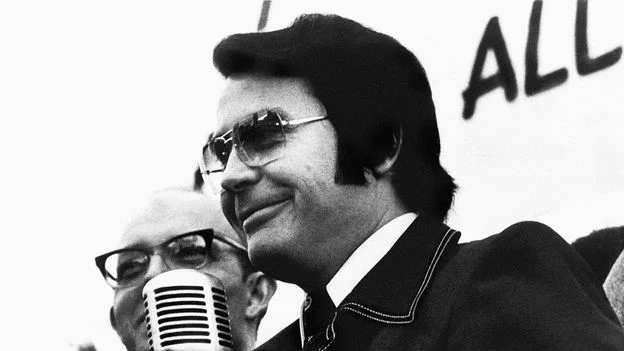
The events of 18 November 1978 remain etched in global history as one of the most profound tragedies of the 20th century. On that day, in a remote jungle clearing in Guyana, South America, more than 900 members of the Peoples Temple Agricultural Project—popularly known as Jonestown—lost their lives. While often characterized in popular culture as a "mass suicide," surviving witnesses and historical records increasingly frame the event as a mass murder orchestrated by a charismatic but deeply disturbed leader, Jim Jones. The tragedy resulted in the deaths of 918 people, including more than 300 children, marking the greatest loss of American civilian life in a non-natural disaster until the terrorist attacks of September 11, 2001.
The Origins of the Peoples Temple: From Integration to Ideology
The trajectory of Jim Jones and his followers began far from the jungles of Guyana. Born in 1931 in Crete, Indiana, Jones grew up in poverty during the Great Depression. His early life was marked by social isolation and a burgeoning interest in religion and social justice. In 1956, he founded the "Wings of Deliverance" in Indianapolis, which he soon renamed the Peoples Temple.
In the context of the 1950s and 60s, Jones was an anomaly. He was a staunch advocate for racial integration at a time when much of the United States remained segregated. The Peoples Temple was built on socialist ideals, offering its members comprehensive social services, including healthcare, elderly care, and legal assistance. This commitment to social equality attracted a diverse following, particularly among African Americans and the disenfranchised, who saw in Jones a leader willing to challenge the status quo.
By the mid-1960s, Jones moved his congregation to Ukiah, California, and later to San Francisco and Los Angeles. He claimed that Northern California was one of the few places likely to survive a nuclear holocaust, a narrative that tapped into the Cold War anxieties of the era. As the congregation grew, so did Jones’s influence, transforming the Peoples Temple from a fringe religious group into a potent political force.
Political Ascent and Social Influence in California
Throughout the 1970s, Jim Jones became a figure courted by the California political elite. His ability to mobilize thousands of disciplined, dedicated followers made him an invaluable asset to local and state politicians. In San Francisco, Jones’s support was credited with helping George Moscone win the 1975 mayoral election. In gratitude, Moscone appointed Jones as the chairman of the San Francisco City Housing Authority Commission.
Jones’s reach extended beyond local politics. He met with Vice Presidential candidate Walter Mondale and First Lady Rosalynn Carter. His reputation as a humanitarian and a champion of the poor shielded him from early scrutiny. To the public, the Peoples Temple was a model of communal living and racial harmony. Behind the scenes, however, a darker reality was beginning to emerge.
Former members and journalists began to report an environment of psychological abuse, financial exploitation, and physical punishment. Jones utilized "loyalty tests" to ensure absolute devotion, often forcing members to sign false confessions or turn over their life savings to the church. His use of amphetamines and barbiturates increased, fueling a growing sense of paranoia and a messianic complex.
The Migration to Guyana: Seeking the Promised Land
In 1977, as investigative journalists began preparing exposés on the Temple’s internal practices—most notably an article by Marshall Kilduff and Phil Tracy in New West magazine—Jones orchestrated a mass exodus. He convinced hundreds of his followers to relocate to a 3,800-acre tract of land the church had leased in Guyana. He pitched the settlement as a "socialist paradise" free from the racism and perceived fascism of the United States.
Jonestown was intended to be self-sufficient, but the reality was far grimmer. The tropical soil was poor, and the community struggled to produce enough food. Members worked long hours in the heat, were subjected to constant surveillance, and listened to Jones’s voice broadcast over loudspeakers 24 hours a day. The isolation allowed Jones to exert total control over information. He told his followers that the U.S. government was collapsing and that African Americans were being rounded up into concentration camps.
The Final Mission: Congressman Leo Ryan’s Investigation
The concerns of families in the U.S. eventually reached the halls of Congress. In November 1978, U.S. Representative Leo Ryan of California organized a fact-finding mission to Jonestown. Accompanied by journalists and a group of concerned relatives, Ryan arrived in Guyana to investigate allegations that people were being held against their will.
Initially, the visit appeared peaceful. Jones hosted a musical performance for the delegation, and many members spoke of their happiness. However, the facade cracked when a resident slipped a note to an NBC journalist, Don Harris, expressing a desire to leave. By the following day, several more members had come forward, asking to return to the U.S. with Ryan.

On the afternoon of 18 November 1978, as the delegation and 15 defectors prepared to board two planes at the Port Kaituma airstrip, they were ambushed by "Red Brigade" gunmen sent by Jones. Congressman Ryan, three journalists, and one defector were killed. Jackie Speier, Ryan’s aide (who would later become a Congresswoman herself), was shot five times but survived by hiding on the tarmac.
The Massacre: "Revolutionary Suicide" and Mass Murder
Back at the Jonestown compound, Jones gathered his followers in the central pavilion. He informed them that the attack on the congressman would bring the "forces of the night" down upon them. He argued that the U.S. military would parachute in, torture the elderly, and kill the children.
The "Death Tape," a 44-minute audio recording of the final meeting, captures the harrowing final moments. Jones urged his followers to commit what he called "revolutionary suicide." Huge vats of grape-flavored Flavor Aid were laced with cyanide, Valium, and chloral hydrate.
The children were the first to die. They were either fed the poison by their parents or had it squirted into their throats with syringes. While some members may have followed Jones’s orders out of a sense of misguided loyalty, evidence suggests that many were coerced. Armed guards surrounded the pavilion, and the screams of the dying children on the audio recording suggest a scene of profound terror rather than peaceful transition. Jones himself did not drink the poison; he was found with a single gunshot wound to the head, likely self-inflicted or delivered at his request.
Supporting Data and Demographics
Analysis of the victims reveals a demographic that was disproportionately vulnerable. Approximately 70% of the Jonestown residents were African American, many of them elderly women who had joined the Temple during its early days in Indianapolis or California.
- Total Casualties: 918 (including those at the airstrip and Georgetown).
- Children: 304 individuals under the age of 18.
- Survivors: Fewer than 100 people associated with the Guyana mission survived, many of whom were away from the compound at the time of the massacre.
The sheer scale of the event overwhelmed the Guyanese and American authorities. The bodies remained in the tropical heat for days before the U.S. military could complete the recovery process, a delay that complicated autopsies and forensic investigations.
Official Responses and Political Fallout
The aftermath of Jonestown sent shockwaves through the American political landscape. The revelations of Jones’s ties to prominent politicians led to a period of intense soul-searching in San Francisco and beyond. Investigations by the FBI and the State Department sought to determine how such a large-scale operation had escaped federal oversight for so long.
In 1979, the House Committee on Foreign Affairs released a report titled "The Assassination of Representative Leo J. Ryan and the Jonestown, Guyana Tragedy." The report criticized the State Department for failing to take the warnings of concerned relatives seriously and for its "lack of imagination" in assessing the danger posed by Jones.
Broader Impact and Historical Implications
The legacy of Jonestown persists in the collective memory and in the study of social psychology. The phrase "drinking the Kool-Aid"—a reference to the poisoned Flavor Aid—has entered the American lexicon as a metaphor for blind, unquestioning obedience to a dangerous cause or leader. However, many survivors and historians find the phrase offensive, as it minimizes the coercion and psychological torture the victims endured.
The tragedy also led to significant changes in how the media and government approach high-intensity religious groups. It sparked a national debate over the balance between religious freedom and the need to protect citizens from predatory organizations.
Ultimately, Jonestown serves as a stark reminder of the dangers of unchecked power and the vulnerability of those seeking community and purpose in an indifferent world. The victims were not merely "cult members"; they were individuals who sought a better life, a more just society, and a sense of belonging, only to have those aspirations weaponized against them by a leader who chose total destruction over the loss of control. Through the work of the Jonestown Institute and surviving witnesses, the focus has shifted from the madness of Jim Jones to the lives and humanity of the 918 people who perished in the jungle.