admin
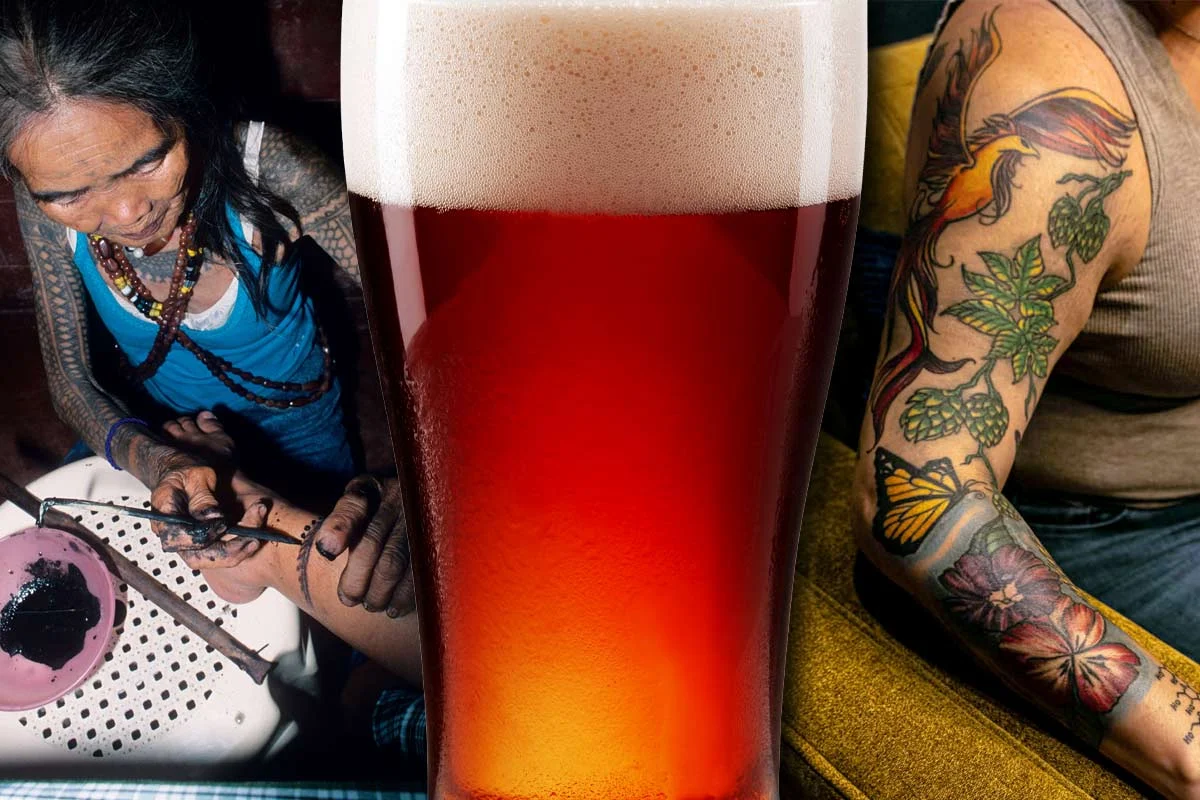
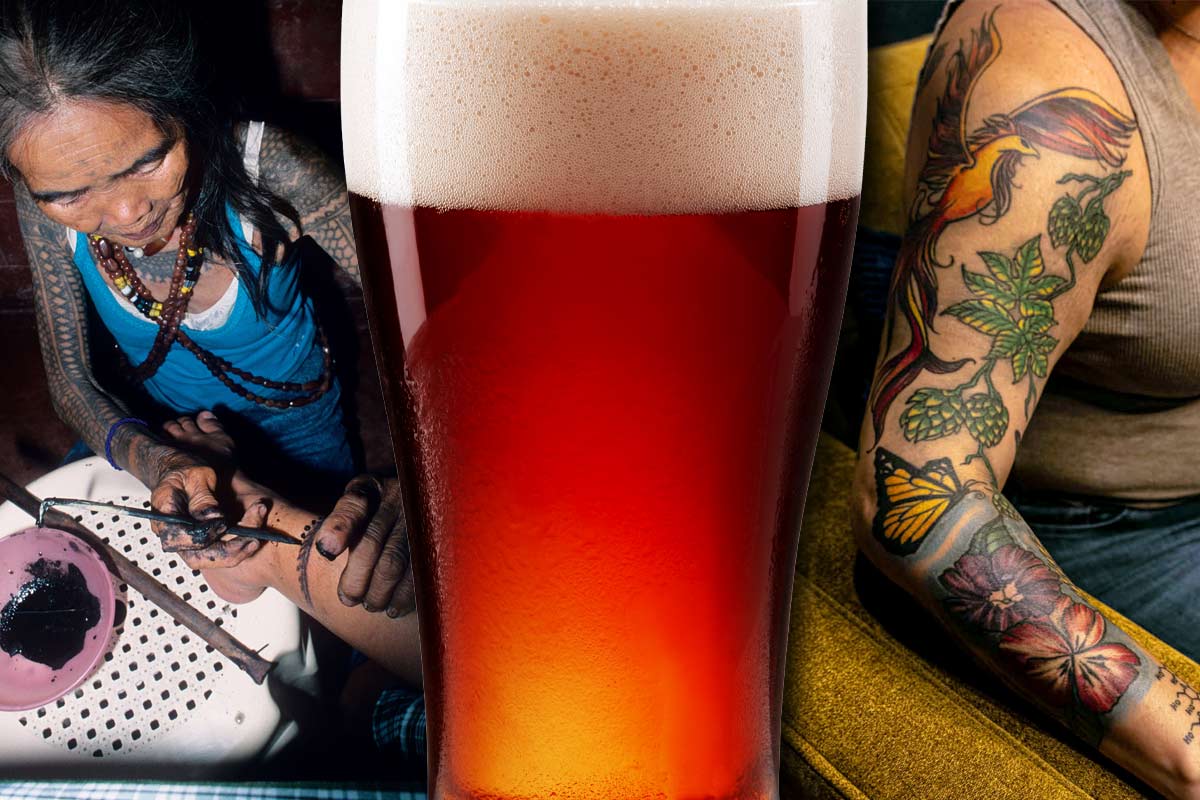
The historical and cultural convergence of tattooing and fermentation represents a profound intersection of human expression, where the transformation of raw materials reflects the evolution of identity, spirituality, and communal bonds. While seemingly disparate, these two ancient crafts share a foundational grammar of change: tattooing inscribes ancestry and narrative onto the human canvas, while fermentation preserves and elevates the fruits of the land into ritualized sustenance. Across the globe, from the subarctic forests of Japan to the tropical highlands of the Philippines and the savannas of Guyana, these practices function as technologies of continuity, allowing communities to maintain a living dialogue with their ancestors and the environment.
The Hearth as a Cosmological Center: The Ainu of Northern Japan
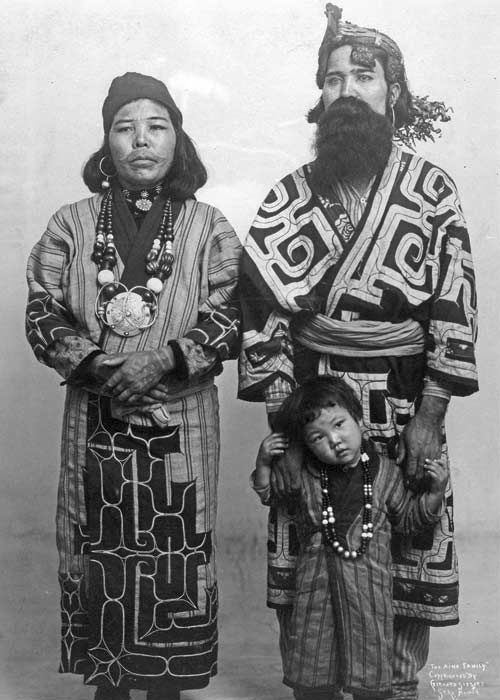
For the Ainu, the Indigenous people of Hokkaido, Sakhalin, and the Kuril Islands, the domestic hearth (ape-huci) served as the physical and spiritual nexus for both tattooing and brewing. Traditionally a hunter-gatherer society, the Ainu viewed the world through the lens of kamuy—divine spirits inhabiting all natural phenomena. Central to this belief system was Kamuy Fuchi, the goddess of the hearth, who protected the home and mediated between the human and spirit realms.
Ainu tattooing, or nuye, was a gendered ritual performed almost exclusively by and for women. The process involved using a makiri (tattooing knife) to create incisions, into which soot collected from the bottom of earthenware brewing pots was rubbed. This soot was often mixed with water steeped in ash tree bark, creating a permanent pigment that bound the individual to the hearth. These markings, particularly the distinctive lip tattoos, were considered essential for a woman’s passage into the afterlife and served as a protective shield against malevolent spirits.
Parallel to this, the production of tonoto, a fermented beverage made from rice or millet, was a sacred responsibility held by Ainu women. The brewing process was conducted under the watchful eye of Kamuy Fuchi. Women remained the sole caretakers of the fermenting brew until its ritual presentation to men during ceremonies. The use of brewing soot for tattoo ink was not merely a matter of convenience; it was a deliberate act of spiritual integration, ensuring that the fire which animated Ainu life was physically etched into the bodies of its practitioners.
The decline of these practices began in the late 19th century. Following the Meiji Restoration in 1868, the Japanese government implemented aggressive assimilation policies. The Hokkaido Former Aborigines Protection Act of 1899 effectively banned Ainu tattooing and restricted traditional brewing, stripping these acts of their mythological context in an attempt to erase Ainu cultural identity.
Pigment and Potency: The Kalinga of the Philippines
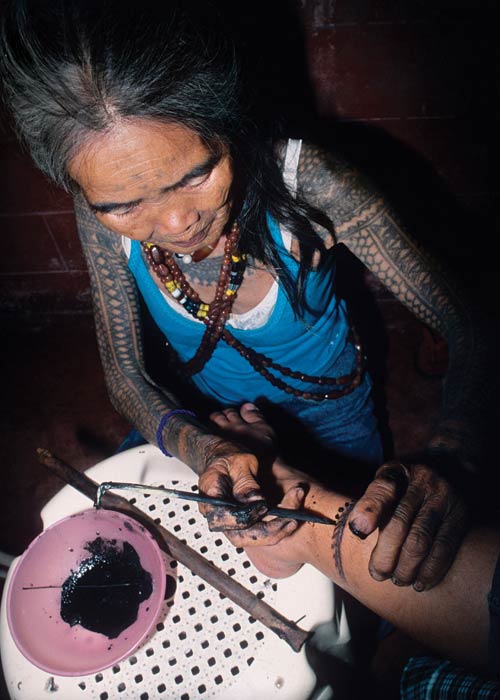
In the rugged Cordillera Central mountains of Luzon, the Kalinga people developed a sophisticated system of body art known as batok. This hand-tapped tattooing practice served as a visual language of social status, bravery, and beauty. For Kalinga men, tattoos were traditionally earned through acts of valor in warfare, while for women, they represented maturity and aesthetic refinement.
The technical intersection of tattooing and fermentation in Kalinga culture is found in the composition of the ink. Historically, mambatok (tattoo artists) utilized a mixture of soot and water, but in certain regions, sugarcane juice was employed as a carrier. When sugarcane juice is mixed with carbon and left to sit, it undergoes a natural fermentation process, converting sugars into alcohol. This chemical transformation altered the viscosity and preservative qualities of the ink.
While the ink itself was a product of fermentation, the social context of batok was inextricably linked to fermented beverages like tapuy (rice wine) and basi (fermented sugarcane wine). These drinks were essential components of the puchon (peace pacts) and healing rituals where tattooing took place. Today, the practice sees a global resurgence, spearheaded by figures such as Whang-od Oggay, who at 108 years old is recognized as the oldest living mambatok. Her work has transformed the village of Buscalan into a site of cultural pilgrimage, demonstrating how ancient "ink and drink" traditions continue to drive modern economic and social engagement.
Charms of the Brew: The Makushi of Guyana
In the Guiana Shield of South America, the Makushi people illustrate a unique functional link between tattooing and fermentation. Their culture is centered on the cultivation and processing of cassava, a starchy root that serves as the primary caloric staple. The most complex expression of this is parakari, a cassava beer produced through a sophisticated dual-fermentation process involving both specialized molds and yeasts.
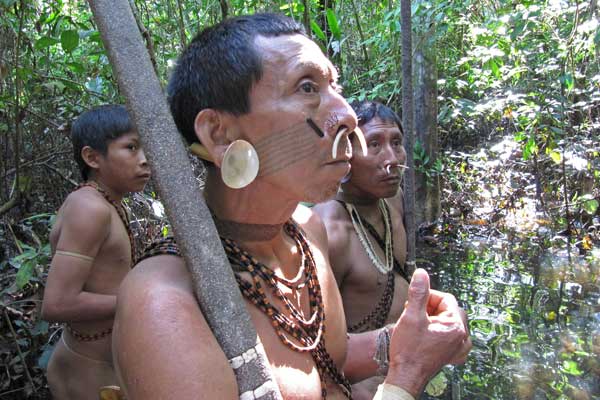
For the Makushi, the quality of the brew was believed to be influenced by the spiritual and physical state of the brewer. This led to the practice of kansku, or brewing charms—tattoos applied to the arms and jaws of women. These markings featured motifs of stinging or sweet insects, such as bees and scorpions. The intent was to "gift" the brew with specific characteristics: sweetness (likened to honey) or a potent "sting" (intoxication).
In the Makushi language, the word yekî possesses a double meaning, referring both to the sting of an insect and the state of being intoxicated. Anthropological records indicate that a woman’s ability to serve fermented beverages was historically contingent upon her bearing these tattoos. The markings functioned as a certification of her skill and her alignment with the spiritual forces of transformation. Although missionary influence in the 20th century led to a significant decline in kansku, the cultural memory of the tattooed brewer remains a testament to the belief that the human body can actively shape the chemical outcome of fermentation.
Indigenous Epistemologies and the Logic of Transformation
The common thread among the Ainu, Kalinga, and Makushi is the concept of "embodied knowledge." In these cultures, tattooing and fermentation are not merely crafts but epistemological tools—ways of knowing and interacting with the world.
In Hawaii, this is expressed through the relationship between kākau (tattooing) and the cultivation of kalo (taro). Dr. Lindsay Malu Kido, a scholar of Indigenous body sovereignty, notes that kākau serves as a living record of genealogy (moʻokūʻauhau). Simultaneously, the fermentation of kalo into poi is viewed as an act of kinship. In Hawaiian cosmology, the taro plant is Hāloa, the elder brother of the Hawaiian people. Therefore, the act of fermenting and consuming kalo is a physical reconnection with ancestral lineage.
The revival of these practices in the 21st century is increasingly framed as an act of decolonization. By reclaiming traditional tattooing and brewing methods, Indigenous communities are asserting authority over their bodies and their lands, rejecting the external moral frameworks that once sought to pathologize or prohibit these traditions.
A Chronology of Suppression and Resilience
The history of these dual practices follows a distinct timeline of external pressure and internal resilience:
- Pre-Colonial Era: Tattooing and fermentation exist as integrated ritual practices, defining social structures and spiritual life.
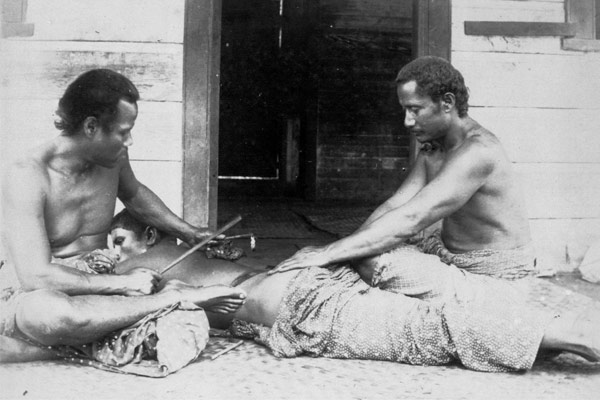
- 1800s – Early 1900s: Colonial expansion and missionary activity label tattooing as "primitive" or "heathen." Laws such as the Japanese ban on Ainu tattoos (1871) and U.S. colonial restrictions in the Philippines suppress these traditions.
- Mid-20th Century: Many traditional practices go underground or face near-extinction as younger generations are pushed toward Western modernization.
- 1970s – 1990s: The "Indigenous Renaissance" begins. Scholars and community elders in Hawaii, Alaska, and the Philippines start documenting and reviving hand-tap tattooing and traditional fermentation techniques.
- 21st Century: Global interconnectedness allows for a "re-indigenization" movement. Tattooing and craft fermentation become symbols of cultural pride and resistance against global homogenization.
Contemporary Echoes in the Craft Brewing Industry
In the modern era, the kinship between ink and drink has transitioned into the professional sphere of craft brewing. While the ancestral protocols have evolved, the underlying logic—using the body to signal a relationship with transformation—remains prevalent.
Data from the Brewers Association suggests that the craft beer industry is one of the most highly "inked" professional sectors. For modern brewers, tattoos often serve as a visual resume or a map of their career evolution. Symbols of hops (Humulus lupulus), yeast cells (Saccharomyces cerevisiae), and chemical formulas for alpha acids or ethanol are common.
For individuals like Sandra Murphy, owner of Murphy’s Law Brewery in Texas, and Rachael Engel of Sound2Summit Brewery in Washington, tattoos represent personal milestones and identity shifts. Murphy’s sleeve, which incorporates yeast cell structures and brewing grains, serves as a memorial and a symbol of resilience. Engel’s hop-themed tattoos coincided with her transition and her emergence as a professional in the industry, mirroring the ancient practice of using tattoos to mark significant life transformations.
Analysis: The Future of Cultural Synthesis
The intersection of tattooing and fermentation provides a unique lens through which to view the durability of human ritual. As global interest in fermented foods—from kombucha to sourdough to craft ales—continues to rise, there is a parallel surge in the "re-enchantment" of the body through tattooing.
This synthesis suggests that in an increasingly digital and ephemeral world, there is a growing desire for the "permanent" and the "living." A tattoo is a permanent physical commitment; fermentation is a commitment to a living, biological process. Together, they represent a rejection of the mass-produced and a return to the artisanal and the embodied.
The implications for the craft beer and fermentation industries are significant. By acknowledging the deep Indigenous roots of these practices, the industry can move toward a more inclusive and historically grounded narrative. The work of organizations like the North American Guild of Beer Writers in supporting these explorations highlights a shift toward recognizing that the glass of beer in a consumer’s hand is the result of thousands of years of cultural and physical transformation.
In conclusion, the relationship between ink and drink is a testament to the human drive to mark the self and the world. Whether through the soot of an Ainu hearth or the hop-saturated ink of a modern brewer, these practices remain vital expressions of who we are, where we have been, and the transformations we undergo to become our future selves. Both ink and fermentation leave indelible traces, ensuring that the stories of the past are carried forward on the skin and in the spirit.