admin
In an era where the traditional boundaries between corporate real estate and cultural production continue to blur, artist and curator Shaina Tabak has unveiled a massive, artist-run intervention titled 260 Madison. Occupying a dual-level site in the heart of Midtown Manhattan, the exhibition spans a former Duane Reade storefront and a sprawling 23,000-square-foot office floor directly above it. This ambitious project, featuring the work of over 50 artists, represents a significant moment in the ongoing dialogue regarding the adaptive reuse of New York City’s commercial infrastructure. While Tabak is currently completing her Master of Fine Arts in Visual Arts at Columbia University, her background as a Rhode Island School of Design (RISD) graduate with a BFA in furniture design has already facilitated a prolific career, including more than 20 prior exhibitions.
The exhibition, which remains on view through November 22, 2026, serves as a comprehensive examination of the systems that organize contemporary urban life. By utilizing a site that was once a hub of retail and corporate administration, the curators—Tabak, alongside Dayana Matasheva and Edson Niebla Rodríguez of the artistic duo Demon Lovers, Inc.—have created a venue where the architecture itself participates in the narrative. The project was made possible through a strategic partnership with AmTrustRE, the building’s owner, which granted the curatorial team full creative autonomy over the space. This collaboration highlights a growing trend in urban real estate: the "activation" of vacant commercial properties to generate cultural capital during periods of economic transition or building modernization.
The Architectural and Curatorial Framework
The physical environment of 260 Madison is characterized by the raw, industrial remnants of a commercial space in flux. Visitors encounter exposed HVAC systems, partially dismantled restrooms, and corporate-logo wallpaper that remains as a ghostly vestige of the building’s former tenants. This backdrop provides a visceral setting for a diverse array of media, including sculpture, video installations, and new media works. According to the curatorial statement, the primary objective of the exhibition is to investigate the mechanisms of control, surveillance, and extraction that define the modern era, as well as the material and architectural structures that dictate human movement and labor.
The roster of participating artists reflects a sophisticated blend of emerging talent from the Columbia University MFA community and internationally recognized figures. Notable contributors include Simon Denny, known for his explorations of technology and corporate culture; Jon Kessler, a veteran of kinetic sculpture; and the provocative duo Eva and Franco Mattes. The inclusion of such diverse voices allows the exhibition to address complex themes, from the environmental impact of manufacturing to the psychological weight of the digital economy.
Shaina Tabak’s Artistic Methodology
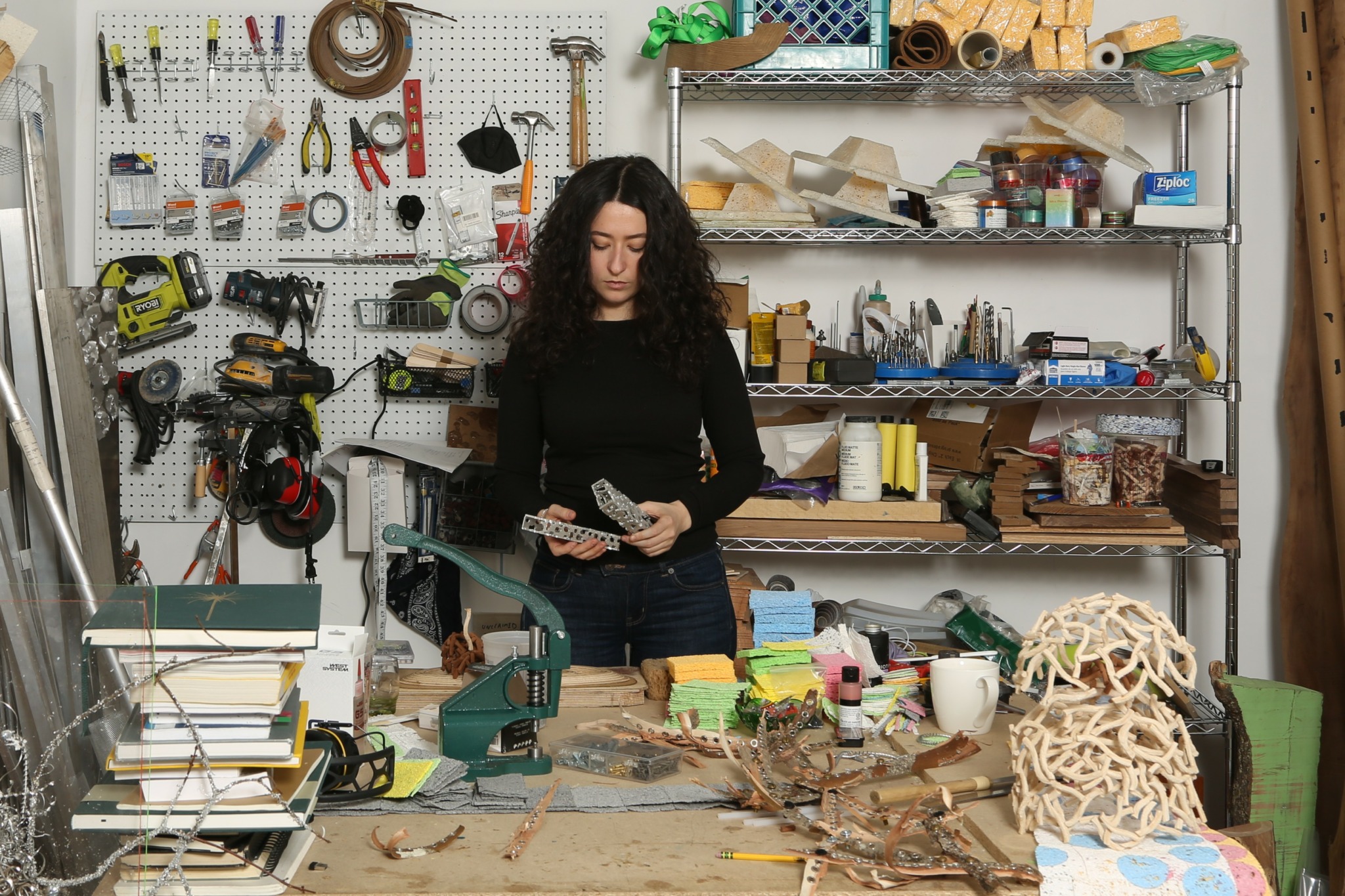
Central to the exhibition is Tabak’s own work, which bridges the gap between digital modeling and physical craftsmanship. Her practice is deeply rooted in materiality, viewing physical substances not just as mediums for form, but as historical records of labor and extraction. Tabak often begins her process with digital models, which are then translated into physical sculptures through a variety of technical methods, including extrusion, lamination, perforation, and precision cutting.

Her recent body of work focuses on the intersection of consumerism and visual culture. In her Brooklyn-based studio, the Queens-born artist has been experimenting with three-ply cardboard—the ubiquitous material of global shipping—to embed collected industrial objects. This series serves as a commentary on the "packaging and shipping systems" that underpin contemporary consumerism. Furthermore, Tabak explores the phenomenon of algorithmic commerce, where visual search technology transforms images into immediate opportunities for transaction. Her sculptures aim to create a "historical distance from the present," inviting viewers to imagine how the artifacts of today’s value systems might be perceived by future generations.
Historical Precedents and Theoretical Influences
The conceptual foundation of 260 Madison is built upon several key historical and theoretical pillars. Tabak cites two landmark exhibitions as primary inspirations: Damien Hirst’s Freeze (1988) and Christopher Wool’s See Stop Run (2024).
Hirst’s Freeze, organized while he was still a student, is widely regarded as a turning point in the contemporary art market. Held in a vacant London Port Authority building in the Docklands, it bypassed traditional gallery systems and established the "Young British Artists" (YBA) movement. Tabak acknowledges the parallels between Freeze and 260 Madison, particularly the "uneasy relationship" between artistic independence and the real estate developers who facilitate such projects. While these exhibitions provide artists with unprecedented scale and freedom, they also serve to increase the cultural and commercial value of the properties they inhabit.

More recently, Christopher Wool’s See Stop Run demonstrated the viability of utilizing gutted office floors in New York’s Financial District. This precedent informed the decision to treat the 260 Madison site as a "material record" of changing labor relations. By leaving the infrastructure exposed, the curators allow the building’s history of demolition and renovation to enter into a direct dialogue with the artworks.
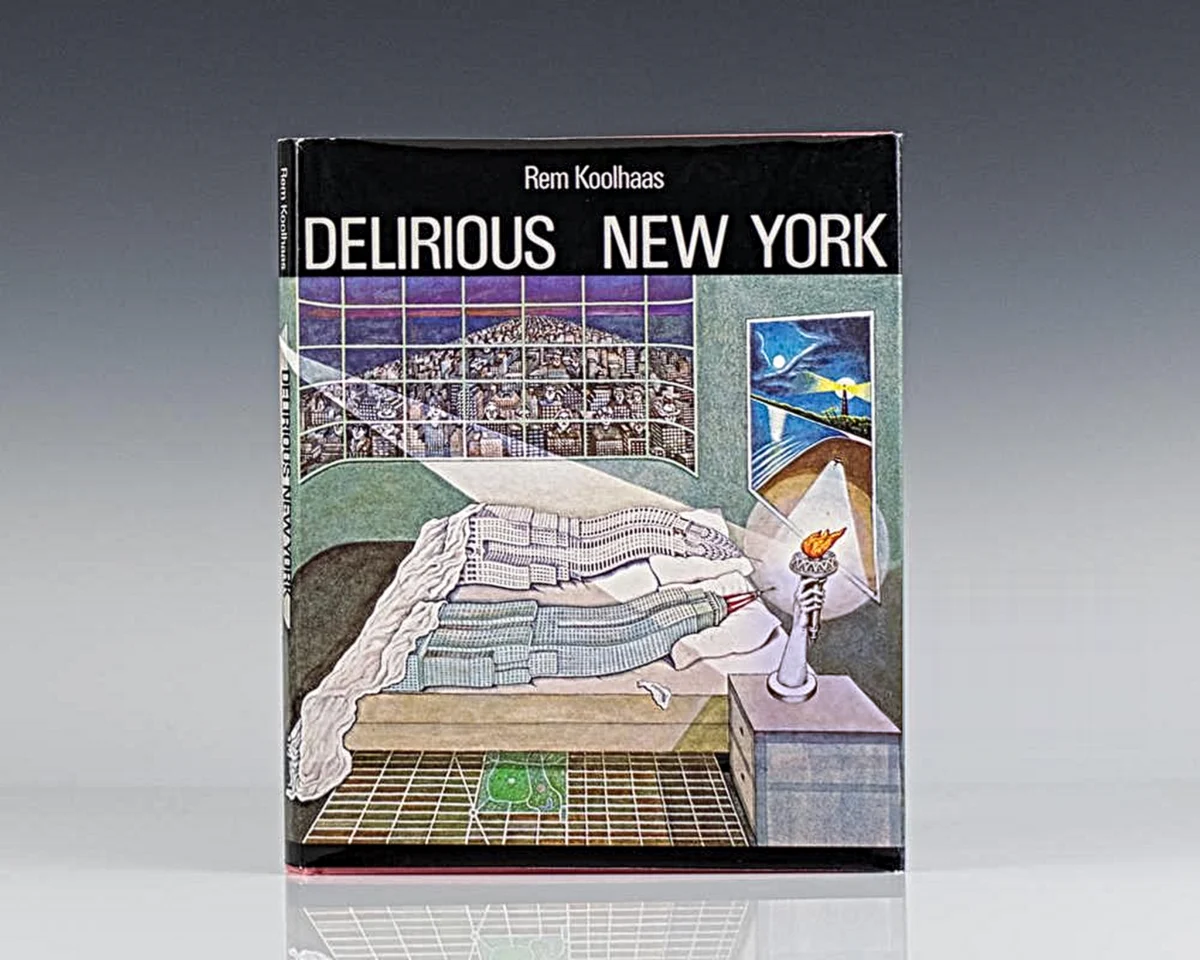
The architectural theories of Rem Koolhaas also play a vital role in the exhibition’s logic. Tabak references Koolhaas’s seminal book Delirious New York and his essay "Junkspace" to explain the function of the Manhattan skyscraper. Koolhaas’s concepts of the "vertical schism" and "architectural lobotomy" describe buildings where the exterior shell remains constant while the internal floors accommodate radically different, often contradictory, activities. At 260 Madison, this theory is put into practice as a space designed for paralegal work and corporate retail is transformed into a site for avant-garde artistic inquiry.
Materiality as a Monument to Labor
The influence of British sculptor Rachel Whiteread is evident in the sculptural approach seen throughout the exhibition. Tabak’s work Swept Towards Skylight (2026) draws inspiration from Whiteread’s House (1993), a temporary public sculpture created by casting the interior of a Victorian terraced house in concrete. Whiteread’s process turned negative space into a permanent monument to the domestic lives that once occupied the structure.

At 260 Madison, Tabak applies a similar logic to the corporate environment. By embedding works in insulation foam and coating them with cement, she creates the illusion of solidifying the "voids" of the office space. This technique serves to memorialize the routines and labor that once defined the floor. The goal is to present the building not merely as a container for art, but as an artifact in its own right—a monument to the economic and social systems that are currently being dismantled or redefined in the post-pandemic landscape.
Broader Implications for the New York Art Scene
The opening of 260 Madison comes at a critical time for New York City real estate. Following the shift toward remote and hybrid work models, Manhattan has faced record-high office vacancy rates, particularly in older B and C-class commercial buildings. Data from major real estate firms indicate that millions of square feet of office space remain underutilized, prompting landlords to seek creative solutions for "placemaking" and tenant attraction.
Exhibitions like 260 Madison suggest a potential future for these spaces as temporary or permanent cultural hubs. By allowing artists to operate on a scale typically reserved for major museums, developers can maintain the relevance of their properties while fostering a vibrant local arts ecosystem. However, this trend also raises questions about the long-term sustainability of artist-run spaces in a city known for high rents and rapid gentrification.

The success of 260 Madison relies on its ability to navigate these contradictions. It functions as both a critique of corporate structures and a beneficiary of corporate vacancy. For the 50-plus artists involved, the exhibition provides a rare opportunity to engage with the public in a non-traditional setting, free from the constraints of the "white cube" gallery.
Chronology of the Project
- 2024–2025: Conceptualization of the project by Shaina Tabak in collaboration with Demon Lovers, Inc. Initial negotiations with AmTrustRE regarding the use of the 260 Madison Avenue property.
- Early 2026: Site preparation and artist selection. The curators focused on creating a dialogue between the specific history of the building and the themes of contemporary material culture.
- Mid-2026: Installation phase. Artists were encouraged to work with the existing infrastructure, leading to the incorporation of HVAC systems and architectural debris into several pieces.
- November 2026: Closing of the exhibition. The project concludes on November 22, 2026, after which the space is expected to undergo further modernization or transition to new commercial tenants.
As the exhibition enters its final weeks, it stands as a testament to the resilience and ingenuity of the New York artist community. By reclaiming a piece of the Midtown skyline, Shaina Tabak and her collaborators have successfully turned a site of commercial obsolescence into a profound reflection on the nature of modern life. The legacy of 260 Madison will likely be measured by how it influences future intersections between the city’s artistic vanguard and its architectural heritage.