Jia Lissa
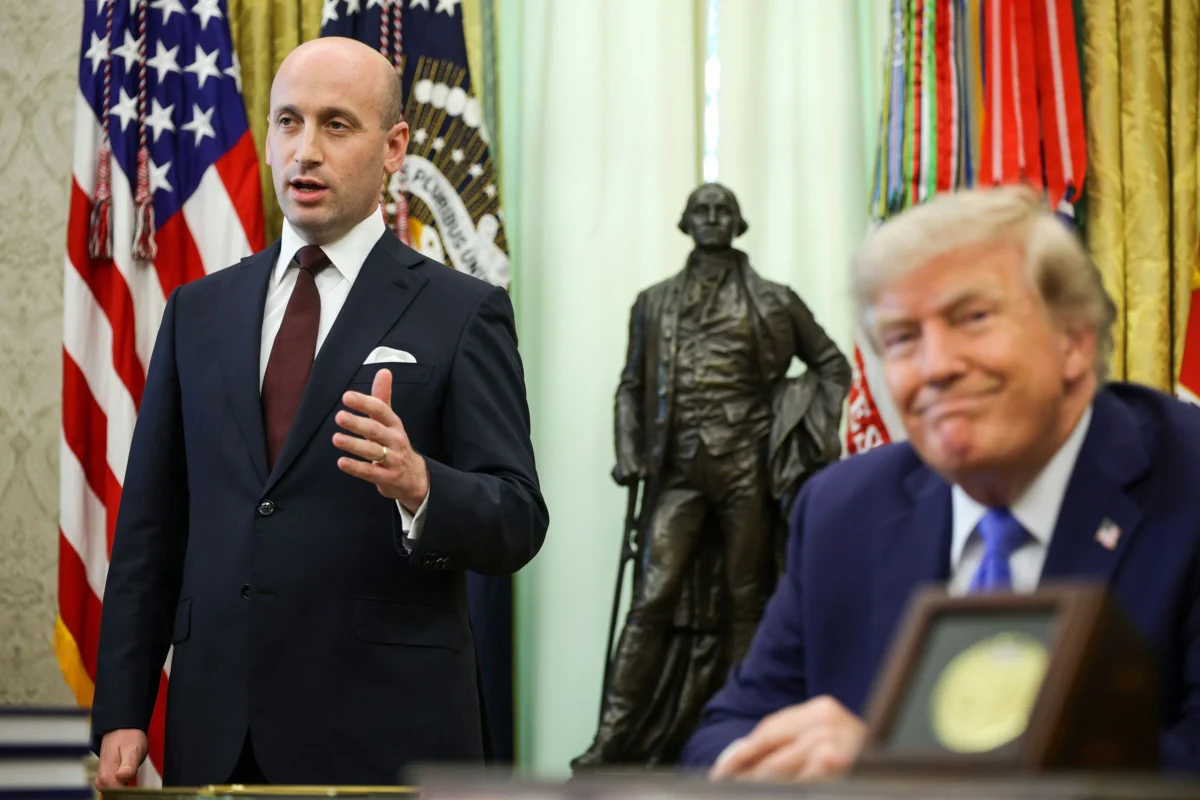
President Donald Trump on Friday announced a significant shake-up in his administration, naming Stephen Miller, one of his most influential and politically aggressive aides, as his next White House chief of staff. This pivotal change comes in the immediate aftermath of a deeply disappointing midterm election cycle for Republicans, which saw the party suffer considerable losses in both the House and Senate, widely interpreted as a searing rebuke of President Trump’s policy agenda. The announcement, made via the President’s Truth Social platform, confirms Miller will assume the demanding role from Susie Wiles on Monday, less than a week after the electoral results sent shockwaves through the Republican Party.
The transition marks a definitive shift in the administration’s internal power dynamics and signals a likely doubling down on the hardline, "America First" policies that have been hallmarks of President Trump’s political career. Miller, who previously served as Deputy Chief of Staff for Policy and Homeland Security Adviser, has been the architect behind some of the most polarizing and fiercely debated policies of Trump’s second term, most notably a stringent crackdown on immigration. These policies, which included measures like the "zero tolerance" approach at the border and efforts to limit asylum claims, have faced widespread condemnation from human rights organizations and political opponents for their perceived severity and human cost.
The Departure of Susie Wiles: A Post-Election Scapegoat?
The appointment of Miller directly follows the resignation of Susie Wiles, who had held the chief of staff position since the start of President Trump’s second presidential campaign in 2021. According to two sources familiar with the matter, President Trump had privately attributed the Republicans’ dismal midterm performance—widely considered the worst for the party in decades—to Wiles’s leadership. Wiles, a veteran political strategist with deep ties to Florida politics and a long history with the Trump political machine, submitted her resignation on Thursday.
Wiles’s tenure as chief of staff was, in many ways, an anomaly for the famously revolving door of Trump’s top aides. Unlike his first term, which saw a rapid succession of chiefs of staff—including Reince Priebus, John Kelly, and Mick Mulvaney—Wiles had managed to maintain the President’s confidence for an extended period. She played a crucial role in stabilizing the nascent second-term administration and navigating its early policy initiatives.
However, Wiles faced a series of challenges in recent months that observers noted had eroded her standing. Before the midterms, negative stories began circulating, suggesting her position was precarious. Internally, sources indicate that President Trump had progressively excluded Wiles from key decision-making processes, contributing to the perception among her detractors that her influence was waning. A notable instance cited was the reported hiring of Katie Zacharia as press secretary without Wiles’s prior consultation, a claim the White House later pushed back on. Beyond political hurdles, Wiles also battled personal health issues, successfully undergoing chemotherapy, and faced accusations regarding her daughter’s firm receiving lucrative contracts allegedly due to familial ties to the President. Both the White House and the firm vehemently denied these allegations.
In her farewell statement posted on X, Wiles expressed gratitude, writing, "Serving President Trump in the White House has been the honor of a lifetime. I’m so proud to have been a part of what we’ve accomplished together from securing our border and cutting taxes to strengthening our economy and putting America First." Her statement underscored her alignment with the administration’s core objectives, even as her departure signaled a critical shift in the White House’s operational leadership.
The Midterm Election Backdrop: A Resounding Rebuke
The dramatic personnel change cannot be understood outside the context of the recent midterm elections. Republicans had entered the cycle with high hopes, anticipating significant gains across the country, fueled by historical trends favoring the opposition party in a president’s second term. However, the results were far from what the party had envisioned.
Democrats not only defied expectations but also managed to retain control of the House of Representatives and expand their majority in the Senate. Preliminary analyses of the election results showed Republicans losing dozens of seats in the House and several key Senate races that were projected to be wins. For example, in competitive districts across states like Pennsylvania, Arizona, and Georgia, Republican candidates endorsed by President Trump struggled to connect with moderate voters, often losing to Democratic challengers by significant margins. The overall vote share for Republican congressional candidates was notably lower than anticipated, reflecting a broader dissatisfaction with the party’s direction and the President’s continued influence.
Political analysts quickly labeled the outcome a "red wave that never materialized," instead describing it as a "blue ripple" or even a "Democratic surge" in specific areas. Issues such as abortion rights, concerns over democratic institutions, and the perceived extremism of some Trump-backed candidates proved to be potent motivators for Democratic voters. While inflation and economic concerns were prevalent, they did not translate into the overwhelming Republican advantage that many pollsters and strategists had predicted.
President Trump, who had heavily endorsed candidates and held numerous rallies throughout the campaign, quickly sought to assign blame. While publicly maintaining that his endorsements had helped, privately, he expressed deep frustration with the election strategy and the performance of campaign staff, with Susie Wiles reportedly bearing the brunt of his criticism. The electoral defeat created an urgent need for a decisive change in the President’s inner circle, paving the way for Miller’s ascent.
Stephen Miller’s Ascendancy: Loyalty, Aggression, and Unwavering Commitment
Stephen Miller’s appointment as chief of staff elevates a figure long recognized as one of President Trump’s most fervent ideologues and loyalists. Miller’s political journey began far from the corridors of power, marked by early conservative activism during his college years. He rose to prominence as a communications aide to then-Senator Jeff Sessions, a staunch conservative from Alabama, where he honed his skills in policy advocacy and political messaging.
Miller joined Trump’s first presidential campaign in 2016 and quickly became a key speechwriter and policy adviser, instrumental in shaping the "America First" narrative. His influence grew significantly during Trump’s first term, particularly in the realm of immigration policy. As Deputy Chief of Staff for Policy and Homeland Security Adviser, he was the driving force behind some of the administration’s most controversial immigration initiatives. These included the travel ban targeting several Muslim-majority countries, the "zero tolerance" policy that led to family separations at the U.S.-Mexico border, and the implementation of programs like "Remain in Mexico," which forced asylum seekers to wait in Mexico while their cases were processed. These policies sparked widespread international condemnation and numerous legal challenges, raising profound questions about human rights and international law.
Beyond immigration, Miller also led the Homeland Security Council within the White House and played a significant role in broader national security endeavors. Notably, he closely collaborated with Defense Secretary Pete Hegseth on a campaign of strikes against boats around Venezuela, which began the previous year. Miller reportedly orchestrated this campaign through the Pentagon, showcasing his expansive reach and influence across various national security portfolios.
Miller’s deep loyalty to President Trump is legendary. He has been with Trump since his first campaign and remained a steadfast supporter even during Trump’s political exile following the 2020 election and through subsequent legal challenges. This unwavering dedication, coupled with his reputation as a tenacious defender of the President and his policies, proved to be a decisive factor in his selection. With the looming threat of congressional investigations anticipated to begin next year, President Trump reportedly sought a chief of staff who would exhibit absolute loyalty and possess the aggressive temperament necessary to confront political adversaries head-on. Miller’s track record suggested he was uniquely suited for such a combative role.
The Selection Process and Internal White House Dynamics
The decision to appoint Miller was not made in a vacuum. Following Wiles’s resignation, President Trump reportedly considered a short list of three candidates: special envoy Steve Witkoff, director of national intelligence Jay Clayton, and Miller. Each candidate brought a different set of skills and experiences to the table, but Miller’s unique combination of policy aggression, ideological alignment, and personal loyalty ultimately swayed the President.
Sources within the West Wing indicated that Miller had been actively signaling his interest in the chief of staff position for weeks, particularly as rumors about Wiles’s shaky standing intensified before the midterms. His ambition for the top operational role was an open secret, and the post-election crisis provided the opportune moment for his elevation.
The changing of the guard is expected to trigger further personnel shifts within the White House. Aides close to Wiles, such as her deputies James Blair, who was responsible for crafting the GOP midterm strategy, and Richard Walters, are now seen as particularly vulnerable. Political analysts suggest they may either be fired by Miller or compelled to resign, as the new chief of staff moves to consolidate his power and align the staff with his own operational style and policy vision. This anticipated purge underscores Miller’s reputation for demanding ideological conformity and unwavering commitment to the President’s agenda.
Conversely, the transition is likely to bring a measure of relief to figures like Defense Secretary Pete Hegseth. Hegseth, who reportedly had a strained relationship with Wiles in recent months, is ideologically aligned with Miller. Their close collaboration on the Venezuela campaign last year highlights a shared worldview and operational synergy, suggesting a more cohesive working relationship under Miller’s leadership.
Implications for the Administration and Beyond
Stephen Miller’s appointment as White House chief of staff carries significant implications for the remainder of President Trump’s term and potentially for his future political ambitions.
Policy Direction: The most immediate impact is a likely hardening of the administration’s policy stances. Miller’s elevation signals that President Trump intends to double down on his core "America First" agenda, particularly on issues of immigration, trade, and national security. Observers anticipate an even more aggressive pursuit of border control measures, potentially including renewed efforts to curtail legal immigration avenues and bolster enforcement. On foreign policy, Miller’s influence could push for a more isolationist approach, prioritizing domestic concerns and transactional international relations.
Congressional Relations: With Republicans having lost ground in Congress, the administration faces the prospect of increased scrutiny and potential investigations from a newly empowered Democratic majority. Miller’s reputation as a combative and unyielding defender of the President positions him as a key figure in anticipated clashes with Capitol Hill. His appointment suggests a strategy of confrontation rather than conciliation, likely exacerbating tensions between the executive and legislative branches. Democrats, upon hearing of Miller’s appointment, quickly voiced concerns, with some congressional leaders suggesting it confirmed the administration’s intent to pursue divisive policies and obstruct oversight efforts.
Internal White House Stability: While Miller’s appointment is designed to bring a loyal and aggressive hand to the helm, it could also lead to further internal instability as staff adjust to his leadership style. Miller is known for his intense focus on ideological purity and unwavering execution of the President’s directives. This could lead to a more centralized and perhaps less collaborative decision-making process, potentially alienating those who do not fully align with his vision.
President Trump’s Political Future: The appointment of Miller is also being analyzed in the context of President Trump’s long-term political strategy. By bringing in a hardline loyalist, Trump signals to his base that he remains committed to the core tenets of his movement. This move could energize his most ardent supporters, which might be crucial for any potential future presidential campaigns. However, it could simultaneously alienate moderate voters and independent swing states, who may be seeking a less confrontational and more unifying approach to governance.
In conclusion, Stephen Miller’s ascent to White House chief of staff is more than just a personnel change; it represents a strategic recalibration in the Trump administration. Triggered by a devastating midterm election outcome, the move consolidates power in the hands of a fiercely loyal and ideologically driven operative. As the administration navigates a politically fractured landscape and prepares for renewed congressional scrutiny, Miller’s aggressive leadership is poised to shape the final chapters of President Trump’s current term, with profound implications for policy, political discourse, and the future trajectory of American governance.