admin
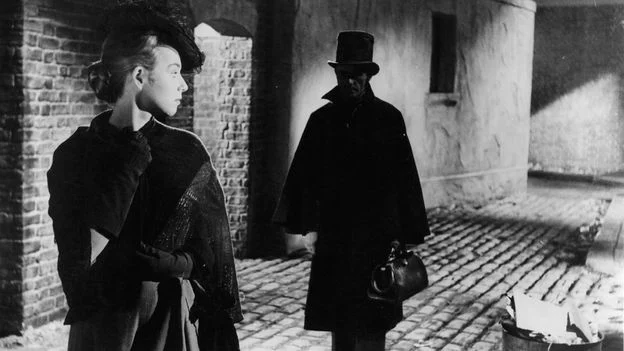
The autumn of 1888 remains one of the most scrutinized periods in criminal history, defined by a series of brutal homicides in London’s East End that would eventually birth the global archetype of the serial killer. Between August and November of that year, five women—Mary Ann Nichols, Annie Chapman, Elizabeth Stride, Catherine Eddowes, and Mary Jane Kelly—were murdered and mutilated in the district of Whitechapel. Despite an unprecedented police investigation and a media frenzy that gripped the British Empire, the perpetrator was never apprehended. A century later, archival re-evaluations by historians and the BBC suggest that the "Jack the Ripper" persona was less a clinical reality and more a collaborative creation of tabloid journalism, gothic literature, and a febrile public imagination.
The killings occurred during a unique cultural convergence. As the murders terrorized the East End, the Lyceum Theatre in the West End was hosting a popular American production of Robert Louis Stevenson’s The Strange Case of Dr Jekyll and Mr Hyde. The theatre’s business manager was Bram Stoker, who was then in the early stages of conceptualizing Dracula. Simultaneously, Arthur Conan Doyle’s Sherlock Holmes had just debuted in A Study in Scarlet the previous year. This atmosphere of "literary terror" provided a ready-made framework for the public and the press to interpret the real-world violence occurring in the slums.
The Socio-Economic Context of 1888 Whitechapel
To understand the impact of the Ripper murders, one must consider the environment of the East End in the late 19th century. Whitechapel was a densely populated labyrinth of poverty, characterized by substandard housing, chronic unemployment, and a massive influx of Jewish immigrants fleeing pogroms in Eastern Europe. Statistics from the era suggest that the district contained approximately 62 brothels and 1,200 women working as prostitutes in an area of less than one square mile.
The "Canonical Five" victims were not merely random targets but women marginalized by extreme economic hardship. Each had been driven into precarious living situations, often relying on the "penny-sleep" or casual sex work to afford a bed for the night. The brutal nature of their deaths highlighted the vulnerability of the urban poor, but rather than focusing solely on social reform, the contemporary media utilized the tragedies to fuel a new, sensationalist style of reporting.
A Chronology of the Whitechapel Murders
The timeline of the killings, as recognized by the Metropolitan Police, illustrates the escalating violence that paralyzed London:
- August 31, 1888: The body of Mary Ann Nichols is discovered in Buck’s Row. Her throat is severed, and her abdomen is mutilated.
- September 8, 1888: Annie Chapman is found in the backyard of 29 Hanbury Street. The precision of the mutilations leads to early speculation that the killer possesses surgical knowledge.
- September 30, 1888 (The "Double Event"): Elizabeth Stride is found murdered in Dutfield’s Yard, followed less than an hour later by the discovery of Catherine Eddowes in Mitre Square. Eddowes’ body is severely mutilated, and a piece of her apron is found near a wall inscribed with anti-Semitic graffiti.
- November 9, 1888: Mary Jane Kelly is found murdered in her room at 13 Miller’s Court. This was the most horrific of the crimes, as the killer had the privacy of an indoor setting to perform extensive mutilations.
Following the death of Kelly, the specific pattern of "Ripper" killings appeared to cease, though several other murders in the area were investigated for potential links until 1891.
The Birth of Tabloid Sensationalism
The Pall Mall Gazette, under the editorship of WT Stead, played a pivotal role in shaping the Ripper narrative. Stead was a pioneer of "New Journalism," a precursor to modern tabloid style that emphasized human interest stories, crusading zeal, and sensational headlines. Stead utilized the murders to attack his political rivals, specifically the Metropolitan Police Commissioner, Sir Charles Warren.
By framing the murders as a failure of the police to protect the "poor daughters of the people," Stead and other editors transformed the killer into a symbolic figure. The name "Jack the Ripper" itself originated from the "Dear Boss" letter sent to the Central News Agency. While many modern historians believe this letter was a hoax written by a journalist to keep the story alive, the name provided a brand for the terror.

Christopher Frayling, a professor of cultural history, noted in a 1988 BBC retrospective that the Pall Mall Gazette had essentially predicted the Ripper’s appearance. Critics of the time had already begun comparing the "Mr. Hyde" of the stage to the real-world "monster" stalking the East End. This blurring of fiction and reportage meant that the public was no longer looking for a common criminal, but for a gothic villain.
The Suspects: Fact vs. Media Myth
In 1894, Sir Melville Macnaghten, the Chief Constable of the Metropolitan Police Criminal Investigation Department, authored a memorandum naming three primary suspects. However, analysis of these suspects reveals how much the police were influenced by the prevailing social prejudices and media tropes of the day:
- Montague John Druitt: A barrister and schoolmaster who disappeared shortly after the final murder. His body was found in the Thames in December 1888. Macnaghten incorrectly identified him as a doctor, likely to satisfy the media theory that the killer had medical training.
- Aaron Kosminski: A Polish Jewish immigrant who was later committed to a lunatic asylum. Kosminski represented the "outsider" or "immigrant" suspect, tapping into the xenophobic anxieties of the Victorian middle class.
- Michael Ostrog: A Russian doctor and convict with a history of insanity. Ostrog fit the profile of both the "mad doctor" and the "foreign threat," though there was little evidence linking him to the specific crimes.
Professor Judith Walkowitz, author of City of Dreadful Delight, argues that the media’s insistence on the killer being a "gentleman" or a "doctor" was rooted in contemporary anxieties about class and sexual danger. The idea that an aristocrat would descend into the slums to prey on the poor was a recurring theme in Victorian melodrama, further complicating the search for a realistic perpetrator.
Official Responses and Investigative Failures
The Metropolitan Police and the City of London Police faced immense pressure to resolve the case. Sir Charles Warren, a military man by background, struggled with the transition to civil policing in a high-stakes environment. The investigation saw the use of several innovative—though ultimately unsuccessful—methods:
- Bloodhounds: The police attempted to use tracking dogs (Barnaby and Burgho), but the plan was abandoned after the dogs failed to perform in urban environments and Warren became a target of public ridicule.
- Plainclothes Patrols: Hundreds of officers were deployed in civilian clothing, and some even reportedly dressed as women to act as decoys.
- Forensic Photography: The crime scenes were documented with early photography, providing some of the first visual records used in criminal profiling.
Despite these efforts, the lack of fingerprinting technology (which would not be standardized for another decade) and the absence of DNA evidence meant that the police were forced to rely on eyewitness testimony, which was notoriously unreliable in the dark, foggy alleys of Whitechapel.
Analysis of Implications and Long-Term Legacy
The Jack the Ripper case had profound implications for British society that extended far beyond the criminal investigation. Firstly, the murders forced the Victorian public to confront the appalling living conditions of the East End. The outcry over the "abyss" of Whitechapel contributed to the passage of the Housing of the Working Classes Act in 1890, which empowered local authorities to clear slums and build decent housing.
Secondly, the case fundamentally changed the relationship between the police and the press. The Ripper murders demonstrated the power of the media to drive a public narrative and interfere with an active investigation. The "crank letters" and false leads generated by sensationalist reporting set a precedent for the difficulties faced by modern law enforcement in high-profile serial murder cases.
Finally, the Ripper legend birthed the "Ripperology" subculture. The mystery remains unsolved not necessarily because the killer was a criminal genius, but because the evidence was contaminated by the myth-making of the era. As Christopher Frayling concluded, the search for the Ripper often tells us more about the prejudices and fears of the searchers than it does about the identity of the murderer.
The five women killed in 1888 were victims of a singular human violence, but the "Jack the Ripper" that haunts the modern imagination is a composite character—part Dr. Jekyll, part media invention, and part reflection of a society struggling to reconcile its imperial grandeur with its urban decay. By stripping away the gothic cape and the top hat of the legend, historians are left with a sobering reality: a series of unsolved crimes against the most vulnerable members of society, amplified by a media industry that discovered, for the first time, that murder sells.