admin
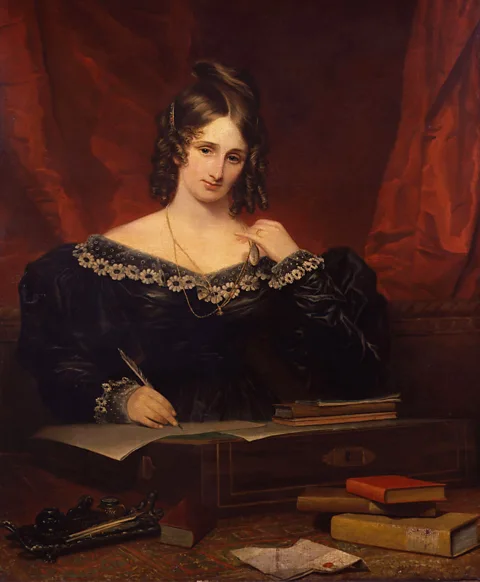
More than two hundred years after a teenage Mary Wollstonecraft Godwin—later Mary Shelley—conceived of a "hideous progeny" on the rain-swept shores of Lake Geneva, her creation remains the primary lens through which humanity views the intersection of scientific ambition and moral responsibility. What began as a ghost story told among friends in 1816 has transformed into a foundational myth of the modern age, spawning thousands of adaptations across every conceivable medium. From the flickering frames of 1910 silent films to Guillermo del Toro’s highly anticipated 2025 cinematic reimagining, Frankenstein; or, The Modern Prometheus continues to serve as a warning, a tragedy, and a mirror reflecting the deepest anxieties of the human condition.
The Chronology of a Masterpiece: From Villa Diodati to Global Canon
The genesis of Frankenstein is as storied as the novel itself. The timeline of its creation and subsequent rise to cultural dominance provides a window into how a single work of fiction can redefine an entire genre.
1815–1816: The Atmospheric Catalyst
The eruption of Mount Tambora in Indonesia in 1815 caused a global climate anomaly known as the "Year Without a Summer." In 1816, the unusually cold and wet weather confined Mary Godwin, her lover Percy Bysshe Shelley, Lord Byron, and John Polidori to the Villa Diodati in Switzerland. To pass the time, Byron challenged the group to each write a ghost story.

1818: The First Edition
The novel was first published anonymously in London on January 1, 1818. It featured a preface by Percy Shelley and was dedicated to Mary’s father, the philosopher William Godwin. Initial critical reception was mixed; while some praised its "extraordinary powers of imagination," others, such as The Quarterly Review, dismissed it as a "tissue of horrible and disgusting absurdity."
1823: The First Stage Adaptation
Richard Brinsley Peake’s play Presumption; or, the Fate of Frankenstein premiered at the English Opera House. This production introduced the concept of the "mute" monster and the lab assistant, tropes that would later define Hollywood’s interpretation. The play was so popular that it prompted the first publication of the novel under Mary Shelley’s own name that same year.
1831: The Definitive Edition
Mary Shelley published a revised edition with a significant new introduction, detailing the origins of the story and framing it more explicitly as a cautionary tale of "playing God." This version remains the most widely read today.
1910–1931: The Cinematic Birth
The first film adaptation was a 12-minute short produced by Thomas Edison’s studios in 1910. However, it was James Whale’s 1931 Frankenstein, starring Boris Karloff, that permanently etched the "Monster" into the public consciousness. Karloff’s flat-headed, bolted-necked creature became the definitive visual archetype, though it diverged significantly from Shelley’s articulate, philosophical protagonist.

2025: The Del Toro Reimagining
In early 2025, director Guillermo del Toro is set to release his version of the tale for Netflix. Starring Oscar Isaac as Victor Frankenstein and Jacob Elordi as the Creature, the film aims to return to the novel’s roots, focusing on the "familial pain" and the tragedy of the outsider rather than mere Gothic horror.
The Scientific Context: Galvanism and the Principle of Life
To understand why Frankenstein resonated so deeply in the early 19th century, one must look at the scientific landscape of the era. Shelley was writing at a time when the boundaries between life and death were being aggressively interrogated by "natural philosophers"—the precursors to modern scientists.
A primary influence was "Galvanism," named after Luigi Galvani, who in the 1780s discovered that the muscles of dead frogs’ legs twitched when struck by an electrical spark. This led to the theory of "animal electricity," the idea that a vital force resided within the nervous system. Shelley’s own journals indicate that she and Percy discussed these experiments at length.
The most sensational application of these theories occurred in 1803, when Galvani’s nephew, Giovanni Aldini, conducted a public demonstration on the body of George Forster, a recently executed murderer. Using a battery, Aldini caused the corpse’s jaw to quiver, its eyes to open, and its right hand to raise and clench. For the witnesses of the time, the line between reanimation and resurrection seemed dangerously thin.

Mary Shelley’s father, William Godwin, was also a close associate of Sir Humphry Davy, the preeminent chemist of the day. Davy’s lectures on the potential of chemistry to "interrogate nature" and uncover her secrets likely informed Victor Frankenstein’s "crazed ambition." The novel does not use magic; it uses the emerging tools of the laboratory, making it what many scholars consider the first true work of science fiction.
The Paradox of Success: Message vs. Iconography
A central tension in the legacy of Frankenstein is how the success of its visual adaptations has often overshadowed the nuanced message of the original text. In Shelley’s novel, the Creature is not a grunting brute; he is a highly intelligent, sensitive being who teaches himself to read and speak by observing a family in the woods and reading books like John Milton’s Paradise Lost.
The Creature’s tragedy is not that he is "evil," but that he is abandoned by his "parent" (Victor) and rejected by society due to his appearance. His murderous rampage is a reaction to systemic loneliness and the denial of empathy. Christopher Frayling, a leading scholar on the subject, notes that Hollywood "domesticated" the story, turning a complex philosophical dialogue into a "monster movie."
"It’s perhaps a double-edged sword," Frayling writes in Frankenstein: The First Two Hundred Years. "The definitive movie image launched a thousand imitations, but in the process, the Creature’s voice—the very thing that makes him human—was lost."

This loss of voice changed the public perception of the story. For many, "Frankenstein" became the name of the monster, not the scientist—a linguistic error that Shelley’s fans often point out, yet one that highlights how the creation has completely consumed the identity of the creator in the popular imagination.
Broader Impact: The "Franken-" Prefix and Modern Bioethics
The linguistic and cultural impact of the novel extends far beyond the arts. The prefix "Franken-" has become a ubiquitous shorthand for any scientific advancement that triggers public anxiety regarding the "natural order."
- Genetically Modified Organisms (GMOs): The term "Frankenfood" was coined in the early 1990s to describe crops altered through biotechnology. It remains a potent rhetorical tool in debates over agricultural safety and corporate control of the food supply.
- Artificial Intelligence: As AI models become increasingly sophisticated, the "Frankenstein complex"—a term coined by Isaac Asimov—describes the fear that human-made machines will eventually turn on their creators. Modern discussions regarding "alignment" in AI echo Victor Frankenstein’s failure to consider the long-term consequences of his invention.
- Bioethics and Stem Cells: Debates over cloning, gene editing (CRISPR), and stem-cell research frequently invoke Shelley’s "Modern Prometheus" as a warning against hubris.
Dr. Fiona Sampson, author of In Search of Mary Shelley, argues that this persistent relevance is due to the novel’s focus on "the responsibility of the maker." She states, "With modernity comes a sense of anxiety about what humans can do. Frankenstein fused these concerns with fiction for the first time, imagining what might happen if scientists went too far without a moral compass."
The 2025 Renaissance: Del Toro’s Familial Lens
The upcoming Guillermo del Toro adaptation represents a significant shift in how the story is being retold for the 21st century. Del Toro, who has spent over 30 years developing the project, views the story as deeply personal.

In a 2024 interview with Variety, Del Toro explained his approach: "I don’t see it as a horror movie in the traditional sense. It’s a song of the human experience. It’s about the lineage of familial pain. Victor is the father who abandons his child, and the Creature is the child who is born into a world that has no place for him."
This interpretation aligns with modern psychological readings of the novel. Mary Shelley’s own life was marked by profound loss; her mother died shortly after her birth, and she lost several of her own children in infancy. Scholars often interpret the novel’s "post-partum" horror—Victor’s immediate disgust at his creation—as a reflection of Shelley’s own anxieties surrounding birth and death.
Conclusion: A Living Myth for a Technological Age
As Frankenstein enters its third century, its "hideous progeny" shows no signs of slowing down. The novel survives because it addresses universal questions: What does it mean to be human? What are the limits of our responsibility to the things we create? And what happens when we prioritize progress over empathy?
The story has transcended its origins as a 19th-century Gothic novel to become a living myth. Whether through the lens of a 1931 horror classic, a 1974 Mel Brooks parody, or a 2025 philosophical drama, the "Modern Prometheus" continues to demand that we look at our own creations—be they biological, mechanical, or digital—and ask if we are prepared for them to live.

In the final words of her 1831 preface, Mary Shelley bid her "hideous progeny go forth and prosper." In the centuries since, it has done more than prosper; it has become an inseparable part of the human narrative, a "graveyard smash" that continues to haunt the laboratories and libraries of the world.