admin
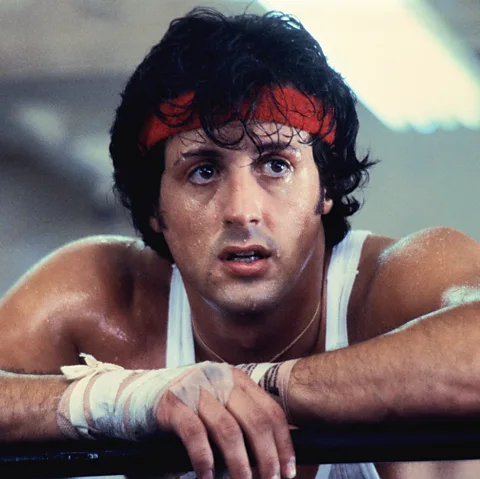
The cinematic landscape of 1976 was defined by a profound shift in American storytelling, a transition from the cynical, gritty realism of the post-Vietnam era to a renewed sense of aspirational heroism. At the center of this transformation was an unknown, impoverished actor named Sylvester Stallone, whose refusal to compromise on his creative vision birthed one of the most enduring franchises in film history. The upcoming biographical drama I Play Rocky, directed by Academy Award-winner Peter Farrelly, seeks to chronicle this meteoric rise, detailing how a man with partial facial paralysis and a speech impediment overcame systemic industry rejection to create the iconic character of Rocky Balboa. Starring Anthony Ippolito as the young Stallone, the film serves as both a period piece and a testament to the "underdog" archetype that Stallone himself personified long before he stepped into the ring on screen.
The Genesis of an Underdog: Stallone’s Early Struggles
To understand the impact of Rocky, one must first examine the dire circumstances of its creator. Born in 1946, Sylvester Stallone’s entrance into the world was marked by a medical accident; the misuse of forceps during his birth severed a nerve, resulting in permanent paralysis of the lower left side of his face. This condition gave him his signature snarling look and slightly slurred speech—traits that casting directors in the early 1970s viewed as insurmountable liabilities.
By the mid-1970s, Stallone was living on the fringes of the New York acting scene. I Play Rocky illustrates the grueling reality of his daily life: gutting fish for meager wages and sleeping in bus terminals. His only constant companion was his bullmastiff, Butkus. The film highlights a particularly poignant moment in Stallone’s history when, at his lowest financial point, he was forced to sell his dog for $40 outside a liquor store because he could no longer afford to feed him. This period of "desperate frustration," as Stallone describes in his memoir The Steps, became the emotional fuel for his screenwriting. He channeled his feelings of being a "thug" or a "patsy" in the eyes of the industry into the character of a washed-up Philadelphia debt collector who moonlights as a club fighter.

The Three-Day Script and the Battle for Creative Control
The inspiration for the Rocky script famously struck Stallone after he witnessed a 1975 heavyweight championship match between Muhammad Ali and Chuck Wepner. Wepner, a massive underdog, managed to go fifteen rounds with the greatest boxer in the world, even knocking Ali down in the ninth round. Stallone saw in Wepner a metaphor for his own life: the goal wasn’t necessarily to win, but to "go the distance."
Stallone drafted the screenplay for Rocky in a feverish seventy-two-hour period. When the script began circulating through Hollywood, it sparked an immediate bidding war. Producers Irwin Winkler and Robert Chartoff recognized the script’s potential, and United Artists eventually offered Stallone upwards of $360,000 for the rights—a staggering sum for a man with less than $100 in his bank account. However, the offer came with a non-negotiable condition: the studio wanted an established A-list star, such as Burt Reynolds, James Caan, or Ryan O’Neal, to play the lead role.
Stallone’s refusal to sell the script unless he was cast as the lead remains one of the most legendary gambles in Hollywood history. He understood that Rocky was his only leverage; to sell the character was to sell his future. Eventually, a compromise was reached. The producers agreed to cast Stallone, but the budget was slashed to approximately $1 million—a shoestring amount even by 1976 standards—and the producers were forced to put up their own homes as collateral to secure the financing.
A Chronology of the Rocky Phenomenon
The production of the original Rocky was a race against time and financial ruin, a process that I Play Rocky meticulously recreates. The timeline of the film’s journey from a desperate idea to a global phenomenon provides a clear picture of its improbable success:

- March 1975: Stallone watches Ali vs. Wepner and begins writing the script.
- Late 1975: Stallone negotiates with Winkler and Chartoff, refusing six-figure offers to maintain his role as the lead.
- January 1976: Principal photography begins in Philadelphia and Los Angeles. The shoot lasts only 28 days.
- November 1976: Rocky premieres in New York City. Despite a minimal marketing budget, word-of-mouth creates an unprecedented surge in ticket sales.
- 1976 Year-End: Rocky becomes the highest-grossing film of the year, earning over $225 million worldwide on its $1 million budget.
- March 1977: At the 49th Academy Awards, Rocky wins three Oscars: Best Picture, Best Director (John G. Avildsen), and Best Film Editing. Stallone becomes the third person in history to be nominated for Best Actor and Best Original Screenplay for the same film, following Orson Welles and Charlie Chaplin.
Technical Innovation on a Budget
The enrichment of the Rocky narrative in I Play Rocky also focuses on the technical hurdles of the 1976 shoot. Because the budget was so limited, the crew could not afford standard Hollywood luxuries. Most of the iconic training montages—including the run through the Italian Market and the ascent of the Philadelphia Museum of Art steps—were filmed "guerrilla-style" without proper permits.
This necessity birthed innovation. Rocky was one of the first films to extensively use the Steadicam, a then-new invention by Garrett Brown. The fluid, moving shots of Stallone running through the streets gave the film a dynamic, visceral energy that traditional tripod-mounted cameras could not achieve. Furthermore, the lack of a special effects budget meant that Stallone and his co-star Carl Weathers (Apollo Creed) had to engage in highly physical, choreographed combat that resulted in real injuries, including Stallone’s permanently damaged knuckles from punching frozen meat in a Philadelphia packing plant.
Expert Analysis: The Socio-Political Impact of 1976
Film historians and journalists emphasize that Rocky’s success cannot be separated from the American zeitgeist of the mid-70s. Mike Sielski, author of Going the Distance, notes that the United States was reeling from the trauma of the Vietnam War and the moral decay of the Watergate scandal. The cinematic trend of the era reflected this disillusionment, with films like Taxi Driver and Network offering bleak, satirical, or violent critiques of society.
"Rocky was the antidote to the anti-hero," says Nick de Semlyen, editor of Empire magazine. "It tapped into a primal human need to see resilience rewarded. The fact that Rocky loses the fight but wins his self-respect was a radical departure from the ‘win-at-all-costs’ mentality. it suggested that dignity was found in the effort, not just the trophy."

This shift in the cultural "mood" is a central theme in I Play Rocky. The film explores how Stallone’s personal narrative—a man fighting for his voice—mirrored a nation’s desire to believe in the "American Dream" once again. The "Stallone/Rocky" duality became a blueprint for the action stars of the 1980s, establishing a genre of "unstoppable" heroes that would dominate the box office for the next two decades.
The Enduring Legacy and Future Implications
The release of I Play Rocky on November 6, 2026, coincides with a period of renewed interest in the origins of Hollywood’s Golden Age of action. The Rocky franchise has since expanded into nine films, including the critically acclaimed Creed spin-offs starring Michael B. Jordan. The original 1976 film remains a cornerstone of the National Film Registry, cited for being "culturally, historically, or aesthetically significant."
For modern audiences, the story of Stallone’s rise offers a case study in creative intellectual property and the importance of artist autonomy. In an era dominated by established franchises and studio-driven "content," Stallone’s insistence on starring in his own work serves as a reminder of the power of individual conviction.
I Play Rocky does more than just recount the making of a movie; it deconstructs the myth of the "overnight success." By highlighting the years of homelessness, the physical impairments, and the repeated rejections, Peter Farrelly’s film reinforces the central message of Stallone’s life: that the world may knock you down, but the choice to get back up is yours alone. As the film prepares for its international release, it stands as a tribute to a man who, much like the character he created, was willing to bet everything on himself when no one else would.