admin

The trajectory of a cinematic career is often measured by steady climbs and incremental gains, but for Norwegian actress Renate Reinsve, the path to international stardom was defined by a singular, transformative moment that occurred just as she was prepared to walk away from the industry entirely. In July 2021, when Reinsve ascended the steps of the Palais des Festivals at the Cannes Film Festival, she did so with the internal conviction that she was experiencing a final "swan song." Having struggled to secure meaningful film roles despite a decade of respected theater work, Reinsve had resolved to retire from acting to pursue a career in carpentry. However, the premiere of Joachim Trier’s The Worst Person in the World did more than just delay those plans; it catalyzed a career shift that has since seen her become one of the most sought-after performers in global cinema.
The Catalyst of Millennial Anguish
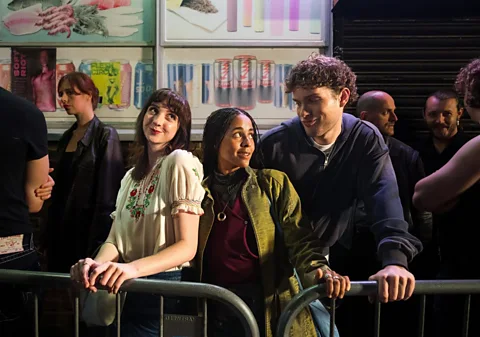
The success of The Worst Person in the World was neither accidental nor quiet. The film, which serves as the concluding chapter in Joachim Trier’s "Oslo Trilogy," struck a profound chord with global audiences by articulating a specific brand of "millennial anguish." Reinsve’s portrayal of Julie—a woman navigating the paralyzing abundance of choice in her late 20s and early 30s—was hailed by critics as a definitive performance of the era.
At the time of its release, the film garnered significant statistical milestones for a Norwegian production. It secured a 96% "Certified Fresh" rating on Rotten Tomatoes and earned two Academy Award nominations: Best International Feature Film and Best Original Screenplay. For Reinsve, the immediate impact was a Best Actress win at Cannes, an accolade that placed her in the company of cinematic legends and effectively dismantled her plans to move to Italy for vocational training.

Reinsve’s connection to Julie was rooted in a shared sense of existential restlessness. "I’ve lived a similar life to Julie," Reinsve noted in recent reflections for the BBC’s Close Up series. She described the character’s tendency to switch careers—from medicine to psychology to photography—as a recognizable symptom of a generation burdened by the pressure to find a "perfect" life path. The film’s ability to find beauty in uncertainty transformed it from a local drama into a global phenomenon, grossing over $12 million worldwide, an impressive feat for a subtitled character study.
A Chronology of Reinsve’s Professional Evolution
To understand the magnitude of Reinsve’s current standing, one must examine the timeline of her professional development, which was marked by long periods of obscurity followed by a rapid-fire series of high-profile projects.
- 2011: The Beginning: Reinsve made her film debut with a small, single-line role in Joachim Trier’s Oslo, August 31st. While the role was minor, it established a creative rapport with Trier that would lie dormant for nearly a decade.
- 2012–2019: The Theater Years: Reinsve worked extensively in the Norwegian theater scene, including stints at the Trøndelag Teater and the Norwegian Theatre in Oslo. Despite winning a Hedda Award (Norway’s equivalent of the Tony), she found the transition to film frustratingly difficult, often citing a lack of funding for the types of character-driven projects she wished to pursue.
- 2020: The Turning Point: Facing a lack of opportunities, Reinsve decided to quit acting. One day after making this decision, Joachim Trier contacted her, revealing he had written the role of Julie specifically for her.
- 2021: Global Recognition: The Worst Person in the World premiered at Cannes. Reinsve won Best Actress. The film’s "frozen time" sequence, where Julie runs through the streets of Oslo while the rest of the world stands still, became an instant iconic image of 21st-century cinema.
- 2024–2025: Expansion into International Markets: Reinsve transitioned to English-language cinema, starring in projects such as the Apple TV+ series Presumed Innocent alongside Jake Gyllenhaal and the horror film Backrooms. She also reunited with Trier for Sentimental Value, which further solidified her status as a powerhouse of European cinema.
- 2026: The Artistic Pivot to Fjord: Reinsve’s latest project, Fjord, directed by Palme d’Or winner Cristian Mungiu, represents a significant stylistic departure, moving from the whimsical melancholy of Oslo to the stark, socio-political realism of a legal drama.
Artistic Collaboration and the Trier Influence
The partnership between Joachim Trier and Renate Reinsve is frequently compared to the great director-muse relationships of film history. Trier’s methodology, heavily influenced by the French New Wave, emphasizes the "chemistry of the everyday." During the filming of The Worst Person in the World, Trier encouraged Reinsve to study the naturalism of 1960s French cinema, focusing on how the camera can capture minute shifts in emotion without the need for heightened melodrama.
This collaborative environment allowed for a "playful, fun collaboration" that Reinsve cites as her favorite filming experience. The technical execution of the film also relied on a tactile, human element; for example, the famous scene of Julie running through a frozen Oslo was achieved without digital effects, instead using hundreds of volunteers who stood perfectly still. This commitment to "truthfulness" on screen became the hallmark of Reinsve’s acting style—a blend of vulnerability and intellectual curiosity.

Fjord and the Challenge of Ideological Conflict
If The Worst Person in the World was about the internal landscape of an individual, her latest film, Fjord, is about the external pressures of society, religion, and the state. Directed by Romanian filmmaker Cristian Mungiu, Fjord centers on a Romanian-Norwegian family whose children are removed by the Norwegian Child Welfare Services (Barnevernet) following allegations of physical abuse and concerns over strict religious upbringing.
In Fjord, Reinsve plays Lisbet, a character she describes as the antithesis of herself. Unlike the outspoken and searching Julie, Lisbet is quiet, submissive to her husband’s authority, and deeply entrenched in her evangelical faith. This role required Reinsve to explore "stillness" and "compassion" for a character whose worldview might be alien to a liberal audience.
The film has already sparked intense debate regarding its portrayal of the clash between liberal secularism and conservative religious values. Mungiu, known for his unflinching look at social systems in films like 4 Months, 3 Weeks and 2 Days, stated that his objective was not to defend any specific ideology but to force audiences to confront their own biases. Reinsve’s performance has been praised for its refusal to judge the character, instead focusing on the visceral grief of a mother losing her children to a system she does not understand.
Broader Impact and the Scandi-Wave in Cinema
Reinsve’s success is emblematic of a broader "Scandi-wave" that has seen Nordic talent and stories dominate the international cultural landscape. The global appetite for Norwegian narratives has grown significantly, supported by the Norwegian Film Institute’s efforts to increase international co-productions.

Industry analysts point to Reinsve as a key figure in this movement, noting that her ability to move seamlessly between big-budget English-language productions and intimate European art-house films is a rare trait. Her career trajectory serves as a case study for the "Cannes Effect"—how a single prestigious award can overnight transform a regional actor into a global brand.
Furthermore, the themes explored in her work—millennial identity, the ethics of child welfare, and the friction of modern romance—reflect a shift in cinema toward stories that prioritize emotional intelligence and social complexity over traditional blockbuster tropes.
Implications for the Future of European Talent
As Fjord prepares for its wide release in the United Kingdom and Ireland on November 13, 2026, the film industry continues to watch Reinsve’s choices with interest. Her decision to prioritize challenging, auteur-driven projects over conventional Hollywood stardom suggests a long-term commitment to the craft of acting rather than the machinery of celebrity.
The "privilege" Reinsve speaks of—the ability to work with directors like Trier and Mungiu who "fight" for their vision—is a testament to her standing in the industry. By bridging the gap between the relatability of a millennial icon and the gravitas of a dramatic heavyweight, Renate Reinsve has redefined what it means to be a modern international star. Her journey from the brink of quitting to the heights of Cannes serves as a reminder of the volatile, often unpredictable nature of artistic success and the enduring power of a single, well-told story.