admin
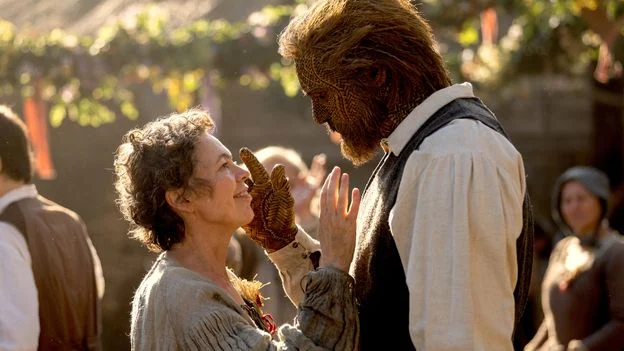
The cinematic landscape of 2024 has been marked by a notable shift toward surrealist storytelling, but few projects have captured the public imagination as viscerally as Wicker. A period romantic fantasy directed by the husband-and-wife filmmaking duo Alex Huston Fischer and Eleanor Wilson, the film has transitioned from a niche adaptation to a viral cultural phenomenon. Based on the short story "The Wicker Husband" by Ursula Wills-Jones, the narrative centers on an ostracized fisherwoman, portrayed by Academy Award winner Olivia Colman, who resides in a quasi-medieval village. Faced with social isolation and the harsh realities of her labor-intensive life, she commissions a local basketmaker, played by Peter Dinklage, to weave her a companion. The resulting creation is a muscular, sentient wicker man, portrayed by Alexander Skarsgård, who becomes both a domestic partner and a source of profound communal envy.
The film’s initial trailer, released in August, ignited an immediate and intense reaction across social media platforms, particularly on Threads and TikTok. Audiences were captivated not only by the absurdity of the premise but by the specific subversion of romantic tropes. Unlike traditional fairy tales where a "monster" must be transformed into a prince to find acceptance, Wicker presents a protagonist who finds fulfillment in a partner who remains fundamentally "other." This reaction was further amplified by a unique promotional campaign involving Regal Cinemas, which released a digital scan of Skarsgård’s torso for a 3D-printable popcorn bucket, bridging the gap between high-concept cinema and internet "thirst" culture.
Historical Context and the Evolution of Monster-Human Romances
Wicker does not exist in a vacuum; it is the latest entry in a long-standing tradition of "monster-human" romances that use non-human leads to explore human desire and societal exclusion. Historically, this genre traces its roots back to the 18th century, specifically to Gabrielle-Suzanne Barbot de Villeneuve’s 1740 version of Beauty and the Beast. Scholars often point out that de Villeneuve wrote the story during a period when she was seeking a legal separation from her husband due to his financial mismanagement and "monstrous" behavior. In this light, the monster-romance serves as a vehicle for women to process the complexities of domestic life and the "beastly" nature of traditional patriarchal structures.

In the 21st century, the genre has seen a significant resurgence, often referred to by critics as the "Shape of Water effect." Guillermo del Toro’s 2017 Oscar-winning film, which depicted a romance between a mute janitor and an amphibian creature, proved that audiences were hungry for narratives that centered on outsiders finding solace in one another. Following this, films like Your Monster and various reinterpretations of Frankenstein have continued to push the boundaries of what constitutes a "desirable" romantic lead. Wicker elevates this by introducing a "sentient object" element, where the partner is literally crafted to fulfill the protagonist’s needs, yet possesses an autonomy that challenges the villagers’ perceptions of reality.
The Mental Load and Domestic Labor Dynamics
One of the most significant reasons Wicker has resonated with modern audiences is its pointed commentary on domestic labor and the "mental load" often carried by women in heterosexual relationships. Directors Alex Huston Fischer and Eleanor Wilson have noted that while the script was written five years ago, its themes have become increasingly relevant as cultural conversations around "weaponized incompetence" and the unequal distribution of household chores have moved into the mainstream.
In a pivotal scene highlighted by the directors, the Wicker Husband notices a leak in the roof while he and the Fisherwoman are in bed. Without being prompted, he simply states his intention to fix it. Wilson explains that this specific moment—a man identifying a domestic need and addressing it without requiring praise or direction—is what many viewers found most "arousing." This reflects a broader societal fatigue among women who feel burdened by the cognitive labor of managing a household. By presenting a partner who is literally designed to be supportive, the film acts as a cathartic fantasy for those navigating the imbalances of modern domestic life.
Characterization and the Rejection of Traditional Beauty Standards
The casting of Olivia Colman as the Fisherwoman is a deliberate choice that reinforces the film’s themes of marginalization. Unlike the polished "Disney princess" archetype, the Fisherwoman is described in the source material as a woman who is physically and socially "unattractive" by the standards of her community. She is characterized by a unibrow, a limp, and the lingering scent of her trade. Wilson emphasized that the character’s lack of traditional beauty was a primary draw for the production, as it allowed for a more honest exploration of self-image and desire.

The Fisherwoman’s journey is not one of transformation into a beauty, but one of self-actualization through the eyes of a partner who does not subscribe to the village’s narrow aesthetic criteria. This narrative choice has drawn praise from critics who argue that it provides a necessary counter-narrative to the "makeover" tropes prevalent in romantic cinema. By having a character who is "overlooked" find intense passion with a "monstrous" being, the film validates the desires of those who feel excluded from conventional dating markets.
Chronology of Production and Release
The development of Wicker followed a trajectory that mirrors the rising interest in high-concept "A24-style" folk horror and fantasy.
- 2019: Alex Huston Fischer and Eleanor Wilson begin adapting Ursula Wills-Jones’ short story, focusing on the intersection of folklore and domestic realism.
- 2022: Production is greenlit with Black Bear Pictures, and the casting of Olivia Colman and Alexander Skarsgård is announced, signaling a high-profile approach to the unconventional script.
- Early 2024: Principal photography concludes, with a heavy emphasis on practical effects and intricate wicker-work costumes to bring Skarsgård’s character to life.
- August 2024: The first trailer is released, sparking a viral "frenzy" on social media and introducing the 3D-printable torso bucket marketing campaign.
- October 23, 2024: The film is scheduled for theatrical release in the United States.
- October 30, 2024: The film is scheduled for theatrical release in the United Kingdom.
Analysis of Implications for the Film Industry
The success of the Wicker marketing campaign and the intense online engagement suggest a shifting tide in how studios may approach romantic content. For decades, the romantic comedy and period drama genres adhered to strict formulas involving "relatable" protagonists and aspirational lifestyles. Wicker, however, suggests that there is a significant market for "weird" romance—stories that embrace the grotesque, the surreal, and the socially uncomfortable.
Furthermore, the film’s resonance with LGBT and neurodivergent audiences cannot be ignored. Experts in media communication, such as Dr. Indira Neill Hoch, suggest that "monster" narratives often serve as allegories for those who feel "othered" by society. The Wicker Husband, as a literal outsider made of wood and vine, represents a form of love that exists outside the boundaries of "normalcy," providing a space for audiences to explore their own unconventional identities and desires.

Official Responses and Creative Vision
The directors have remained surprised but delighted by the "feral" reaction to the film. In statements to the press, they have maintained that while the film contains elements of humor and absurdity, it is rooted in a sincere exploration of human connection. "We wanted to make him beautiful, but we also wanted to make sure the audience understood that the Fisherwoman is enjoying herself," Wilson stated, referring to the film’s explicit and "scintillating" sex scenes.
This focus on female pleasure and agency is a cornerstone of the film’s creative vision. By allowing the Fisherwoman to "seek out" her partner rather than being trapped into a relationship, the filmmakers have created a modern parable of autonomy. The film ultimately asks the audience to reconsider their definitions of a "perfect" partner, suggesting that true intimacy may be found not in perfection, but in the willingness to be "strange" together.
As Wicker prepares for its global rollout, it stands as a testament to the power of original storytelling in an era often dominated by sequels and reboots. By tapping into deep-seated cultural anxieties about labor, beauty, and belonging, it has managed to turn a "bizarre premise" into one of the most anticipated and discussed films of the year. Whether it leads to a surge in "sentient object" romances remains to be seen, but its impact on the cultural conversation regarding modern love is already undeniable.