admin
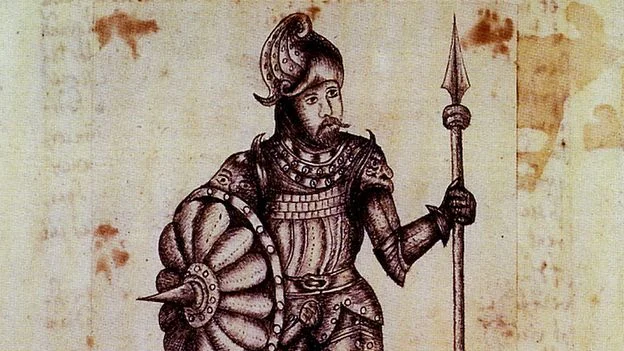
While the annals of Western history have long centered on the year 1492 as the definitive moment of European contact with the Americas, a wealth of archaeological evidence and ancient literary records confirms that Christopher Columbus was preceded by half a millennium. Five centuries before the Niña, the Pinta, and the Santa María made landfall in the Bahamas, Norse explorers had already established a presence on the North American continent. These voyages were not the result of a single, state-sponsored expedition but rather the culmination of a centuries-long process of "island-hopping" across the North Atlantic, utilizing Iceland and Greenland as strategic staging posts. This "lost history," preserved for generations in the Icelandic sagas and recently verified by cutting-edge scientific dating, reveals a sophisticated era of maritime exploration that fundamentally alters the narrative of the "Age of Discovery."
The Sagas as Historical Records
For centuries, the primary accounts of Norse voyages to the Americas were found in the Icelandic sagas—epic narratives written down by the descendants of the Vikings. Two primary texts, the Saga of the Greenlanders and the Saga of Erik the Red, collectively known as the Vinland Sagas, detail the discovery of lands to the west of Greenland. For much of the modern era, these stories were dismissed by historians as mythological fiction or exaggerated folklore.
However, the perspective on these manuscripts shifted significantly in the 20th century. One of the most critical documents is the 14th-century Flateyjarbók, or the Flatey Island Book. Described by experts as one of the most valuable Icelandic manuscripts in existence, its historical weight was recognized as early as the late 19th century. In 1893, organizers of the Chicago World’s Fair—intended to celebrate the 400th anniversary of Columbus’s voyage—desperately sought to borrow the book. The American interest was so intense that they offered to send a warship to Denmark to retrieve it and an armored train to transport it across the United States, insuring the volume for $1 million—an astronomical sum at the time. The Danish government, recognizing the manuscript’s irreplaceable nature, declined the request. The reason for this intense interest was clear: the Flateyjarbók contained the detailed account of Norse settlements in Greenland in the 10th century and the subsequent discovery and attempted colonization of North America.
Archaeological Confirmation: L’Anse aux Meadows
The transition of the Norse sagas from myth to history was finalized in 1960 when Helge Ingstad, a Norwegian explorer, and Anne Stine Ingstad, an archaeologist, discovered the remains of a Norse settlement at L’Anse aux Meadows on the northern tip of Newfoundland, Canada. This site provided the "smoking gun" that historians had sought for decades.
The settlement was not a permanent, long-term colony but rather a sophisticated transit camp and ship-repair facility. Excavations revealed eight timber-framed sod buildings, including workshops, a forge, and a carpentry shop. The presence of iron slag and Jasper fire-starters indicated a level of technology previously unknown in North America at that time.
In 2021, a breakthrough in chronometric science provided an exact date for the Norse presence at the site. Using a new dating technique centered on a massive solar storm that occurred in the year 993 AD, researchers analyzed tree rings from wooden artifacts found at the site. The solar storm left a distinct radiocarbon signature in the trees growing at the time. By counting the rings from that signature to the bark edge—where the tree was felled by metal tools—scientists determined that the Vikings were active at L’Anse aux Meadows in exactly 1021 AD. This finding solidified the timeline of Norse exploration, placing them in Canada exactly 1,000 years before the study’s publication and 471 years before Columbus’s first voyage.
A Chronology of North Atlantic Expansion
The Norse arrival in North America was the logical conclusion of a westward expansion that began in the 9th century. This progression can be mapped through a series of key milestones:
- Circa 870 AD: Norse explorers discover and begin the settlement of Iceland. Within decades, a thriving society is established.
- 930 AD: The establishment of the Althing, the world’s oldest surviving parliament, in Iceland. This legislative body met in a rift valley where the North American and Eurasian tectonic plates meet, symbolically linking the two continents through Norse governance.
- 982–985 AD: Erik the Red, banished from Iceland for manslaughter, explores the coast of Greenland. He returns to Iceland to recruit settlers, leading to the establishment of the Eastern and Western Settlements on Greenland’s southwestern coast.
- 986 AD: Bjarni Herjólfsson, blown off course while sailing for Greenland, is credited in some sagas as the first Norseman to sight the North American coast, though he does not land.
- Circa 1000 AD: Leif Eriksson, son of Erik the Red, purchases Bjarni’s ship and sets out to explore the lands sighted earlier. He lands at three distinct locations: Helluland (Baffin Island), Markland (Labrador), and Vinland (Newfoundland).
- 1000–1025 AD: Multiple expeditions are launched to Vinland, including those led by Leif’s siblings and the explorer Thorfinn Karlsefni, who attempted to establish a permanent colony with livestock and families.
The Role of Law and Exile in Exploration
The catalyst for much of this exploration was not merely curiosity, but the Norse judicial system. The Althing in Iceland utilized "outlawry" as a primary sentence for violent crimes. An individual declared an outlaw was stripped of all civil rights and could be killed by anyone without legal repercussion. Erik the Red’s discovery of Greenland was a direct result of such a sentence. After being exiled for three years following a dispute with a neighbor, Erik used his time to scout the land to the west.

This culture of risk-taking and self-reliance, born out of the necessity of exile, drove the Norse further into the unknown. When Erik established the Greenland colony, he created a base that would survive for nearly 500 years. At its peak, the Greenland settlement housed several thousand people, supported by a trade network that exported walrus ivory and furs to Europe. It was from this stable base that Leif Eriksson and others launched their probes into the American mainland.
Mapping the New World: Helluland, Markland, and Vinland
The Norse descriptions of the American coast were remarkably accurate. They categorized the land into three distinct zones based on their resources:
- Helluland (Land of Flat Stones): Identified by modern historians as Baffin Island. The sagas describe a barren land of large, flat rocks and glaciers, offering little to the settlers other than a navigational landmark.
- Markland (Land of Forests): Identified as the coast of Labrador. This region was of immense value to the Greenland Norse, who lacked local timber for shipbuilding. Evidence suggests that the Norse continued to visit Markland for centuries to harvest wood.
- Vinland (Land of Wine/Vines): Identified as Newfoundland and potentially areas further south, such as the Gulf of St. Lawrence. The name refers to the wild grapes found there, which represented a warmer climate and more fertile soil than Greenland or Iceland.
Archaeologists and historians, including Robert McGhee of the Canadian Museum of Civilization, suggest that L’Anse aux Meadows served as a "gateway" to these regions. It was a place where ships could be overwintered and repaired before heading further south or back to Greenland.
Sustained Contact and the Columbus Connection
A common misconception is that the Norse left America and never returned. However, archaeological evidence and historical documents suggest that the Norse made occasional trips to the "New World" for at least two or three centuries after Leif Eriksson. These were likely commercial voyages intended to gather timber and trade for furs with indigenous populations, whom the Norse called "Skraelings."
Furthermore, historical analysis suggests that the knowledge of these northern lands was not confined to Scandinavia. By the late 15th century, sailors from Bristol, England, were reportedly making regular trips to the "Isle of Brazil" or "the northern part," which many historians believe refers to the fishing grounds of the North American coast.
Intriguingly, a letter written in 1497 by an Englishman named John Day to Christopher Columbus implies that Columbus was aware of these earlier voyages. Day mentioned that men from Bristol had already discovered the land to the north "in times past." This raises the possibility that Columbus’s decision to sail a more southerly route was a strategic choice. By avoiding the northern latitudes already known to the Norse and the English, Columbus may have been attempting to bypass the "Vinland" territories in search of a direct route to the fabled riches of Asia.
Historical Implications and Legacy
The realization that the Norse explored and settled in North America half a millennium before the Spanish-led expeditions reframes our understanding of global history. It shifts the narrative from a sudden "discovery" to a process of gradual, albeit intermittent, contact.
The Norse failed to establish a permanent, lasting civilization in America due to several factors, including the long and dangerous supply lines back to Greenland, a cooling climate known as the "Little Ice Age" which made North Atlantic travel more difficult, and conflict with well-established indigenous groups. Nevertheless, their presence represents the first chapter of European interaction with the Americas—a chapter written by outlaws and explorers who navigated the open Atlantic in wooden ships, guided only by the stars and the sagas.
Today, while Columbus Day remains a fixture of the American calendar, the recognition of Leif Eriksson and the Norse pioneers serves as a reminder of the complexity of human migration and the enduring spirit of exploration that crossed the Atlantic long before the 15th century.