admin
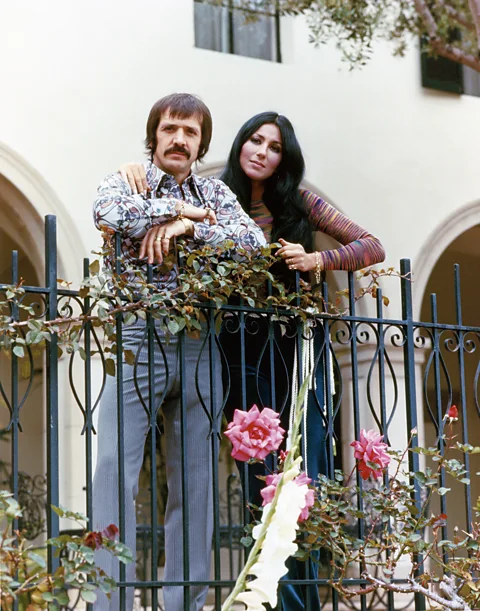
The Los Angeles neighborhood of Bel-Air, a name synonymous with unparalleled wealth and quiet exclusivity, celebrates its centenary this year, marking ten decades since its transformation from a rugged ranch into one of the world’s most prestigious residential enclaves. While the area gained global recognition through the 1990s sitcom The Fresh Prince of Bel-Air, the reality of the neighborhood remains largely hidden behind manicured hedges and limestone walls. To mark the 100th anniversary of its founding, a new historical retrospective titled Bel-Air: The Centennial, authored by David Silverman, explores the cultural, architectural, and social shifts that have defined this unique pocket of Southern California since 1922.

Unlike its neighbors in the "Platinum Triangle"—Beverly Hills and Holmby Hills—Bel-Air has historically maintained a lower public profile. According to Silverman, this is by design. While tour buses frequently traverse the palm-lined streets of Beverly Hills, they rarely find much to show in Bel-Air. The neighborhood’s geography, characterized by winding canyons and steep hillsides, offers a level of seclusion that has attracted the world’s most private individuals, from Golden Age film stars to modern-day tech moguls. This 100-year journey reflects not only the history of Los Angeles real estate but also the broader evolution of the American dream of luxury.
The Genesis of an Enclave: Alphonzo Bell and the Danziger Ranch
The story of Bel-Air began with Alphonzo Bell, a rancher whose life was fundamentally altered when he struck oil on his family’s property in Santa Fe Springs. With his newfound wealth, Bell sought to create a residential community that reflected his own values of privacy, prestige, and high-society living. In the early 1920s, he purchased nearly 18,000 acres of land known as the Danziger Ranch. At the time, much of the Los Angeles basin was still undeveloped, consisting of vast citrus groves and open hillsides.

Bell envisioned a "Gentlemen’s Haven," a term that underscored the exclusionary social standards of the 1920s. Advertisements placed in the Los Angeles Times in 1923 touted the development as a "Community of Gentlemen’s Estates" intended for "the highest class of homeseekers." To ensure the neighborhood remained upscale, Bell implemented strict building requirements; every home constructed had to cost at least $15,000, which is approximately $300,000 in today’s currency—a staggering sum for the era.
The developer also focused on leisure and equestrian life. He established more than 65 miles of bridle trails that wound through the canyons and along the edges of what would become the Bel-Air Country Club. These trails included specially designed underpasses so that riders would never have to cross the street with their horses, emphasizing a lifestyle that was entirely removed from the bustle of the growing city below.

A Chronology of Transformation: From Business Elite to Hollywood Royalty
The history of Bel-Air is marked by distinct eras that reflect the shifting demographics of California’s elite.
1922–1928: The Founding and the Morality Clauses
In its first six years, Bel-Air was intended as a sanctuary for the business elite. Alphonzo Bell, a deeply religious man, reportedly held a dim view of the burgeoning film industry in nearby Hollywood. He viewed "movie people" as morally suspect and initially used restrictive covenants to prevent actors and directors from purchasing land in his development. During this period, the neighborhood was dominated by captains of industry and traditional old-money families.

1929–1945: The Great Depression and the Hollywood Incursion
The stock market crash of 1929 and the subsequent Great Depression forced a pragmatic shift in Bell’s strategy. As land sales slowed, the economic necessity of selling to wealthy entertainers outweighed his moral reservations. Hollywood figures began acquiring property through lawyers or third parties, eventually leading to an influx of stars. Judy Garland famously used her earnings from The Wizard of Oz to purchase a home there. Other luminaries of the era, such as William Powell, Carole Lombard, and directors Alfred Hitchcock and Howard Hawks, soon followed, cementing Bel-Air’s status as the preferred refuge for the cinema elite.
1946–1969: Modernism and the Television Age
Post-World War II, architectural tastes shifted from the Mediterranean and Tudor styles of the founding era toward Mid-Century Modernism. The rugged terrain of Bel-Air provided a perfect canvas for architects like Richard Neutra and Paul R. Williams to experiment with glass walls and cantilevered terraces that maximized canyon views. This era also saw Bel-Air enter the American living room via television. In 1962, The Beverly Hillbillies premiered, featuring the Kirkeby Estate as the home of the Clampett family. Although the show referenced Beverly Hills in its title, the iconic mansion was a Bel-Air landmark, leading to an unwanted surge in tourism that forced the owners to request more privacy.

1970–Present: The Era of Global Wealth and Giga-Mansions
In recent decades, Bel-Air has transitioned from a neighborhood of "estates" to one of "giga-mansions." The scale of development has increased exponentially, with older homes being razed to make way for 30,000-square-foot compounds. The 2019 sale of the "Chartwell" estate (formerly the Kirkeby Estate) to Lachlan Murdoch for $150 million set a then-record for California real estate, highlighting the neighborhood’s continued status as a premier destination for global capital.
Architectural Significance and the Landscape of Privacy
The architectural evolution of Bel-Air is a primary focus of Silverman’s centennial study. The neighborhood began with a heavy emphasis on Spanish Colonial Revival and Italianate styles, intended to evoke the feel of a Mediterranean village. However, the 1950s and 60s introduced a "groovy scene," as described by contemporary observers of the time.

Modernist photography, particularly the work of Julius Shulman, captured the neighborhood’s transition into a more contemporary aesthetic. These homes featured open floor plans and an "indoor-outdoor" lifestyle that became the hallmark of Southern California luxury. As the neighborhood grew higher into the hills, the architecture adapted to the topography, resulting in homes that seem to float above the clouds, offering vistas that extend to the Pacific Ocean.
Despite the variety in style, one architectural feature remains constant: the gate. While Bel-Air was never a technically "gated community" with a single perimeter, its famous East and West Gates serve as psychological and physical barriers. These entryways, constructed in the late 1920s, were designed to create an aura of exclusivity, signaling to the visitor that they were entering a more rarefied space.

Supporting Data: The Economics of Exclusivity
The economic profile of Bel-Air today reflects its century-long trajectory of appreciation. According to recent real estate data:
- Median Home Price: As of late 2023, the median listing price for a home in Bel-Air fluctuates between $8 million and $10 million, though many properties are listed in the $50 million to $150 million range.
- Price Per Square Foot: Premium properties in the neighborhood can command upwards of $3,000 to $5,000 per square foot, significantly higher than the Los Angeles County average.
- Privacy Premium: Real estate analysts note that "walled and gated" properties in Bel-Air carry a 20% to 30% premium over similar homes in less secluded areas.
- Development Scale: The neighborhood has seen a 40% increase in "mega-development" (homes over 20,000 square feet) over the last two decades, leading to local debates regarding "mansionization" and hillside preservation.
The Cultural Impact of the Bel-Air Brand
Bel-Air’s influence extends far beyond its physical borders, acting as a global shorthand for extreme wealth. The 1990s saw the neighborhood’s brand reach its zenith with The Fresh Prince of Bel-Air. Interestingly, as Silverman notes, the show was not filmed in Bel-Air, and the house used for exterior shots was actually located in nearby Brentwood. Nevertheless, the show solidified the neighborhood’s image in the public consciousness as a place of aspiration and social mobility.

The Hotel Bel-Air, opened in 1946 on the site of Alphonzo Bell’s former stables, has played an equally vital role in maintaining the neighborhood’s allure. Known for its "bungalow" style and swan-filled lake, the hotel became a site for "assignations" and private meetings among the Hollywood elite. Marilyn Monroe and Grace Kelly were frequent guests, and today, the hotel remains a centerpiece of the community’s social fabric, where the former stables now command thousands of dollars per night in lodging fees.
Analysis of Implications: Preservation vs. Progress
As Bel-Air enters its second century, it faces a set of modern challenges. The very hillsides that provide the neighborhood with its prized views are increasingly vulnerable to the effects of climate change, including wildfires and mudslides. Furthermore, the trend toward massive redevelopment has sparked tension between long-term residents and new developers.

"The neighborhood has evolved from a ‘gentlemen’s haven’ to a global enclave," says Silverman. This shift has brought about a change in the neighborhood’s character. Where once there were bridle trails and community stables, there are now high-tech security systems and subterranean galleries for car collections.
The centenary serves as a moment of reflection on the sustainability of such an enclave. While the neighborhood remains a bastion of privacy, the increasing scale of construction and the environmental pressures on the Santa Monica Mountains suggest that the next 100 years may require a new vision—one that balances the historic desire for seclusion with the modern necessity of environmental stewardship and community integration.

In conclusion, the 100-year history of Bel-Air is more than a chronicle of expensive homes; it is a mirror of Los Angeles’s growth from a frontier town to a global metropolis. From Alphonzo Bell’s oil-funded dream to the modernist glass boxes of the 1960s and the fortress-like estates of today, Bel-Air remains a testament to the enduring human desire for a "beautiful air"—a space apart from the world, yet perched right at its center.