admin
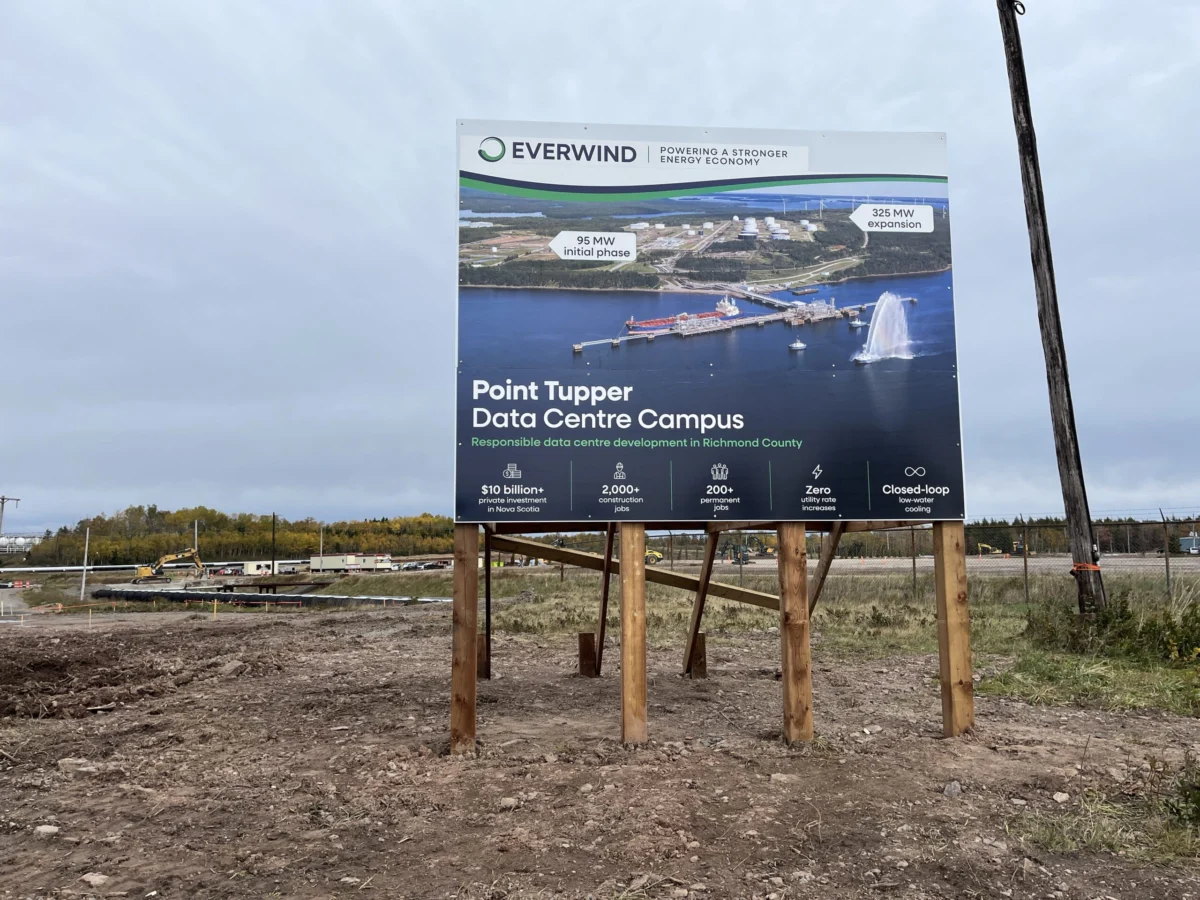
Mounting criticism is challenging Nova Scotia’s ambitious plan to host a colossal AI data centre in Cape Breton, as opposition parties vociferously demand an emergency legislative sitting to scrutinize a project they argue lacks fundamental consultation and robust regulatory safeguards. The controversy erupted following a significant announcement by energy and infrastructure company EverWind, revealing a $10 billion private investment to establish a sprawling data centre campus at its existing Point Tupper site, near Port Hawkesbury, Nova Scotia. This development marks a pivotal moment for the province, positioning it at the forefront of global artificial intelligence infrastructure, yet simultaneously igniting a fierce debate over environmental, economic, and democratic principles.
Project Unveiling and Immediate Backlash
The catalyst for the current political storm was EverWind’s Friday announcement, which detailed plans for an unprecedented $10 billion investment. This massive undertaking is earmarked for a state-of-the-art data centre campus, strategically located at Point Tupper, a hub already significant for industrial operations. Adding substantial weight to the project’s profile, AI development company Anthropic, widely recognized as the creator of the sophisticated Claude AI, confirmed its commitment to the venture by signing a long-term lease for space within the forthcoming centre. This partnership signals a major draw for cutting-edge technology and investment into the province.
However, the celebratory tone of the announcement quickly soured as the scale and perceived secrecy of the project drew immediate condemnation from political opposition and local communities. On the subsequent Monday morning, Official Opposition Leader Claudia Chender, representing the New Democratic Party, took to social media to share a strongly worded letter addressed to Premier Tim Houston. In her communication, Chender underscored the urgent need for "tough questions" regarding the project’s implications. Her primary concern revolved around the Premier’s apparent reliance on non-binding federal guidelines, which she noted were "endorsed by the AI industry itself," and vague "expectations" communicated via social media. Chender unequivocally stated, "Non-binding guidelines are not laws. This project needs to be regulated in the legislature, not on Facebook."
This sentiment was swiftly echoed by Liberal MLA Becky Druhan, who formally supported Chender’s call for an emergency sitting of the provincial legislature. In her own letter to Premier Houston, Druhan emphasized the public’s right to transparency, demanding clarity on the nature of preliminary discussions and any commitments made. Druhan pointed out a striking inconsistency: "The need for answers and protections is now even more urgent. In June, you told Nova Scotians that data centres were ‘not a today thing, not even a tomorrow thing.’ Yet last week, you participated in the announcement of a $10 billion project." This apparent policy shift, from cautious dismissal to full endorsement within a matter of months, has fueled suspicions of a rushed process and insufficient due diligence.
The Premier’s Defense and Regulatory Framework
In response to the escalating criticism, Premier Tim Houston issued a statement to Global News, asserting that the project would be subject to "many checks and balances built into the process." He maintained that a robust "process is in place" and that the Department of Environment and Climate Change possesses "a range of approvals and regulations to regulate industry on a case-by-case basis depending on the circumstances of each situation." Houston emphasized the stringency of these regulations, stating they "are stringent and serious and they will be followed. Regulatory decisions are made based using sound technical expertise and evidence, science and facts."
The Premier also referenced a broader national context, noting Canada’s new AI strategy, announced in June, which includes proposals for the development of "large-scale" data centres. He argued, "The federal Liberal government has established guidelines for data centers. So have I. This is not a partisan issue. This project is going through a process to ensure that it meets these standards." While federal guidelines exist, their non-binding nature remains a central point of contention for those advocating for provincial legislative oversight and legally enforceable regulations specific to such massive infrastructure projects. The current regulatory landscape in Nova Scotia primarily relies on environmental assessment processes, municipal zoning bylaws, and utility board approvals. Critics argue these existing frameworks may not adequately address the novel and complex challenges posed by hyper-scale AI data centres, particularly concerning their energy, water, and social impacts.
Community Concerns and Public Protests

Beyond the political arena, local communities in Richmond County, where Point Tupper is situated, have voiced profound concerns over the lack of public consultation. Julissa Stewart, a prominent community advocate, articulated the widespread feeling of disenfranchisement, stating, "We need to engage the public in this because it’s impacting the residents. The residents are concerned and they want their voices to be heard, and doing it after the fact is just not acceptable." Stewart highlighted a critical worry: "What happens if the project that gets built is not the project that was advertised? So what happens if they say it won’t use much power and then it uses far more than what was proposed?" These questions reflect a deep-seated distrust in the initial information provided and a demand for transparency and accountability throughout the project’s lifecycle.
The lack of pre-announcement public engagement culminated in a rally held in downtown Halifax just one day after EverWind’s disclosure. Protesters expressed frustration that the data centre seemed to have been "randomly announced" without any prior consultation with affected communities. Megan Boudreau, one of the protest organizers, lamented the scarcity of information: "These companies don’t have a lot of information that they’re able to give us. We don’t know what this is going to look like." The rapid pace of the announcement and the perceived opacity have fostered an environment of skepticism and heightened public demand for clarity.
The concerns articulated by Nova Scotians mirror broader environmental and health anxieties surrounding large-scale data centres across Canada. Heated debates and even moratoriums have been imposed in various municipalities, such as Lorneville, New Brunswick, and several in Ontario, grappling with the immense resource demands and potential local impacts of these facilities. These precedents highlight a growing national discussion about how to integrate such energy-intensive developments responsibly.
Understanding the Scale and Resource Demands
The proposed EverWind data centre campus represents an enormous undertaking. The company projects an initial 95-megawatt (MW) phase to commence operations in late 2027. This will be followed by a substantial 325 MW expansion targeted for 2028, contingent on regulatory conditions. At its full developmental capacity, EverWind anticipates the campus reaching a staggering 420 MW, designed to "meet growing demand for artificial intelligence and digital services." To put this into perspective, 420 MW is comparable to the energy consumption of a small city or a major industrial complex. For Nova Scotia, a province with a relatively small grid and a population of just over one million, this represents a monumental increase in industrial energy demand.

A significant portion of the $10 billion investment, specifically $2 billion, is allocated to advancing EverWind’s onshore wind energy projects. This commitment suggests a strategy to mitigate the data centre’s carbon footprint by integrating renewable energy sources directly. However, experts like Thomas McNeil, senior energy coordinator at the Ecology Action Centre, quickly pointed out that even with renewable energy commitments, the data centre would rapidly become Nova Scotia Power’s largest industrial customer. McNeil raised critical questions about the project’s broader implications for a province already facing significant energy challenges: "If we’re going to build a project of this size in a province that’s pretty small, with some of the highest electricity rates in the country, some of the highest rates of energy poverty, with limited groundwater resources… then certainly I think there’s a lot that will still need to be clarified."
The concerns extend to the reliability and stability of the provincial power grid. Nova Scotia has experienced increasing strain on its electrical infrastructure, exacerbated by more frequent and intense extreme weather events. McNeil articulated this vulnerability: "What we can say for sure is that we’re already struggling with the reliability of our grid, so our ability to keep the lights on in regular conditions." He continued, "We are, of course, starting to see more extreme weather events, more storms. And so there are questions about the long-term resiliency of the power grid in Nova Scotia as well. So, are we in a position in which we’re going to easily be able to increase demand on the grid at that scale without sacrificing reliability and our ability to keep the power on during a storm?"
EverWind has stated its intention to fund the electricity infrastructure costs attributed to the project, aiming to prevent these costs from being passed on to ratepayers. The company also noted that the data centre would incorporate "several hundred megawatt hours" of battery storage to support its facility, potentially offering some grid stabilization. However, McNeil argued that an independent analysis is crucial to truly assess the project’s impact on the grid and residential power bills, emphasizing the need for objective verification of the company’s claims.
Premier Houston, in his statement, directly addressed the fear of rising power rates for households, dismissing it as "misinformation." He asserted, "The misinformation that is being spread that your household power rate will go up, that is completely false." Houston reiterated his government’s unwavering commitment to protecting Nova Scotian ratepayers, calling it "an outright condition of our government’s support." He even suggested scenarios where adding a new customer of this magnitude could potentially decrease rates, promising that rate protection would be "built into any agreement" signed with the project. Regarding grid impact, Houston mentioned EverWind’s plan to build "80 turbines" and highlighted the data centre’s phased construction, with the initial 95 MW phase being "fully disruptable." This means, according to the Premier, that "if the power grid encounters a situation where it is reaching capacity, the power to the (data centre) will be shut down long before there is any impact on any household."
Local Government’s Limited Prior Knowledge

Adding another layer of complexity to the transparency debate, Lois Landry, the warden of Richmond County, revealed her own limited prior knowledge of the project’s true scope. Landry, who spoke at EverWind’s announcement on Friday, disclosed that she only learned the multi-billion-dollar investment involved an AI company and a data centre that very morning, during a technical briefing for reporters. "So there was really no confirmation about AI because there was no disclosure of the client until the client announced later that day," she explained. This admission by a key local government official underscores the provincial government’s and the proponent’s failure to adequately inform and consult with local leadership and the public ahead of the formal announcement.
Landry also confirmed that no building permit application for the project has yet been submitted, indicating that detailed planning is still underway. "They can’t apply for a permit without the final design, so I think they’re still working through that," she noted, clarifying that any pre-construction work, such as tree cutting on their own property, is currently within EverWind’s legal rights. This sequence of events — a major announcement preceding detailed designs, permit applications, and comprehensive public consultation — is precisely what has fueled the widespread criticism and calls for a more structured and transparent process.
Broader Implications and the Path Forward
The EverWind AI data centre project in Cape Breton represents a microcosm of the global challenges and opportunities presented by the rapid expansion of artificial intelligence. While promising significant economic investment and job creation, such projects demand meticulous planning, robust regulatory frameworks, and genuine public engagement to ensure sustainable and equitable development. The controversy in Nova Scotia highlights the critical need for governments to anticipate the diverse impacts of emerging technologies and to establish clear, legally binding safeguards before committing to projects of this scale.
The path forward will likely involve continued pressure from opposition parties for legislative action, potentially leading to a debate on data centre-specific regulations or amendments to existing environmental assessment processes. Community groups will undoubtedly maintain their advocacy for transparency and a moratorium until their concerns are adequately addressed and independent analyses of the project’s impact are conducted. Premier Houston’s administration faces the delicate task of balancing economic development aspirations with environmental stewardship and public trust. The outcome of this debate in Nova Scotia could set an important precedent for how other jurisdictions in Canada and beyond approach the integration of hyper-scale AI infrastructure into their local economies and environments. The unfolding narrative in Point Tupper will serve as a crucial test case for responsible technological advancement in an era defined by rapid digital transformation.