admin
In the heart of West Virginia, farmers Tim and Rebecca Cooper are facing a confluence of severe challenges, from the abrupt cancellation of vital federal funding and soaring operational costs to an escalating demand for food assistance within their community. Their unwavering dedication to feeding their neighbors in the unincorporated town of Points and the nearby village of Paw Paw underscores the precarious state of small-scale agriculture and regional food systems amidst shifting political landscapes and economic pressures. The Coopers’ story is a microcosm of the struggles confronting many American farmers striving to maintain local food access and combat food insecurity, particularly in rural, underserved areas.
The Promise of Local Food: The Rise and Fall of LFPA
The Coopers’ journey into large-scale community food provision began with an ambitious opportunity born from federal policy. In 2022, under the Biden administration, the U.S. Department of Agriculture (USDA) launched the Local Food Purchase Assistance (LFPA) Program, a groundbreaking initiative designed to bolster regional food systems. The LFPA program aimed to strengthen local and regional food supply chains, support underserved farmers, and improve food access for communities in need. It achieved this by providing federal funds to state agencies, which then partnered with food banks and other organizations to purchase fresh, locally grown produce and meat directly from farmers. This mechanism not only injected much-needed capital into local agricultural economies but also ensured that food pantries could offer healthier, culturally relevant options to their clients.
In West Virginia, the Mountaineer Food Bank became a key beneficiary of LFPA funds. Recognizing the Coopers’ burgeoning capacity and their commitment to sustainable practices at Cooper Farms, Mountaineer Food Bank representatives approached them with an offer that seemed like a dream come true: contracts to purchase nearly all the vegetables and pork the farm could produce. For Tim Cooper, who grew up in poverty and vividly recalled his mother’s struggles to put food on the table, the prospect of being paid to feed families like his own was profoundly meaningful. This opportunity allowed Cooper Farms to scale up operations significantly. They invested in new high tunnels, essential infrastructure for year-round cultivation of crops like cabbage, arugula, and various lettuces, and expanded their livestock. By March of 2025, their fields and newly constructed tunnels were teeming with an impressive array of produce, representing a substantial investment of labor, capital, and hope.
A Sudden Reversal: The Impact of Policy Shifts
The optimistic trajectory of Cooper Farms, and indeed many other small farms across the nation, was dramatically altered in early 2025 with the Trump administration’s decision to cancel LFPA funding. This policy reversal, which impacted numerous programs designed to support local food systems, sent shockwaves through the agricultural community. Tim Cooper recounted the heartbreaking moment when representatives from Mountaineer Food Bank delivered the devastating news: they would no longer be able to purchase the food they had contracted for. "All that money is spent. Everything’s ordered," Tim recalled, his voice heavy with the memory. "Now, where do you go with it? We can’t just go to the local store and try to sell a half-a-million-dollar crop." The weight of potential failure, particularly in the eyes of their five daughters, was immense. Rebecca echoed his sentiment, describing the "panic" that gripped them, fearing they might lose their farm and the life they had built.
This experience was not isolated. Nathan Bergdoll, a planning coordinator for the West Virginia Department of Agriculture, confirmed that the cancellation of LFPA had created a crisis for countless farmers and low-income communities throughout the state. "The opportunities are just not there for local food, period," Bergdoll lamented, describing calls from desperate farmers contemplating bankruptcy, forced home sales, and the collapse of their livelihoods. He emphasized how these programs had been instrumental in "building out local communities and food systems around them, and now that’s all fallen to pieces for no apparent reason." The withdrawal of federal support effectively dismantled a nascent infrastructure that had begun to create more resilient, localized food economies.

The Coopers found the timing and rationale behind the cuts particularly perplexing, especially given the Trump administration’s alignment with Robert F. Kennedy Jr.’s "Make America Healthy Again" (MAHA) movement, which ostensibly champions healthy food. Tim had initially believed that a focus on healthy eating would safeguard programs supporting local producers. "There’s no possible way that they’re going to take this money from local producers," he had thought. Furthermore, West Virginia’s Republican Governor, Patrick Morrissey, had been an early adopter of MAHA’s healthy food objectives. Yet, despite this public stance, Governor Morrissey and Republican state lawmakers have consistently declined to fund a state-level program mirroring the LFPA, leaving West Virginia farmers and food-insecure residents without a vital safety net. "Our governor, he just does not want to hear it at all, and a lot of our legislators don’t want to hear it," Tim stated, highlighting a stark disconnect between stated health goals and tangible policy support for local food systems.
Resilience in the Face of Adversity: The Local Market Lifeline
Despite the significant setbacks, the Coopers’ commitment to their mission remains unyielding. Day by day, they have adapted, finding alternative avenues to feed their community. Their efforts are vividly showcased at the Magnolia Market in Paw Paw, a weekly farmers’ market run by Community Markets, Inc. Paw Paw, a small village of approximately 400 residents, exemplifies a rural food desert. The closest full-service grocery store is a grueling 30-minute drive away, leaving residents to rely on a gas station and a Dollar General for their daily needs. A recent visit to the Dollar General revealed a paltry produce section stocked with packaged snacks, and entirely empty meat cases, underscoring the critical role local markets play in providing fresh, nutritious food.
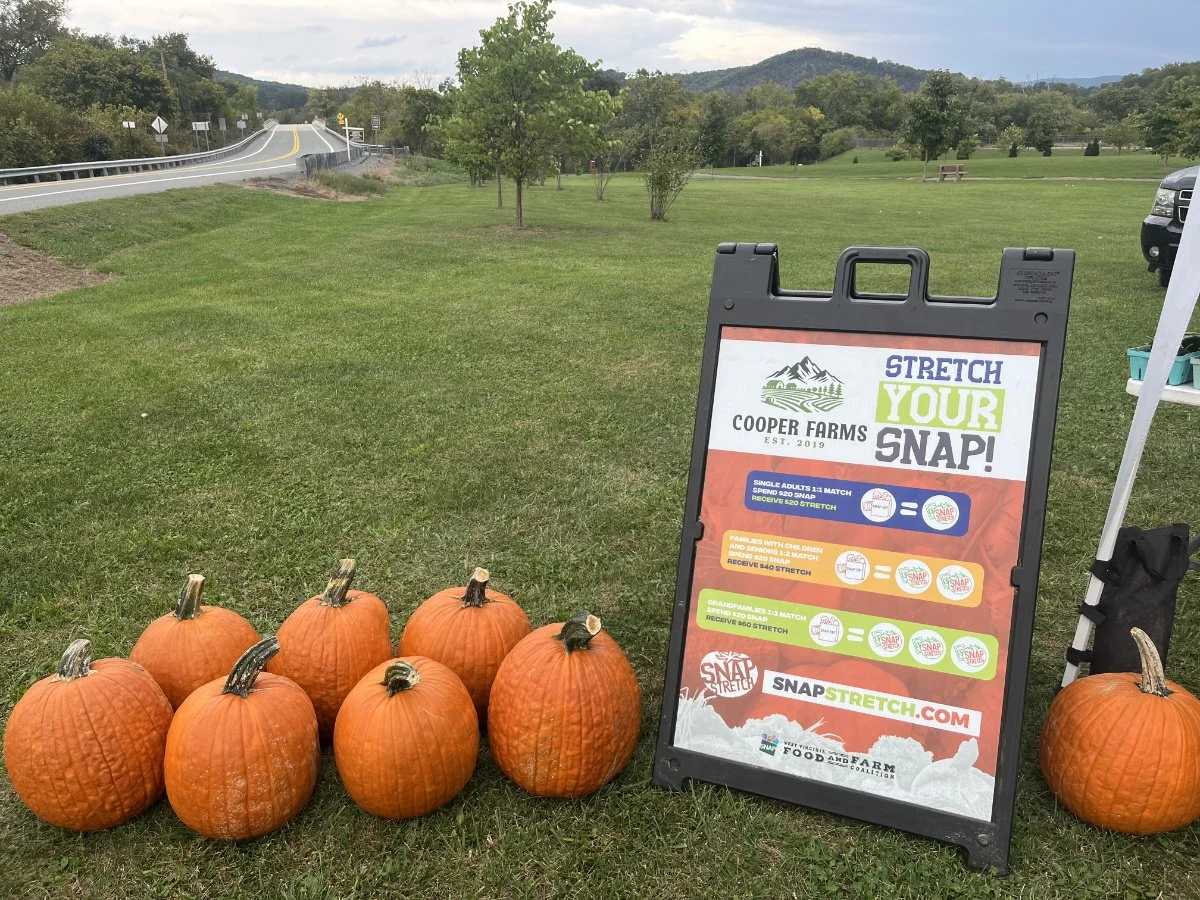
At the Magnolia Market, the Coopers meticulously arrange their vibrant harvest: peppers, tomatoes, watermelons, dark purple and green beans, and potatoes. Pumpkins and gourds add a seasonal touch, clustered beside a prominent sign detailing the "Stretch Your SNAP!" program. Rebecca proudly explains how they distribute colorful SNAP Stretch "dollars" to shoppers utilizing Supplemental Nutrition Assistance Program (SNAP) benefits. This innovative program, often supported by philanthropic organizations or state initiatives, matches SNAP purchases of fresh produce, effectively doubling the buying power of low-income families. Single adults receive an extra dollar, families with children two, and grandparents raising children three, directly combating food insecurity and promoting healthy eating.
Beverly Kerns, a 67-year-old Paw Paw resident and market volunteer, embodies the profound impact of these initiatives. Disabled since her thirties and a lifelong SNAP recipient, Kerns has relied on food assistance to raise her two children and manage her own health issues. Now, she regularly purchases produce from the Coopers with her SNAP benefits, benefiting from the additional SNAP Stretch dollars. Looking ahead to the winter months when the market closes, Kerns has diligently canned 20 quarts of green beans, frozen 14 jars of vegetable soup, and prepared pizza sauce and salsa for her grandchildren – all from locally sourced produce. She stresses the importance of encouraging her family to eat fresh, despite rising food prices. Kerns has even compared prices, noting that the Coopers’ fresh meat offers superior value compared to a Walmart 45 minutes away. "There was no comparison. This was fresh, and the pricing was a little lower," she affirmed.
Tim Cooper attests to the persistent and growing need for food assistance in their community. "Whether they can pay us or not, they’re never turned away," he states, a testament to his deeply ingrained empathy stemming from his own childhood experiences. "I’ve lived that lifestyle, and where we’re at right now in life, we’re blessed to be a blessing to people. Until the Lord shows me otherwise, this is exactly what we’re going to do." This philosophy underscores the vital role that community-minded farmers play as front-line responders to food insecurity, often filling gaps left by inadequate public policy.
Mounting Pressures: High Input Costs and Land Speculation
While their customers grapple with high food prices, the Coopers themselves are confronting skyrocketing input costs, further squeezing their already tight profit margins. "Right now, our biggest challenges are that fertilizer is going up and diesel is through the roof and steadily going up," Tim explains. Global supply chain disruptions, geopolitical conflicts impacting energy markets, and increased demand have all contributed to these inflationary pressures, making every aspect of farming more expensive. Fertilizer prices, for instance, have seen significant increases globally in recent years, impacting farmers’ ability to maintain soil health and crop yields without substantial financial outlay. Similarly, diesel, essential for powering tractors, irrigation systems, and transportation, has been volatile, directly affecting operational costs. The Coopers typically order their supplies a year in advance, and the uncertainty surrounding future prices as November approaches adds another layer of anxiety to their planning.

Beyond daily operational costs, a more insidious threat looms: the escalating price of farmland. The Coopers were fortunate to acquire their farm at $2,500 per acre. However, in the past year, neighboring properties in their valley have sold for $6,000 and even $10,000 per acre. This dramatic appreciation in land value is not driven by agricultural profitability but by external pressures. Tim notes that only wealthy families seeking country vacation homes or developers constructing data centers can now afford such prices. These new buyers, often disconnected from agricultural practices, frequently take valuable farmland out of production. This trend poses an existential threat to local food systems, as fertile ground is converted for residential or industrial use, irreversibly diminishing the agricultural capacity of regions.
The Coopers’ farm, where a family meal can be prepared almost entirely from what they grow – pork ribs from their barn, scalloped potatoes from spuds dug earlier that summer – represents a precious and increasingly rare model of integrated, sustainable living. "Agriculture is the backbone of America," Tim asserts, reflecting on the disappearing rural landscape. "I can’t think of a small town where you can’t ride down and see an old, abandoned fruit stand on the side of the road somewhere. That was someone’s livelihood." His words serve as a poignant reminder of a fading agricultural heritage, threatened by economic forces and policy neglect.
Broader Implications and the Call for Policy Action
The Cooper family’s struggle encapsulates a critical moment for American agriculture and food security. The abrupt cancellation of programs like LFPA highlights the fragility of federal support for local food systems, which are crucial for bolstering rural economies, improving public health outcomes, and enhancing community resilience. The lack of state-level alternatives, despite ostensible political alignment with health initiatives, reveals a significant policy gap. This void forces dedicated farmers like the Coopers to shoulder an immense burden, relying on personal sacrifice and community initiatives like SNAP Stretch to keep fresh food accessible.
The challenges extend beyond federal funding. Rising input costs, driven by global economic factors, directly impact the viability of small farms, pushing them closer to the brink. Simultaneously, land speculation and development pressures are consuming agricultural land at an alarming rate, threatening the very foundation of local food production. Without targeted interventions, such as land preservation programs, investment in agricultural infrastructure, and consistent support for local food procurement, the trend of declining small farms and increasing food deserts will only accelerate.
The Coopers’ advocacy trips to Charleston and Washington D.C. underscore the urgent need for policymakers to listen to the voices of those on the ground. Their efforts, alongside those of organizations championing local food and hunger relief, are crucial in shaping a future where resilient, community-based food systems are not just an aspiration but a sustained reality. The story of Tim and Rebecca Cooper is a powerful testament to the enduring spirit of American farmers, but it also serves as a stark warning: without robust, consistent policy support, the backbone of America’s food system risks fracturing, leaving communities like Paw Paw increasingly vulnerable. The call for a reevaluation of priorities and a renewed commitment to local agriculture and food security has never been more pressing.