admin
admin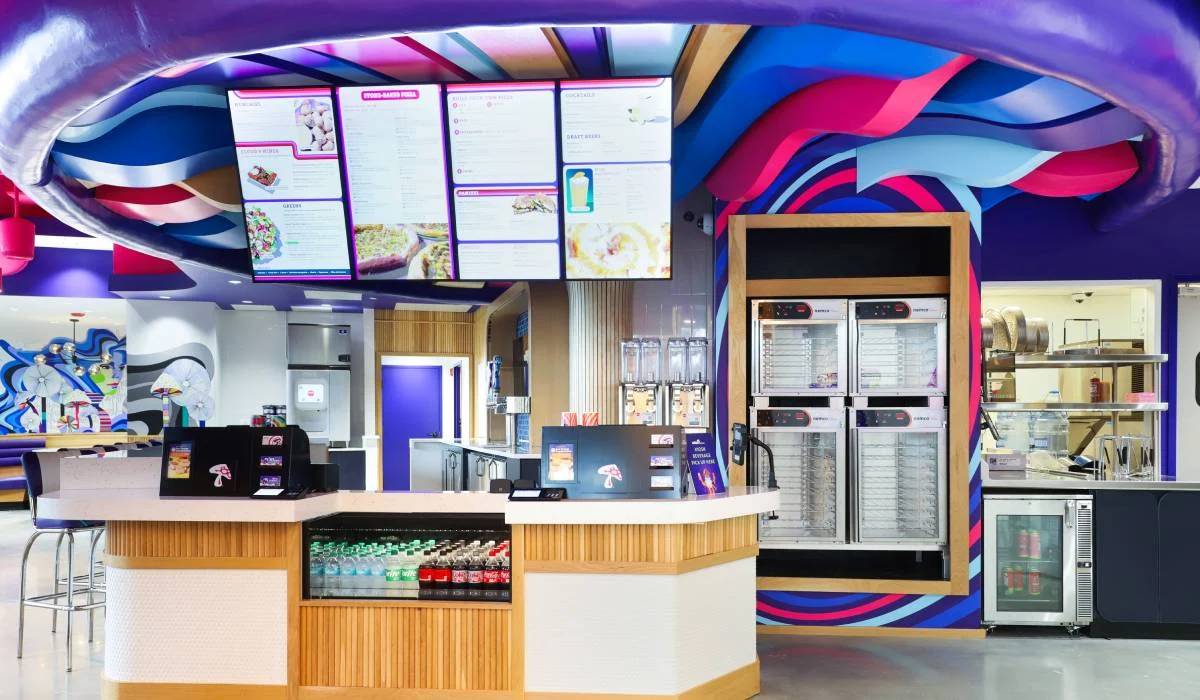
More than half a decade after the COVID-19 pandemic fundamentally reshaped the global dining landscape, the restaurant industry has transitioned from a period of frantic adaptation to one of sophisticated optimization. For full-service operators, delivery has moved well beyond the "turn it on" phase—a desperate search for revenue during lockdowns—into a complex strategic pillar. Today’s focus is no longer just about adding a sales channel; it is about optimizing a multifaceted ecosystem that touches the kitchen line, labor models, guest relationships, and the broader technological stack. As the industry matures, the leaders emerging are those who treat off-premises dining not as an auxiliary service, but as a core competency that must be as refined as the in-house dining experience.
The Shift from Volume to Profitability
In the immediate wake of 2020, the primary metric for success in the delivery space was top-line growth. Restaurants were eager to recapture lost foot traffic by any means necessary. However, the current economic climate—defined by rising labor costs, food inflation, and consumer price sensitivity—has shifted the focus toward sustainable profitability. Jason Saposnik, Vice President of Information Technology for FSC Franchise Co., the parent company of Beef ‘O’ Brady’s, The Brass Tap, and Newk’s Eatery, notes that the perspective has evolved significantly.
"We look at it a little differently nowadays," Saposnik explains. "Early on, the focus was more about just growing delivery sales. Now, we’re a lot more focused on whether those sales are profitable, how the restaurants can handle that increased volume, and whether customers are actually getting the same great experience."
This shift mirrors broader industry trends. According to the National Restaurant Association’s 2024 State of the Restaurant Industry report, while delivery remains a vital revenue stream, nearly 80% of operators cite higher costs as a top concern. Consequently, the "growth at all costs" mentality has been replaced by a rigorous analysis of margins, leading many brands to reassess their relationships with third-party delivery providers and their internal kitchen efficiencies.
A Chronology of Integration: From Tablet Hell to Seamless Flow
The operational journey of delivery can be divided into three distinct eras. The first, often referred to as "Tablet Hell," occurred between 2017 and 2020. During this period, restaurants were cluttered with disparate hardware—one for DoorDash, one for Uber Eats, and another for Grubhub. Employees acted as the "integration layer," manually re-entering orders from these tablets into the Point of Sale (POS) system. This manual process was a significant source of friction, leading to missed orders, kitchen delays, and frequent human error.
Saposnik recalls this era as a major hurdle for FSC Franchise Co. "That created all sorts of issues," he says. The second era, beginning around 2021, saw the rise of middle-ware integrators like Olo and ItsaCheckmate, which allowed third-party orders to flow directly into the POS. This automation stabilized the front-of-house operations, but it did not address the physical capacity of the kitchen.
We are now in the third era: The Optimization Phase. In this current period, the focus is on "throttling" and capacity management. Integration is now considered "table stakes"—the bare minimum required to function. The real challenge lies in managing how a kitchen designed for 50 seats can handle 50 seats plus 30 delivery orders during a Friday night rush.
Managing the Collision of Digital and Physical Demand
The most significant pressure point for modern full-service restaurants is the intersection of the digital guest and the physical guest. Scott Pavlica, Vice President of Finance at Mecha Noodle Bar, argues that operators must move beyond viewing delivery as a mere percentage of total sales. Instead, they must understand the "absolute volume" a kitchen can absorb within specific time increments.
"You have to think about absolutes and how much volume per 15 minutes, per half hour, per hour—whichever metric you have—that you can really handle," Pavlica says. "The guest in the dining room doesn’t care that we have 50 additional orders in that hour coming through the same fixed amount of real estate. At the same time, the digital guest doesn’t care that the dining room is full. They both just want their food."
To mitigate this conflict, brands are increasingly utilizing delivery throttling and Kitchen Display System (KDS) prioritization. By setting order-volume thresholds, systems can automatically adjust promised delivery times or temporarily pause incoming digital orders to prevent the kitchen from becoming overwhelmed. This ensures that neither the in-house nor the off-premises guest experiences a decline in quality.
The Rise of "Unsexy" Operational Solutions
While high-tech software often grabs headlines, many of the most impactful improvements in delivery are found in the physical logistics of the restaurant. Pavlica describes these as "unsexy" solutions—changes to the physical layout and prep processes that ensure speed and accuracy.
"Have you mise en place’d all of your materials to satisfy a to-go order?" Pavlica asks. "Just like we want hot plates nearby so we can plate food and get it out, we need our to-go materials to be available in the same manner."
This operational philosophy is being adopted across the sector:
- Keke’s Breakfast Cafe: The brand has implemented a dedicated to-go expo role—a staff member whose sole responsibility is managing the flow of off-premises orders. They have also invested in specialized packaging designed to maintain the temperature and texture of breakfast items, which are notoriously difficult to transport.
- Mellow Mushroom: The pizza chain has transitioned from traditional paper receipts to indexed sticky labels. These labels, marked with "item one of five" or "two of five," allow staff to verify that a large order is complete without breaking the seals on the packaging, thereby improving accuracy and hygiene.
- New Unit Design: Many brands are now building new locations with separate entrances or dedicated pick-up windows for delivery drivers, reducing congestion in the main lobby.
The Strategic Balance: First-Party vs. Third-Party Data
A central debate in the delivery space revolves around who "owns" the customer. Third-party marketplaces like DoorDash and Uber Eats offer unparalleled discovery and customer acquisition tools. Jenna Law, Vice President of Marketing and Communications at Keke’s Breakfast Cafe, notes that many customers discover their brand first on a marketplace app before ever stepping foot in a physical cafe.
However, these marketplaces come with high commission fees (often 15% to 30%) and provide limited data to the restaurant. Consequently, brands are pursuing a "migration strategy."
"Owning the guest information and transactional data is crucial," says Ahsan Jiva, EVP of Strategy and Transformation at Mellow Mushroom. He warns that brands operating solely within third-party ecosystems are effectively "renting" their own customers.
The compromise for many is a hybrid model. A customer might place an order through Mellow Mushroom’s own website (first-party), but the delivery is fulfilled by a DoorDash Drive courier (white-label delivery). This allows the brand to control the digital storefront, the marketing data, and the transaction fees while outsourcing the "last mile" logistics.
From Dashboards to AI-Driven Decisions
As data collection becomes more robust, the industry is moving toward "prescriptive analytics." Historically, managers were required to look at dashboards, interpret trends, and decide on a course of action. The future, according to industry leaders, lies in AI systems that suggest the action themselves.
Mellow Mushroom recently launched "My Mellow," an internal mobile tool that acts as a centralized command center for general managers. The goal is to cut through the "noise" of multiple data streams. "I think dashboards are going to die," Jiva predicts. "A dashboard requires someone to read and understand and then take an action. Our goal is to provide the action or our best guess at what the action should be."
For example, instead of a manager noticing that ticket times are rising, an AI-enabled system might alert them: "Your Saturday third-party orders are dragging ticket times; you should throttle this window or add an extra expo." This allows the manager to focus on hospitality and floor management rather than data analysis.
Implications for the Future of Hospitality
The evolution of delivery is ultimately about extending the "four walls" of hospitality into the digital world. The misconception that delivery is a cold, anonymous transaction is fading. For Law and the team at Keke’s, a guest who orders online six times is just as much a "regular" as someone who sits in a booth every Sunday.
"Delivery isn’t going anywhere, so hospitality has to extend into the digital world now," Law says.
As full-service restaurants continue to refine these systems, the line between digital and physical service will continue to blur. The goal is a seamless experience where the complexity of the tech stack remains invisible to the guest, leaving only the "great experience" promised by the brand. Through a combination of rigorous capacity management, "unsexy" physical optimization, and smarter data ownership, the industry is finally turning the chaos of the pandemic into a sustainable and profitable model for the future.