admin
admin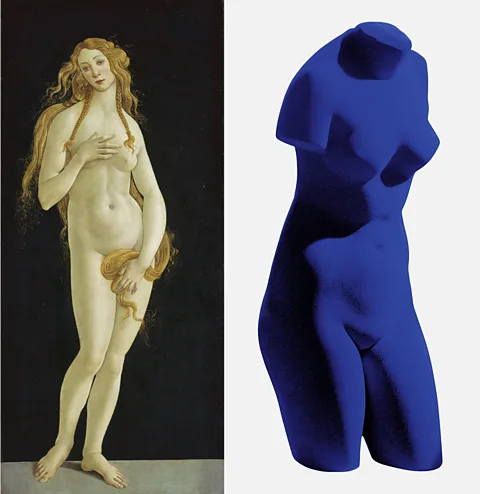
The image of Aphrodite, the ancient Greek goddess of love, beauty, and procreation, remains one of the most enduring yet contentious subjects in the history of Western art. For over two millennia, her depiction has oscillated between sacred reverence and secular scandal, serving as a canvas upon which societies have projected their shifting attitudes toward gender, sexuality, and the female form. While she was originally a multi-faceted deity with roots in the complex mythologies of the Near East, the artistic focus on her nudity—specifically following the 4th-century BCE—transformed her into a figure of perpetual debate. Today, as major institutions like the Ashmolean Museum re-examine her legacy, the controversy surrounding Aphrodite continues to provoke questions about the "male gaze," the objectification of women, and the power of religious iconography in a secular world.
The Multi-Faceted Origins of a Global Deity
To understand the controversy, one must first look back to the historical and mythological genesis of the goddess. Aphrodite’s origins are not found in a single narrative but are instead the result of a complex cultural synthesis. Historically, the goddess emerged on the island of Cyprus around 1200 BCE. She was not a domestic Greek invention but an evolution of much older Middle Eastern deities, including the Mesopotamian Ishtar, the Phoenician Astarte, and the Egyptian Hathor.
In these earlier iterations, the goddess was far more than a symbol of romantic attraction. She was a formidable power responsible for the fertility of the earth, the cycles of nature, and even the fortunes of war. Anja Ulbrich, curator at the Ashmolean Museum, notes that these archaic goddesses possessed "more than one function." This is reflected in the early Greek cults of Aphrodite, where she was worshipped by the navy as a protector of seafarers and was occasionally depicted as a warrior goddess.

The mythological account of her birth provides a different, more visceral perspective. According to Hesiod’s Theogony, Aphrodite was born from the sea foam (aphros) produced when the titan Kronos castrated his father, Ouranos, and threw his genitals into the ocean. This primal, violent origin story contrasts sharply with the later, more sanitized versions of her myth, yet it underscores the raw, elemental power she was thought to wield. As she stepped onto the shores of Cyprus, flowers were said to bloom beneath her feet, symbolizing her role as the "Pandemos"—the goddess of all people, whose influence pervaded every aspect of living existence, from the growth of plants to the passions of humanity.
The Praxitelean Revolution and the Birth of the Female Nude
The pivotal moment in the history of Aphrodite’s depiction occurred in approximately 350 BCE, when the sculptor Praxiteles created the Aphrodite of Knidos. Before this period, female deities in Greek art were almost exclusively depicted fully clothed. While male nudity had been celebrated as a symbol of heroic virtue and athletic perfection since the 7th century BCE, the female body remained largely concealed in public monuments.
Praxiteles’ decision to depict Aphrodite completely nude was a radical departure from tradition. The original marble statue, which was purchased by the citizens of Knidos after being rejected by the more conservative city of Kos, became an immediate sensation. It was the first life-sized representation of the naked female form in Greek history. However, the controversy did not stem solely from the lack of clothing, but from the specific pose Praxiteles employed.
The statue depicted the goddess caught in a private moment, preparing for or finishing a bath. Her posture—slightly hunched, with one hand held over her groin—created a sense of vulnerability and modesty. This pose became known as the Venus Pudica (the modest or shameful Venus). Unlike the confident, outward-facing nudity of male statues, the Venus Pudica suggested that the goddess was being observed without her consent. This established a voyeuristic relationship between the artwork and the spectator, a dynamic that would define the "female nude" in Western art for the next 2,000 years.

A Chronology of Artistic Influence and Public Outcry
The influence of the Aphrodite of Knidos cannot be overstated. Though the original is lost, it was copied thousands of times during the Roman era, with variations like the Capitoline Venus and the Medici Venus spreading the Pudica aesthetic across the Roman Empire.
The Renaissance Revival
Following the collapse of the Roman Empire and the rise of Christian asceticism, the nude Aphrodite largely vanished from public view. However, during the 15th-century Renaissance, artists began to rediscover and emulate classical sculptures. Sandro Botticelli’s The Birth of Venus (c. 1485) famously utilized the Pudica pose, reintroducing the goddess into the European consciousness. While Botticelli’s work was celebrated by the Medici circle, it also faced religious pushback, most notably during the "Bonfire of the Vanities" led by the friar Savonarola.
The Victorian and Edwardian Backlash
By the 19th century, the depiction of Venus had become a staple of academic art, but public patience with the "eroticized" goddess began to wear thin. In 1880, the American author Mark Twain famously lambasted Titian’s Venus of Urbino (1534), calling it "the foulest, the vilest, the obscenest picture the world possesses." Twain’s criticism was rooted in the perceived hypocrisy of the era, where high art was used as a veil for what he considered pornography.
The 1914 National Gallery Incident
The tension between art and social politics reached a violent climax on March 10, 1914. Mary Richardson, a member of the militant suffragette movement, entered the National Gallery in London and attacked Diego Velázquez’s Rokeby Venus with a meat cleaver. Richardson struck the canvas at least seven times, leaving deep gashes in the depiction of the goddess’s back. Richardson later stated that her act was a protest against the government’s treatment of Emmeline Pankhurst, but she also offered a second, more culturally resonant explanation: "I didn’t like the way men visitors gaped at it all day long." This event remains a seminal moment in feminist art history, highlighting the goddess as a symbol of the male-dominated gaze.

Supporting Data: The Ubiquity of the Venus Archetype
The prevalence of the Aphrodite/Venus figure in global museum collections underscores her status as a foundational archetype. Data from major art historical databases suggest that:
- There are over 50 known Roman copies of the Aphrodite of Knidos type in major museums today.
- In the Louvre alone, the Venus de Milo (c. 100 BCE) remains one of the three most visited works, alongside the Mona Lisa and the Winged Victory of Samothrace.
- A search of the British Museum’s online collection yields over 2,500 objects related to the keyword "Aphrodite" or "Venus," ranging from monumental statues to domestic oil lamps and coins.
This data suggests that while the goddess is a figure of controversy, she is also an essential component of the global cultural economy. The "Venus" brand is one of the oldest and most successful in human history, transcending its original religious context to become a universal symbol of aesthetic standard.
Modern Re-appropriation and Empowerment
In the 21st century, the narrative surrounding Aphrodite has begun to shift. No longer just an object of the "gaping" male visitor, the goddess is being reclaimed by female artists and performers as a symbol of agency and self-ownership.
In 2023, the global superstar Beyoncé utilized Venus iconography during her Renaissance World Tour. She appeared on stage emerging from a giant metallic clam shell—a direct reference to Botticelli—wearing a gown adorned with hands in the Venus Pudica position. By doing so, she subverted the traditional meaning of the pose; rather than representing shame or modesty, the hands became a stylized fashion statement, asserting her control over her own image. Similarly, artists like Lady Gaga (with her Artpop era) and Björk have invoked Aphrodite to explore themes of queer identity, digital beauty, and reproductive rights.

Analysis of Implications: The Enduring Mirror
The controversy of Aphrodite is, in essence, a reflection of the evolving human condition. As Anja Ulbrich suggests, the goddess is "very versatile," and different eras have narrowed her down to fit their specific needs. In the ancient world, she was a cosmic force; in the Renaissance, she was a symbol of humanist beauty; in the 19th century, she was a flashpoint for morality; and in the 20th century, she became a target for political protest.
The implication of Aphrodite’s continued presence in art is that society is never truly finished debating the female body. Whether she is being hacked by a cleaver or celebrated on a concert stage, she forces a confrontation with how we define beauty and who has the right to look. The "obscenity" that Mark Twain perceived was not in the goddess herself, but in the social structures that surrounded her.
As we move further into an era defined by digital imagery and the "Instagram face," the classical proportions of Aphrodite remain a haunting benchmark. The goddess of love continues to be a polarizing figure not because her image has changed, but because we have. Her 3,000-year history serves as a reminder that art is never just about the subject; it is about the eyes of the beholder and the cultural baggage they bring to the gallery. Aphrodite Pandemos—the goddess of all people—remains as relevant, and as troublesome, as ever.