admin
The modernization of a landmark dining program is frequently framed through the lens of necessary change—implementing contemporary menus, sourcing innovative ingredients, adopting avant-garde techniques, and reimagining service models to align with the expectations of the modern traveler. However, for the culinary leadership at the Biltmore Hotel in Miami-Coral Gables, a National Historic Landmark approaching its centennial in 2026, the strategic focus has shifted toward a more nuanced inquiry: identifying which elements of the guest experience must remain untouched. This philosophy of stewardship, rather than mere management, defines the current evolution of the Biltmore’s culinary identity, where the primary objective is to balance the preservation of timeless rituals with the logistical and aesthetic demands of a 21st-century luxury resort.
The Evolution of a Century-Old Culinary Identity
The Biltmore Hotel has served as a cornerstone of South Florida’s social and architectural history since its opening in 1926. Designed by Schultze and Weaver—the architects behind the Waldorf Astoria and The Pierre in New York—the property was conceived as a "cathedral of leisure." Throughout its nearly 100-year history, the hotel’s dining rooms have hosted royalty, heads of state, and icons of the silver age of Hollywood. This deep historical resonance creates a unique set of challenges for contemporary culinary directors. Unlike a new restaurant opening with a blank slate, a landmark property carries the weight of generational expectations.
Steven Hall, the Director of Culinary Operations and Executive Chef at the Biltmore, describes this responsibility as being a steward of a legacy that predates the current staff and will likely outlast them. The challenge lies in distinguishing between aspects of the operation that require technical updating and those that are foundational to the hotel’s identity. In the luxury hospitality sector, "timelessness" is often the most valuable commodity, yet it is also the most difficult to maintain in an era characterized by rapid technological shifts and changing consumer preferences toward convenience and speed.
Historical Context: From the Roaring Twenties to the Centennial
To understand the current modernization efforts, one must look at the Biltmore’s timeline. Opened during the height of the Florida land boom, the hotel was a symbol of the Mediterranean Revival movement. After serving as a military hospital during World War II and later as a campus for the University of Miami’s medical school, the property underwent a massive $55 million restoration in the 1980s to return it to its former glory.
As the hotel prepares for its 2026 centennial, the culinary program is undergoing a similar revitalization. This period of transition is marked by a data-driven approach to guest satisfaction. Industry trends in the luxury segment indicate that while 78% of high-net-worth travelers prioritize "unique experiences," there is a concurrent rise in "nostalgia marketing," where guests seek out classic experiences that feel authentic and grounded in history. The Biltmore’s strategy leverages this by ensuring that the "ritual" of dining remains the core product, while the "details" of the menu and service are refined to meet modern standards of health, sustainability, and presentation.
The Preservation of Ritual: Afternoon Tea as a Strategic Anchor
One of the most prominent examples of this philosophy is the Biltmore’s Traditional Afternoon Tea. In an increasingly digital and fast-paced world, the tea service represents a deliberate counter-trend: the "slow dining" movement. The ritual is characterized by a specific cadence—tiers of savory and sweet offerings, the precise pacing of the service, and an environment that encourages presence and conversation.
From a management perspective, the decision not to modernize the tea ritual for the sake of efficiency is a calculated one. While many modern dining establishments have moved toward faster turnover rates and casual service styles, the Biltmore has maintained the formal structure of its tea service. According to culinary leadership, the value of the tradition lies in its ability to offer a "sense of occasion" that cannot be replicated in a casual setting. However, the modernization occurs "under the hood." The ingredients are sourced from local artisanal producers, the pastry techniques utilize modern molecular gastronomy to enhance textures without altering classic flavors, and the tea selection is curated to include rare single-estate harvests that appeal to the modern connoisseur.
Modernizing the Golf Dining Experience: The Case of Fairways
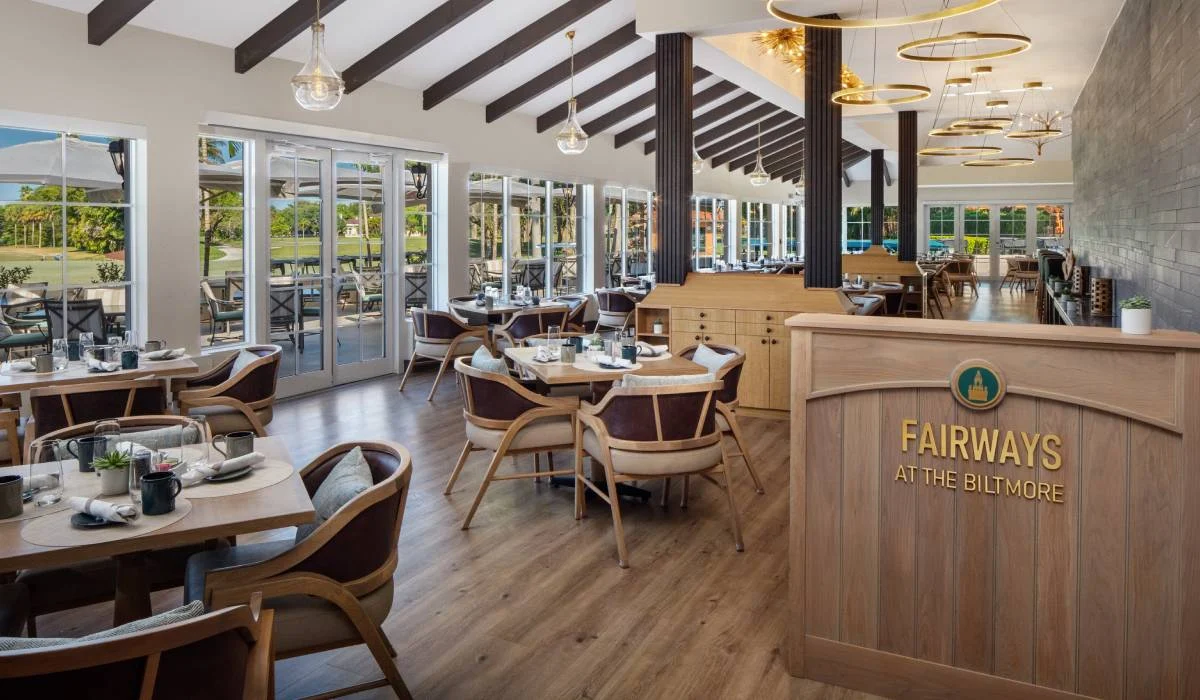
While the Afternoon Tea represents the preservation of ritual, the Fairways restaurant—the hotel’s classic golf club dining venue—illustrates how heritage can be used as a guide for necessary evolution. Historically, golf club restaurants were often restricted by a narrow definition of their clientele, focusing primarily on the post-round needs of golfers.
However, modern resort demographics have shifted. Data from the National Golf Foundation indicates that the profile of the "resort golfer" is diversifying, with a significant increase in younger players and families. Furthermore, leisure travelers today do not compartmentalize their dining experiences based on their morning activities. A guest who spends the morning at the Biltmore’s world-class pool may choose Fairways for lunch because of its atmosphere, not necessarily because they have just finished 18 holes.
Modernizing Fairways required moving beyond the "golf restaurant" trope to create a versatile social hub. This involved a comprehensive redesign of the menu to include approachable but thoughtfully prepared dishes that reflect contemporary dietary trends—such as plant-based options and lighter, nutrient-dense fare—while maintaining the "clubhouse" comfort that regular patrons expect. The goal was to create an environment where a local resident, a family on vacation, and a golfer could all find a relevant experience.
Operational Excellence and the Management of Scale
The execution of these culinary strategies requires significant operational infrastructure. As Director of Culinary Operations, Steven Hall oversees a team of more than 200 associates. Managing a staff of this size in a landmark property involves balancing the high-volume requirements of a 271-room hotel with the precision required for fine dining.
The Biltmore’s culinary department operates across multiple venues, including the fine-dining Fontana, the poolside Cascade, and extensive banquet and catering operations for weddings and corporate events. The modernization process involves the implementation of advanced kitchen management systems to reduce waste and improve consistency, yet the human element remains paramount. In a landmark hotel, the staff often becomes part of the tradition themselves; many employees at the Biltmore have tenures spanning decades, providing a continuity of service that is rare in the high-turnover hospitality industry.
Market Analysis: The Intersection of Heritage and Contemporary Luxury
The Biltmore’s approach reflects a broader trend in the global luxury hospitality market. Properties like the Ritz Paris, the Savoy in London, and the Raffles in Singapore have all faced similar dilemmas during their centennial renovations. The consensus among industry analysts is that "landmark fatigue" occurs when a property fails to innovate, becoming a "museum" of its own past. Conversely, "brand dilution" occurs when a historic property chases every emerging trend, losing its unique identity in the process.
The Miami market presents its own set of variables. With a surge of new ultra-luxury developments in Brickell and Miami Beach, the Coral Gables market relies on its reputation for "Old Florida" elegance. The Biltmore’s culinary program acts as a primary driver of this brand positioning. By maintaining high-standard traditions like the Afternoon Tea while modernizing venues like Fairways, the hotel captures both the legacy guest and the new luxury traveler.
Broader Impact and Future Implications
The strategy employed at the Biltmore offers a blueprint for other historic institutions facing the pressures of modernization. It suggests that the most effective way to preserve heritage is not to freeze it in time, but to understand the psychological and emotional reasons why guests return to a specific tradition. By protecting the "core ritual" and evolving the "technical details," a property can maintain its relevance without sacrificing its soul.
As the Biltmore Hotel Miami-Coral Gables moves toward its 2026 centennial, the culinary program stands as a testament to the idea that heritage is an asset, not a constraint. The ongoing evolution of the dining program will likely continue to focus on this balance. For the culinary team, the ultimate success of a dish or a service model is measured by its ability to feel both "entirely fresh" and "comfortingly recognizable." In the world of landmark hospitality, the art of modernization is not knowing what to erase, but knowing what deserves to remain, ensuring that the stories embedded in the hotel’s walls continue to be told through the medium of exceptional cuisine.