admin
admin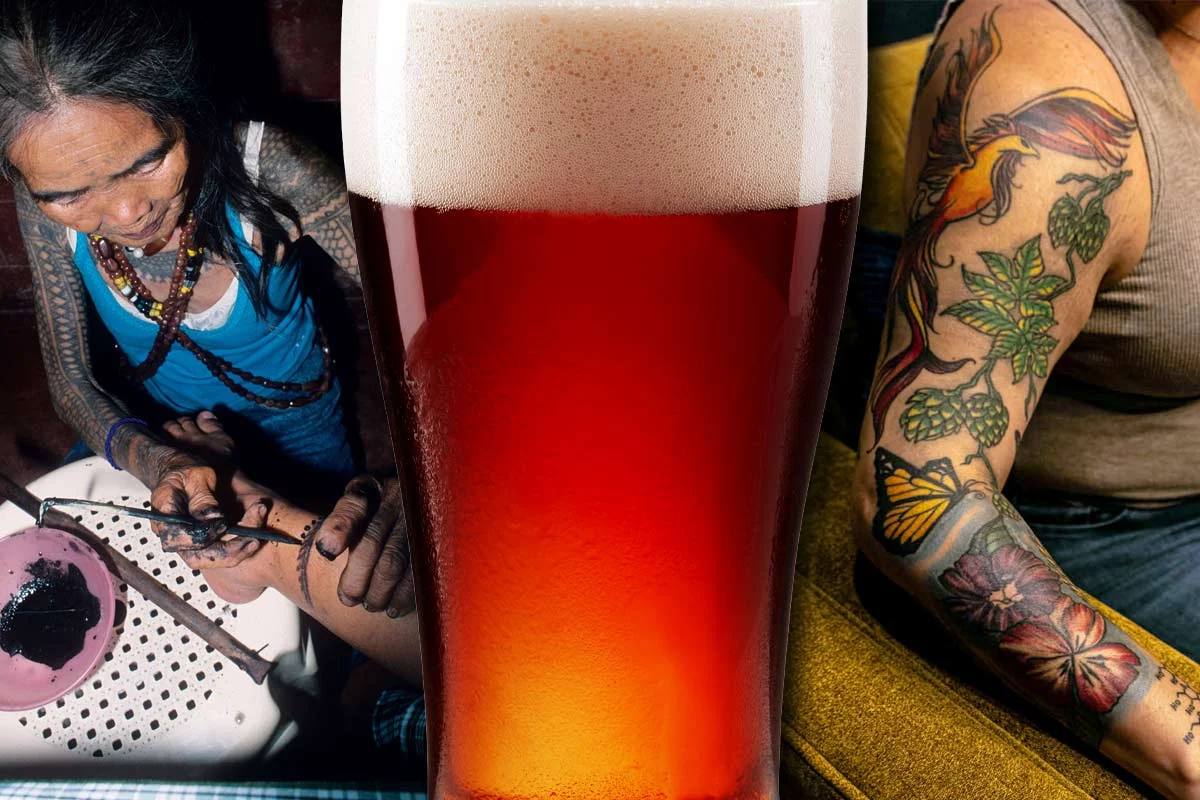
Across the diverse landscape of human history, tattooing and fermentation have rarely occupied the same academic or social discourse, yet a closer examination reveals a profound and ancient kinship. These two practices, though seemingly disparate—one involving the permanent marking of human skin and the other the biological transformation of organic matter—share a fundamental architecture of transformation. Both are crafts that reshape raw material over time through a delicate interplay of environmental relationship, spiritual devotion, and communal bond. Tattooing inscribes identity and ancestry onto the living canvas of the body, while fermentation preserves, nourishes, and binds societies through shared taste and ritual. Together, they represent a "grammar of transformation" that allows communities to stay in constant conversation with their land, their ancestors, and their future.
The Hearth as a Nexus of Transformation
In the traditional societies of the Ainu, the Kalinga, and the Makushi, the intersection of ink and drink is not merely metaphorical but rooted in the physical reality of the hearth. The hearth serves as the domestic and spiritual center of the home, a place where fire facilitates the transition from the raw to the cooked, and from the profane to the sacred.
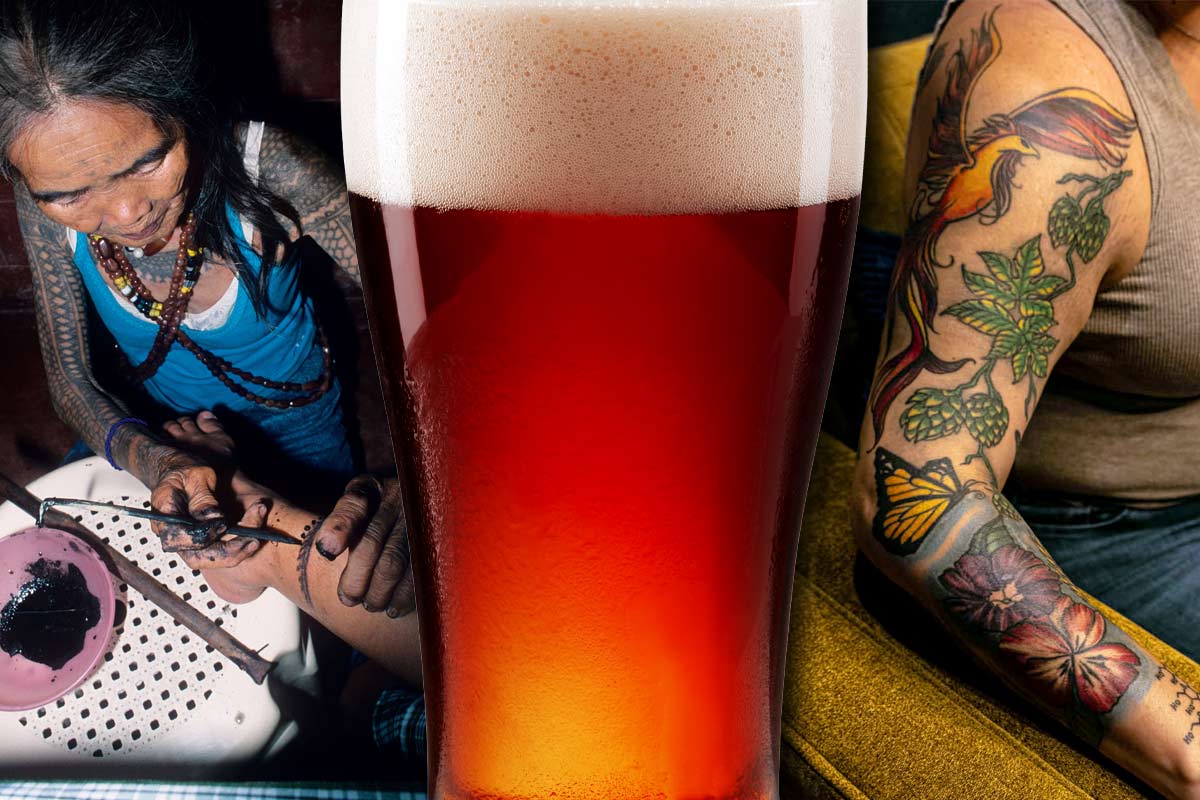
Among the Ainu, an Indigenous people of northern Japan and the Russian Far East, the hearth is the domain of Kamuy Fuchi, the hearth goddess. Historically, Ainu women were the primary practitioners of both tattooing and fermentation. To create the dark pigment for their facial and hand tattoos, women scraped soot from the underside of earthenware pots used for brewing and cooking. This soot, mixed with water steeped in ash tree bark, was then rubbed into patterned incisions made with a makiri (tattooing knife).
This process directly linked the beverage to the body. The beer, known as tonoto—a fermented rice and millet beverage—was prepared exclusively by women under the spiritual oversight of Kamuy Fuchi. By using the byproduct of the brewing fire to mark their skin, Ainu women embodied the protection of the goddess. These tattoos were not merely aesthetic; they marked a girl’s transition to womanhood and were believed to ward off malevolent spirits. The suppression of these practices during the late 19th century under Japanese colonial policy, specifically the Hokkaido Aborigine Protection Act of 1899, sought to strip the Ainu of this mythological context, yet the historical record preserves the hearth as the site where the "fire" of culture was both ingested as drink and worn as ink.
Chemical Intersections and Social Prestige in the Philippines
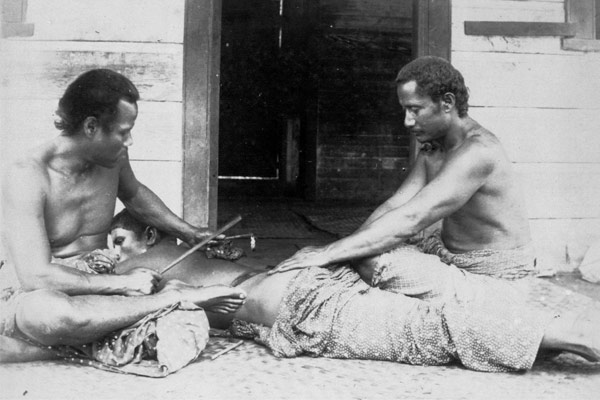
In the rugged Cordillera mountain region of Luzon, the Kalinga people provide another compelling example of how fermentation technology informs the art of the tattoo. The Kalinga practice of batok, or hand-tapped tattooing, has gained international recognition through the work of Apo Whang-od Oggay, who, at over a century old, remains a master of the craft.
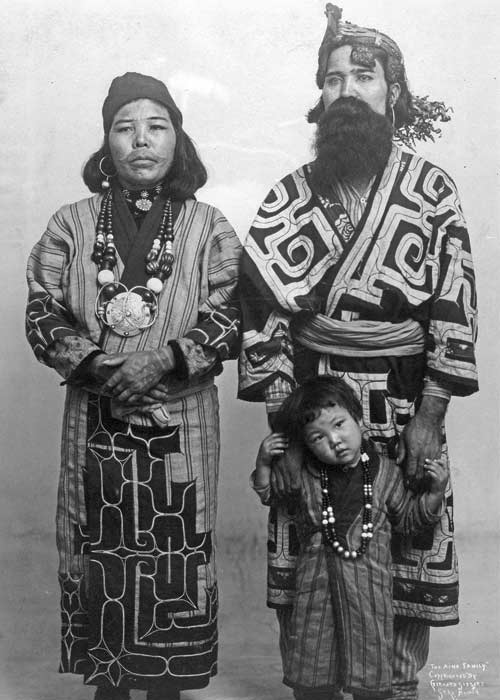
The technical intersection here lies in the composition of the ink. Historically, Kalinga tattooists utilized a mixture of soot and water, but in certain regions, sugarcane juice was employed as a carrier. Sugarcane juice, high in natural sugars, begins to ferment almost immediately upon exposure to wild yeasts in the air. This fermentation process alters the viscosity and chemical profile of the ink, potentially affecting its application and interaction with the skin’s biological systems.
While the biological mechanism of a tattoo—whereby macrophages in the dermis "lock" the pigment in place—is distinct from the microbial activity of fermentation, the Kalinga view both as essential markers of social standing. For men, batok historically signaled bravery in warfare; for women, it represented beauty and readiness for marriage. Parallel to this, the consumption of fermented beverages like tapuy (rice wine) and tubâ (palm wine) remains central to the feasts and healing rites where these tattoos are displayed. In this context, the "sting" of the needle and the "kick" of the wine are two sides of the same communal coin.
The Makushi and the Charms of the Brew
In the savannas and forests of Guyana, the Makushi people offer perhaps the most direct functional link between tattooing and fermentation. For the Makushi, the processing of cassava (Manihot esculenta) is the cornerstone of daily life. The production of parakari, a complex cassava beer involving dual fermentation with both mold and yeast, is a high-stakes labor that defines a woman’s role within the community.
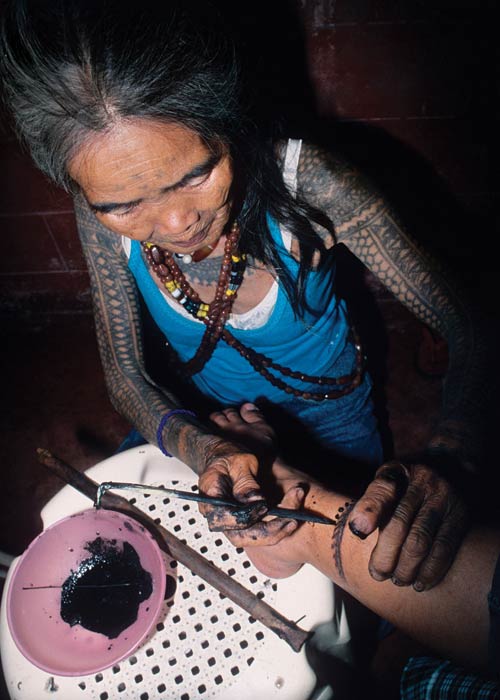
Anthropological studies, including those by Dr. Lars Krutak, highlight the use of kansku—tattoos specifically designed as brewing charms. These markings were believed to grant a woman the spiritual and physical capacity to produce superior fermented products. The motifs often depicted arthropods like bees or scorpions, symbolizing the desired "sting" (yekî) or sweetness of the beverage. In the Makushi language, the term yekî is a linguistic bridge, referring simultaneously to the potency of a drink and the sensation of being intoxicated.
These tattoos were considered a prerequisite for social interaction. A woman was often required to have her arms tattooed before she was permitted to serve drink to a man, ensuring that the beverage had been prepared under the correct spiritual conditions. Although these practices declined under missionary influence in the 20th century, they underscore a worldview where the body is an active instrument in the fermentation process, rather than just a passive consumer of its results.
Hawaiian Epistemology: Genealogy and Kinship
The Hawaiian framework of kākau (tattooing) and the fermentation of poi (taro) provides a sophisticated philosophical lens through which to view these intersections. In Native Hawaiian cosmology, the taro plant, or kalo, is recognized as Hāloa, the elder brother of the Hawaiian people. Therefore, the cultivation and fermentation of kalo into poi is not merely food production; it is an act of kinship and ancestral care.
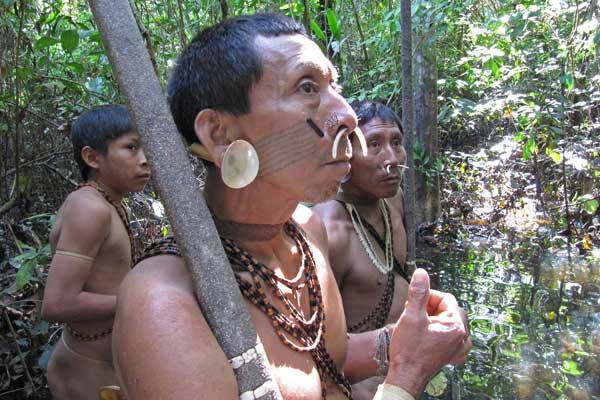
Simultaneously, kākau serves as a living record of genealogy. As noted by scholar Dr. Lindsay Malu Kido, reviving these traditions is a form of "Indigenous body sovereignty." By tattooing ancestral patterns onto the skin, Hawaiians reclaim their bodies from colonial moral frameworks. The parallel between kākau and poi is found in the concept of "living records." Both the fermented taro and the tattooed skin are biological entities that carry the past into the present. They are technologies of continuity that ensure the survival of a lineage through periods of external suppression.
A Chronology of Suppression and Modern Resilience
The history of these twin practices is marked by a clear timeline of colonial interference followed by contemporary reclamation:
- 18th – 19th Century: Indigenous tattooing and brewing practices are documented by European explorers, often described as "primitive" or "pagan."
- Late 19th Century: Colonial governments (Japan in Hokkaido, the U.S. in Hawaii and the Philippines) implement bans on traditional tattooing and regulate Indigenous alcohol production to facilitate assimilation.
- Mid-20th Century: Many traditional practices go "underground" or see a sharp decline as younger generations are forced into Western education and religious systems.
- Late 20th – Early 21st Century: A global resurgence of Indigenous identity leads to the revival of hand-tapped tattooing and traditional fermentation. Masters like Whang-od Oggay become cultural icons.
- Present Day: The craft beer movement and the tattooing industry begin to intersect, with modern brewers adopting the "ink" of their ancestors or their trade to express professional identity.
Contemporary Echoes in the Craft Brewing Industry
In the modern era, the relationship between ink and drink has shifted from ancestral protocol to personal narrative, yet the underlying logic of transformation remains. Today’s craft brewers often utilize tattoos as a visual language to communicate their dedication to the science and art of fermentation.
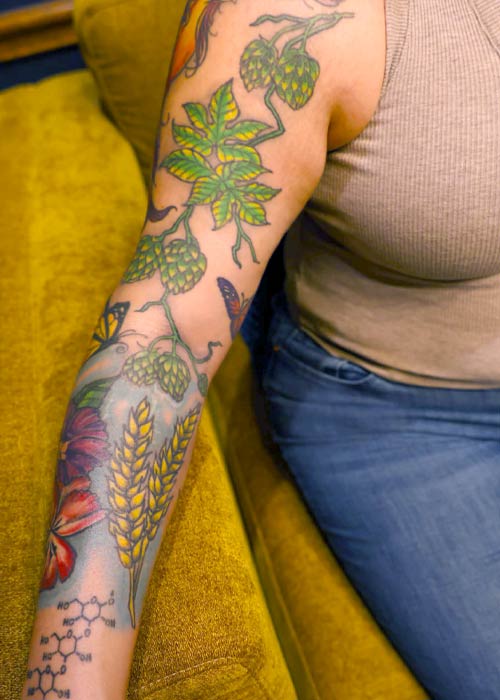
Sandra Murphy, owner of Murphy’s Law Brewery in Texas, exemplifies this modern synthesis. After facing profound personal loss, Murphy turned to the brewing industry as a site of healing. Her tattoo sleeve—which incorporates the chemical formula for ale yeast cell walls alongside wheat, barley, and birth flowers—is a testament to how fermentation and tattooing can serve as tools for reclaiming one’s voice.
Similarly, Rachael Engel of Sound2Summit Brewery notes that tattooing was an integral part of her journey of self-discovery and transition. Her "hop sleeve" represents a personal evolution that mirrors the growth of the hop bine itself—a climb toward the light. These contemporary examples demonstrate that while the specific religious contexts of the Ainu or Makushi may have evolved, the human impulse to mark the body in celebration of a transformative craft remains undiminished.
Analysis of Implications: Ink and Drink as Resistance
The convergence of tattooing and fermentation offers significant insights into the resilience of human culture. From a sociological perspective, these practices function as "embodied knowledge." They are skills that cannot be fully captured in text but must be passed from hand to hand, from breath to breath.
Furthermore, the revival of these crafts serves as a powerful tool for decolonization. By returning to traditional methods of brewing and tattooing, communities are asserting their right to define their own aesthetics and their own nourishment. This is a move away from the homogenized, mass-produced culture of the 20th century toward a localized, relational way of being.
In conclusion, the intersection of tattooing and fermentation reveals that humans have always sought ways to make the internal external and the ephemeral permanent. Ink marks the body, creating a boundary of identity; fermentation marks the food, creating a boundary of culture. Both leave indelible traces of where we have been and provide a roadmap for where we are going. Whether it is the soot of an Ainu hearth or the hop vine on a modern brewer’s arm, these marks tell a story of transformation—a story that is brewed in the heart and inscribed on the skin.