Jia Lissa
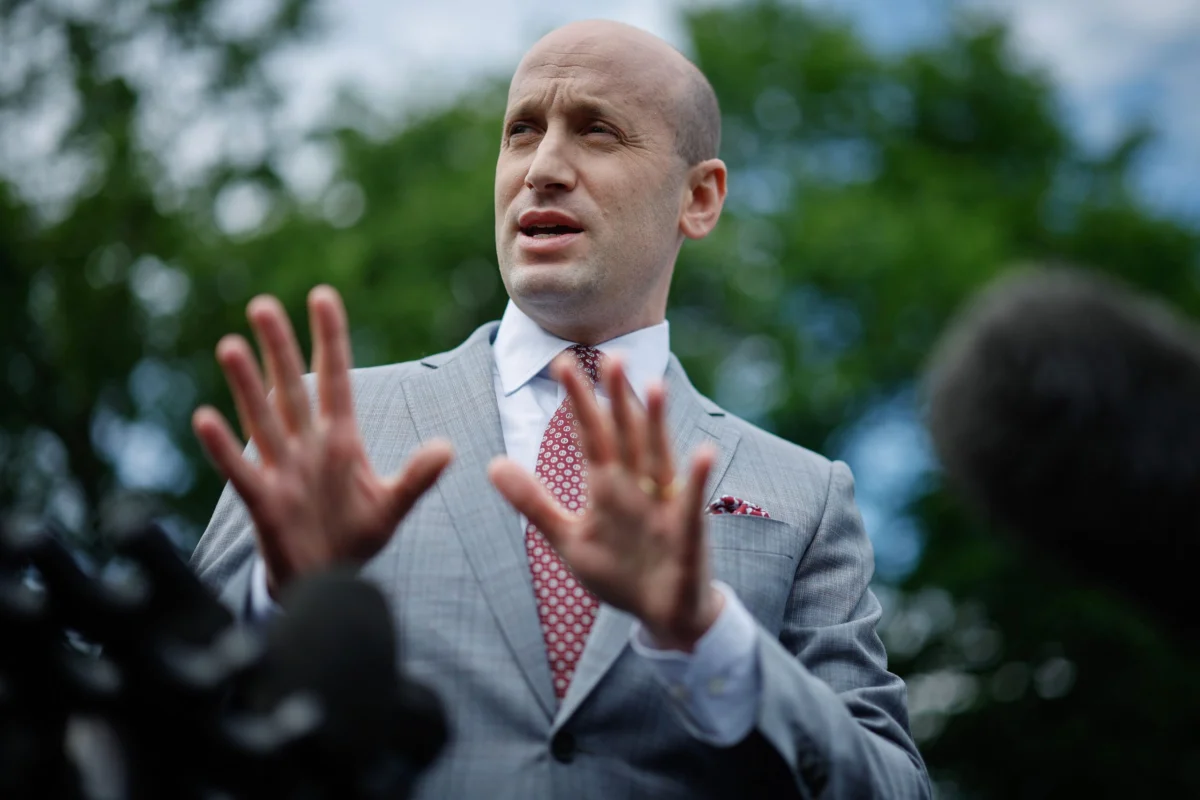
Last week, President Donald Trump formally appointed Stephen Miller, his long-serving and controversial senior advisor, as his new Chief of Staff. The promotion places Miller, widely recognized as the principal architect of the administration’s stringent and often unpopular immigration policies, in the most powerful administrative position within the White House. This significant leadership change occurs in the immediate aftermath of midterm elections that delivered a decisive Democratic majority in both the Senate and the House of Representatives, signaling a profound shift in the legislative landscape. Miller, whose previous titles included Deputy Chief of Staff for Policy and Homeland Security Adviser, is now poised to play an even more critical and direct role in shaping the White House’s agenda for the remainder of the presidential term.
The Strategic Timing of Miller’s Elevation
Miller’s ascent to Chief of Staff is not merely a personnel change but a strategic maneuver within a tumultuous political environment. The timing, just days after a midterm election cycle that saw considerable losses for the Republican party, suggests a clear intent from President Trump to consolidate power around a trusted and ideologically aligned figure. Analysts widely interpret the election results as a repudiation of certain aspects of the Republican platform and presidential conduct, with some commentators even labeling it an "extinction-level event" for the party’s legislative ambitions. In this context, Trump’s decision to elevate Miller, a figure synonymous with the administration’s most hardline positions, signals a potential doubling down on the "America First" agenda rather than a pivot towards moderation or bipartisan compromise.
Historically, the Chief of Staff serves as the President’s gatekeeper, agenda-setter, and closest confidant, managing the White House staff and controlling access to the Oval Office. This role demands exceptional loyalty and a deep understanding of the President’s priorities. Miller has consistently demonstrated both throughout his tenure. His promotion underscores President Trump’s reliance on individuals who are not only ideologically aligned but also fiercely loyal and effective in implementing his vision, particularly in times of political adversity.
Stephen Miller’s Trajectory: From Conservative Activist to Policy Architect
Stephen Miller’s journey to the pinnacle of White House power has been characterized by an unwavering commitment to a conservative, nationalist ideology. Raised in Southern California, an area known for its diverse demographics and generally liberal political leanings, Miller’s early political awakening stood in stark contrast to his surroundings. His family’s history, tracing back to ancestors who fled antisemitic pogroms in Eastern Europe to seek refuge in the United States, adds a layer of complexity to his staunch anti-immigration stance, a point often highlighted by critics and biographers.
Prior to joining the Trump campaign in 2016, Miller honed his political acumen as a press secretary for then-Congresswoman Michele Bachmann and later as communications director for Senator Jeff Sessions. In these roles, he developed a reputation as a fierce advocate for conservative principles, particularly on issues of national sovereignty and immigration enforcement. It was during his time with Sessions that Miller’s deep-seated beliefs about immigration solidified, aligning with the "America First" philosophy that would later become a cornerstone of the Trump presidency.
Upon joining the Trump campaign, Miller quickly became a key advisor, drafting speeches and articulating the candidate’s populist and nationalist message. His influence grew exponentially once Trump assumed office, where he was instrumental in crafting some of the administration’s most impactful and controversial policies. These included the travel bans targeting several Muslim-majority countries, the "zero tolerance" policy at the U.S.-Mexico border leading to family separations, the efforts to end the Deferred Action for Childhood Arrivals (DACA) program, and the significant reduction in refugee admissions. These policies, often implemented through executive action and regulatory changes, have consistently faced legal challenges and widespread condemnation from human rights organizations and Democratic lawmakers. Public opinion polls have frequently indicated significant opposition to these measures, particularly family separations, which consistently registered high disapproval ratings across the political spectrum.
Jean Guerrero’s Evolving Understanding: Beyond White Nationalism
Journalist Jean Guerrero, author of the 2020 biography Hatemonger: Stephen Miller, Donald Trump, and the White Nationalist Agenda, offers unparalleled insight into Miller’s motivations and ideological framework. Guerrero, who, like Miller, grew up in Southern California amidst immigrant communities, initially embarked on her research to understand how a man from such a background could champion white supremacist and anti-immigrant views. Her comprehensive investigation into Miller’s formative experiences, mentors, and the intellectual currents that shaped his beliefs culminated in a nuanced understanding that has continued to evolve.
Initially, Guerrero perceived Miller primarily as a white nationalist, driven by racial animosity and a desire to preserve what he viewed as "Western civilization." However, her ongoing analysis, particularly as she observed the administration’s broader foreign policy actions and Miller’s persistent behaviors, led her to a more profound conclusion: Miller, she now believes, is fundamentally a "class supremacist" and a case study in "oligarchic capture."
Guerrero’s shift in perspective stemmed from observations such as the administration’s interference in countries like Venezuela and Honduras, actions that often lead to instability and increased migration flows. She questioned why policies seemingly designed to cause migration would be pursued by an anti-immigrant administration. The answer, she posits, lies in Miller’s deeper-seated disdain for the less privileged. She recalls instances from Miller’s youth, detailed in her book, where he would intentionally leave trash for custodial staff at his high school and college, protesting any requests to clean up after himself. This behavior, she argues, reveals a consistent desire to keep people "in their place" – a hierarchical worldview where certain individuals are meant to serve others, and any challenge to this order is met with antagonism.
This "class supremacist" lens recontextualizes Miller’s focus on immigration. While racial elements remain, Guerrero suggests the underlying motivation is to maintain a stratified society. By criminalizing and marginalizing one sector of the population – immigrants – the administration, under Miller’s guidance, creates a "servant class" that is disempowered and unable to collectively bargain for dignity or improved conditions. This strategy, in turn, prevents broader solidarity among workers, distracting from systemic issues of economic inequality and concentrating power among an elite. Miller’s long-standing admiration for The Camp of the Saints, a white supremacist dystopian novel, further illuminates this worldview, depicting immigrants as an existential threat and their "citizen allies" as villains undermining societal order.
Implications for the White House Agenda and Beyond
With Miller now at the helm as Chief of Staff, the implications for the White House agenda are significant, particularly given the newly divided Congress. The Democratic majority in both legislative chambers means that major legislative initiatives from the White House will face formidable opposition. This reality is likely to push the administration to rely even more heavily on executive actions, regulatory changes, and administrative policy shifts – precisely the areas where Miller has historically demonstrated exceptional influence and effectiveness.
1. Intensification of the "America First" Agenda: The White House spokesperson, Lauren Bis, stated that Miller "will continue to deliver historic successes for the American people" through the "America First" agenda, including a "crime crackdown," "record setting deregulation," and "securing our border." This indicates a continued focus on nationalistic policies, potentially leading to further executive orders on immigration, increased border enforcement measures, and possibly efforts to redefine domestic opposition as threats to national security.
2. Executive Action and Regulatory Warfare: Given legislative gridlock, Miller’s role will be crucial in identifying and implementing policies that do not require congressional approval. This could include further restrictions on asylum eligibility, expedited deportations, new visa regulations, and the continued use of federal agencies to enforce a stricter interpretation of immigration laws. The administration may also seek to challenge existing precedents or expand presidential powers in areas related to national security and border control.
3. Shifting Targets: Allies and Surveillance: Guerrero suggests that Miller may shift his focus from solely targeting immigrants to also targeting their "citizen allies" and those who advocate for social justice. This could involve an increased emphasis on surveillance technologies and collaborations with tech companies, potentially eroding rights to privacy and free speech. Such a strategy would align with Miller’s perceived desire to "inflame and antagonize," extending the "war" to anyone perceived as undermining the established order. This could manifest in heightened scrutiny of non-profit organizations, activists, and even academic institutions that support marginalized communities.
4. Political Strategy and the Base: Miller’s appointment can be seen as a move to energize President Trump’s core political base, which responds strongly to hardline stances on immigration and national security. In the wake of midterm losses, this strategy aims to consolidate support and perhaps lay the groundwork for future political campaigns, emphasizing a confrontational approach against perceived enemies both foreign and domestic. However, this strategy risks further alienating independent voters and moderate Republicans who have shown increasing discomfort with extreme rhetoric and policies. Public opinion data consistently demonstrates that while a segment of the population supports stricter immigration enforcement, the methods employed by the administration, particularly those involving family separations and perceived cruelty, often draw widespread condemnation.
5. Broader Societal Impact: The implications extend beyond policy to the very fabric of American society. A Chief of Staff committed to a "class supremacist" worldview, as described by Guerrero, could exacerbate social divisions, increase fear within immigrant communities, and challenge established norms of civil discourse and democratic dissent. The emphasis on strength, force, and power, as Miller once articulated to Jake Tapper, suggests a governance philosophy that prioritizes state authority over individual liberties, particularly for those deemed to be "out of place."
In conclusion, Stephen Miller’s elevation to Chief of Staff marks a pivotal moment in the Trump administration’s final phase. It signals a reaffirmation of the "America First" agenda, a strategic consolidation of power, and a potential intensification of policies rooted in a complex ideology that, according to leading biographers, transcends mere racial nationalism to encompass a deeper-seated desire for social hierarchy and control. As the White House navigates a politically fractured landscape, Miller’s influence will undoubtedly shape both policy and political strategy, leaving an indelible mark on the nation’s direction.