admin
admin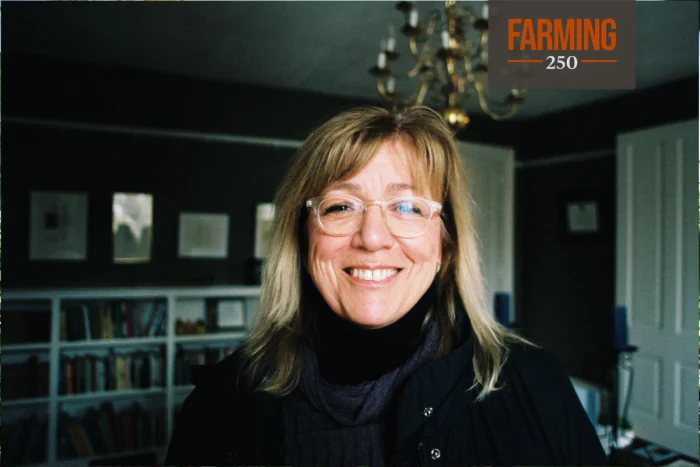
In a pivotal moment for American agriculture, Mary Berry, a lifelong farmer and daughter of renowned agrarian philosopher Wendell Berry, stands as a vocal advocate for small-scale, diversified farming and the revitalization of rural culture. Through her personal journey and the impactful work of The Berry Center, established in 2011, she actively challenges the dominant industrial agricultural paradigm, championing localized food systems and community-driven solutions. Her steadfast commitment to these principles, deeply rooted in her own upbringing on a subsistence farm in Kentucky, provides a compelling counter-narrative to the prevailing economic forces that have reshaped the nation’s agricultural landscape, particularly following the dissolution of the federal tobacco program in 2004. As her father’s seminal work, The Unsettling of America, approaches its 50th anniversary, Mary Berry’s efforts underscore the enduring relevance of agrarian thought in confronting contemporary challenges to land, people, and community.
A Legacy Rooted in the Land: Mary Berry’s Journey
Mary Berry’s connection to the land began in childhood, growing up on her parents’ subsistence farm in Henry County, Kentucky. This formative experience instilled in her a profound understanding of traditional agricultural practices: the rhythmic rotation of crops, the natural fertilization with manure, and the powerful, yet gentle, efficiency of draft horses plowing the fields, a stark contrast to the burgeoning mechanization seen elsewhere. This hands-on education in ecological farming preceded her formal studies, culminating in her graduation from the University of Kentucky in 1981. Post-graduation, she committed herself fully to farming, cultivating a diverse array of products over the years, including tobacco, dairy cows, beef cows, pastured poultry, and organic vegetables. Her entrepreneurial spirit, shared with her husband, Steve Smith, led to a significant milestone in 1990 when he pioneered the first Community Supported Agriculture (CSA) program in Kentucky. This innovative model, which connects consumers directly with local farmers, became a foundational element of the emerging local food movement and a testament to their early vision for sustainable, community-based agriculture.
The establishment of this early CSA highlighted a burgeoning interest in alternative food systems, even as conventional agriculture intensified. According to the USDA, the number of CSAs in the U.S. grew significantly from a handful in the late 1980s to over 12,000 by the mid-2000s, reflecting a societal shift towards valuing fresh, local produce and direct farmer relationships. Mary and Steve’s initiative was not merely a business venture but a practical expression of their belief in strengthening regional food economies and fostering a deeper connection between eaters and the land that sustains them. This period of active farming, marked by both innovation and hard work, provided Mary with firsthand experience of the economic and social dynamics of small-scale agriculture, shaping her future advocacy and solidifying her conviction in its intrinsic value.
The Fading Landscape of Kentucky Agriculture
Mary Berry’s deep concern for the decline of small-scale agriculture in Kentucky is a sentiment shared by many who witnessed the profound transformation of the state’s rural economy. This decline, she observes, accelerated precipitously after the federal tobacco price support and quota program concluded in 2004. For decades, this program had provided a critical safety net for thousands of small and mid-sized farmers across Kentucky and other tobacco-producing states. Introduced during the Great Depression, the program stabilized prices and limited supply, effectively ensuring a steady, albeit modest, income for many families who might otherwise have struggled to remain viable. For generations, tobacco had been a cornerstone of Kentucky’s agricultural identity, deeply interwoven with its social and economic fabric.
The termination of the program, driven by declining tobacco consumption, public health concerns, and international trade pressures, left a gaping void in the rural economy. Farmers who had relied on tobacco for a significant portion of their income suddenly faced an uncertain future, with many struggling to find alternative crops or markets. Data from the USDA National Agricultural Statistics Service illustrates this dramatic shift: Kentucky saw a significant decrease in the number of farms and farmers in the years following 2004, coupled with an increase in average farm size, indicating a trend towards consolidation and larger-scale operations. While some attempted to diversify into other crops or livestock, the lack of established infrastructure, market access, and financial support for these new ventures proved to be a formidable barrier. The cultural impact was equally devastating, as family farms, once vibrant hubs of community life, found themselves increasingly isolated and economically vulnerable, leading to outmigration from rural areas and a palpable sense of loss.
Wendell Berry’s Enduring Influence
At the heart of Mary Berry’s unwavering commitment to agrarian values lies the profound intellectual and philosophical legacy of her father, Wendell Berry. A celebrated poet, novelist, and essayist, Wendell Berry has long been one of America’s most incisive critics of industrial society and its impact on land and community. His seminal 1977 book, The Unsettling of America: Culture & Agriculture, serves as a foundational text for the agrarian movement, laying bare the dangers of industrial farming practices – their ecological degradation, their social injustices, and their spiritual impoverishment. The book eloquently argues for the preservation of agrarian culture, advocating for a deep, reciprocal connection to the land, responsible stewardship, and the vitality of local communities.
As The Unsettling of America approaches its 50th anniversary in 2027, its messages resonate with renewed urgency in an era grappling with climate change, food insecurity, and rural economic distress. To commemorate this milestone, Mary Berry has embarked on a cross-country tour, engaging with food system leaders to gather their reflections on how her father’s work has shaped their perspectives and initiatives. These conversations are being compiled into a video podcast, slated for release early next year, which will serve as a contemporary testament to the book’s enduring influence and its continued capacity to inspire thoughtful action. Wendell Berry’s passing on August 31, 2026, less than a week after Mary’s interview with Civil Eats, adds a poignant layer to this commemorative project, underscoring the immediate relevance of his lifelong advocacy. His vision for a sustainable and humane agriculture, articulated decades ago, remains a powerful guide for those seeking to build a more resilient and equitable food future.
The Berry Center: A Hub for Agrarian Renewal
In 2011, driven by a desire to translate her father’s profound writings into tangible action, Mary Berry established The Berry Center in New Castle, Kentucky. This non-profit organization is dedicated to putting Wendell Berry’s wisdom to work "for the land and the people of Henry County," while simultaneously developing replicable programs that can be adapted and utilized anywhere. The Center serves as a vibrant hub for agrarian renewal, embodying the principles of stewardship, community, and local economies.
A cornerstone of The Berry Center’s mission is the preservation and dissemination of agrarian thought. It meticulously houses an extensive archive containing the writings of Wendell Berry, his uncle, and his grandfather, offering invaluable resources for scholars, farmers, and advocates alike. Beyond historical preservation, the Center actively cultivates practical knowledge through its Farm and Forest Institute, which offers holistic, human-scale farming classes. These programs provide hands-on training and education in sustainable practices, empowering a new generation of farmers with the skills and philosophy needed to thrive in a diversified agricultural landscape.
Perhaps one of The Berry Center’s most impactful initiatives is "Our Home Place Meat," a cooperative designed to bridge the gap between small-to-midsize grassfed beef cattle farmers and regional markets. This program addresses a critical challenge faced by independent producers: market access. By aggregating supply and streamlining distribution, Our Home Place Meat helps farmers achieve better prices for their high-quality products, while simultaneously providing consumers with ethically raised, locally sourced meat. This model directly counters the industrial food system by fostering direct relationships, ensuring fair compensation for farmers, and building a resilient, regional food infrastructure. These initiatives collectively demonstrate The Berry Center’s commitment to building practical, scalable solutions that reinforce the value of diversified farming and strong rural cultures, a vision Mary Berry vividly remembers from her own upbringing.
Challenging the Narrative: Is Rural America Worth Saving?

Mary Berry directly confronts a pervasive societal bias when she poses the fundamental question: "Is rural America worth saving?" She articulates a profound frustration with the prevalent perception that rural areas are often treated as mere "colonies or sacrifice zones" by urban-centric policies and economies. This perspective views rural lands primarily as sources of raw materials or convenient dumping grounds, rather than as vibrant communities with intrinsic value and complex social structures. This instrumentalization, she argues, must cease.
A common misconception she observes is the belief that farmers who manage to sustain themselves in places like Henry County must inherently be "privileged," "subsidized," or "rich." Mary vehemently refutes this, emphasizing that many contemporary farmers, especially younger ones, are far from affluent; they are often struggling entrepreneurs who have invested heavily in land and equipment, facing constant economic pressures. She highlights a poignant paradox: despite differing political affiliations, many rural residents share a common feeling of being "left behind, taken for granted, or looked down on." This sentiment is particularly acute in areas where the traditional economic mainstays, such as the tobacco program, were abruptly withdrawn, leaving communities without adequate support or alternative pathways.
The "culture of competition" that dominates much of the agricultural sector, Mary notes, further exacerbates these struggles, hindering collective action and mutual support. She acknowledges her own and her husband’s success as entrepreneurial farmers but stresses that such individual achievements are insufficient to stem the tide of broader rural decline. However, amidst these challenges, she retains an enduring hope, drawing from memories of a past where mutual aid and fair treatment fostered extraordinary kindness and generosity. When people are "fairly treated for the good work that they do," she states, and when "quality matters, and they’re fairly paid, and there’s some stability from year to year," the inherent goodness and cooperative spirit of rural communities shine through. This observation underscores her belief that economic justice and recognition are paramount to revitalizing rural America.
Debunking Industrial Agriculture: A System in "Death Throes"
Mary Berry offers an uncompromising critique of industrial, large-scale farming, directly challenging its proponents’ claims that it is essential for efficiency and feeding a growing global population. She dismisses this argument as "completely wrong-headed" and fundamentally flawed, asserting that "you can’t feed people by destroying the world." This statement cuts to the core of the debate, highlighting the unsustainable environmental and social costs inherent in industrial agriculture’s pursuit of maximum output.
Industrial farming, characterized by monoculture, heavy reliance on synthetic fertilizers and pesticides, genetic modification, and concentrated animal feeding operations (CAFOs), has indeed led to unprecedented yields. However, the externalized costs are immense. According to numerous scientific studies and reports from organizations like the UN Food and Agriculture Organization (FAO) and the Intergovernmental Panel on Climate Change (IPCC), industrial agriculture is a major contributor to greenhouse gas emissions, deforestation, biodiversity loss, soil degradation, and water pollution. Its reliance on fossil fuels for machinery, fertilizer production, and long-distance transportation further exacerbates its environmental footprint. Socially, it often displaces small farmers, concentrates economic power in a few large corporations, and can lead to poor working conditions for agricultural laborers.
Mary Berry views this system as being "in its death throes," an unsustainable model that is "coming apart and deserves it." She argues that industrial agriculture primarily serves an economy that is "destroying the land and the people," making "no sense whatsoever by any standard" when viewed holistically. Her perspective aligns with a growing body of academic and activist work that advocates for agroecological approaches, which prioritize ecological health, social equity, and economic viability for farmers and communities. These alternative models, often rooted in traditional and indigenous practices, offer a stark contrast to the extractive nature of industrial farming, proving that food can be produced abundantly without devastating the planet or its inhabitants.
The Path Forward: Diversification and Cooperation
The transition away from tobacco cultivation in Kentucky revealed significant systemic weaknesses, particularly the lack of robust infrastructure to support diversified farming. Mary Berry recalls the fervent efforts made during the lead-up to the end of the tobacco program, with her family and others organizing numerous farm meetings to discuss diversification. These gatherings were often packed, with farmers eager to explore new possibilities like vegetable production. However, she laments, "there was no shape around that for farmers. We just didn’t do enough to put in some infrastructure." This absence of supportive frameworks—ranging from processing facilities and cold storage to reliable distribution networks and fair market access—meant that farmers were often left to "do everything" themselves, an economically unfeasible burden for most small and mid-sized operations.
The diversified farming models Mary grew up with, and which she advocates for, inherently reduce risk and enhance ecological resilience. Unlike monocultures, which are highly susceptible to disease, pests, and market fluctuations, diversified farms spread their bets across multiple crops and livestock, creating more stable income streams and healthier ecosystems. The challenge, however, is scaling these individual efforts into a viable regional economy. This is where the work of The Berry Center becomes critical. By creating initiatives like Our Home Place Meat, which builds market channels for grass-fed beef, the Center directly addresses the infrastructure gap. Such cooperatives and regional food hubs reduce the individual farmer’s burden, allowing them to focus on production while benefiting from collective marketing and distribution.
This approach inherently fosters a culture of cooperation over competition, a paradigm Mary Berry believes is essential for rural revitalization. Instead of farmers competing against each other for limited market share, cooperative models allow them to pool resources, share knowledge, and collectively access larger markets, thereby strengthening the entire regional food system. The implication is clear: a sustainable agricultural future relies not just on individual entrepreneurial spirit, but on the deliberate construction of supportive economic and social infrastructures that value collaboration, local production, and fair compensation for the vital work of farming.
Hope on the Horizon: Small-Scale Solutions for Global Challenges
Despite the formidable challenges she identifies within the current agricultural system and the broader rural economy, Mary Berry remains resolutely optimistic about the future of farming. Her hope, she states, "comes pretty easily to me," a testament to her deep-seated belief in the potential for positive change. This optimism is not naive; rather, it is grounded in the tangible progress she witnesses through the focused, human-scale work undertaken at The Berry Center. "Work at The Berry Center has helped that," she explains, "because if you keep the scale right, you can see improvements." This emphasis on appropriate scale is crucial, suggesting that meaningful, sustainable change often originates from localized efforts that are manageable, observable, and directly responsive to community needs, rather than top-down, large-scale interventions.
The implications of Mary Berry’s work extend far beyond Henry County, Kentucky. Her advocacy for regional food economies, diversified farming, and robust rural cultures offers a blueprint for addressing some of the most pressing global challenges of our time: food security, climate resilience, and social equity. By demonstrating that small-to-midsize farms can be economically viable and ecologically sound, The Berry Center provides a powerful counter-example to the industrial model. Their success in connecting grass-fed beef farmers to regional markets, for instance, showcases how localized systems can enhance economic stability for producers while offering consumers healthier, more sustainably produced food.
Ultimately, Mary Berry’s vision is one of restoration and regeneration – not merely returning to a romanticized past, but drawing wisdom from traditional practices to forge a more resilient and equitable future. Her work underscores the profound truth that the health of our land and the vitality of our communities are inextricably linked. By championing solutions that empower farmers, enrich rural life, and foster a deeper connection between people and their food sources, Mary Berry and The Berry Center offer a beacon of hope, demonstrating that a future where agriculture nourishes both the earth and its inhabitants is not just possible, but actively being built, one local, human-scale improvement at a time.