Jia Lissa
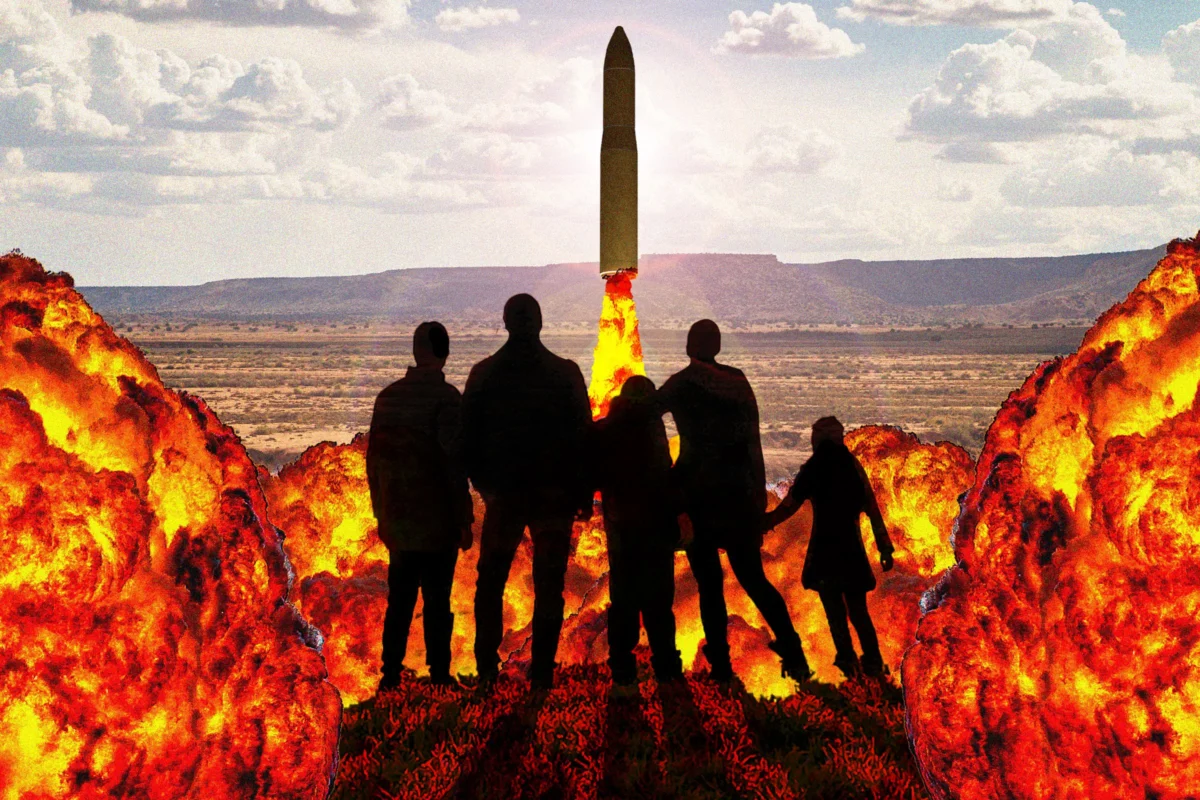
Sally Schultz believed she had discovered a tranquil haven when she acquired a half-acre plot in Rio Rancho Estates, an unincorporated, census-designated community nestled on the fringes of Rio Rancho, New Mexico. A single mother of four, Schultz had sought solace and stability in this rural expanse following a divorce, envisioning a self-sufficient homestead. For a modest $3,500, she secured land for her trailer, conveniently located near elementary schools and parks. In a remarkably short period, she transformed the arid soil, coaxing forth a vibrant array of crops including corn, squash, and green chile. This affordable parcel of land became her sanctuary, a testament to a hard-won second chance at life. Then, an unexpected and ominous neighbor arrived: a burgeoning missile company.
"We’ve already been through so much," Schultz laments, her voice tinged with a weariness born of unforeseen challenges. "And now we have to leave. It is the unknowing that is scariest." Her anxieties echo those of hundreds of residents in Rio Rancho Estates, a community suddenly thrust into the shadow of a colossal industrial complex poised to become a critical node in America’s defense infrastructure.
The Arrival of Castelion: A New Defense Frontier
The catalyst for this upheaval is Castelion, a startup founded in November 2022 by three former SpaceX executives. The company is rapidly developing Project Ranger, which it boldly proclaims will be "America’s largest dedicated hypersonic manufacturing production facility." Construction, a swift and aggressive undertaking, is projected to conclude by the end of the current year. The chosen site for this ambitious mega-campus, in numerous instances, lies a mere 1,000 yards or less from approximately 450 residential properties within Rio Rancho Estates, including Schultz’s home. This unsettling proximity places these residences squarely within a potential danger zone, should any of the substantial quantities of explosive chemicals stored on-site ignite or detonate.
Despite being a year into its engagement with the state of New Mexico, Castelion — which notably declined requests for comment from this publication — has yet to provide satisfactory answers to fundamental safety inquiries. An official hazard assessment, reviewed by investigative journalists, starkly concluded that in the event of a fire, many buildings would simply be allowed to burn uncontrolled, releasing highly corrosive hydrochloric acid gas into the atmosphere. Further evidence, in the form of emails exchanged between Castelion and Rio Rancho officials, reveals that critical fire safety standards were still under negotiation even as the sprawling facility’s construction was well underway. "I live next door to where World War III will be manufactured," declared Laura Lundberg, a local resident, encapsulating the profound unease pervading the community.
The Rise of a Defense Darling: Castelion’s Rapid Ascent
Castelion has swiftly emerged as a prominent player among the new generation of defense technology startups, attracting significant investment and high-profile military contracts. The company recently achieved a staggering valuation of $13 billion, marking more than a fourfold increase from its Series B valuation of $2.8 billion just last year. This meteoric rise underscores the intense interest and strategic importance placed on its mission.
In a remarkably short span of 18 months, Castelion has secured over $500 million in US military contracts, solidifying its position as a key supplier within the nation’s "Arsenal of Freedom" initiative. This program, emphasizing domestic manufacturing and technological superiority, aims to bolster America’s defense capabilities through rapid innovation and scaled production.
The company’s primary claim to fame is its purported ability to manufacture hypersonic missiles—weapons capable of flying at five times the speed of sound or higher—at a significantly lower cost than existing alternatives. For context, the US Army’s Dark Eagle, one of the most advanced domestic hypersonic weapons, carries an estimated price tag of $41 million per missile, according to a 2023 Congressional Budget Office study. Castelion’s flagship product, Blackbeard, a solid-rocket-powered missile, was initially advertised with a projected unit cost of $384,000.
However, the reality of mass production appears to be driving costs upward. Castelion commenced the year with a nearly $50 million Navy contract for full-scale Blackbeard prototypes. By June, the Navy expanded this commitment, adding $23.4 million to procure the first 50 operational Blackbeard prototypes. A subsequent $90 million contract in August for manufacturing services for the same 50 missiles pushed the total cost to $163.4 million, equating to approximately $3.3 million per unit—still substantially lower than competitors but significantly higher than the initial projections. Most recently, in September, the Navy awarded Castelion its largest contract to date, valued at up to $200 million, signaling continued confidence and investment.
Despite the rapid influx of funding and a recently released photo of its Blackbeard hypersonic strike missile, concrete performance figures and verified test data for the weapon remain undisclosed to the public. This lack of transparency regarding efficacy further compounds concerns for residents living adjacent to the proposed manufacturing and testing hub. Project Ranger, a sprawling 1,000-acre facility, broke ground on January 21st and is targeting mass production as early as the upcoming year.
A History of Evasion? The Nevada Precedent
Intriguingly, New Mexico was not Castelion’s initial choice for its expansive facility. In August 2023, the company, operating under the pseudonym Pallas Industrials, submitted an application to construct a rocket factory in Churchill County, Nevada. Andrew Kreitz, Castelion’s Chief Financial Officer, signed a special use application outlining plans for rocket motor manufacturing and ground-testing up to eight days per month at the proposed Nevada site.
Churchill County officials, in response, issued an eight-page staff analysis demanding detailed testing conditions and stringent safety protocols. Shortly thereafter, Pallas Industrials withdrew its application from Nevada, re-emerging as Castelion. A few months later, in the spring of 2024, residents in western Rio Rancho began noticing soil-probing trucks, a prelude to the company’s new endeavor. By this time, Castelion was already in advanced discussions with New Mexico officials regarding the land for its missile factory, suggesting a deliberate shift to a potentially more amenable regulatory environment.
Unveiling the Hazards: The Sandia Report
A pivotal document in this unfolding narrative is a hazard report delivered in June 2025 by Sandia National Laboratories. This report was generated as part of the New Mexico Small Business Assistance Program, an initiative designed to offer local businesses cost-free access to the expertise of the state’s national laboratories, Los Alamos and Sandia.
The report, initially released under the Freedom of Information Act (FOIA) in a heavily redacted form, inadvertently became fully accessible. Instead of securely scrubbing the underlying data layer, the lab simply overlaid black highlight on black text, allowing the full, unredacted content to be revealed through a simple copy-and-paste function. This technical oversight proved immensely revealing.

The unredacted Sandia report paints a sobering picture, alleging that Castelion’s plans for constructing and operating the missile factory present substantial and unacceptable risks to the surrounding community. The report identifies a "massive storage facility fire" as the gravest potential scenario. Castelion intends to store colossal stockpiles of propellants on Project Ranger’s site, including at least one heat-sensitive chemical oxidizer: ammonium perchlorate. According to the Sandia report, plans include storing up to 250,000 pounds of this material within covered magazines and bunkers. Critically, outside these secure bunkers, Castelion is authorized to maintain up to 81,000 pounds of active explosive material at any given time within hazardous integration facilities during the assembly process.
Sandia’s calculations demonstrate the severe implications of such a scenario. A detonation involving the facility’s maximum allowed stockpile of explosive material would necessitate a safety buffer from the nearest inhabited building equivalent to nearly nine football fields in length. A worst-case explosion, the report projects, could shatter large windows almost four miles away and carry a 3.2 percent chance of causing minor eardrum damage to individuals located as far as 400 yards from the detonation point.
Sandia National Laboratories declined to comment on the report or its contents. Furthermore, one of the hazard report’s key authors, Meg Davidson, has since departed Sandia Labs and now serves as a senior manager of strategic partnerships at Castelion, raising questions about potential conflicts of interest. Davidson did not respond to requests for comment.
Beyond the immediate threat of explosion, the report identifies a fire at the test stand as "the most probable foreseeable hazardous event." A chemical fire involving the propellants would unleash a toxic haze containing dangerous byproducts such as hydrogen chloride and chlorine. In their gaseous forms, both are highly corrosive, capable of causing severe burns to eyes, skin, and the respiratory tract. Even short-term inhalation at high concentrations can lead to chemical lung damage and potentially fatal asphyxiation.
First Responder Concerns and Regulatory Loopholes
The gravity of these chemical hazards is further underscored by internal emails obtained through public records requests. These communications reveal that the Rio Rancho Fire Department, after assessing the risks, determined that 17 of the 26 buildings at the Project Ranger site would be left to burn unaddressed if a fire erupted. This extraordinary decision stems from the inherent dangers a chemical blaze would pose to first responders, effectively barring firefighters from even entering the high-risk facilities.
Such incidents are not without precedent in the rapidly expanding defense tech sector. In June, an explosion occurred at Anduril’s Mississippi facility during a test run of an ammonium perchlorate-based rocket motor. While fortunately causing no casualties, the blast highlighted the inherent technical risks associated with scaling solid propellant production. Similarly, in May, a storage tank holding approximately 7,000 gallons of methyl methacrylate, a flammable liquid vital for manufacturing acrylic plastics and resins used in military and commercial aircraft, overheated at a GKN Aerospace plant in Garden Grove, California. This incident necessitated the evacuation of over 40,000 residents, illustrating the far-reaching impact of industrial chemical accidents.
Despite these stark warnings and real-world examples, internal emails reveal a troubling timeline regarding Castelion’s adherence to safety standards. Between March and May 2025, even as construction was actively progressing, the company was still negotiating critical fire-response requirements with local authorities. Bryce Barlow, Castelion’s site developer, informed the city on March 23 that the company had not yet finalized its fire-flow response plans, proposing a phone or in-person discussion as an alternative to formal submission. Weeks later, the stringent requirements were reportedly relaxed by city manager Matt Geisel, who indicated that specific numerical standards would be added to the plans at a later date. Castelion merely needed a signed memorandum of understanding, backed by a governing body resolution and a serviceability letter, to proceed. "Great news! Saves all of us both legal bills and headaches," CFO Kreitz reportedly wrote in response, a sentiment that starkly contrasts with the escalating safety concerns of residents.
The "Done Deal": Political Endorsement and Economic Incentives
The trajectory of Project Ranger in New Mexico appears to have been largely predetermined through a confluence of political will and significant financial incentives. In August 2025, prior to Castelion’s formal announcement selecting New Mexico, Republican state senator Jay Block, a former county commissioner whose district includes Rio Rancho, publicly advocated for financing Project Ranger before the Sandoval County Commission.
The county had already approved a substantial $125 million in industrial revenue bonds for Castelion and passed a resolution granting itself control over the designated state land. Furthermore, the commissioners extended an astonishing 95 percent discount on the property taxes Castelion would ordinarily owe. To sweeten the deal further, the county agreed to abate compensating taxes on out-of-state equipment, significantly reducing the upfront relocation costs for the incoming missile manufacturer. These aggressive incentives underscore New Mexico’s fervent desire to attract high-tech industry and create jobs, often prioritizing economic development over potential community concerns.
Castelion held its inaugural public information meeting on Project Ranger in October 2025. However, many residents felt that by then, the decision was already fait accompli. "All of this happened behind the scenes. By the time it was public, it was already a done deal," stated Zachary Darden, a Rio Rancho resident who ran an unsuccessful mayoral campaign on a platform opposing the development, highlighting a pervasive sense of powerlessness within the community.
In November, emails indicate that Alberto Solís, Rio Rancho’s economic development manager, coordinated CFO Kreitz’s four-day networking trip to New Mexico, a part of the state’s required outreach process. Kreitz’s itinerary included attending a Chamber of Commerce "Jingle Mingle" mixer and an event with the Sandoval Economic Alliance, a local nonprofit dedicated to attracting new businesses.
More than a month after Kreitz’s networking tour, Castelion hosted its groundbreaking ceremony. Notably, local residents were not invited. Instead, the event was a high-profile gathering of the state’s most influential political and business figures, including Senator Jay Block, US Senator Martin Heinrich, then-Mayor of Rio Rancho and Republican gubernatorial candidate Gregg Hull, and Governor Michelle Lujan Grisham. County and state economic development officials were also in attendance, signaling the broad political support for the project. Rob Black, New Mexico’s secretary of economic development, lauded the project, stating, "Castelion’s Project Ranger shows what a strong public-private partnership can deliver for a local community."
Community Crossroads: A High Price for Progress?
While state and local officials celebrate the perceived economic boon, the residents living in the immediate vicinity of the Project Ranger site are left grappling with an agonizing dilemma. The perceived risks of living next to a hypersonic missile manufacturing facility, coupled with the lack of transparency and apparent compromises on safety standards, are prompting many to consider relocation. However, for a significant portion of Rio Rancho Estates residents, a predominantly low-income neighborhood, the financial burden of moving is simply insurmountable.
"This land is affordable for people who need it," emphasized community member Jason Clifford, articulating the core of the community’s predicament. "We were sold out by our local officials." This sentiment encapsulates the profound sense of betrayal and vulnerability felt by those who sought stability and affordability in Rio Rancho Estates, only to find their peace, safety, and future suddenly imperiled by a high-stakes industrial venture. The arrival of Castelion thus presents a complex societal challenge, weighing the strategic imperatives of national defense and economic development against the fundamental rights to safety, transparency, and peaceful habitation for an unsuspecting community. The outcome in Rio Rancho Estates will undoubtedly serve as a critical case study for similar communities nationwide, facing the ever-growing footprint of industrial expansion.