admin
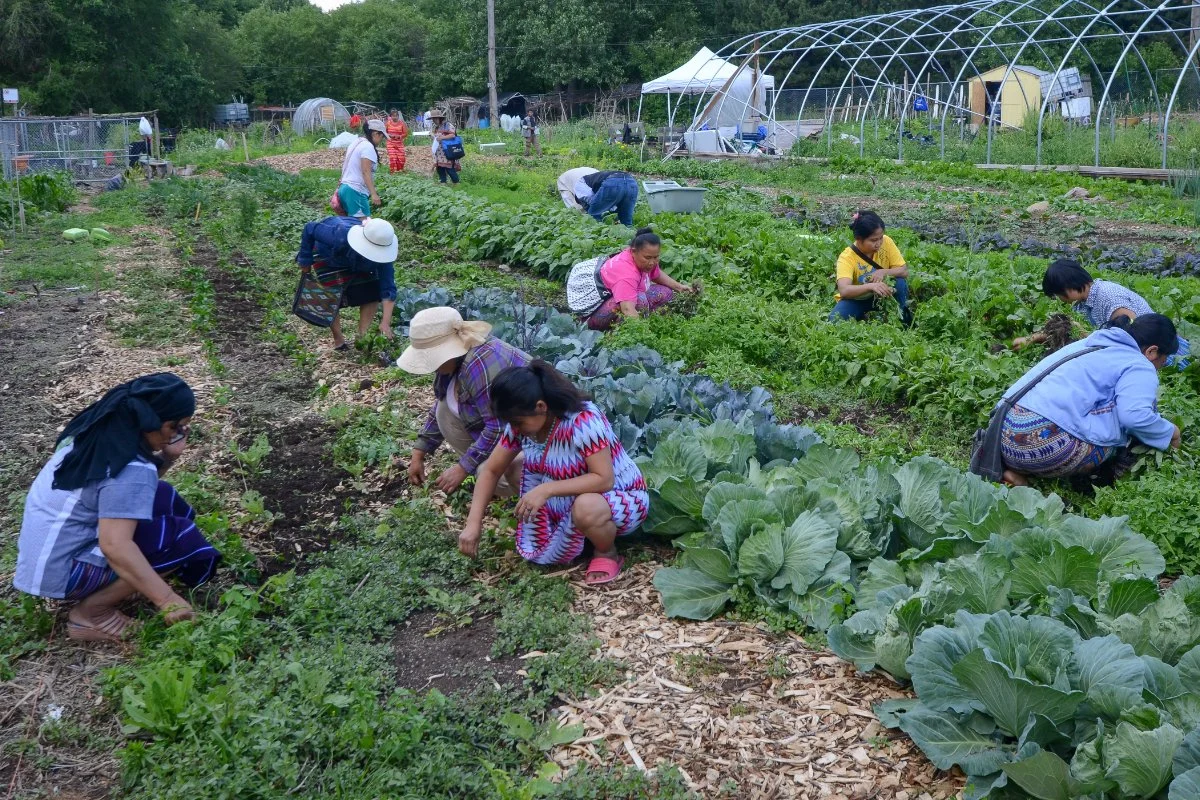
In the heart of Chicago, amidst a period marked by intensified federal immigration enforcement, an urban farm known as Global Gardens has emerged as a vital sanctuary, seamlessly weaving together cultural preservation, economic empowerment, and food security for a diverse refugee population. This verdant oasis offers more than just fresh produce; it provides a profound sense of belonging and a connection to ancestral lands that traditional markets often fail to deliver.
The Shadow of Heightened Immigration Enforcement in Chicago
The landscape for immigrant and refugee communities in Chicago has grown increasingly fraught over the past year. Federal immigration authorities have intensified operations, sowing fear and anxiety across the city’s diverse neighborhoods. This crackdown has manifested in a series of highly publicized and often confrontational incidents, particularly in areas like Albany Park and West Ridge, which are home to significant immigrant and refugee populations.
A chilling timeline of events underscores the escalating tension:
- October 2025: Federal agents conducted raids in Albany Park, where residents protesting their presence were met with tear gas, according to local news reports. This incident ignited widespread outrage and galvanized community resistance.
- February 2026: Hundreds of high school students staged a walkout across Chicago, protesting the federal crackdown and demanding an end to what they described as aggressive tactics. Their unified voice highlighted the deep impact on younger generations.
- June 2026: Further demonstrations erupted after federal agents reportedly used a taser to detain a man in Albany Park. These events, widely covered by local media including the Chicago Sun-Times and Block Club Chicago, painted a stark picture of a community under duress.
These actions, part of a broader national push to enforce immigration laws more stringently, have created an environment of pervasive fear. While many of Global Gardens’ growers hold green cards, the threat of unwarranted attention from immigration authorities leads some to exercise extreme caution, hesitating to speak openly or be photographed. This climate of apprehension profoundly impacts daily life, affecting everything from school attendance to access to essential services. Advocacy groups and local officials have frequently condemned these federal operations, citing concerns about civil liberties and community trust. The city’s official stance, while not always directly confronting federal agents, often emphasizes support for immigrant communities through local initiatives and resources, seeking to mitigate the chilling effect of federal policies.

Global Gardens: A Haven of Trust and Cultivation
Against this backdrop of federal scrutiny and community apprehension, Global Gardens stands as a beacon of resilience. Located in Albany Park, a neighborhood synonymous with multiculturalism, the 14-year-old operation provides 68 plots of land, transforming an urban space into a vibrant agricultural hub. It offers a crucial environment of trust, safety, and community, where refugees can grow food, sustain their families, and re-engage with skills often honed over generations in their homelands. The organization’s legal name, Global Gardens Refugee Training Farm, reflects its foundational mission, though its approach has evolved from formal training to providing essential infrastructure that empowers growers to leverage their existing agricultural expertise.
"We’re translating or uplifting their knowledge to a new environment because they already have generations worth of farming knowledge," explains Haley LeRand, the executive director of Global Gardens. This philosophy acknowledges and values the deep-seated agricultural wisdom brought by refugees, fostering a sense of dignity and continuity.
The farm is a melting pot of cultures and experiences. While three-quarters of its farmers hail from Myanmar, a nation grappling with over 100 languages and ethnicities, the community also embraces refugees from Burundi, Afghanistan, Cambodia, Bhutan, Ethiopia, Republic of Congo, the Democratic Republic of Congo, and Ukraine. This diversity enriches the farm’s cultural tapestry and the variety of crops cultivated.
Individual Narratives: Rehena and Shorif’s Journey
The story of Rehena and Shorif, a couple from Myanmar, exemplifies the profound impact of Global Gardens. On an early fall day, Rehena, shielding herself from the rain with a red umbrella, navigates her 3-by-125-foot plot. She proudly points to familiar market staples like lettuce, chard, kale, zucchini, and broccoli, which she sells at local farmers’ markets. Yet, her plot also yields an array of vegetables and herbs rarely found in mainstream American grocery stores: water spinach, mizuna, holy basil, and Thai basil, alongside long beans dangling from a trellis built by Shorif.

For Rehena and Shorif, who requested their full names be withheld due to fears of retribution from the current administration, Global Gardens is more than just a farm; it’s a reconnection to their past. "It reminds us a lot of our memories with our farmland vegetables," Shorif shares, his voice tinged with both nostalgia and contentment. "Now, we are here enjoying our lives, doing the farm. Growing things can make us happy." They tend their dense plot several times a week, supplementing their income and providing fresh, culturally relevant food for their five children.
Their journey to Chicago was arduous and fraught with unimaginable hardship. Shorif’s family, part of the minority Rohingya Muslim community, lived an agrarian life in Rakhine State, Myanmar, cultivating rice and vegetables. Their world was shattered in 2012 when violence consumed their village, burning down their home. This incident predated the devastating 2021 civil war, which has since displaced over 3.5 million people and continues to inflict immense suffering across Myanmar. After fleeing their homeland with their young son, Rehena and Shorif spent twelve years in Malaysia, enduring transient living conditions and deeply missing their farming lifestyle as their family grew with the addition of a daughter and three more sons.
Their fortunes shifted in spring 2024 when they secured refugee status with the United Nations and resettled in Chicago with their children. The Ethiopian Community Association of Chicago provided crucial resettlement assistance. Shorif learned about Global Gardens shortly after their arrival from a new friend, Armand, a fellow grower and refugee from the Republic of Congo. The farm quickly became a focal point for the Rohingya community in Chicago. "Since Shorif and his wife came here, suddenly a lot of Rohingya people want gardens, which I love," LeRand notes, observing the ripple effect of inspiration. Despite missing her siblings in Myanmar, who face severe food and medicine shortages, Rehena finds solace and support within the Global Gardens community. "The people are so good here," she affirms, "and they help us in many respects."
Economic Empowerment and Food Security
Global Gardens plays a pivotal role in the economic integration and food security of its refugee farmers. Nine families, including Rehena and Shorif, cultivate larger plots specifically for market sales and Community Supported Agriculture (CSA) subscriptions. In 2026 alone, the market farmers collectively earned over $100,000, a significant contribution to their household incomes. Rehena and Shorif’s $4,579 in farmers’ market sales last season, for instance, was primarily allocated to essential items like rice and other household necessities. "It’s a great help for our family because the rent is so high," Rehena emphasizes, highlighting the tangible financial relief provided by their farming endeavors in a city known for its high cost of living.
Beyond income generation, Global Gardens addresses critical food insecurity issues. The remaining roughly 300 farmers grow produce exclusively for personal consumption, ensuring their families have access to fresh, healthy, and culturally appropriate foods. Moreover, the market farmers donate leftover produce to local food pantries and rescue organizations, extending the farm’s reach into the broader community.

One key partner is Common Pantry. Morgan Crull, the pantry’s food programs manager, praises the unique contribution of Global Gardens: "This allows us to source culturally relevant items that we could not source through traditional vendors." This access to diverse, fresh produce not only enhances the nutritional value of the food pantry offerings but also introduces new culinary experiences to recipients. Guests frequently commend the unparalleled freshness of the products, often inspiring them to experiment with novel recipes using unfamiliar vegetables.
Emily Parker, resettlement services senior manager at RefugeeOne, underscores the broader significance: "What is particularly valuable is that farming can be more than simply a job for someone who has recently arrived in Chicago. For people who grew food in their home countries, it can be a way to use an existing skill, maintain a connection to familiar foods and traditions, and build a sense of community and economic independence here." This sentiment reflects a deeper understanding of refugee resettlement, moving beyond basic needs to encompass holistic well-being and cultural continuity.
Cultivating Culture and Community: The "Third Space"
Global Gardens has evolved into a vibrant cultural hub, a "third space" beyond home and work, fostering connection and celebration. From May through October, multiple generations converge at the farm, engaging in the timeless rhythms of planting, weeding, and harvesting. The farm provides free land, water, utilities, and seeds to farmers operating on restricted budgets, a testament to its commitment to accessibility. Local grants and the use of city-owned land provide essential funding and relative stability, allowing the organization to focus on its mission without the constant pressure of land acquisition.
The farm actively promotes cultural exchange through various initiatives. Growers organize outdoor cooking classes, teaching visitors and fellow farmers how to prepare traditional meals from their homelands. These classes offer a rare opportunity to savor unique cuisines, such as Burmese dishes, which are largely unavailable in Chicago’s restaurant scene.
Beyond culinary arts, Global Gardens hosts a semi-regular summer concert series featuring international music artists, with food prepared by the growers. The annual Fall Harvest Fest also draws a wide array of outside visitors, fostering cross-cultural understanding and community engagement. LeRand envisions the farm as an inviting space, equipped with outdoor tables, a washing station, and a cooler, where newly arrived refugees can gather, cook, eat, and socialize, often brought in groups of ten or more by existing gardeners. "These are people who had acres and acres of land, so their entire days revolved around land and food, yet they became completely divorced from that [here]," LeRand muses. "I sort of see this as a coming home. They come here at sunrise."

This sentiment resonates deeply with farmers like Ka Nay Moo, 40, a member of the Karen ethnic group from Myanmar. After fleeing her country, she spent a decade in a restricted refugee camp in Thailand. Drawing on her parents’ experience of growing rice, cucumber, pumpkin, and Thai chili pepper, she managed to cultivate beets and forage for mushrooms and wild mustard greens even in the camp. Arriving in Chicago in 2010, she eventually found her way to Global Gardens through the Burmese diaspora. "I just came here to relax and chill and meet up with others," she says, emphasizing the social and emotional sanctuary the farm provides.
Eh Klu Paw, 19, another market grower, arrived in Chicago as a toddler, having been born in a Thai refugee camp. While he barely remembers the camp, the recent immigration crackdown has impacted his family. His mother frequently reminds him to carry his ID and green card. Despite these concerns, Eh Klu Paw has embraced his role, taking over more of the farmers’ market duties from his parents, managing harvesting, packing, and sales. He expresses pride in Global Gardens’ sustainable practices, noting its eschewal of synthetic fertilizers and pesticides, its use of chicken-wire barriers against rabbits, and its commitment to repurposing materials like wood pallets for trellises. The growers’ practice of utilizing entire plants and cultivating nutritious greens often considered weeds, such as amaranth, further demonstrates their resourcefulness and deep connection to the land. Eh Klu Paw’s favorite crop, water spinach, which he sautés in oil, is a testament to the culturally specific foods grown. "My friends think it’s cool," he shares about his farming responsibilities. "Sometimes they ask me like, ‘Yo, can you give me some vegetables?’ I get to feed people. I think that’s important." His statement encapsulates the multifaceted benefits: pride, community contribution, and the joy of sharing.
Broader Impact and Future Outlook
Global Gardens exemplifies the critical role urban agriculture plays in fostering community resilience, cultural preservation, and economic self-sufficiency, especially for vulnerable populations. In an era where global conflicts continue to displace millions—with the UN Refugee Agency reporting over 100 million forcibly displaced people worldwide in recent years, many seeking refuge in countries like the United States—initiatives like Global Gardens offer vital lifelines. They demonstrate how local, grassroots efforts can effectively address complex challenges arising from global crises and national policy shifts.
The farm’s success in cultivating culturally relevant produce not only supports the dietary needs and traditions of diverse refugee communities but also enriches the local food system by introducing new varieties and sustainable growing practices. Its contribution to food pantries highlights an innovative model for addressing food insecurity that prioritizes both quantity and cultural appropriateness.
While the shadow of immigration enforcement remains a persistent concern, the unwavering commitment of Global Gardens, supported by local grants, city resources, and a dedicated community, offers a compelling counter-narrative. It showcases the transformative power of land and community, proving that even in the most challenging urban environments, a patch of earth can become a fertile ground for hope, healing, and the vibrant cultivation of new lives. The ongoing waitlists for plots and CSA subscriptions underscore the profound demand for such spaces, signaling a future where urban farms continue to be essential pillars in building inclusive, resilient, and culturally rich communities.