Jia Lissa
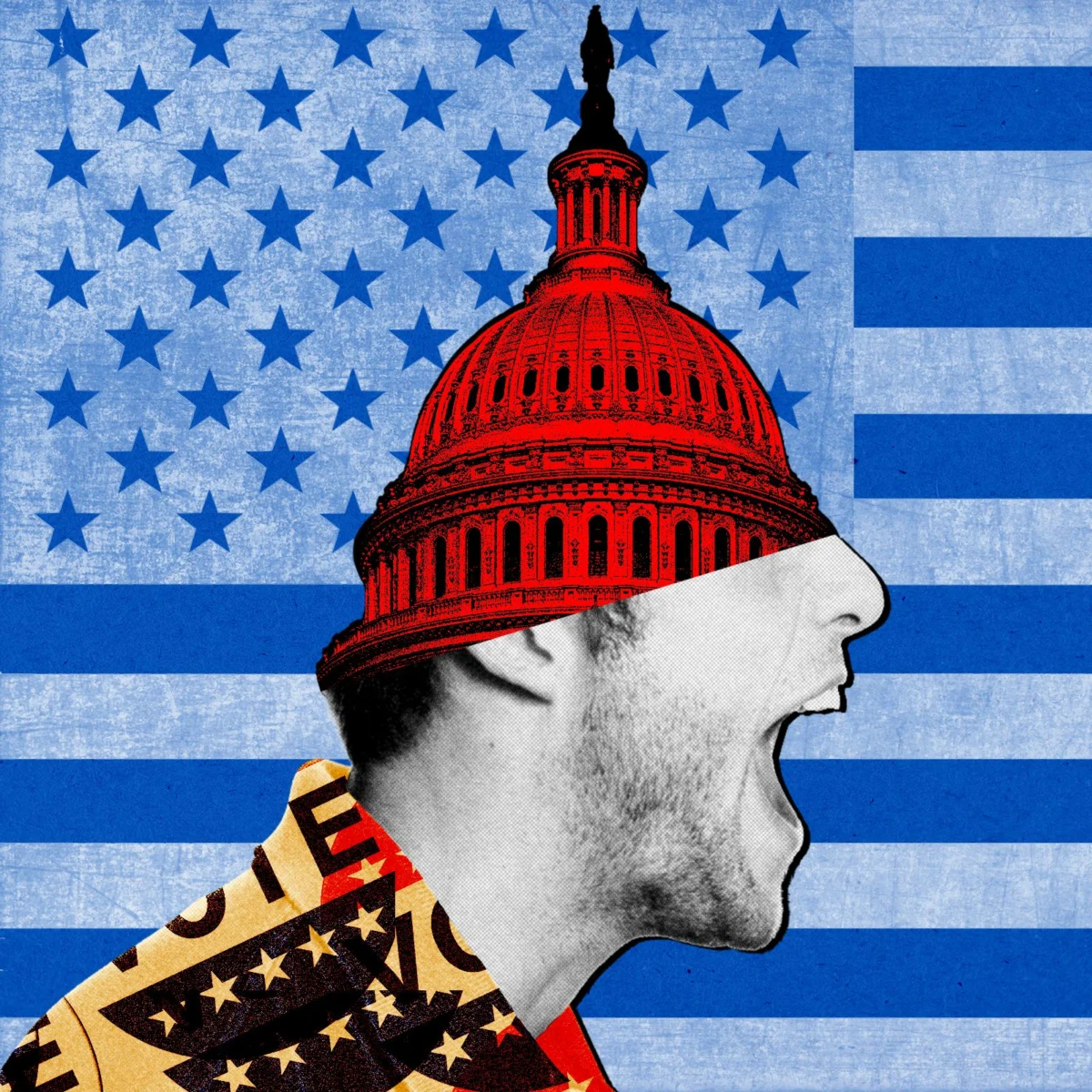
Following the recent midterm elections, a notable shift in strategy and rhetoric has emerged among various far-right and extremist groups, who are interpreting the Democratic sweep not as a setback, but as a strategic opportunity to consolidate power and advance their agendas. This re-evaluation was dramatically highlighted by white nationalist figure Nick Fuentes, who, on Election Day last week, leveraged the social media platform X to issue a provocative directive to his followers: "get out and vote Democrat today." The post quickly gained traction, accumulating over 12 million views, signaling a deliberate attempt to influence the political narrative and establish a presence in the post-election discourse.
Hours after the polls closed and the extent of the Democratic victories became clear, Fuentes wasted no time in claiming responsibility for the outcome. In a message disseminated via Telegram, he declared, "We did it again," subsequently coining the phenomenon "the Groyper Effect," a direct reference to the moniker adopted by his loyal supporters. This audacious claim, while lacking substantive evidence of actual electoral impact, underscored a broader sentiment within his movement: that the election results, irrespective of their direct causation, could be strategically exploited to further their long-term objectives.
The "Groyper Effect" and the Shifting Far-Right Strategy
Nick Fuentes, a prominent figure in the "America First" movement, has cultivated a dedicated following known as "Groypers," largely composed of young, online-savvy individuals who espouse white nationalist and Christian nationalist ideologies. His movement is characterized by its virulent antisemitism, anti-immigrant stances, and a profound disdain for mainstream conservatism, which it views as weak and complicit. For years, Fuentes and his Groypers have sought to push the Republican Party further to the right, often clashing with established conservative figures and attempting to disrupt mainstream conservative events. His directive to vote Democrat was not an endorsement of liberal policies, but rather a calculated maneuver designed to accelerate what he perceives as the inevitable collapse of the current political order. By encouraging a Democratic victory, Fuentes appears to believe he is hastening a societal backlash that will ultimately benefit the extreme right.
In the days immediately following the election, Fuentes articulated this strategy with greater clarity during a livestream. "Let the Democrats rule; see how that goes," he posited, suggesting that a period of left-leaning governance would inevitably lead to public dissatisfaction and a yearning for radical change. He predicted, "There will come a time when the far left will terrorize people, and they’re going to push all of them into the arms of the right. Who’s going to fight the far left? Only the far right. This is why we have to take over the right wing now." This statement reveals a core tenet of his movement’s thinking: that societal chaos and political polarization are not obstacles, but rather catalysts for their eventual rise to power.
This aggressive posture extended to a direct challenge to the Republican Party’s established leadership. In another livestream, Fuentes issued a stark warning: "It’s our party now… You need to cooperate with us… Groypers are open for business. It has [to] be America First—and if it’s not, we’ll do it again for the enemy." This rhetoric signals a clear intent to execute a "hostile takeover" of the Republican Party from within, bending its platform to align with their ultranationalist and extremist viewpoints.
Electoral Outcomes: A Double-Edged Sword for the GOP
A comprehensive review by WIRED of communications from various white-supremacist, Christian-nationalist, and other far-right groups in the wake of the midterm results revealed a consistent theme: a unified attack on Donald Trump’s perceived failure to adequately prioritize white, Christian, American values. Despite this criticism, there was also a shared belief that the Democratic gains would inadvertently create a vacuum, fostering a backlash that would drive more disillusioned voters into the embrace of far-right ideologies and organizations.
Jared Holt, a senior researcher at Open Measures, corroborated this observation, telling WIRED, "Many prominent figures in racist, extremist movements have taken to declaring the MAGA movement dead since the midterm elections, claiming that the results validate their previous criticisms of the Trump administration and opens new opportunities for their movements to push disaffected voters toward their ideological beliefs." This perspective suggests a calculated pivot away from the specific figure of Trump towards a broader, more ideologically pure far-right movement that seeks to capitalize on perceived mainstream conservative weaknesses.
While some of the more overtly extremist Republican candidates were rejected by voters in the recent elections, a significant number of candidates with ties to far-right movements did secure victories. The Institute for Research and Education on Human Rights (IREHR) meticulously tracked 535 candidates running in statewide races who were identified as members of at least one far-right Facebook group. Their research indicated that out of the 476 races called by the Friday following Election Day, an alarming 338 of these candidates emerged victorious, representing a 71 percent win rate. It is important to note that the vast majority of these successes involved Republican incumbents retaining their seats, highlighting a potential entrenchment of individuals with far-right sympathies within the party’s existing structure.
A concrete example of this trend is Marshall Rawson, a 34-year-old citrus farmer from Florida, who easily defeated his Democratic opponent in the state’s 10th District State House race. Rawson’s victory is particularly notable given his confirmed attendance at the infamous "Unite the Right" rally in Charlottesville, Virginia, in 2017, an event widely condemned for its overt white supremacist and neo-Nazi displays. His electoral success underscores the complex challenge of identifying and addressing extremist infiltration within mainstream political processes.
Ballot Measures: A Parallel Path to Advancing Far-Right Agendas
Beyond individual candidate victories, the recent elections also saw the passage of numerous ballot measures that align with far-right agendas, signaling another avenue through which these ideologies are gaining traction. These measures included stringent anti-transgender rules, onerous voter identification laws, and various anti-immigrant policies.
Devin Burghart, executive director with IREHR, highlighted some of the more extreme examples during a briefing with reporters. "Arizona, Colorado, Nebraska, and Washington approved bans on trans athletes in female sports, so girls in Washington state, for instance, will now have to go through a genital exam or pass a DNA test before they can participate in youth sports," Burghart stated. Such measures, deeply rooted in a conservative social agenda, represent a direct legislative implementation of policies favored by many far-right groups, often bypassing the traditional legislative gridlock that might otherwise impede their passage.
These ballot measure successes were enthusiastically celebrated by extremist groups, who viewed them as irrefutable proof that a significant segment of the American populace desired policies that the current Republican establishment was either unwilling or unable to deliver. The Proud Boys, a street-fighting group whose operations had reportedly been made largely redundant by Immigration and Customs Enforcement actions in recent years, expressed optimism following the election results. In their Telegram channel, the Cape Fear Proud Boys chapter wrote, "The ultimate rebuke of the current Republican establishment was citizens voting them out of office, then doing their job for them by passing ballot measures on issues the Republicans should have already handled." This sentiment reinforces the narrative that the Republican Party is failing its base, thereby creating an opening for more radical elements to step in.
Chuck Tanner, research director at IREHR, further elaborated on the implications of the election results, even in areas where far-right candidates did not win outright. "What this signals to me is even in those places where they lost, they’re getting 41-47 percent of the vote, [so] there’s still a mass base to try to be mobilized," Tanner noted during the briefing. "That’s the lesson that some of these groups are taking out of it, is that there’s still that mass base." The existence of this substantial, albeit not always victorious, voting bloc is perceived by extremist groups as a powerful leverage point, making the Republican Party vulnerable to internal takeover.
The Call for a "Hostile Takeover" and Non-Democratic Avenues
The perceived existence of this "mass base" fuels the conviction among extremist leaders that the time is ripe for a strategic infiltration and hostile takeover of the Republican Party. Warren Balogh, a white supremacist from Pittsburgh who also attended the 2017 Charlottesville rally, articulated this ambition clearly on his Telegram channel: "Now is the time, if you’re a nationalist, to start looking at moving on the Republican Party where you live. And by that I mean, organizing your guys and going in to do a hostile takeover." This call to action emphasizes grassroots organizing combined with a top-down ideological restructuring, aiming to reshape the GOP from within.
The Cape Fear Proud Boys echoed this sentiment, declaring in a post days after the election, "This may be the best thing that has happened to the Republican Party in a half-century. Now you will learn to placate us, or you will continue to fail. Understand this: You’re going to run people we like, and you’re going to do what we say." Such statements represent a clear ultimatum to the Republican establishment, demanding ideological subservience and political capitulation to their extremist views.
However, some factions within the extremist landscape appear less inclined to wait for the next general election in 2028 or to rely solely on democratic processes. A more direct, potentially extra-legal, path to power is being openly discussed. Joel Webbon, a Christian nationalist pastor, starkly stated in a video posted online after the election, "I’m not saying that we will win through democracy. I’m just saying we’ll win." This alarming declaration points to a willingness to pursue means outside of established democratic norms, raising significant concerns about the stability of democratic institutions.
Further underscoring this trajectory, Webbon and other far-right pastors, alongside guest speaker and noted conspiracy theorist Alex Jones, were scheduled to convene at a conference in Texas this week. The agenda for this gathering reportedly includes discussions on "battle plans" for "Christian nationalists on the right to be able to seize power." The inclusion of Alex Jones, known for his promotion of numerous conspiracy theories, including the false claim that the Sandy Hook Elementary School shooting was a hoax, highlights the convergence of various fringe elements seeking to coordinate and strategize for future actions.
Anticipating Future Challenges and Security Concerns
Experts monitoring these groups indicate that while they have not yet observed explicit calls for violence, the rhetoric and planned activities suggest a dangerous trajectory. The focus is now shifting to key dates in the political calendar, particularly January 3, when Congress is slated to certify the midterm election results. This date holds symbolic weight, echoing the events leading up to the January 6, 2021, Capitol insurrection.
Far-right activist and pardoned January 6 rioter Jake Lang has notably announced plans for an event in Washington D.C. on January 3. While the potential attendance numbers remain unclear, and one of the Christian nationalist pastors Lang initially listed as an official speaker has since disavowed participation, the mere scheduling of such an event raises alarms among law enforcement and anti-extremism organizations. Lang, who recently garnered attention for disrupting a cat convention he mistakenly believed to be a furry convention, declined to comment on his plans. His history as a participant in the January 6 events, and subsequent pardon, positions him as a figure capable of mobilizing individuals drawn to anti-establishment and potentially disruptive actions.
The current landscape reveals a sophisticated and multi-pronged strategy by far-right extremist groups. They are adept at exploiting political discontent, leveraging social media, and pursuing both electoral and non-electoral avenues to advance their agenda. The perception that mainstream political parties are failing to address their concerns, coupled with a willingness to operate outside conventional democratic frameworks, poses a significant and evolving challenge to American democracy and civil society. The coming months, particularly around key political milestones, will undoubtedly test the resilience of democratic institutions and the vigilance of those committed to countering extremist influence.