admin
admin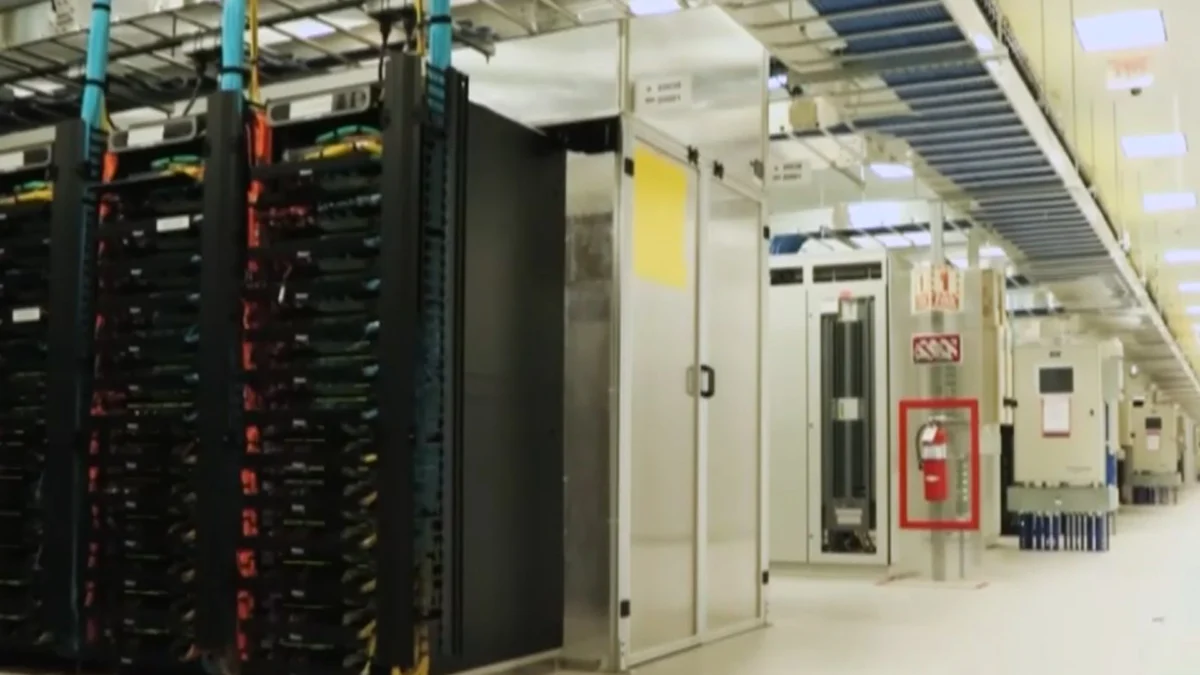
Point Tupper, Nova Scotia – EverWind Fuels, a prominent energy and infrastructure company, has announced a monumental $10 billion private investment to establish a state-of-the-art data centre campus at its existing Point Tupper site, strategically located near Port Hawkesbury, Nova Scotia. This ambitious initiative, touted as the largest injection of private capital in Nova Scotia’s history, is poised to significantly bolster Canada’s digital infrastructure and renewable energy capacity. The investment is bifurcated, with $8 billion earmarked for the development, construction, ownership, and financing of the data centre campus itself, and an additional $2 billion dedicated to advancing EverWind’s extensive onshore wind projects, underscoring a commitment to sustainable growth.
The announcement was made by EverWind CEO Trent Vichie, who expressed profound pride in the company’s commitment to the region. "This is the largest injection of private capital, we believe, in Nova Scotia history, and we could not be prouder to be here today," Vichie stated, highlighting the transformative potential of the project. A key component of this development is a long-term lease agreement secured with a "leading AI company – a very, very large one," the identity of which was anticipated to be disclosed later the same day. This partnership signifies the high-level demand for advanced computational infrastructure to support the burgeoning artificial intelligence sector.
A Phased Approach to Digital Infrastructure Development
The data centre campus is planned for a phased rollout, commencing with an initial 95-megawatt (MW) phase targeted for late 2027. This foundational stage will lay the groundwork for a substantial expansion, with a 325-megawatt addition slated for 2028, contingent upon the necessary regulatory approvals. Upon full development, EverWind projects the campus to achieve an impressive capacity of 420 megawatts. This scale is designed to meet the rapidly escalating global demand for artificial intelligence capabilities and digital services, positioning Nova Scotia as a critical hub in North America’s digital economy.
The strategic location in Point Tupper offers several advantages, including access to a cooler climate, which is beneficial for data centre cooling requirements, and proximity to existing infrastructure that can be leveraged for development. The integration of renewable energy sources, specifically EverWind’s onshore wind projects, is a central tenet of the plan, aiming to power the data centre with clean energy and mitigate its environmental footprint.
Economic Impact and Job Creation

The economic ripple effects of this massive investment are projected to be substantial. EverWind anticipates the project will generate approximately 2,000 jobs during the construction phase, providing significant employment opportunities for skilled trades and labour in the region. Following construction, the campus is expected to create 215 "high paying permanent operating positions," fostering a new wave of technical and specialized employment in Nova Scotia. Beyond direct employment, the project is also expected to stimulate a considerable number of indirect jobs across various support industries and services, further boosting the provincial economy.
Trent Vichie emphasized the long-term commitment embedded in the investment. "The investment here is anchored by a long-term commitment, so this will be here for a long, long time," he remarked, underscoring the enduring benefits for the local community and the province. He added that this investment would bolster not only Nova Scotia’s energy economy but also its burgeoning knowledge economy, aligning with global trends towards digitalization and technological advancement. Furthermore, the data centre and associated wind development are projected to generate over $400 million in municipal tax revenues throughout their operational lives, providing a significant and stable revenue stream for local governments to invest in public services and infrastructure.
Powering the Future: Energy Infrastructure and Ratepayer Protection
A key concern often raised with large-scale industrial projects, particularly data centres, is their impact on existing electricity grids and consumer rates. EverWind has proactively addressed this by committing to fund the electricity infrastructure costs directly attributed to this project. This crucial commitment aims to prevent these significant expenses from being passed on to provincial ratepayers, a concern frequently voiced in other jurisdictions contemplating similar developments.
To further enhance grid stability and energy security for the data centre, EverWind plans to incorporate "several hundred megawatt-hours" of battery storage capacity. This substantial battery infrastructure will support the facility, ensuring a reliable power supply and potentially offering ancillary services to the broader provincial grid. The explicit link to EverWind’s $2 billion investment in onshore wind projects demonstrates a strategic alignment with renewable energy goals, aiming to power the data centre largely with clean, domestically produced electricity. This approach aligns with Canada’s broader clean energy transition objectives and Nova Scotia’s commitment to phasing out coal-fired electricity generation.
Premier Tim Houston lauded the project’s strategic importance for both Nova Scotia and Canada. "Canada doesn’t have enough compute power. We need more compute power in this country. The data we use every day in our health-care system for all of our banking needs, everything on our phones. Business is run on this data. Government runs on it," Premier Houston stated, underscoring the fundamental role of robust data infrastructure in modern society. He further emphasized the need for secure digital infrastructure, describing the EverWind project as a critical piece of that puzzle for national security and economic resilience.
Addressing Environmental and Community Concerns

The exponential growth of artificial intelligence and other high-tech industries has brought the issue of data centre environmental impact to the forefront. These facilities are notoriously energy-intensive, requiring massive amounts of electricity not only for computation but also for cooling the vast arrays of computer servers. Concerns regarding water consumption, energy rates, and potential environmental degradation have been widely reported across Canada.
EverWind has outlined specific measures to mitigate these concerns at the Point Tupper site. The company plans to implement a closed-loop cooling system, a sophisticated technology where a water-glycol mixture circulates through a sealed system, rather than requiring continuous discharge and replenishment of large volumes of water. "Heat will be removed primarily using air, with water-assisted cooling used during the hottest weather," EverWind detailed in a press release. The company also noted that Nova Scotia’s inherently cooler climate significantly reduces the overall cooling-water requirements for much of the year, offering a natural advantage for such an operation.
Under current design assumptions, the initial 95-MW phase is expected to use approximately 100,000 litres of water per day. To put this in perspective, EverWind compared this volume to the daily water usage of a large shopping mall. At the planned 420-megawatt full build-out, the average water use is projected to increase to about 500,000 litres per day. The company has committed to funding the necessary water infrastructure costs and adhering to all applicable requirements for water use, noise emissions, and other environmental standards.
Regulatory Oversight and Political Reactions
In light of widespread national concerns, the question of provincial legislative oversight for data centres was raised. Premier Houston affirmed that existing "checks and balances" are in place. "There’s an industrial approval process… that process will be ongoing. The environmental approvals, industrial approvals. There’s a very stringent process for industrial entities that set up in the province that doesn’t change," he assured, indicating that the project would be subject to rigorous existing regulatory frameworks.
However, the announcement drew immediate criticism from opposition parties. NDP Leader Claudia Chender expressed significant reservations, stating she did not believe the Premier was adequately protecting Nova Scotians from potential risks. "Nova Scotians have deep concerns about the impact of data centres, including on power rates and fresh water," Chender remarked in a statement. She criticized the Houston government for supporting the project "without any discussion, consultation, legislation or regulations," asserting that the Premier was asking residents to simply trust his word.
These provincial concerns mirror a broader national dialogue. In June, Canada unveiled a new AI strategy that included proposals for the development of "large-scale" data centres. This national push has been met with varied reactions across the country. Communities in Lorneville, Saint John, New Brunswick, have been vocal in their opposition to a proposed AI data centre, citing environmental and health concerns. Similarly, several municipalities in Ontario have recently voted on or considered moratoriums on new data centre developments while they conduct studies to establish appropriate guardrails and regulations. Alberta has also seen heated public town halls dominated by angry remarks and questions concerning the environmental risks, significant water usage, and the cost of energy associated with these facilities. This national context highlights the growing scrutiny and the need for transparent regulatory frameworks surrounding data centre development.

Local Governance and First Nations Partnership
Representatives from all three levels of government – federal, provincial, and municipal – were present at the announcement, underscoring the project’s broad significance. Lois Landry, Warden of the Municipality of the County of Richmond, articulated the local government’s stance, emphasizing the need for robust answers regarding the project’s impact on electricity, water, environment, and existing infrastructure. "Richmond County has been clear that the project of this scale must address questions about electricity, water, environment, existing infrastructure with clear answers supported by sound technical evidence," Landry stated.
Warden Landry expressed encouragement regarding the proposed technology for minimizing water consumption, the arrangements to protect electricity ratepayers, and the commitments concerning infrastructure costs and renewable energy generation. She reiterated the community’s openness to opportunities, "provided they are developed responsibly, protect the interests of our residents and deliver meaningful, lasting benefits." While acknowledging the "important work ahead," she welcomed the opportunity for the community to be an active part of the ongoing conversation.
In a significant move towards inclusive economic development, EverWind announced that negotiations are underway with a First Nations consortium, led by Membertou Development Corporation, for a potential ownership stake in the data centre. This partnership reflects a commitment to reconciliation and shared prosperity. Membertou First Nation Chief Terry Paul affirmed the long-standing partnership with EverWind, expressing pride in ambitious development projects like the data centre. "The world of tech is changing and advancing, there’s no question about that. What we as a community can control is how we develop it safely, with responsibility to our resources," Chief Paul stated, highlighting the importance of responsible development and resource stewardship. EverWind has also committed to funding various community programs, potentially including local infrastructure, recreation facilities, and housing initiatives, further demonstrating its dedication to being a responsible community partner.
This $10 billion investment by EverWind in Nova Scotia represents a pivotal moment for the province’s economic future and Canada’s digital infrastructure ambitions. While offering substantial economic benefits and a strategic foothold in the global AI landscape, the project also underscores the critical need for continued vigilance, transparent regulatory processes, and ongoing dialogue to ensure sustainable development that addresses environmental and community concerns. As the project moves forward, its success will hinge not only on technological prowess but also on effective collaboration and adherence to the highest standards of environmental and social responsibility.