admin
admin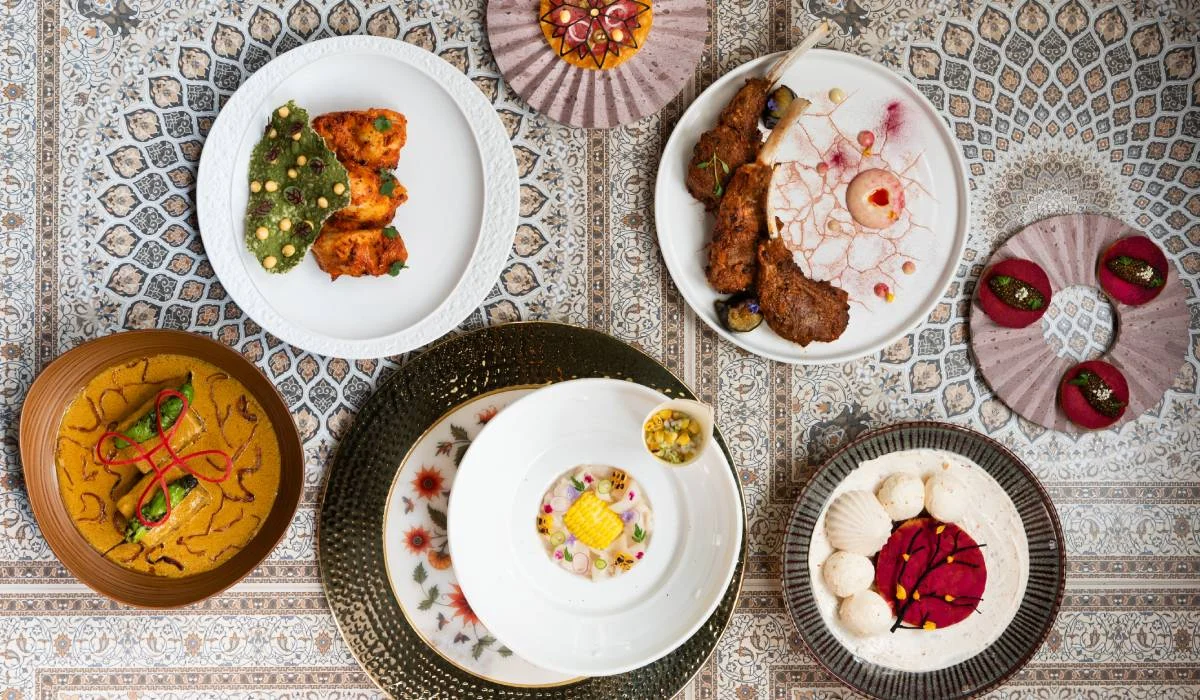
The landscape of American fine dining is undergoing a profound transformation as a new generation of chefs and restaurateurs moves beyond the traditional boundaries of fusion to embrace deeply personal, heritage-driven storytelling. From the arid plains of Rajasthan to the bustling streets of Jakarta and the serene rice fields of South Korea, the plate has become a canvas for cultural preservation and historical reinterpretation. This shift is most evident in the success of establishments like Musaafer, Lysée, and the duo of Wayan and Ma.de, where culinary techniques serve as the medium for narratives that span generations and continents.
The Musaafer Expedition: Redefining the Indian Gastronomic Map
At Musaafer—an Urdu term meaning "traveler"—the dining experience is rooted in a rigorous 100-day research expedition undertaken by Executive Chef Mayank Istwal. This journey across the diverse states and territories of India was not merely a search for recipes but a deep immersion into the domestic kitchens of the subcontinent. Istwal’s methodology involved cooking alongside matriarchs and traditional cooks whose families had guarded specific regional techniques for centuries.
When Mithu Malik and her husband established Musaafer in Houston, Texas, the restaurant represented a significant shift in the state’s culinary hierarchy. It achieved a historic milestone as the first Indian restaurant in Texas with a female owner to be recognized by the Michelin Guide, subsequently expanding its footprint to New York City. The restaurant’s philosophy explicitly seeks to dismantle the Western perception of Indian food as a monolithic category of "curry and rice."
The menu at Musaafer rotates three times annually, functioning as a living archive of Istwal’s travels. A standout example of this narrative approach is the laal maas, a dish originating from the northwestern state of Rajasthan. Historically, this smoked meat dish was prepared by chefs accompanying Rajput kings on jungle hunts. While the original recipe utilized game meat, the 1970s ban on hunting in India necessitated a shift to goat. Musaafer’s rendition honors this history by utilizing smoked goat meat combined with mathania chilies, freeze-dried garlic, and a millet brittle, bridging the gap between ancient royal tradition and modern culinary presentation.
Similarly, the masala papad appetizer reinterprets matthi, a traditional deep-fried pastry often paired with achar (pickled mango). By refining the texture to be thinner and crispier and incorporating spice-cured tuna, avocado, and an achar emulsion, the kitchen demonstrates how ancestral flavors can be elevated through contemporary techniques without losing their cultural soul.
Synthesis of Technique and Memory: The Lysée Perspective
In New York City’s competitive pastry scene, Eunji Lee has carved a niche that blends the rigor of French patisserie with the nostalgic flavors of South Korea. Lee, who previously served as the executive pastry chef at the three-Michelin-starred Jungsik—the first Korean restaurant in the United States to reach that echelon—now operates her own boutique, Lysée.
Lee’s work is characterized by a "tri-cultural" identity, drawing from her Korean upbringing, her classical training in Paris under masters such as Cédric Grolet, and her current life as a New Yorker. This synthesis is reflected in her signature offerings, such as the matcha floating island, which utilizes Uji matcha and Yuja sorbet, and the New York marble pound cake, featuring a chocolate caramel glaze.
The centerpiece of Lee’s storytelling is her toasted brown rice mousse cake. This dessert is a direct homage to her grandmother, who farmed rice in the South Korean countryside. Lee frequently cites the aroma of brown rice cooking on the stove as a foundational sensory memory. By combining this Korean staple with French pralines, caramel, and Georgia-sourced pecans, Lee creates a culinary bridge that spans her personal and professional history. "I try to tell my story through my dishes," Lee states, emphasizing that dessert serves as a unique language for deeper cultural communication.
The Indonesian Renaissance: Wayan and Ma.de
The expansion of Indonesian cuisine in the American fine-dining sector is currently led by Ochi Latjuba Vongerichten and her husband, Chef Cedric Vongerichten. Their New York establishments, Wayan and Ma.de, offer two distinct perspectives on the Indonesian archipelago.
Wayan, the couple’s inaugural concept, focuses on a modern French-Indonesian fusion. The menu features items such as escargot rendang served with toasted brioche and garlic-herb butter, a dish that exemplifies the marriage of French ingredients with the complex, slow-cooked spice profiles of Indonesia. Another cornerstone is the roasted duck, a staple of French cuisine, reimagined with a calamansi gulai (Indonesian curry), Asian pear, and cashews.
In contrast, Ma.de—which translates to "second born"—is a more intimate exploration of Ochi Vongerichten’s roots in Jakarta. The restaurant specializes in Padang-style dining, a regional cuisine from West Sumatra known for its bold flavors and communal service. The dining philosophy at Ma.de is centered on "communal abundance," where dishes are served family-style and all at once, reflecting the traditional way of eating in Indonesia.
The menu at Ma.de is structured around three essential pillars: gulai (curry), lado (chili pepper), and bareh (rice). Signature dishes include butterfish glazed in calamansi and lime with coconut salem rice, and yellowtail king sashimi paired with makrut lime and rhubarb. Vongerichten emphasizes the importance of sourcing, utilizing Indonesian farmers for specialty ingredients while supplementing with local New York produce to maintain the "soul" of the dish.
Chronology of Recognition and Market Context
The rise of these establishments coincides with a broader shift in the American culinary landscape over the past decade.
- 2011-2014: The Michelin Guide begins to significantly expand its recognition of Asian cuisines beyond Japanese and Chinese, notably awarding stars to modern Korean concepts like Jungsik.
- 2020: Musaafer opens in Houston, challenging the regional perception of Indian cuisine and setting the stage for its Michelin recognition.
- 2021-2022: Post-pandemic dining trends show an increased consumer interest in "experiential" and "narrative-driven" dining, where the history of the food is as valued as the taste.
- 2023-2024: Indonesian cuisine, long underrepresented in the American fine-dining sector, begins to receive critical acclaim through the work of the Vongerichtens, with Wayan and Ma.de gaining mentions in the Michelin Guide.
Data from the National Restaurant Association and various culinary think tanks suggest that "heritage cooking"—the practice of using professional techniques to cook one’s ancestral food—is one of the fastest-growing segments in the luxury dining market. Consumers are increasingly willing to pay a premium for dishes that offer an authentic cultural backstory and high-quality, ethically sourced ingredients.
Broader Implications for the Culinary Industry
The success of Malik, Lee, and Vongerichten signifies a departure from the "melting pot" approach of the 1990s and early 2000s, where global flavors were often diluted to suit a Western palate. Instead, these chefs are practicing a form of culinary diplomacy, using the plate to educate patrons on the nuances of regional identities.
Industry analysts suggest that this trend has significant economic and social implications:
- Supply Chain Diversification: As these high-end restaurants demand specific regional ingredients—such as mathania chilies from Rajasthan or specific rice varieties from Indonesia—they create new international trade opportunities for small-scale heritage farmers.
- Deconstruction of the "Ethnic" Label: By achieving Michelin stars and high-tier critical acclaim, these restaurants are successfully moving their respective cuisines out of the "cheap eats" category, allowing for higher price points that reflect the labor-intensive nature of traditional spice blending and preparation.
- Inspiration for Future Generations: The visibility of these chefs provides a roadmap for first- and second-generation immigrants to pursue fine dining without feeling the need to abandon their cultural heritage in favor of classical European cuisine.
Ochi Vongerichten highlights that while the recognition is a personal honor, its true value lies in the elevation of Indonesian culture as a whole. "Indonesia has one of the richest food cultures in the world, but it’s still underrated," she notes. This sentiment is echoed by Malik and Lee, who see their work as part of a larger movement to ensure that the "breadth and magic" of their respective cultures are finally recognized on the global stage.
As the American palate continues to evolve, the focus on storytelling suggests that the future of fine dining will be defined not just by technical perfection, but by the ability of a chef to transport a diner to a specific time and place through the medium of flavor. The journey from a grandmother’s rice field to a Michelin-starred table in Manhattan is no longer just a personal story—it is the new standard for culinary excellence.