admin

Canadian telecommunications giant Bell Canada has issued an urgent report detailing a significant surge in copper wire thefts and associated vandalism targeting its critical infrastructure across three distinct communities in Nova Scotia. The company’s statement, released Monday, highlights an alarming trend of escalating incidents between January 1 and October 31, 2026, leading to widespread disruptions in essential communication services and substantial financial burdens for both providers and affected customers. The pronounced increase underscores a growing national challenge, compelling telecommunications companies to advocate for more robust federal legislative support, specifically referencing the proposed Bill C-14, to curb this costly and dangerous criminal activity.
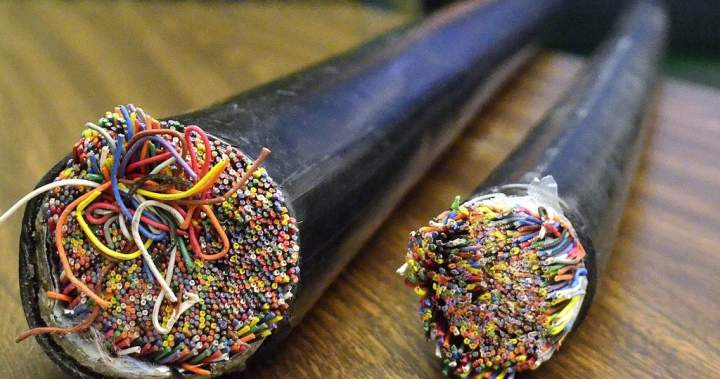
The report identifies Oxford and Kerrs Mill in northern Nova Scotia, alongside Elmsdale, situated north of Halifax, as the primary hotspots for these illicit activities. Over the ten-month period, Bell Canada recorded a total of 66 incidents across these three locations, revealing a stark year-over-year escalation that points to an organized and persistent criminal threat. The community of Oxford has been particularly hard hit, registering 29 incidents of theft and vandalism, an almost fourfold increase compared to the same period in 2025. This dramatic rise signals an intensifying vulnerability within the region’s telecommunications network. Similarly, Kerrs Mill experienced a doubling of incidents, with 26 occurrences reported this year, highlighting a rapidly deteriorating security situation. Perhaps most concerning is the situation in Elmsdale, approximately an hour’s drive north of Halifax, where 11 reports of theft and vandalism were filed in 2026, a stark contrast to the zero incidents recorded throughout the entirety of 2025. This sudden emergence of criminal activity in Elmsdale indicates a potential expansion of theft rings into previously unaffected areas.
The ramifications of these thefts extend far beyond mere property damage and financial losses. Each of the 66 reported incidents carried the inherent risk of disrupting vital phone, internet, and cellular services for both residential and business customers. Crucially, such disruptions can compromise the ability to dial 911, posing severe public safety risks, particularly in emergency situations where immediate communication is paramount. Bell Canada emphasized that repairs resulting from these acts of theft and vandalism are not trivial, often requiring significant time and resources. Restoration efforts can span from a minimum of 12 hours to several days, leaving communities disconnected and vulnerable. The financial cost to telecommunications providers is substantial; while the scrap value of the stolen copper itself is often minimal, the expenses associated with deploying crews, replacing specialized infrastructure, and restoring services are considerable. These costs are ultimately borne by the companies, but the ripple effect impacts consumers through potential service interruptions and, indirectly, through operational overheads.

The surge in copper wire thefts in Nova Scotia is not an isolated phenomenon but rather a localized manifestation of a broader, national, and even international trend. Copper, a highly conductive and durable metal, holds significant value on the scrap metal market due to its widespread use in construction, electronics, and, critically, telecommunications infrastructure. Fluctuations in global commodity prices, coupled with economic pressures, often drive an increase in metal theft as individuals or organized groups seek quick profits. Across Canada, various utility companies, including hydro, railway, and telecommunications providers, have reported similar challenges, citing significant operational disruptions and financial losses. The Canadian Telecommunications Association (CTA) has frequently highlighted the pervasive nature of these crimes, advocating for a coordinated national response. This background context underscores the urgency behind Bell Canada’s call for federal assistance, specifically through Bill C-14, which is envisioned to provide the necessary legislative tools to combat this escalating problem more effectively.
The proposed Bill C-14 represents a critical piece of legislation that telecommunications companies hope will fortify their efforts against persistent metal theft. While specific details of the bill’s provisions are subject to parliamentary process, industry stakeholders anticipate measures that could include enhanced penalties for metal theft, stricter regulations for scrap metal dealers to track the origin of materials, and increased enforcement powers for law enforcement agencies. Such legislation would aim to dismantle the economic incentive for these crimes by making it more difficult to sell stolen copper and increasing the legal risks for offenders. Currently, the patchwork of provincial and municipal bylaws, coupled with existing criminal code provisions, often proves insufficient to deter sophisticated theft operations. A unified federal approach, as championed by the industry, would provide a more consistent and powerful deterrent across jurisdictions, treating infrastructure theft with the gravity it warrants given its impact on national connectivity and public safety.

In response to the escalating threat, Bell Canada has already implemented a multi-faceted approach to security. The company is actively collaborating with local police forces, sharing intelligence and supporting investigations into these criminal acts. Furthermore, Bell has invested in enhanced security measures at its facilities, including the deployment of alarms, sophisticated surveillance systems, and other preventative technologies designed to detect and deter intruders. Despite these proactive steps, the sheer scale and distributed nature of telecommunications infrastructure make it incredibly challenging to secure every potential target. This reality underscores the necessity of public vigilance. Bell Canada’s statement explicitly encouraged residents in affected areas to report any suspicious activity around telecommunications infrastructure directly to the police or Crime Stoppers. Community engagement is identified as a crucial layer of defense, as local residents are often the first to notice unusual vehicles or individuals tampering with utility boxes, poles, or buried cables.
The economic and social ramifications of widespread copper theft are profound and far-reaching. Economically, the direct costs of repairs, replacement of stolen materials, and increased security measures burden telecommunications providers, potentially impacting investment in network upgrades and expansion. For businesses, service outages can lead to significant revenue losses, disruption of operations, and damaged customer relations, particularly for those heavily reliant on internet-based transactions or cloud services. In rural areas, where connectivity might already be more fragile, prolonged outages can isolate communities, hindering access to online education, healthcare, and commercial activities. Socially, the most critical concern remains the compromise of public safety. The inability to contact emergency services during a crisis due to a severed copper line can have dire, even life-threatening, consequences. Furthermore, the constant threat of service disruption erodes public trust in infrastructure reliability and can create a sense of insecurity within affected communities. The psychological impact of being disconnected, particularly for vulnerable populations or in areas prone to natural disasters, cannot be overstated.

A chronological analysis of the incidents reported by Bell Canada reveals a worrying escalation. The period from January 1 to October 31, 2026, clearly marks a period of heightened criminal activity. The comparison with 2025 data, specifically the almost fourfold increase in Oxford and the doubling in Kerrs Mill, indicates a significant and rapid deterioration of the security landscape. The emergence of incidents in Elmsdale, where none were recorded the previous year, suggests an expanding geographical reach of these theft operations. This escalating trend points towards a systemic issue rather than isolated opportunistic crimes, hinting at organized groups systematically targeting valuable infrastructure for scrap. This pattern further strengthens the argument for a more coordinated and robust response, transcending local police efforts to include broader federal intervention.
Beyond immediate responses, the long-term implications of these thefts demand strategic foresight. The reliance on copper in older telecommunications infrastructure makes it a perennial target. While newer fiber optic cables contain no copper, the vast existing network still utilizes copper lines for a significant portion of "last-mile" connectivity, especially in less densely populated areas. This creates a dual-network vulnerability where both new and old infrastructure face threats – the new from deliberate damage to critical fiber lines, and the old from theft of valuable copper. Future solutions may involve accelerating the transition to fiber optic networks, implementing advanced monitoring technologies that can detect tampering in real-time, or even exploring alternative, less valuable materials where feasible. However, these are costly and long-term endeavors. In the interim, a combination of heightened security, aggressive law enforcement, community vigilance, and supportive legislation like Bill C-14 remains crucial. The narrative of rising copper thefts in Nova Scotia serves as a stark reminder of the intricate challenges faced in maintaining essential modern infrastructure against persistent criminal enterprises. It underscores the collective responsibility of industry, government, and the public to protect the vital arteries of communication that underpin contemporary society.