Jia Lissa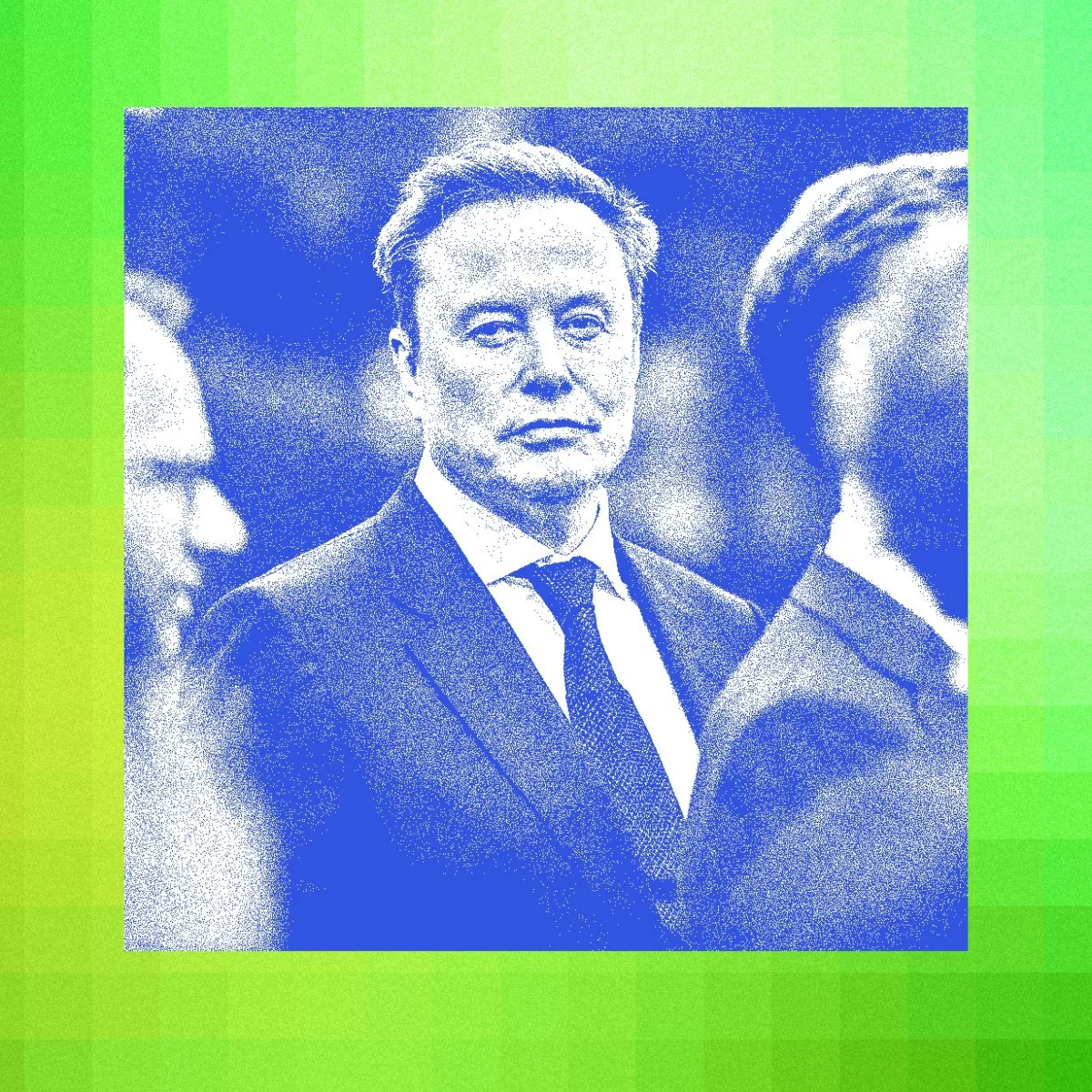
This week, the Uncanny Valley podcast, hosted by Zoë Schiffer and Leah Feiger, delved into three compelling narratives at the intersection of technology, politics, and culture: the strategic financial maneuvers of Elon Musk’s America PAC in the upcoming 2026 midterm elections, the rise of effective altruism as a central philosophy in the contentious AI safety debate, and the fierce online backlash faced by a graphic designer for creating the logo for Meta’s AI assistant, Muse. The discussion underscored the profound and often polarizing influence of tech leaders, philosophical movements, and digital platforms on contemporary society.
Elon Musk’s America PAC: Strategic Spending in the 2026 Midterms
Elon Musk’s America PAC, a super PAC initially established in 2024, is now directing millions of dollars towards critical Senate races in the 2026 midterm elections, exhibiting a distinct strategy focused on opposing Democratic candidates rather than solely bolstering Republican ones. This shift in focus from presidential campaigning to legislative influence marks a significant evolution in Musk’s political engagement and highlights the growing power of tech billionaires in shaping the American political landscape.
Background and Evolution of America PAC
America PAC first gained prominence in the 2024 presidential election, where it served as a primary vehicle for Musk’s substantial financial support for then-candidate Donald Trump. The PAC reportedly spent over $260 million to contribute to Trump’s successful presidential bid, showcasing an unprecedented level of individual donor influence in a national election. Following the presidential outcome, the PAC has pivoted its strategy, redirecting its considerable financial muscle towards influencing the composition of Congress. This strategic shift reflects a common tactic among well-funded political action committees: after a presidential election, attention often turns to congressional races to secure a legislative environment favorable to the donor’s interests.
Targeted Spending and Anti-Democrat Focus
A key revelation from recent analysis, including a live tracker developed by WIRED, indicates that America PAC’s midterm spending is highly targeted. Instead of broadly supporting Republican candidates, the PAC demonstrates a clear preference for expending resources against Democrats. Data suggests that for every dollar America PAC has spent in direct support of a Republican candidate, more than two dollars have been allocated to campaigns opposing a Democrat. This aggressive anti-Democrat stance is particularly evident in closely contested Senate races across the country, which are widely considered pivotal in determining the balance of power in the next Congress.
For instance, in Texas, a state where several of Musk’s enterprises, including SpaceX and Tesla, have significant operations, America PAC has reportedly poured approximately $9 million into campaigns attacking Democratic challenger James Talarico. In contrast, the PAC’s support for Republican incumbent Ken Paxton in the same state is estimated to be around the $1 million mark. Similar spending patterns have been observed in other critical Senate races, such as those in Ohio and Iowa, underscoring the PAC’s tactical approach to dislodge Democratic incumbents or prevent challengers from gaining ground.
Implications for the Regulatory Landscape
The strategic channeling of funds against Democratic candidates is not merely an ideological stance; it carries significant implications for the future regulatory environment faced by Musk’s vast business empire. Democratic control of either the House or Senate could lead to increased scrutiny, investigations, and potential regulatory pressures on tech companies and influential figures like Musk. Sources within Democratic circles have openly discussed the prospect of launching investigations and issuing subpoenas against large tech entities and their leaders should they gain control of legislative chambers. This potential for heightened oversight, particularly from figures known for their robust regulatory stances, such as Federal Trade Commission Chair Lina Khan, is a significant motivator for Musk and his associates to influence congressional outcomes.
While some analysts express skepticism about the long-term impact of such investigations on a trillionaire like Musk, citing previous instances where fines amounted to a "drop in the bucket," the prospect of regulatory entanglement remains a powerful deterrent. The government’s increasing dependence on companies like SpaceX for critical functions, such as space launches and satellite communications via Starlink, also complicates the enforcement of stringent regulations, creating a complex interplay of influence and accountability.
Broader Context of Tech Philanthropy in Politics
Musk’s America PAC is part of a broader trend of tech founders and Silicon Valley elites wielding significant financial influence in politics. While Silicon Valley is not a monolithic entity, a vocal segment aligns with Musk’s concerns about potential legislative hurdles to growth and innovation, particularly in burgeoning fields like artificial intelligence. The current election cycle sees active participation from various PACs linked to tech groups, reflecting a diverse array of political leanings, although those supporting conservative causes tend to be more publicly prominent. The influx of newly minted millionaires from the AI sector is also sparking internal debates within the tech community about the most effective ways to deploy capital, whether through philanthropy or political contributions, and where such contributions would yield the greatest impact.
Effective Altruism: At the Nexus of AI Safety and Political Ideology
The once-niche philosophical movement of effective altruism (EA) has surged into mainstream discourse, particularly becoming a central point of contention in the escalating debate surrounding artificial intelligence safety. Its tenets, which advocate for the most efficient allocation of resources to maximize positive impact, have attracted numerous AI researchers and subsequently drawn the ire of political figures, notably within the Trump administration.
Defining Effective Altruism
At its core, effective altruism is a utilitarian philosophy centered on the principle of using evidence and reason to determine the most effective ways to benefit others. Proponents aim to maximize the good they do, whether through charitable donations, career choices, or advocacy, by rigorously evaluating which actions will have the greatest positive impact per unit of effort or resource. Originating in academic circles at institutions like Oxford University and popularized through online forums such as LessWrong in the early 2000s, EA initially focused on global health, poverty reduction, and animal welfare.
EA’s Intersection with AI Safety
The philosophy found fertile ground within the AI research community, where many individuals, steeped in rationalist thought, began to apply EA principles to the potential risks posed by advanced artificial intelligence. For these researchers, the development of Artificial General Intelligence (AGI) presents a profound "existential risk" to humanity. If one’s primary goal is to safeguard humanity and prevent catastrophic harm, then mitigating the risks of a potentially world-ending technology becomes an imperative, even if the probability of such an outcome is perceived as low.
This concern crystallized recently when AI researcher Jacob Coxon publicly voiced his belief that advanced AI could pose an existential threat to humanity, a stance deeply rooted in EA principles. His pronouncement generated a wave of media attention and further propelled effective altruism into the spotlight, making it synonymous with the "AI doomer" perspective in some circles.
The Trump Administration’s Stance
The increasing visibility of EA, particularly its association with dire warnings about AI, provoked a strong reaction from the Trump administration. Senior Pentagon officials publicly labeled effective altruism as a "dangerous ideology." This sentiment was echoed by an official Department of Defense social media account, which urged citizens to choose "Americanism, not effective altruism."
This official condemnation frames EA as antithetical to American values, potentially portraying it as anti-growth, anti-progress, and even religiously fanatical due to its extreme utilitarian calculations and focus on distant, potentially speculative risks. Critics within the administration appear to interpret EA’s emphasis on caution and safety as an impediment to rapid technological advancement, which they view as crucial for national competitiveness and security, particularly in the global AI race.
Ethical Dilemmas and Controversy
The controversy surrounding effective altruism stems from several factors. While many who identify as EAs are described as "completely normal" and "thinking about it really deeply," the philosophy, when taken to its extreme utilitarian conclusions, can lead to deeply unsettling trade-offs. The idea that one might be willing to inflict a certain amount of harm in the present to prevent a greater, more catastrophic harm in the future raises significant ethical questions. This "ends justify the means" approach, even if logically derived from a goal of maximizing good, can be perceived as cold, detached, or even dangerous.
Furthermore, the perception that certain EA-aligned AI companies are the only ones taking AI safety seriously can create an environment where winning the "AI race" becomes paramount, potentially justifying aggressive or exclusive strategies under the guise of protecting humanity. This dynamic is observable in the historical split between OpenAI (represented by CEO Sam Altman, often seen as embodying a "growth at all costs" capitalist view) and Anthropic (founded by Dario Amodei and other former OpenAI researchers, who left to build AI "safely to benefit all of humanity," aligning more closely with EA principles, despite Amodei’s later disavowal of the label). The existence of communal spaces like Lighthaven in Berkeley, which host EA-related events, further illustrates the movement’s organized, albeit diffuse, nature. The official pushback from the Trump administration, effectively turning "effective altruism" into a pejorative, underscores the deep ideological divides that AI safety concerns are now creating within political and technological spheres.
Backlash Over Meta’s Muse Logo: Freelance Artists in the AI Era
The introduction of Meta’s new AI assistant, Muse, and its associated logo, designed by freelance artist Jessica Hische, sparked an unexpected and intense backlash within the digital art community. The incident highlights the growing tension between AI development and the creative industries, as well as the economic pressures facing independent artists in an evolving technological landscape.
The Muse Logo and its Designer
Meta’s Muse AI assistant, which has seen considerable traction on app charts, commissioned renowned freelance designer and lettering artist Jessica Hische to create its logo. Hische, known for her distinctive illustrative typography, announced her involvement in the project through her newsletter with the self-aware title, "New Work! (Don’t be mad at me)." In her announcement, she defended her decision, arguing that a large company hiring an independent artist should be commended, particularly in an era where generative AI could easily produce similar visual assets. She also detailed her design process for the "M" logo and the full Muse typeface.
The Immediate Online Outcry
Hische’s announcement, when shared on Threads (Meta’s own social media platform), ignited a firestorm of criticism. The reaction was swift and severe, with many subscribers and fellow artists expressing "disgust," "disappointment," and vowing to cease supporting her work. The intensity escalated to personal attacks, including speculation about her finances and even the posting of photos of her residence. Hische described feeling as though she was being attacked by a "mob" on Threads for three days.
Economic Realities and Ethical Dilemmas for Artists
The vehemence of the backlash underscores a profound schism within the creative community regarding AI. Many artists view generative AI as an existential threat to their livelihoods, fearing that it will devalue human creativity and eliminate commercial opportunities. For these "AI purists," any collaboration with tech companies developing AI tools is seen as a betrayal of artistic principles and an endorsement of a technology that could ultimately displace them.
Hische’s personal circumstances shed light on the complex economic realities facing freelance artists. She candidly explained that her corporate work, which typically subsidizes her less profitable artistic endeavors and community projects—such as her two art shops in Oakland that host children’s workshops—had significantly declined in recent years. When Meta approached her, the opportunity to secure financial stability, including the ability to offer health plans to her employees and manage payroll without stress, outweighed her initial conflicted feelings about AI.
The payment for the Muse logo project, approximately $12,500 for what Hische considered "two days of work" (a sprint for the initial "M" and additional work for the full typeface), highlights the disparity between the perceived value of such work for a tech giant and the actual compensation. While a seemingly modest sum for a major corporation, for a freelance artist, it represented a vital income source.
Broader Implications for Creative Industries
Hische’s experience brings into sharp focus the broader ethical considerations for artists navigating the AI era. Her decision to work with Meta was a pragmatic one, born out of economic necessity rather than an endorsement of AI without reservations. She holds "complicated feelings" about AI, acknowledging its potential detriment to commercial art, a sentiment informed by her husband’s work in the field and their differing views.
Ultimately, Hische did not regret taking the job or discussing it publicly. She believed that by highlighting a major tech company’s decision to hire an independent artist, she was advocating for the value of human creative labor. Her perspective suggests that a purely adversarial stance might discourage corporations from commissioning artists at all, potentially leading them to rely solely on AI-generated content. Instead, she posited that a "symbiotic relationship" could exist, where artists are compensated for their unique skills, even as AI technology advances.
The incident serves as a stark reminder of the digital mob mentality that can proliferate on social media platforms, often disproportionately targeting individuals rather than the larger corporate entities they represent. It also illustrates the ongoing, difficult conversation within the creative industries about adaptation, resistance, and the future of human artistry in a world increasingly shaped by artificial intelligence.