admin
admin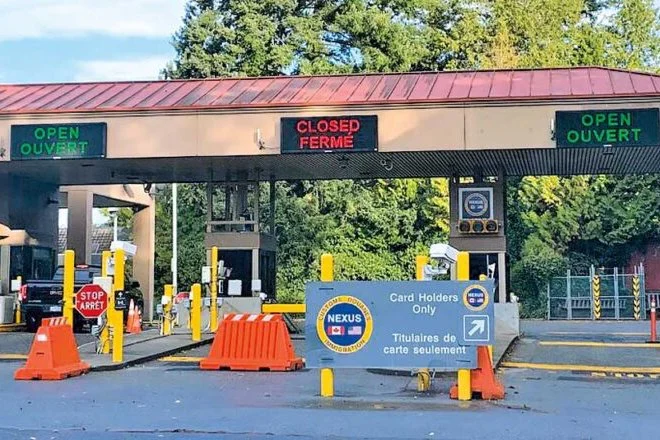
When Ali Hayton, the owner of the International Marketplace grocery store in Point Roberts, Washington, met with Democratic Senator Patty Murray and fellow state business owners in the spring of 2025, her message was stark and unequivocal. Escalating trade tensions with Canada, ignited by recent U.S. policy shifts, were pushing her vital business to the precipice of closure. Such an outcome would not only eliminate the area’s sole grocery store but also plunge the 1,200 year-round residents into a severe food security crisis, illustrating the profound human cost of international disputes on uniquely vulnerable communities.
A Geographic Anomaly’s Economic Dependency
Point Roberts, affectionately known as "the Point" by its residents, is a geographical anomaly born from the stroke of a pen in 1846. That year, the U.S. and Great Britain established the border along the 49th parallel, inadvertently creating a five-square-mile U.S. enclave that juts south from mainland Canada. Situated just twenty miles south of Vancouver, British Columbia, this tiny peninsula is officially part of Washington State but is accessible by land only through Canada. This unique geography has, for generations, forged an intricate cross-border relationship, making the steady stream of Canadian visitors not just welcomed guests, but the economic lifeblood of the community.
Historically, the Point has thrived on this symbiotic relationship. Canadian shoppers would cross the border to take advantage of lower U.S. gas prices, duty-free allowances, and often a more diverse selection of goods, including specific American brands. In return, Point Roberts businesses, from gas stations to restaurants and the International Marketplace, flourished, creating jobs and a vibrant local economy. "Canadian customers are part of who we are and part of who we have always been," emphasizes Ali Hayton, encapsulating the deep-rooted integration of Canadian commerce into the local identity and economy. This delicate equilibrium, however, began to crumble with the onset of new political headwinds.
The Eruption of Trade Tensions: A Chronology of Disruption
The harmonious cross-border relationship that defined Point Roberts began to fray significantly with the inauguration of President Donald Trump in January 2025. His administration swiftly adopted an "America First" trade posture, initiating a systematic imposition of tariffs on Canadian goods and increasingly aggressive rhetoric that included threats to annex Canada as the "51st state." This shift dramatically altered the economic landscape and shattered decades of diplomatic goodwill.
The timeline of escalating tensions reveals a rapid deterioration:
- January 2025: President Trump takes office, initiating a new era of protectionist trade policies and confrontational rhetoric towards key U.S. allies, including Canada.
- Spring 2025: Ali Hayton and other border community business leaders meet with Senator Patty Murray, sounding early alarms about the potential for economic collapse due to impending trade actions.
- February 2026: A Bank of Canada survey underscores the immediate impact of the strained relations, reporting a staggering 10 million fewer trips to the U.S. by Canadians in 2025 compared to 2024—a precipitous drop of 25 percent. This data offered a quantifiable measure of Canadian reluctance to engage in cross-border commerce and leisure.
- July 2026: The U.S. administration signs executive orders announcing a substantial increase of 50 percent in tariffs on a wide range of Canadian agricultural products, including beer, wine, honey, fruit, and dairy. These tariffs directly targeted sectors vital to Canada’s economy, further escalating the trade dispute.
- August 2026: High-stakes trade talks aimed at de-escalating the tariff dispute between the U.S. and Canada collapse without resolution. In immediate response, Canada vows to match U.S. tariffs dollar for dollar, signaling a deepening of the trade war and a hardening of positions on both sides.
This chronological sequence of events created a perfect storm for Point Roberts. The direct economic impact of the tariffs, coupled with the chilling effect of inflammatory political rhetoric, discouraged Canadian travel and spending, severing the vital economic artery that sustained the enclave.
The International Marketplace: More Than Just a Store
At the heart of Point Roberts’ struggle is the International Marketplace, an establishment that transcends the typical definition of a grocery store. When its first iteration opened in 1982, it liberated residents from the necessity of crossing an international boundary just to purchase basic necessities like meat, dairy, and frozen foods. Ali Hayton, who acquired the operation in 1998, expanded it into a sprawling 33,000-square-foot facility, making it the largest commercial structure in Point Roberts. It sells everything from greeting cards to fresh produce—the latter being critically important as the enclave lacks any significant commercial agricultural production or market gardens. The deli section, particularly during lunch hours, functions as a de facto community center, a place where neighbors gather and connect.
The visible decline in business at the Marketplace paints a grim picture. Hayton reports a nearly 50 percent drop in revenue, a figure corroborated by the once-bustling parking lot, which now sits barely half-full on weekends. Historically, especially during summer, Canadian license plates would outnumber Washington plates, a testament to the cross-border shopping phenomenon where visitors would fill up on cheap gas and stock up on groceries before heading home. Now, this vibrant scene is a distant memory.
Hayton acknowledges that the current crisis is not solely attributable to the Trump administration’s policies. The COVID-19 pandemic, which resulted in a 20-month border closure, dealt the first severe blow. Although grocery items were deemed essential and continued to cross, customer traffic from both sides of the border plummeted due to restrictions. "In 2024, things were starting to look up again," Hayton recounts, "Then all the rhetoric about the 51st state [started]." This compounding effect of previous isolation and current trade hostility has pushed her business to the brink.

The logistics of supplying the International Marketplace are uniquely challenging. All inventory, sourced from a U.S.-based wholesaler, must cross the U.S./Canada border, travel through Canadian territory, and then re-enter the U.S. at Tsawwassen, British Columbia, before finally reaching the store. While goods moving "in transit" through Canada are typically exempt from duty, the operational costs are astronomical. "I would love to have fresh produce delivered every single day," Hayton explains, "but when that truck costs me $1,000 to come across the border, I can’t do it." With fewer customers, Hayton has been forced to limit food orders to every two or three days and reduce operating hours, directly impacting the availability of fresh goods for residents. Her determination, however, remains resolute, driven by a profound sense of responsibility to the community. "A mom wakes up at 8:30 in the morning," she says, "She’s out of milk. Does she really have to drive to another country and get milk, or am I going to be there?"
The Ripple Effect: Broader Economic and Social Consequences
The challenges facing the International Marketplace are emblematic of a broader economic malaise gripping Point Roberts. Businesses across the enclave, from gas stations lining Tyee Street to seaside restaurants like The Pier and The Saltwater Café, report significant declines in customer traffic and revenue. Hansen, who owns both The Pier and the Saltwater Café, states her customer base has shrunk by up to 40 percent. In a desperate bid to attract Canadians, she even accepts Canadian dollars at 80 percent of the American dollar, depending on the fluctuating exchange rate. The loss of Canadian tourism and retail spending translates into reduced employment opportunities, decreased property values, and an overall erosion of the economic vitality that once characterized the Point. The slower pace of life, once a charm, now carries an undertone of stagnation.
Beyond the immediate economic impact, the trade war has profound social implications, particularly concerning food security. Dave Lee, a permanent resident and president of the board of directors for the Point Roberts Food Bank (PRFB), highlights the community’s vulnerability. The PRFB serves nearly five percent of the enclave’s population and operates on an honor system, not requiring proof of income. Like the grocery store, the food bank faces logistical hurdles, collecting food from Bellingham and transporting it across two border crossings, meticulously ensuring manifests are double-checked to avoid duties.
Crucially, the food bank’s ability to provide perishable items like cheese, eggs, and fresh vegetables is entirely dependent on the International Marketplace, which generously shares space in its fridges and freezers. "If it went out of business, say next month," Lee worries, "we’d have to scramble and try and figure out what we’re going to do." This precarious situation spurred the PRFB to take proactive steps: in 2023, they purchased property, and in July 2026, construction began on a dedicated warehouse. This new facility aims to provide better oversight and management of inventory, and most importantly, lessen the food bank’s dependence on the grocery store for cold storage. While this initiative offers a degree of resilience for the PRFB, it does not address the fundamental challenge of ensuring widespread food access for all residents if the Marketplace were to close.
Community Resilience and the Quest for Connection
Despite the daunting challenges, the community of Point Roberts is actively seeking solutions and working to rebuild the strained cross-border connections. The local Chamber of Commerce, led by president Wayne Lyle, is undertaking efforts to encourage both Canadian and American visitors. "We advertise in nearby Delta, B.C., and into the Bellingham and Seattle areas," Lyle states, reflecting a multi-pronged approach to attract tourism. He remains cautiously optimistic about the community’s food supply, acknowledging the lack of local produce but emphasizing the historical resilience. "We can get groceries in nearby Tsawwassen if our grocery store ever shut down, but so far, even through COVID, International Marketplace has been there and open."
However, Hayton’s solution, consistent with her message to Senator Murray over a year ago, remains rooted in direct, person-to-person diplomacy. After trade talks collapsed in August and Canada vowed retaliatory tariffs, keeping Canadians largely on their side of the border, the need for human connection became even more critical. Hayton recalls discussions about a large public relations event at the border, involving officials from British Columbia and legislators from Washington State, but the idea never materialized. Undeterred, she has initiated her own "on-the-ground diplomacy." Her staff at the International Marketplace has clear instructions: "When [Canadians] come down, we show them that we’re the same people we’ve always been [despite political tensions]. We still treat everybody the way we want to be treated and provide the same excellent services."
This commitment to hospitality and the preservation of long-standing relationships represents the community’s most potent defense against the broader geopolitical currents. It is a belief that personal connections can bridge the chasm created by national disputes, a quiet act of defiance against policies that threaten to isolate an already isolated community.
Broader Implications and the Path Forward
The plight of Point Roberts serves as a vivid illustration of how international trade wars and political rhetoric can have disproportionately severe impacts on unique border communities. Its extreme reliance on cross-border traffic makes it a canary in the coal mine for the wider U.S.-Canada relationship, demonstrating the fragility of economies built on open borders and mutual trust. The dual blows of the COVID-19 pandemic’s border closure and the current trade hostilities highlight the need for robust contingency planning and targeted support for such vulnerable enclaves.
The long-term sustainability of Point Roberts as a viable community hinges not only on the immediate resolution of the U.S.-Canada trade dispute but also on a recognition of its unique geopolitical status. While local efforts to attract visitors and secure food supplies are commendable acts of resilience, a lasting solution will ultimately require policy changes at the national level that prioritize the well-being of communities caught in the crossfire of international relations. For Ali Hayton and the residents of Point Roberts, the hope remains that the enduring spirit of cross-border friendship will ultimately triumph over political discord, ensuring their lifeline endures.