admin
admin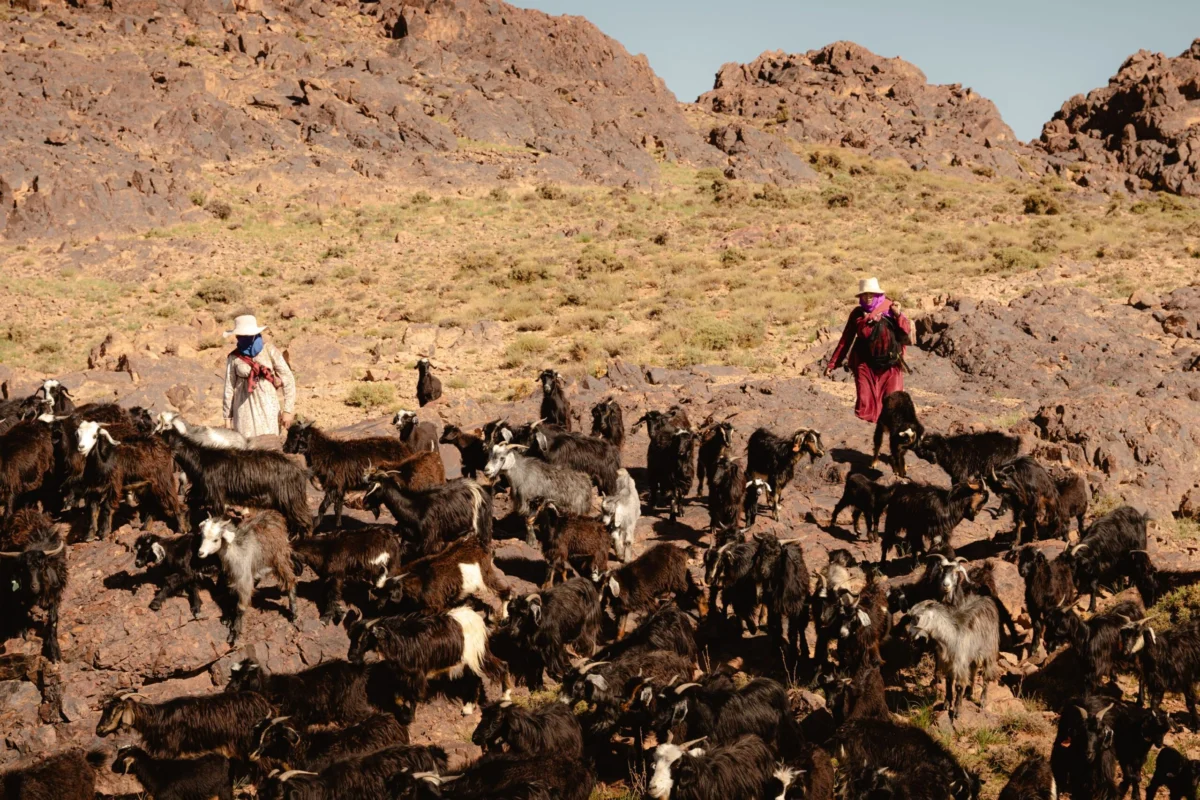
The rugged canyons and stark basalt towers of Jebel Saghro in Morocco resonate with a persistent symphony of bleats and baas. Against the glare of the midday sun, a flash of red, the djellaba of Telhou Belâawane, the matriarch of the Berber family accompanying this expedition, signals the proximity of their herd. For the untrained eye, however, the dark-coated goats blend seamlessly into the volcanic landscape, their presence a testament to a vanishing way of life.

Jebel Saghro, the ancestral homeland of Telhou’s people, the Aït Atta, a historically formidable Berber (or Amazigh, meaning "free people") tribe, serves as a dramatic backdrop for one of Africa’s oldest migratory traditions. This region, stretching from the High Atlas Mountains to the fringes of the Sahara, witnesses a biannual exodus. For millennia, the Aït Atta and other Berber families have undertaken journeys spanning over 180 miles, moving their livestock from the summer pastures of the High Atlas to the winter grazing grounds of Jebel Saghro. This practice, known as transhumance, defines a semi-nomadic existence that is rapidly becoming a relic of the past.
The author joined the Belâawane family, along with a support team from the renowned travel operator Black Tomato, ten days into their trek in late September. This immersive experience is part of "The Keepers," Black Tomato’s latest collection of meticulously curated itineraries. These journeys are designed around individuals who embody and pass down unique knowledge, from a 28th-generation Daoist master in Chengdu, China, to a seasoned mariscador on Chile’s Chiloé Island who navigates the ocean’s tides. Black Tomato, a pioneer in off-the-grid luxury travel, has astutely identified a growing traveler desire for authentic human connection and the acquisition of knowledge in an increasingly digital world. As Black Tomato co-founder Tom Marchant observes, "In a world where nearly anything can be looked up or generated in seconds, human knowledge and connection are the ultimate luxuries. And more than ever, travelers want to be students, not just spectators."

The Caravan and the Support System
Before the author’s arrival, the Belâawane family’s caravan consisted of approximately 200 goats, two herding dogs, two chickens for fresh eggs, and three donkeys. These donkeys were essential for transporting vital supplies: tea kettles, water jugs, blankets, and other provisions. Black Tomato augmented this traditional setup by providing five mules and an additional dozen individuals. This support team included two drivers, four logistics personnel responsible for setting up the author’s comfortable canvas tent (complete with a bed and a flush toilet), a dedicated chef, and five mule handlers. Their animals carried the bulk of the food, luggage, and amenities for the author’s stay. Notably, some of these support staff are cousins of the Belâawane family, and many, like the head mule handler Zaïd Oukhazaid, have reluctantly transitioned from nomadic life to permanent village existence due to various factors, including the escalating impacts of climate change.
An Introduction to Tradition and Terroir
The journey began in Tagdilt, a village on the edge of the Dadès Valley, where Zaïd Oukhazaid and another mule handler met the author. Dressed in coarse, sheep’s wool djellabas over trekking pants and plaid shirts, their heads adorned with high turbans, known as shesh, they exuded an aura of seasoned resilience. Zaïd, diminutive in stature but possessing an outsized personality and profound pride in his Aït Atta heritage, welcomed the author with a broad smile and a firm handshake, followed by a warm embrace. His command of English, though limited to a handful of phrases honed through years of working with tourists, was coupled with an infectious enthusiasm. Noureddine (Nouri) Bachar joined as the author’s translator, facilitating communication. Despite rudimentary language skills on all sides, the author was surprised by the depth of connection forged through shared laughter, smiles, and essential phrases like "thank you very much" and "very very good."

With the threat of rain looming, the Belâawane family had begun their trek earlier than planned, intending to meet the support team at the campsite. "The nomads dictate the days," Nouri explained, highlighting the fluidity of the schedule dictated by the rhythm of the migration. "You are here to support their journey, and we are here to support yours." Once the author’s luggage was loaded onto a mule, Zaïd beckoned them to follow him into a landscape that evoked a Martian panorama. Jebel Saghro, translating to "Land of Thirst" in the Berber tongue, presented an endless expanse of flat-topped mesas, dry riverbeds, and umber cliffs. Zaïd, sensing the author’s apprehension, remarked, "Drop me in a city, I’d be lost. Drop me anywhere in these mountains, and I know my way."
Navigating the Terrain: A Two-Hour Warm-Up
The initial two-hour hike served as a prelude to the more strenuous days ahead, with planned daily treks of five hours or more. The team arrived at Tircht pass, situated at 6,100 feet, just as camp was being established. Each Aït Atta family possesses traditional rights to specific migratory routes, including established campsites like this one, where stone pens, known as azib, have been constructed to shelter their herds. Zaïd efficiently fetched water from a nearby well and prepared a fire for brewing tea. A lighthearted moment ensued when the author requested less sugar in the tea, leading to a hearty laugh from Zaïd and a shared understanding of the importance of preserving dental health.

As dusk settled, the family and the support team convened in a goat-hair tent for introductions and a communal meal. The atmosphere was akin to a family reunion, with the men engaged in lively conversation and Telhou and her shy 17-year-old daughter, Saâdia, sitting together. Traditionally, the man of the household leads the caravan and manages camp setup each night, while the women and children are responsible for herding the goats and preparing meals. The author’s presence offered a welcome respite for the women, freeing them from cooking duties for the duration of the visit. The chef served bowls of harira, a hearty tomato-based soup enriched with beans, herbs, and spices. Following Zaïd’s lead, the author embraced the "nomad way" by drinking directly from the bowl with their hands, earning an approving nod.
Challenges of a Changing World
The nomadic lifestyle faces mounting challenges. Rising global temperatures and severe droughts have significantly diminished pastureland. Furthermore, since 2019, Moroccan law mandates school attendance for children aged six to sixteen, reducing the available workforce for tending the herds. Four of Telhou’s six children attend school, one daughter is married, and Saâdia is soon expected to marry. Zaïd elaborated on the gradual erosion of the nomadic tradition, noting that the allure of modern conveniences—electricity at the flip of a switch, water from a tap—makes the hardships of living off the land increasingly unappealing. Hmad confided to Nouri that only six families from their sub-tribe, the Ait Slilou, had undertaken the journey to Jebel Saghro this year, a stark contrast to the upwards of 80 families in previous generations. This narrative of disappearing traditional lifestyles is echoed globally, from the sheep herders of the Swiss Alps to ranching families in the American West, where reliance on family and the land is slowly giving way to modern pressures.

A Day in the Life: Rhythms of the Herd
The camp awakens before sunrise to the distinctive braying of donkeys. While the author enjoyed coffee and a breakfast of baghrir (crepe-like pancakes) with amlou (a Moroccan almond butter spread), the support team efficiently packed up camp, ensuring no trace was left behind, save for the temporary stone shelter for the goats. By 7:30 a.m., Nouri and the author set off with the family. Hmad guided the donkeys along a dusty trail lined with almond and date trees, while Telhou and Saâdia managed the more arduous task of herding the goats off-road. The author observed Saâdia’s remarkable agility, scrambling up near-vertical scree cliffs with the same effortless grace as the mountain goats themselves. Her ability, at 17, contrasted sharply with the author’s contemplation of their partner’s twin sons, who likely would struggle with such demanding labor.
The day’s 7.5-mile trek traversed Tizi n’ Tircht, a mountain pass at 8,200 feet, offering panoramic views back towards the High Atlas and down to the remote campsite of Azib Almou n’ Ouarg. The solitude of the route was profound, with only one other nomadic family, accompanied by three camels, encountered along the way. Nouri and the author followed the steep, rubbly path with Hmad, arriving at camp shortly after 1 p.m. Famished, they enjoyed a lunch of kefta (meatballs) and Moroccan salads. The author gratefully removed their aching hiking boots, joining the rest of the crew for a much-needed afternoon nap. The women, moving in sync with the herd and pausing periodically for grazing, did not descend into camp until nearly 5 p.m.

A Feast of Tradition and Connection
By the second night, a palpable sense of belonging had settled in, particularly when a goat was "sacrificed" in the author’s honor. The chef prepared a meticulous hoof-to-horn meal. As the author sampled skewers of various goat organs—heart, lungs, intestines—the dinner conversation turned to politics. Nouri explained that it was a historic day, with the king having appointed the first female prime minister. When asked about their reactions, Zaïd humorously quipped about the "end for men," while Saâdia expressed disinterest in politics, focusing solely on the goats. Telhou, with a broad smile, shared her happiness, stating through Nouri, "because I’m a woman, too." This poignant remark underscored the significance of the moment for women in Morocco.
On the third morning, the author requested to accompany the women off-trail. The day’s route, under seven miles, was steeper than previous days. The author had by now begun to discern the subtle distinctions within the goat herd—twisted horns, a shaggy beard, the distinctive white ears of a one-year-old kid nicknamed Mittens. Telhou used primal shouts to maintain herd cohesion, while Saâdia skillfully employed a makeshift slingshot to guide straying goats with precisely thrown stones. The author’s attempt to mimic this resulted in a comical backfire, eliciting giggles from both participants. Telhou, impressed by the author’s stamina, inquired through Nouri if the author enjoyed this demanding work. The author’s honest affirmation highlighted the profound sense of purpose and human connection derived from participating in the care of the herd within this otherworldly landscape, transforming what would otherwise be an epic hike into a meaningful endeavor.

The day’s scenery, characterized by red rocks and flat mesas, evoked comparisons to the landscapes of Utah. The hike felt akin to a geological safari, with Nouri pointing out rock formations resembling elephants and camels. Upon reaching camp, physically exhausted, the author reflected on the stark contrast between modern comforts and the demanding reality of nomadic life. While the physical exertion offered a deep sense of satisfaction, the author pondered the sustainability of such a lifestyle. In many ways, it presented a blissfully simple existence, akin to an extended family hiking trip where mandatory digital disconnection fostered genuine connection. However, the modern stresses were replaced by the primal concerns of survival: finding water, staying warm, and protecting the herd—the family’s very currency—from predators like jackals and wild dogs.
A Lesson in Bread and Community
Despite the day’s exertions, Telhou patiently attempted to teach the author the art of making aghroum, a traditional Moroccan flatbread. Her practiced hands effortlessly tossed the dough, while the author’s attempts proved far less successful. That evening, the group gathered around a large communal bowl brimming with couscous, tender goat meat, carrots, and zucchini. Eating directly from the shared bowl, with Zaïd ensuring everyone received a fair portion of meat, fostered a profound sense of community. Before retiring to their tent, Saâdia adorned the author’s hands with intricate henna patterns, a traditional practice.

Embracing the Nomad Spirit
On their final day with the family, the author chose to accompany the women once more. Increased confidence in navigating the rocky terrain allowed the author to more keenly observe the herd. A flicker of white high on the pass caught the author’s attention: the mischievous Mittens had strayed. Mimicking Telhou’s commanding calls and throwing stones, the author successfully guided Mittens back to the fold. Before departing the family at their winter home, the author conveyed their gratitude for the hospitality. Telhou, through Nouri, declared that the author had "earned their keep" and would be welcomed back annually, adding, "She is a nomad at heart." This heartfelt endorsement resonated deeply, suggesting that such immersive experiences might play a vital role in preserving the nomadic way of life for generations to come.
Black Tomato can arrange this transformative journey through the High Atlas and Jebel Saghro with the Aït Atta as part of its innovative "The Keepers" collection. This experience accompanies an Aït Atta family on their seasonal migration and includes deluxe glamping accommodations, cultural activities such as traditional bread baking and jewelry making, and the constant presence of a private local guide. Prices begin at $12,950 per person for a 5-night, 6-day itinerary, which includes a night in Marrakech and internal flights and transfers. For further details, please visit www.blacktomato.com.