admin
admin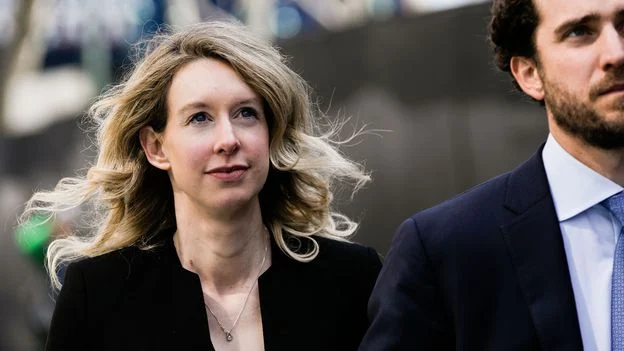
The premiere of the documentary You Can See Everything at the New York Film Festival has reignited a global conversation regarding Elizabeth Holmes, the founder of the defunct blood-testing startup Theranos. Directed by Nathan Fielder and Lance Oppenheim, the film offers an unprecedented, fly-on-the-wall perspective of Holmes’s final weeks of freedom before she reported to federal prison in May 2023. While the rise and fall of Theranos have been extensively documented through investigative journalism, podcasts, and scripted dramas, this latest cinematic entry attempts to penetrate the psychological layers of a woman who remains one of the most polarizing figures in the history of Silicon Valley.
Fielder, known for his subversive and meta-analytical approach to television in programs such as Nathan For You and The Rehearsal, collaborated with Oppenheim to document Holmes, her partner Billy Evans, and their two young children. The resulting film has been described by critics as a "hall-of-mirrors" experience, blending traditional documentary techniques with the unsettling, skeptical humor characteristic of Fielder’s work. The project marks a significant moment in the true-crime and tech-documentary genres, potentially becoming the first documentary to contend for a Best Picture Oscar nomination.
The Rise of Theranos: A Vision Built on Sand
To understand the impact of You Can See Everything, one must revisit the extraordinary ascent of Elizabeth Holmes. In 2003, at the age of 19, Holmes dropped out of Stanford University to found Theranos. Her vision was revolutionary: a portable device, eventually named the "Edison," capable of performing hundreds of medical tests using only a few drops of blood from a finger prick. This promised to democratize healthcare, making diagnostic testing cheaper, faster, and less invasive.

By 2014, Holmes had become a global icon. She was featured on the covers of Fortune, Forbes, and Inc., and was heralded as the world’s youngest self-made female billionaire. Theranos reached a private valuation of $9 billion, fueled by investments from some of the most prominent figures in American business and politics. The company’s board of directors was a "who’s who" of the American establishment, including former Secretaries of State Henry Kissinger and George Shultz, former Secretary of Defense James Mattis, and former Education Secretary Betsy DeVos.
Holmes’s personal brand was meticulously crafted. Adopting a signature uniform of black turtlenecks—a conscious homage to Apple co-founder Steve Jobs—and speaking in an unusually deep baritone voice, she projected an image of a singular, mission-driven visionary. However, as You Can See Everything explores, this image was a facade that obscured a reality of systemic technical failure and corporate deception.
Chronology of a Collapse: From Unicorn to Convict
The unraveling of Theranos began in October 2015, when John Carreyrou of The Wall Street Journal published a series of investigative reports revealing that the Edison device was unreliable and that Theranos was performing the vast majority of its tests using traditional machines manufactured by companies like Siemens. The reports detailed how the company diluted blood samples to meet the volume requirements of conventional machines, leading to inaccurate results that could have endangered patients’ lives.
The timeline of the company’s downfall was swift and litigious:

- 2016: The Centers for Medicare & Medicaid Services (CMS) inspected the Theranos lab in Newark, California, finding "immediate jeopardy" to patient health. Holmes was subsequently banned from owning or operating a blood-testing lab for two years.
- 2018: The Securities and Exchange Commission (SEC) charged Holmes and Theranos’s former president, Ramesh "Sunny" Balwani, with "massive fraud." Later that year, the U.S. Department of Justice indicted both on multiple counts of wire fraud and conspiracy.
- 2021-2022: Holmes stood trial in San Jose, California. During the proceedings, she testified in her own defense, alleging that she had been abused by Balwani—a claim he denied.
- January 2022: A jury found Holmes guilty on four counts of defrauding investors. She was acquitted on charges of defrauding patients.
- November 2022: Holmes was sentenced to 11 years and three months in federal prison.
- May 2023: After several failed appeals to remain free while challenging her conviction, Holmes reported to the Federal Prison Camp in Bryan, Texas.
You Can See Everything: A New Lens on Defiance
The documentary by Fielder and Oppenheim captures Holmes during the interim between her sentencing and her incarceration. During this period, Holmes engaged in a concerted effort to rehabilitate her public image, moving away from the "corporate visionary" persona toward a "devoted mother" narrative. This rebranding was most notably seen in a controversial 2023 New York Times profile where she was referred to as "Liz," a move critics slammed as a calculated attempt to garner sympathy.
In You Can See Everything, the directors utilize their access to highlight the "cognitive dissonance" mentioned by Oppenheim. The film portrays Holmes in domestic settings—barefoot, holding her infant, and speaking in a softer, more natural voice. Yet, the central tension of the film arises from her steadfast refusal to admit any wrongdoing. Even in the face of a criminal conviction and the testimony of dozens of witnesses, Holmes maintains on camera that she never lied and that her technology worked.
Fielder’s presence in the film serves as a surrogate for the audience’s skepticism. His deadpan reactions and blunt questioning—asking her point-blank if she has ever told a lie—provide a comedic yet chilling counterpoint to Holmes’s assertions. The film’s second half introduces a "meta" twist, bringing in an external perspective to question whether Holmes is a master manipulator or truly delusional. This ambiguity is the film’s core strength, refusing to provide easy answers about the nature of her character.
Data and Financial Fallout
The scale of the Theranos fraud remains staggering in its financial and human costs. According to court documents and SEC filings, Holmes and Balwani raised more than $700 million from investors based on false claims about the company’s technology and financial health.

Major investors who suffered significant losses included:
- The Walton family (heirs to the Walmart fortune): ~$150 million
- Rupert Murdoch (media mogul): ~$125 million
- The DeVos family: ~$100 million
- Carlos Slim (Mexican billionaire): ~$30 million
In addition to her prison sentence, Holmes and Balwani were ordered to pay $452 million in restitution to the victims of their fraud. While the financial losses were immense, the risk to public health remains the most scrutinized aspect of the case. During the trial, evidence was presented regarding patients who received false positives for HIV or incorrect results regarding miscarriages due to Theranos’s faulty testing.
Broader Implications for Silicon Valley and Beyond
The legacy of Elizabeth Holmes has become a cautionary tale for the "fake it till you make it" culture prevalent in Silicon Valley. The case prompted a shift in how venture capitalists conduct due diligence, particularly in the "deep tech" and healthcare sectors where the stakes of failure involve human lives rather than just software glitches.
Legal experts suggest that the Holmes conviction sent a clear message to tech founders that hyperbolic marketing can cross the line into criminal fraud when it misleads investors about the fundamental capabilities of a product. However, the continued public fascination with Holmes, as evidenced by the intense interest in You Can See Everything, suggests that she has transcended the role of a mere fraudster to become a cultural icon of the era of "post-truth."

The film also raises questions about the ethics of the documentary genre itself. By giving Holmes a platform to reiterate her claims, the filmmakers risk participating in her image-rehabilitation tour. Yet, by framing her through Fielder’s skeptical lens, the documentary serves as a deconstruction of how modern figures utilize media access to construct alternative realities.
Future Milestones and Legal Status
Elizabeth Holmes is currently serving her sentence at FPC Bryan, a minimum-security facility. Her projected release date is currently set for 2030, though she is expected to be moved to a halfway house as early as late 2025 or 2026. Despite her incarceration, she remains active in her legal defense, frequently posting updates regarding her appeals on social media. Her partner, Billy Evans, continues to support her publicly, maintaining the narrative of a family unjustly separated by a "misunderstood" business failure.
As You Can See Everything prepares for its wide release in U.S. cinemas on October 16 and UK cinemas on November 20, the discourse surrounding Holmes is likely to intensify. The film does not merely document a crime; it documents the persistence of a myth. Whether Holmes is viewed as a tragic figure who flew too close to the sun or a calculating predator who exploited the optimism of the tech industry, her story remains a definitive chronicle of 21st-century ambition and its consequences.