admin
admin
The American craft beer landscape has undergone a radical transformation since its foundational years in the 1980s and 1990s, evolving from a niche movement focused on traditional European styles into a multi-billion-dollar industry defined by relentless experimentation. As the market reached a point of saturation in the mid-2010s, with over 9,000 active breweries in the United States, the necessity for brand differentiation became a primary driver of technical and culinary innovation. This pressure gave rise to one of the most polarizing yet commercially successful sub-genres in the industry’s history: the smoothie sour. Characterized by an opaque, viscous body and a heavy reliance on unfermented fruit purées and dessert-inspired adjuncts, the smoothie sour represents a departure from classical brewing science, signaling a shift toward a culinary-centric beverage category that bridges the gap between traditional ale and the burgeoning ready-to-drink cocktail market.
The Genesis of the Smoothie Style
The lineage of the smoothie sour can be traced back to the resurgence of traditional European sour ales, such as the German Gose and the Belgian Lambic. During the early 2010s, American brewers began adopting "kettle souring"—a process using Lactobacillus to rapidly lower the pH of the wort before boiling—which allowed for the efficient production of tart, refreshing beers. While these early iterations were often light and effervescent, brewers soon began experimenting with "fruited sours," adding massive quantities of fruit to the fermentation vessel.
The transition from a standard fruited sour to a "smoothie" sour occurred when breweries stopped prioritizing clarity and fermentation stability in favor of texture and flavor intensity. By adding fruit purées after the primary fermentation process and incorporating thickening agents like marshmallow fluff, lactose (milk sugar), vanilla, and even graham crackers, brewers created a product that mimicked the mouthfeel of a fruit smoothie or a melted milkshake. This evolution was not merely a stylistic choice but a strategic response to changing consumer palates that increasingly favored sweeter, more approachable flavor profiles over the aggressive bitterness of the West Coast IPA or the funky acidity of traditional wild ales.
Pioneering the Fruited Frontier: Case Studies in Innovation
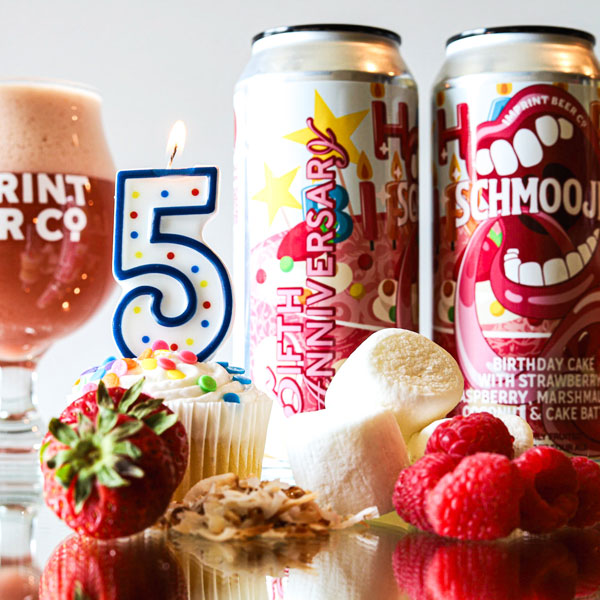
Several breweries have emerged as leaders in this category, each approaching the style from a different strategic angle. Imprint Beer Company, located in Hatfield, Pennsylvania, is widely cited as a pioneer of the movement. Celebrating its fifth anniversary in 2023, the brewery’s ascent coincided with the peak of the "adjunct" era. According to co-founder and brewer Ryan Diehl, the brewery’s breakthrough occurred during a public event where they debuted "Puffsicle," a sour brewed with raspberry, blueberry, pineapple, and marshmallow.
The overwhelming consumer response to Puffsicle led to the creation of the "Schmoojee" line, which has since become a benchmark for the style. Imprint’s process involves a specialized fermentation cycle lasting eight to 11 days, after which the base sour is blended with high concentrations of adjuncts such as cheesecake, white chocolate, and fudge. This method requires a rigorous understanding of flavor balancing to ensure that the sweetness of the adjuncts does not completely overwhelm the underlying acidity of the base beer.
In Dallas, Texas, 903 Brewers adopted the smoothie style as a means of business reinvention. After six years of traditional brewing, owner Jeremy Roberts noted a shift in consumer behavior toward ready-to-go cocktails and non-traditional alcoholic beverages. To capture this demographic, 903 Brewers launched its "Slushy" line, beginning with a cherry limeade sour inspired by popular drive-in fountain drinks. The success of this line, which includes eccentric offerings like the "Blueberry Donut Slushy" and "Dad’s Day Out" (featuring edible glitter), highlights the style’s ability to attract consumers who previously avoided the beer category altogether.
Technical Complexity and Safety Protocols
Despite their whimsical names and candy-like flavors, smoothie sours present significant technical challenges that distinguish them from traditional brewing. Oozlefinch Beers & Blending in Fort Monroe, Virginia, has focused heavily on the science of "back-sweetening"—the practice of adding fermentable sugars and fruit after the initial fermentation is complete.
Head brewer Logan Morris notes that Oozlefinch utilizes specific yeast strains that produce high levels of lactic acid to maintain a sharp profile against the heavy fruit additions. Furthermore, the brewery employs unique thickening agents, including charcoal and pectin-rich fruit blends, to achieve the desired "smoothie" consistency.
However, the inclusion of unfermented sugars in a packaged product introduces a volatile variable: secondary fermentation. If live yeast remains in the can alongside unfermented fruit purée, it will consume the sugars, producing carbon dioxide and potentially causing the cans to rupture or "explode." To mitigate this risk, professional operations like Oozlefinch and Corporate Ladder Brewing in Palmetto, Florida, utilize flash pasteurization. This process kills any remaining yeast or bacteria, ensuring shelf stability and consumer safety, though it requires a significant capital investment in specialized machinery.
Market Demographics and the "Liquid for Everyone" Philosophy
The rise of smoothie sours reflects a broader trend in the beverage industry: the blurring of lines between categories. Corporate Ladder Brewing co-owners Blake Kleppe and James Herrholz emphasize that their "Dessert Station" line is designed to provide a sensory experience that transcends traditional beer drinking. By sourcing ingredients that replicate specific culinary treats—such as Pumpkin Pie A La Mode or Tangerine Creamsicles—they have tapped into a market of "untapped" drinkers.
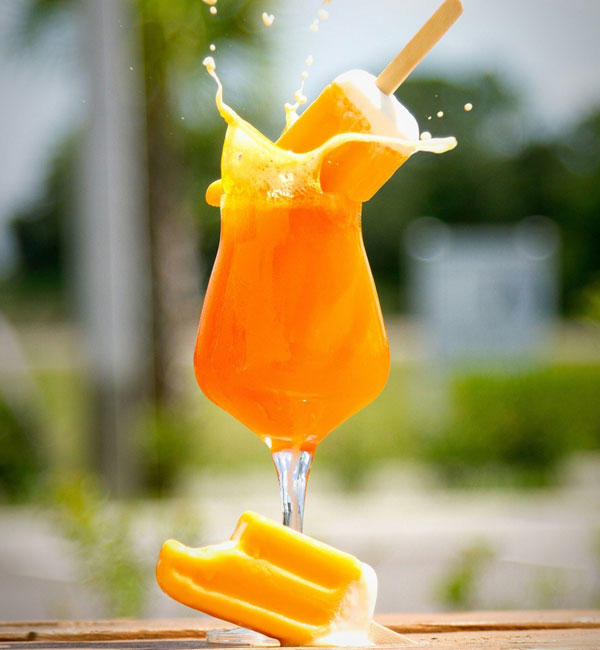
Market data suggests that this strategy is effective. While overall beer shipments have seen fluctuations, the "flavored malt beverage" and "alternative" segments have shown resilience. The smoothie sour appeals to the "Instagram generation," where the visual appeal of a vibrant, thick purple or bright orange liquid is as important as the taste. This has turned beer releases into high-profile events, with devotees traveling across state lines to secure limited-edition variety packs, such as Imprint’s "12 Days of Schmoojee."
Industry Implications and Future Outlook
The emergence of smoothie sours has not been without controversy within the craft beer community. Purists argue that these beverages, often containing more fruit purée than grain, should not be classified as "beer." However, the economic reality for small and independent breweries suggests otherwise. In an era of high competition, the ability to diversify a product line and attract a wider audience—including those who prefer cider, wine, or cocktails—is a vital survival mechanism.
The brotherhood of smoothie sour producers, including notable names like Drekker Brewing Company (North Dakota), Mortalis Brewing Company (New York), and 450 North Brewing Company (Indiana), has fostered a culture of collaboration. These breweries frequently share techniques and ingredients, further accelerating the evolution of the style.
As the style matures, the focus is shifting toward refined "culinary brewing." The goal is no longer just to create a "sweet bomb" but to achieve a sophisticated balance of acidity, body, and flavor authenticity. Whether smoothie sours are a permanent fixture or a passing trend, their impact on the industry is undeniable. They have forced a conversation about the definition of beer and have proven that there is a significant global appetite for innovation that prioritizes flavor and experience over tradition.
The success of these breweries indicates that as long as there is a consumer base seeking new and nostalgic flavors, the craft beer industry will continue to push the boundaries of what can be achieved in a 16-ounce can. As Corporate Ladder’s Blake Kleppe suggests, the ultimate metric of success is not adherence to historical style guidelines, but the enjoyment of the consumer and the expansion of the craft beer community to include a more diverse array of palates.