Jia Lissa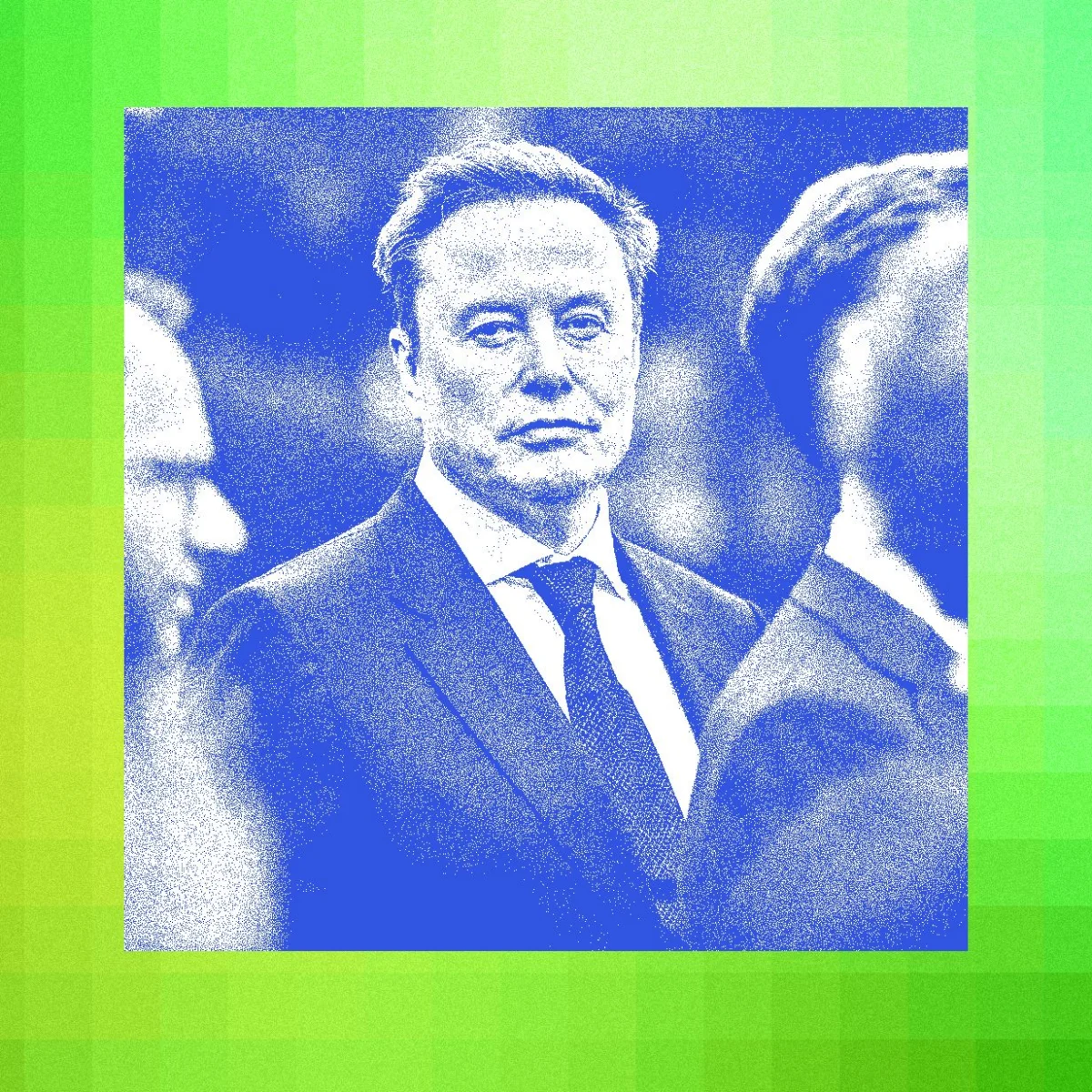
The latest episode of Uncanny Valley, hosted by Zoë Schiffer and Leah Feiger, delved into the multifaceted intersections of technology, politics, and ethics, dissecting three major narratives shaping contemporary discourse. The discussion centered on Elon Musk’s America PAC’s strategic financial interventions in the 2024 Senate races, the burgeoning influence and controversial reception of effective altruism within the AI safety debate, and the unexpected public backlash faced by the graphic designer behind Meta’s new AI assistant, Muse. This comprehensive exploration highlighted the intricate ways in which technological advancement, political maneuvering, and societal values are continually clashing and converging in the digital age.
Elon Musk’s Political Machine: America PAC’s 2024 Midterm Strategy
Elon Musk’s America PAC, a Super PAC initially established in 2024 to support Donald Trump’s successful presidential bid with over $260 million in spending, has significantly recalibrated its focus for the upcoming 2024 midterm elections. Instead of targeting the presidential race, the PAC is now pouring millions into some of the most pivotal Senate contests across the country. The strategic shift underscores a calculated effort to influence the composition of the next Congress, with an emphasis on preventing a Democratic majority in the Senate.
Zoë Schiffer, contributing editor at WIRED, and Leah Feiger, director of politics and science, highlighted the PAC’s distinctive spending pattern. Unlike traditional political action committees that balance support for their preferred candidates with opposition to rivals, America PAC demonstrates a pronounced bias towards undermining Democratic contenders. For every dollar spent in direct support of a Republican candidate, more than two dollars are allocated to campaigns actively opposing Democrats. This aggressive, anti-Democrat approach is particularly evident in key battleground states.
In Texas, a state with significant business interests for Musk’s various enterprises, America PAC has reportedly spent approximately $9 million attacking Democratic candidate James Talarico, while investing around $1 million to promote Republican Ken Paxton. Similar disproportionate spending patterns have been observed in critical Senate races in Ohio and Iowa, signaling a concerted effort to dismantle Democratic electoral prospects rather than merely bolstering Republican campaigns. This strategy reflects a broader trend among some wealthy donors who prioritize weakening political opposition as a primary means of achieving their desired legislative outcomes.
The Stakes: Control of Congress and Regulatory Pressure
The substantial financial outlay by America PAC in these Senate races is not arbitrary; it targets contests crucial for determining control of the legislative chamber. A shift in power to Democrats could lead to a wave of investigations and heightened regulatory scrutiny against tech giants and influential figures like Musk. Feiger noted that Democratic sources, both in the House and Senate, are openly discussing the potential for numerous investigations and subpoenas should they secure a majority. This prospect is a significant driver behind Musk’s intensified political engagement.
Musk has historically expressed strong concerns about regulatory environments, particularly those he perceives as overly restrictive or akin to California’s business landscape. His past statements, including a public assertion that a Kamala Harris presidency would make the entire country resemble California—a scenario he deemed detrimental—underscore his deep-seated apprehensions about regulatory burdens. The fear of slowed growth, impediments to innovation in critical sectors like AI, and increased oversight appears to be a central motivator for his financial interventions.
However, the hosts also deliberated on the practical limits of such regulatory pressure. Schiffer raised the point about SpaceX, highlighting the U.S. government’s increasing reliance on its Starlink and other space technologies. This dependency, she argued, might complicate efforts to hold Musk’s empire fully accountable, as punitive measures could inadvertently jeopardize vital national infrastructure and capabilities. While subpoenas and investigations might proceed, their ultimate impact on Musk’s vast business interests remains debatable. The precedent of a $20 million fine for misleading statements about taking Tesla private, a relatively minor sum for a figure of Musk’s wealth, further illustrates the challenge of effective accountability for ultra-wealthy individuals.
The discussion also touched upon the broader landscape of tech philanthropy and political donations. The rise of "newly minted millionaires" from the AI sector, now grappling with how best to allocate their capital for maximum impact—whether through philanthropy or political contributions—adds another layer to this complex ecosystem. While Silicon Valley is not a monolith, a vocal segment aligns with Musk’s concerns about regulatory overreach and supports conservative political agendas to safeguard their vision of technological progress.
Effective Altruism: From Niche Philosophy to AI Battleground
The podcast then pivoted to effective altruism (EA), a philosophy that has rapidly moved from obscure academic and online circles to the forefront of the AI safety debate. At its core, EA is a belief system advocating for the most efficient use of time, money, and resources to maximize positive impact, whether by improving or saving lives. Popularized by thinkers at Oxford and platforms like LessWrong in the early 2000s, EA initially focused on global health and poverty.
However, its trajectory shifted dramatically with the advent of advanced AI. Many AI researchers, influenced by EA principles, began to view AI as a potential existential risk to humanity. This expansion of EA to include "longtermism"—the idea of prioritizing actions that safeguard the long-term future of humanity—has placed AI safety squarely within its ambit. If one is committed to the welfare of humanity, and believes AI poses a substantial, albeit uncertain, risk of catastrophic harm, then mitigating that risk becomes a paramount concern.
The philosophy gained mainstream attention following AI researcher Jacob Coxon’s public endorsement of concerns that advanced AI could pose an existential threat. This declaration triggered a cascade of headlines and, notably, a strong rebuke from the Trump administration. Senior Pentagon officials labeled effective altruism a "dangerous ideology," with an official Department of Defense social media account urging people to choose "Americanism, not effective altruism." This marked a significant escalation, politicizing a philosophical movement that many adherents view as a rational approach to global challenges.
Schiffer emphasized the spectrum within EA, distinguishing between "fanatics" whose extreme utilitarian viewpoints on trade-offs might seem radical, and "completely normal" individuals who engage deeply with its principles without adopting cult-like behaviors. Feiger acknowledged the appealing aspect of EA’s application to AI: a baseline concern for the technology’s potential harm to humanity. This concern, if genuinely held, could logically lead individuals like Coxon to abandon their work and publicly warn others.
The discussion further explored the ideological split within the AI community. Dario Amodei, a co-founder of Anthropic, departed OpenAI with a group of researchers to establish a company explicitly focused on building AI safely for humanity’s benefit. This move is often framed as a contrast between Sam Altman’s "growth at all costs" capitalist view of AI and Amodei’s more EA-aligned, safety-first approach. While Amodei has reportedly distanced himself from the "effective altruist" label in recent years, many of Anthropic’s researchers are perceived to align with the philosophy’s core tenets.
The mainstreaming of EA has led to its weaponization as a "slanderous term," used to dismiss concerns about AI safety as the musings of "religious fanatics" or "anti-growth" elements. This polarization risks undermining serious discourse about AI’s potential societal impacts, reducing complex ethical considerations to simplistic ideological battles. The underlying controversy stems from the utilitarian nature of EA, where maximizing good or minimizing harm can, in extreme interpretations, justify actions that might be considered harmful in the present to avert a greater future catastrophe. This creates tension, particularly when proponents argue that "winning" the AI race is paramount if one’s company is the only one truly prioritizing safety.
The Art of AI: Backlash Over Meta’s Muse Logo
The conversation shifted to the creative industry, specifically the intense backlash faced by graphic designer Jessica Hische for her work on Meta’s Muse AI assistant logo. Meta’s Muse, an AI assistant, had proven an unexpected success, topping app charts. Hische, a freelance designer and lettering artist, revealed her involvement in the project through her newsletter, playfully titled "New Work! (Don’t be mad at me)." She anticipated some criticism, but the ensuing "mob attack" on Threads, Meta’s own social media platform, was far more severe than expected.
Hische recounted receiving messages of disgust and disappointment from long-time followers, with some even posting photos of her house and speculating about her finances. The vitriol reflected a segment of the design community’s "AI purism," an uncompromising stance against any involvement with AI technology, which they view as a threat to human creativity and livelihoods. Critics perceived Hische’s collaboration with Meta as an endorsement of AI, regardless of her personal motivations or complex feelings about the technology.
Schiffer highlighted Hische’s pragmatic reasons for taking on the Meta project. With her corporate design work significantly reduced in recent years, she needed the income to support her two small businesses in Oakland—a stationery store and an art workshop space for children—and to provide benefits for her employees. The payment for the Muse logo, approximately $12,500 for what she described as two days of intense work (initially just the "M" and then the full typeface), was a crucial financial lifeline. This revelation sparked further discussion about the economic realities faced by freelance artists.
Hische’s decision underscored a common dilemma for creatives: balancing artistic integrity and ethical concerns with the necessity of earning a living, especially when large tech companies are among the few entities commissioning significant commercial art. She argued that large companies should be commended for hiring independent artists rather than relying solely on AI generation, and that artists should not be deterred from such collaborations by fear of social media condemnation. Hische ultimately stated she did not regret taking the job, believing she was advocating for independent artists by demonstrating that symbiotic relationships with tech giants are possible. This incident brought to light the precarious position of freelance creatives caught between a rapidly evolving technological landscape and the strong ethical stances of their professional communities.
Ethical Crossroads for Freelance Creatives
The backlash against Jessica Hische serves as a potent case study for the ethical crossroads facing freelance creatives in the age of AI. The incident on Threads exposed the deep anxieties within the design community regarding AI’s potential to displace human talent and devalue creative work. Many artists perceive any collaboration with AI developers as a betrayal of their craft and a legitimization of technology they fear will ultimately harm their profession.
This situation also illuminates the broader challenges of the gig economy for creative professionals. While Hische’s payment of $12,500 might seem substantial for a short project, it reflects the often-unpredictable income streams and the constant need to secure contracts to maintain financial stability, run small businesses, and support staff. The expectation that artists should forgo lucrative opportunities with major corporations, even if those opportunities are critical for their livelihoods, raises questions about the sustainability of such ethical purism in a highly competitive market.
The amplified nature of social media criticism, where individual decisions can quickly escalate into widespread condemnation and even personal attacks, further complicates these ethical dilemmas. It forces artists to weigh their public image and community standing against their financial needs and professional opportunities, creating a chilling effect on transparency and collaboration. The Muse logo controversy highlights a growing tension between the perceived ethical imperative to resist AI’s encroachment and the practical realities of survival for independent artists in an increasingly AI-driven world.
Looking Ahead: The Intersecting Futures of Tech, Politics, and Ethics
The discussions on Uncanny Valley underscore the profound and often unpredictable ways in which technology, politics, and ethics are intertwined. Elon Musk’s aggressive political spending illustrates the increasing influence of tech billionaires in shaping legislative outcomes, driven by a desire to mitigate perceived regulatory threats to their empires. This direct intervention in elections could have far-reaching implications for policy-making, potentially favoring tech-centric growth at the expense of broader public oversight.
Meanwhile, effective altruism’s journey from a niche philosophy to a central tenet of the AI safety debate reveals how abstract ethical frameworks can become highly politicized. The "dangerous ideology" label from the Trump administration exemplifies the growing ideological battlegrounds surrounding AI development, where concerns about existential risk are pitted against narratives of American innovation and economic supremacy. This polarization risks hindering a nuanced approach to AI governance and safety, replacing collaboration with partisan conflict.
Finally, the backlash against Jessica Hische for her Meta logo design serves as a stark reminder of the human cost of technological shifts. It highlights the ethical quandaries faced by individual creatives, the economic pressures on the gig economy, and the powerful, sometimes punitive, role of online communities in enforcing ethical boundaries. As AI continues to integrate into various industries, these conflicts between innovation, individual livelihood, and collective values are only likely to intensify. The insights from Uncanny Valley emphasize the urgent need for ongoing dialogue, nuanced understanding, and adaptive frameworks to navigate these complex, intersecting futures.