admin
admin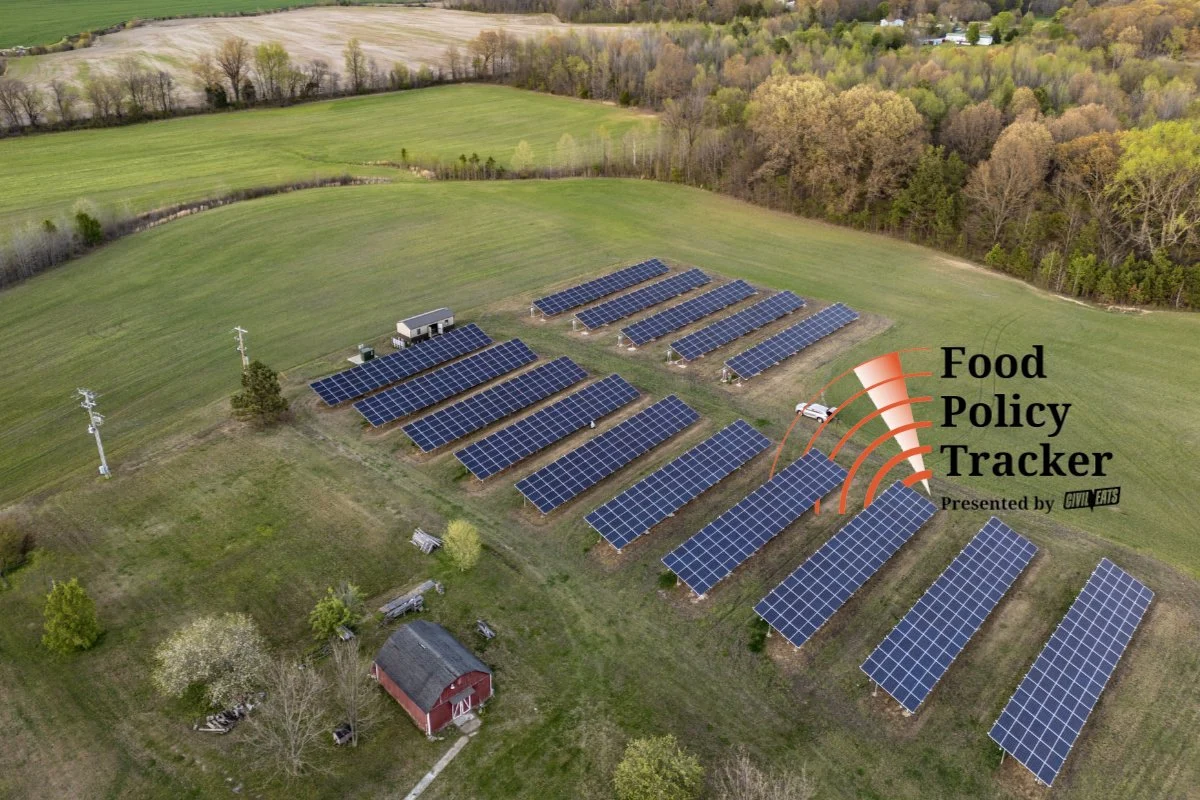
Just days after a coalition of farm and environmental groups filed a lawsuit challenging what they describe as the U.S. Department of Agriculture’s (USDA) systematic dismantling of the Rural Energy for America Program (REAP), the agency published a final rule last week that significantly tightens restrictions, making it even more arduous for farmers and rural small businesses to access funding for renewable energy projects such as solar arrays and wind turbines. The rule, effective October 1, 2026, codifies a series of administrative actions initiated over the past year by the Trump administration and Agriculture Secretary Brooke Rollins, signaling a profound shift away from federal support for rural renewable energy development.
The New Regulatory Landscape: Barriers to Rural Renewables
The newly finalized rule, titled "Unleashing American Energy and Economic Prosperity: Rural Energy for America Program (REAP)," introduces several critical modifications that fundamentally alter the program’s accessibility and scope. Among the most contentious changes is a prohibition on ground-mount solar installations on certified cropland. This particular restriction directly targets the growing practice of agrivoltaics, or dual-use farming, which integrates solar energy generation with agricultural production. While proponents argue agrivoltaics can enhance farm income, optimize land use, and even improve crop yields through shade management, the USDA’s new stance suggests a prioritization of traditional monoculture over diversified energy-agriculture systems.
Another significant hurdle is the ban on systems utilizing materials manufactured in China. This provision, while ostensibly aimed at bolstering domestic manufacturing and supply chain resilience, poses a substantial challenge given China’s dominant position in the global solar panel market. The vast majority of the world’s solar panels are currently produced in China, and this restriction could drastically increase the cost and complexity of sourcing components for American farmers, potentially rendering many projects financially unviable without access to a mature, competitive domestic supply chain.
Perhaps the most impactful structural change to the REAP grant process is the requirement that farmers and other applicants cannot apply for funding until 12 months after a project is fully built and operational. Historically, REAP provided grants and loans to help offset initial capital investments, allowing farmers to undertake projects with a degree of financial certainty. This new "post-reimbursement" model shifts the entire financial risk onto the applicant, demanding that farmers invest substantial sums of money upfront without any guarantee of federal reimbursement. For many small and medium-sized farms, this change represents an insurmountable financial barrier, effectively sidelining them from participating in the program.
Secretary Rollins defended the changes in a press release, stating, "The final rule from USDA will restore integrity and stability to the Rural Energy for America Program. For too long many applicants have prioritized unreliable energy sources and have not fully delivered on their stated goals." This statement echoes earlier sentiments from the administration regarding renewable energy’s reliability and the perceived need to re-evaluate federal subsidies.

A Program’s Evolution: From Support to Scrutiny
The Rural Energy for America Program was originally established through the 2008 Farm Bill, building upon earlier initiatives to support energy efficiency and renewable energy adoption in rural areas. Its core mission was to promote energy independence, create economic opportunities, and enhance environmental sustainability within agricultural communities and rural small businesses. Over the past decade, REAP has been instrumental in facilitating the installation of tens of thousands of renewable energy systems across the country, ranging from small-scale solar arrays on farmhouses and barns to larger wind turbines powering agricultural operations. These investments have not only helped farmers reduce their operational costs by lowering energy bills but also diversified their income streams and contributed to a more resilient rural economy. Data from the USDA’s Economic Research Service (ERS) has consistently shown the program’s success in helping rural businesses adopt clean energy technologies.
However, the current administration, under President Trump, has pursued a broader policy agenda aimed at rolling back federal subsidies for renewable energy, frequently characterizing them as "market-distorting." This policy framework prioritizes traditional fossil fuels, emphasizing what it terms "energy dominance" through domestic oil and gas production. Secretary Brooke Rollins, appointed to lead the USDA, has been a vocal proponent of this shift, explicitly characterizing solar development as a potential "threat to farmland." This perspective stands in contrast to findings from the ERS, which reported in September 2024 that while over 40 percent of new solar and more than half of new wind turbines were installed on former cropland between 2012 and 2020, the total land impacted by these developments was equivalent to less than 0.05 percent of all U.S. farmland. This negligible percentage suggests that the "threat" to farmland conversion may be significantly overstated, especially when compared to land lost to urban sprawl or other industrial developments.
A Chronology of Policy Reversal
The path to the current restrictions on REAP has been a deliberate and escalating process:
- 2008: REAP officially established under the Farm Bill, expanding federal support for rural renewable energy.
- 2012-2020: Period of significant growth for REAP, with thousands of projects funded, demonstrating its effectiveness in rural communities.
- July 2025: The Trump administration issues executive orders signaling a broader intent to end "market-distorting subsidies for unreliable foreign-controlled energy sources," setting the stage for changes to programs like REAP.
- August 2025: Agriculture Secretary Brooke Rollins publicly announces the USDA’s intention to limit REAP funding and characterizes solar development as a threat to farmland, marking the official beginning of the policy shift.
- March 2026: The USDA takes a significant administrative step by pausing the processing of all REAP grant applications and disbursements. This immediate halt left many farmers in limbo, particularly those who had already secured approval and invested substantial funds based on the program’s previous guidelines.
- September 28, 2026: Earthjustice and the Environmental Law and Policy Center, representing the Iowa Farmers Union, solar developers, and other affected parties, file a lawsuit challenging the USDA’s actions, arguing they violate Congressional intent and administrative law.
- October 1, 2026: The USDA publishes the final rule, codifying the restrictive changes and further cementing the administration’s new direction for REAP.
- November 2, 2026: Deadline for public comments on the final rule, although its publication as a "final rule" indicates the agency has largely concluded its internal decision-making process.
The Legal Battle: Challenging Congressional Intent
The lawsuit, filed by Earthjustice and the Environmental Law and Policy Center (ELPC) on behalf of diverse stakeholders including the Iowa Farmers Union, renewable energy developers, and rural businesses, contends that the USDA’s actions constitute a clear violation of Congress’s directive to "promote energy efficiency and renewable energy development for agricultural producers and rural small businesses."
Jessica O’Donnell, a senior attorney at the Environmental Law and Policy Center, emphasized the program’s original purpose in a statement: "Congress created REAP to help farmers put solar on their own land and cut their own energy costs. USDA now wants to dismantle a successful bipartisan program and slam the door on farmers who already spent significant sums of money relying on USDA’s own rules."
The legal challenge specifically points to the USDA’s earlier decision in March 2026 to pause all applications and disbursements. This administrative freeze had immediate and severe consequences for farmers who had already been approved for REAP funding and had commenced construction on their renewable energy systems. These farmers, operating under the expectation of federal reimbursement, found themselves facing unexpected financial burdens, with some projects stalled or even abandoned due to the sudden withdrawal of promised support. The plaintiffs argue that such abrupt and unannounced changes, especially those impacting projects already underway, may violate the Administrative Procedure Act, which requires agencies to follow specific procedures for rulemaking and to avoid arbitrary and capricious actions.

Implications for Farmers and Rural Economies
The implications of these changes for American farmers and rural economies are far-reaching and predominantly negative. For farmers, the new post-reimbursement model introduces an unacceptable level of financial risk. Renewable energy installations, particularly solar and wind, involve significant upfront capital costs. Without the certainty of grant funding or loans at the outset, only the wealthiest agricultural operations may be able to absorb such costs, effectively excluding the vast majority of small and medium-sized farms from participating in a program designed to support them. This could eliminate a crucial avenue for income diversification at a time when many farmers are struggling with fluctuating commodity prices, extreme weather events, and rising input costs.
Moreover, the prohibition on ground-mount solar on certified cropland stifles innovation in agrivoltaics. This dual-use approach offers numerous benefits, including increased overall land productivity, reduced water evaporation, enhanced crop resilience under shade, and supplementary income from energy generation. By restricting this practice, the USDA is arguably limiting farmers’ options for maximizing the utility and profitability of their land.
The "Made in China" materials ban, while aimed at national security or domestic manufacturing, will undoubtedly increase costs and potentially delay projects. The global supply chain for solar components is heavily concentrated in China, and a rapid pivot to entirely domestic or alternative sources may prove difficult and expensive in the short to medium term. This could make renewable energy less competitive compared to traditional sources, undermining the very goal of "energy independence" if it means increased reliance on imported fossil fuels or more expensive domestic alternatives.
Beyond individual farms, the broader rural economy stands to lose. The renewable energy sector creates local jobs in installation, maintenance, and related services. By reducing the uptake of renewable projects, the USDA’s new rule could dampen job growth in these areas, slowing economic diversification in rural communities that often struggle with out-migration and limited employment opportunities. It could also hinder the development of a resilient, decentralized energy infrastructure that benefits local grids and reduces susceptibility to large-scale power outages.
Broader National and Environmental Impact
From a national perspective, the USDA’s actions appear to be at odds with broader climate goals and the global push towards decarbonization. While the USDA’s primary mandate is agriculture, its programs inevitably intersect with national energy and environmental policies. Slowing the adoption of renewable energy in the agricultural sector could contribute to a larger national lag in transitioning away from fossil fuels, impacting the country’s ability to meet emissions reduction targets. The agricultural sector, while unique, is not isolated from the need for sustainable energy solutions.
Environmentally, a reduced embrace of renewable energy on farms means continued reliance on fossil fuels, contributing to greenhouse gas emissions. Renewable energy projects on farms can also reduce the carbon footprint of food production and processing, enhance soil health through sustainable land management practices associated with agrivoltaics, and improve air quality in rural areas. The new rules may therefore inadvertently undermine these environmental co-benefits.

The lawsuit against the USDA also carries significant implications for executive agency power. If the courts find that the USDA has overstepped its authority or acted arbitrarily, it could set a precedent regarding the limits of administrative discretion in reinterpreting or dismantling congressionally mandated programs. The outcome of this legal challenge will be closely watched by environmental groups, agricultural organizations, and the renewable energy industry, as it could influence how future administrations approach existing federal programs.
The Road Ahead: Litigation and Public Discourse
With the final rule now published, the immediate focus shifts to the ongoing legal challenge and the public comment period, which closes on November 2. While comments on a final rule typically have limited power to reverse its implementation, they serve as a critical record of public sentiment and can influence potential future amendments or bolster legal arguments.
The litigation initiated by Earthjustice and ELPC will likely be a protracted process. The plaintiffs will seek injunctive relief to prevent the implementation of the most damaging aspects of the rule and ultimately aim for its full reversal. The USDA, in turn, will defend its actions, citing the administration’s broader energy policy and Secretary Rollins’s stated objectives for "integrity and stability" within REAP.
For farmers and rural communities across America, the stakes are exceptionally high. The ability to embrace renewable energy is not merely an environmental choice but an economic imperative, offering a pathway to greater financial stability and energy independence. The USDA’s new rules, however, threaten to close this pathway, leaving many to wonder if the promise of a sustainable and prosperous rural future will be dimmed by policy rather than empowered by innovation.