admin
admin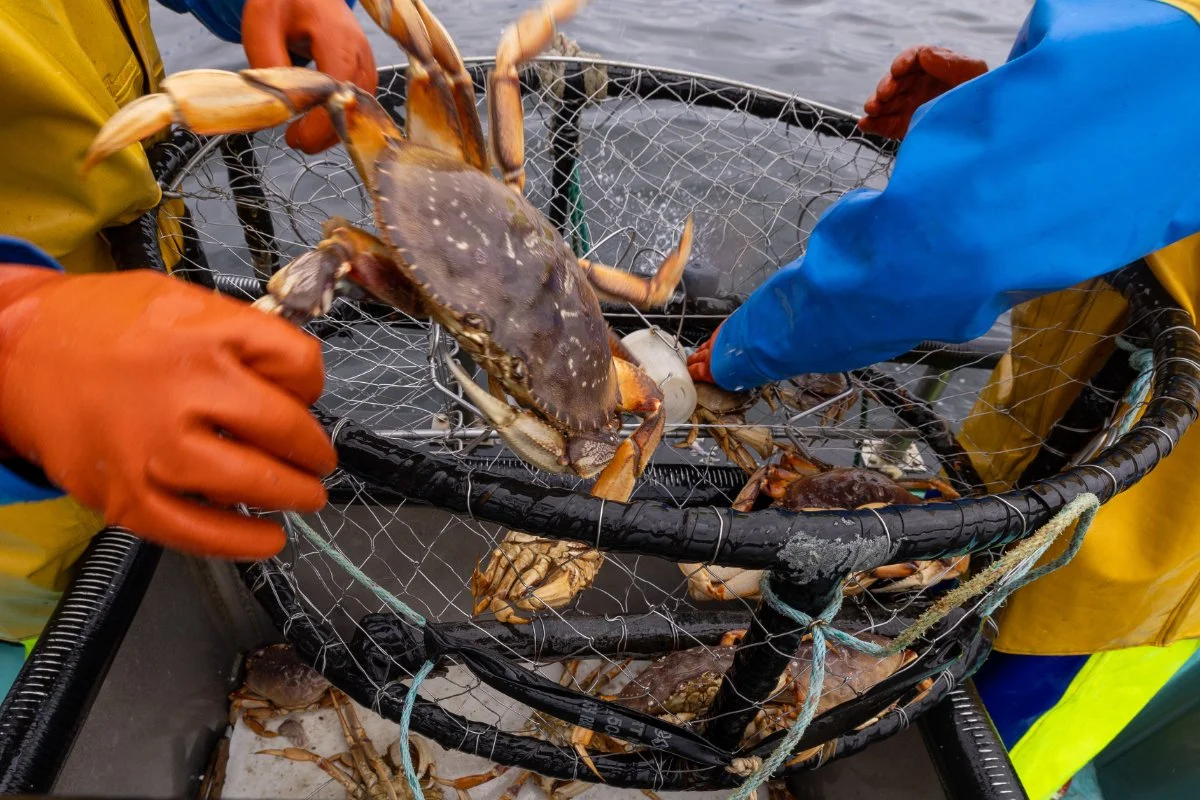
The commercial fishing industry across the United States, particularly along the Pacific coast, is bracing for an unprecedented storm season. This week’s rapid intensification of Hurricane Polo into a Category 5 storm off Mexico serves as a stark warning of the violent weather expected from a brewing "super El Niño" in the tropical Pacific. Forecasters project this El Niño to be one of the most powerful ever recorded, with sea surface temperatures in critical regions expected to soar by 3.4°C through February. This phenomenon, exacerbated by climate change, is poised to unleash erratic weather patterns across the U.S., including heavy rains, strong winds, and coastal flooding, prompting California Governor Gavin Newsom to declare a state of emergency and mobilize resources.
However, beneath the immediate threat of extreme weather lies a deeper, systemic vulnerability for fishing communities: a glaring lack of robust insurance protections and a federal disaster relief system notoriously slow to respond. Unlike their agricultural counterparts who benefit from government-supported crop insurance, fishers navigate an inherently volatile profession with a significantly weaker safety net. The consequences of this disparity are severe, often forcing small, family-owned fishing businesses—the backbone of many coastal economies—to the brink of collapse or out of business entirely, even as they face an accelerating onslaught of climate-driven marine disasters.
The Looming "Super El Niño": A Threat to Marine Ecosystems
The scientific community is closely monitoring the current El Niño event, which NOAA forecasts indicate will lead to a 3.4°C rise in sea surface temperatures in the tropical Pacific. This significant warming is not merely a regional anomaly; it represents a profound disruption to the entire marine food chain, particularly along the Pacific coast from California to Alaska. El Niño’s warmer surface waters and weakened trade winds impede upwelling, the natural process that brings nutrient-rich cold water from the ocean depths to the surface. These trapped nutrients starve the plankton, tiny algae that form the foundational layer of the marine food web.
The ripple effects are catastrophic. Marine species, from small forage fish to economically vital species like salmon and Dungeness crab, are forced to adapt or perish. Some species face starvation, increased susceptibility to disease, or reproductive failures. Others migrate to deeper or colder waters in search of sustenance, disrupting traditional fishing grounds and making them harder for fishers to locate. This current "super El Niño" is not an isolated event but follows a series of marine heatwaves, including one that began in 2014 and continued through the 2015-2016 El Niño. This pattern of prolonged, consecutive years of elevated ocean temperatures creates immense stress on already vulnerable ecosystems, leading to back-to-back fishery losses and, in some cases, ecosystem-level crises, such as the ongoing struggle of California’s red sea urchin fishery to recover from previous events.

A Fragile Industry: The Absence of a Safety Net
The economic fallout from such marine disasters is profound and widespread. The last "super El Niño" in 2015-2016 resulted in estimated losses of at least $141 million across key Pacific fisheries, including Dungeness crab, salmon, red sea urchin, and sardine. These impacts can linger for years, crippling local economies dependent on fishing. For instance, the Dungeness crab fishery, one of California’s most valuable, suffered a "double whammy" during that period. Warmer waters fostered harmful algal blooms that produced domoic acid, a nerve poison, rendering the crab unsafe for consumption. Simultaneously, plankton scarcity pushed humpback whales closer to shore, increasing their entanglement risk with crab gear. Consequently, the fishery was closed for five of its seven months, resulting in $27.2 million in direct losses.
Beyond the direct impact on fish stocks, the extreme weather associated with El Niño—strong winds, large waves, and coastal flooding—directly impedes fishers’ ability to access fishing grounds and earn an income. Dick Ogg, a Dungeness crab fisher from Bodega Bay, California, notes that even if fish are present, unsafe conditions can keep vessels docked for extended periods, cutting off revenue streams for weeks or months.
Unlike farmers, who have access to federally subsidized crop insurance programs that offer a crucial buffer against weather-related damages, fishers lack equivalent government-supported insurance when their fisheries fail. This disparity leaves fishing communities uniquely exposed to the financial devastation wrought by natural disasters.
The Broken Federal Relief System: A Cycle of Delays and Despair
When disaster strikes, fishers are left to rely on federal disaster assistance programs, primarily administered through the National Oceanic and Atmospheric Administration (NOAA). However, this system is widely criticized for being excruciatingly slow and cumbersome, often delivering relief years after the initial impact. The process is a bureaucratic labyrinth: states must first submit disaster requests to NOAA. These requests then undergo a rigorous review process, moving up and down the policy chain, including scrutiny by the Commerce Secretary and the Office of Management and Budget. Even after approval, funds are not immediately available; they must await appropriation by Congress. Finally, states convene fishery stakeholders to design fair and equitable distribution plans, which require further federal sign-off.
This multi-layered process translates into agonizing delays. Fishers often wait three to six years for relief funds to reach their pockets. For many small, independent businesses, this assistance arrives too late to avert financial ruin. The problem is escalating; the number of disaster relief requests to NOAA has ballooned from an average of two per year between 1985 and 2015 to an average of ten per year since then, reflecting the increasing frequency and intensity of marine disasters linked to climate change.

A grim illustration of this systemic failure can be seen in Alaska’s crab fisheries. The Bristol Bay red king crab fishery, for instance, collapsed in 2019, potentially due to ocean acidification. This was followed by the catastrophic collapse of the snow crab fishery in 2021, attributed to a marine heatwave that triggered a mass starvation event. Jamie Goen, executive director of Alaskan Bering Sea Crabbers, reports that it took four years for crabbers to begin receiving federal relief for these disasters, with two other disaster requests still pending. "We lost roughly $250 million in ex-vessel value in a year," Goen stated, highlighting the devastating impact on family businesses across Alaska and the Pacific Northwest.
Gabriel Prout, a third-generation crab fisherman and president of Alaskan Bering Sea Crabbers, vividly describes the personal toll: "When your revenue basically disappears overnight for multiple years, it gets extremely difficult to stay in business. You’re still left with bank loans, quota rights, mortgage fees, vessel expenses, drydocking, and your regular living expenses." Prout’s family survived by drastically cutting costs, reducing crew, performing their own vessel maintenance, and seeking alternative income streams, including ferrying salmon and even renting out a room in his home and his Subaru Crosstrek. Such sacrifices often come at the expense of safety, as fishers may cut corners on vessel maintenance without a steady income. The industry also loses seasoned crew members who leave for more stable employment, replaced by potentially less-experienced workers, further compounding safety concerns. This cycle of delayed relief and financial strain accelerates industry consolidation, as small family businesses are forced to "call it quits."
The federal government’s response has been slow and insufficient. The Trump administration, for example, allocated $124 million in disaster funds this year for fisheries crises that occurred in 2022 and 2023. Yet, nearly 30 claims for environmental disasters dating as far back as 2019 are still awaiting review and funding.
Calls for Immediate Action and Systemic Reform
Ocean advocates and fishing groups are urgently calling for a reform of how disaster relief is delivered, particularly in light of the accelerating impacts of climate change. Anthony Rogers, senior fellow for Fisheries Economics and Climate at Ocean Conservancy, advocates for Congress to bypass the cumbersome review process and appropriate funds now for anticipated Pacific fisheries losses. "Ultimately, they’re going to allocate disaster funds because we know a disaster is going to happen," Rogers asserted. "They should allocate it now so that it’s ready to disperse when people actually need it, rather than five years later."
A NOAA spokesperson, while declining to comment on "internal management matters," issued a general statement reaffirming the agency’s dedication to "providing timely information, research and resources that serve the American public and ensure our nation’s economic and environmental resilience." However, the experiences of fishers on the ground paint a different picture.

Beyond immediate appropriations, there is a growing consensus that the long-term solution requires a fundamental shift in how the fishing industry manages risk. The idea of creating a form of "crop insurance for fishers" is gaining significant traction.
The Promise of Fishery Insurance: Exploring Additional Solutions
The concept of fishery insurance has been researched and discussed for decades but is now closer to becoming a reality, spurred by the opening of USDA’s new Office of Seafood and the relentless pace of climate change impacts. Jamie Goen, of Alaskan Bering Sea Crabbers, is a member of the Ocean Modeling Forum, one of several U.S. initiatives actively researching the feasibility of developing insurance products for fishers. These groups aim to pilot a program within the next two years and are engaged in discussions with the Office of Seafood. The vision for such a program would involve multiple fisheries across the country to diversify risk for insurers, require full subsidization to ensure fisher buy-in, and ideally run for approximately three years initially. Mike Illenberg, director of the Office of Seafood, confirmed these ongoing conversations, stating, "We are very much in the ideation stage."
Concurrently, Homarus Strategies, a marine policy consulting group, and the Alaska Longline Fishermen’s Association are also exploring insurance feasibility. Their collaborative efforts with Senator Lisa Murkowski’s (R-Alaska) office have secured $500,000 in the 2027 fiscal year budget specifically to develop a pilot commercial fisheries insurance program.
Existing models offer valuable insights. USDA’s Office of Risk Management already operates a pilot insurance program for oyster producers, demonstrating a precedent for aquaculture. Internationally, innovative solutions are emerging. In June, a Caribbean insurance provider partnered with the United Nations Office for Disaster Risk Reduction to launch a new insurance product designed to protect fishers in the Caribbean from hurricane damages. Furthermore, coral reefs in Mexico and Hawaii are being insured by major reinsurers like Swiss Re and Munich Re, in collaboration with non-profits, against hurricane and tropical storm destruction, with payouts specifically designated for reef restoration.
Many of these emerging policies utilize "parametric insurance," where a payout is triggered by a single, pre-defined indicator—such as wind speed for hurricanes, or ocean temperature or salinity for fisheries—rather than requiring a lengthy assessment of actual damages. Chris Anderson, a fisheries economist and professor at the University of Washington and a member of the Ocean Modeling Forum, notes that this streamlined approach could be highly effective for fisheries. He also suggests that more traditional forms of insurance, based on lost revenues from diminished catches, might be viable for certain fisheries. Anderson emphasizes that the present moment represents a critical "window of opportunity" for insuring fishers, as climate impacts are occurring with sufficient frequency to warrant insurance but not yet with such regularity as to make it unfeasible.

Navigating the Challenges of Fishery Insurance
While the promise of fishery insurance is significant, its implementation presents numerous challenges that must be carefully addressed to ensure its efficacy and equity. Anthony Rogers of the Ocean Conservancy, while supportive of the concept, expresses concern that such programs might disproportionately benefit large, industrialized fisheries, leaving small, independent operators "high and dry." This mirrors a known issue with traditional crop insurance programs, which have historically favored large agricultural operations, with the majority of benefits going to larger farms.
To address this, models designed for small farms, such as USDA’s Whole Farm Revenue Protection and Micro Farm programs, could serve as blueprints for fishery insurance. However, the incentive structure for insurers would need re-evaluation, as brokers typically work on commission and earn more from larger policies. Anderson suggests a flat fee payment system for brokers as a potential solution.
Another complexity arises from the biological realities of fisheries. Unlike annual row crops, fisheries often resemble tree crops, with impacts that can last for many years. Any insurance product would need to account for these prolonged effects. Rogers also cautions against inadvertently locking fishers into "maladaptive" fishing practices, akin to how some crop insurance policies can discourage farmers from adopting climate-adaptive strategies. Fishers often respond to uncertainty or changing conditions by shifting target species or fishing grounds; insurance products must be flexible enough to allow for such adaptive responses.
Furthermore, any new insurance program must be meticulously coordinated with existing fishery management systems to avoid unintended consequences, such as incentivizing under- or over-fishing.
A Dual Approach for Resilience
Despite the potential for insurance, experts agree that it should not replace the existing federal disaster relief program but rather complement it. Noah Oppenheim, founder of Homarus Strategies, unequivocally states, "Nobody is saying we need to replace the fishery disaster program. We need to focus on improving it." Federal relief remains crucial because it supports not only individual fishers but entire fishing communities, including processors, and funds vital research and long-term rebuilding programs for fish stocks. Fisheries that are uninsurable due to unique risks or data limitations will still require access to disaster funds.

As fishing families like Gabriel Prout’s continue to grapple with successive years of climate-related disasters, the urgency of safeguarding their livelihoods—and their legacy—becomes paramount. "It’s really about protecting their legacy," Prout concludes, "and being able to have something that’s sustainable for our children." The convergence of a powerful El Niño, the intensifying impacts of climate change, and a slow, inadequate federal relief system highlights the critical need for a dual approach: a significantly improved, more responsive federal disaster program coupled with innovative, equitable insurance solutions designed to build true resilience in the face of an increasingly unpredictable ocean.