admin
admin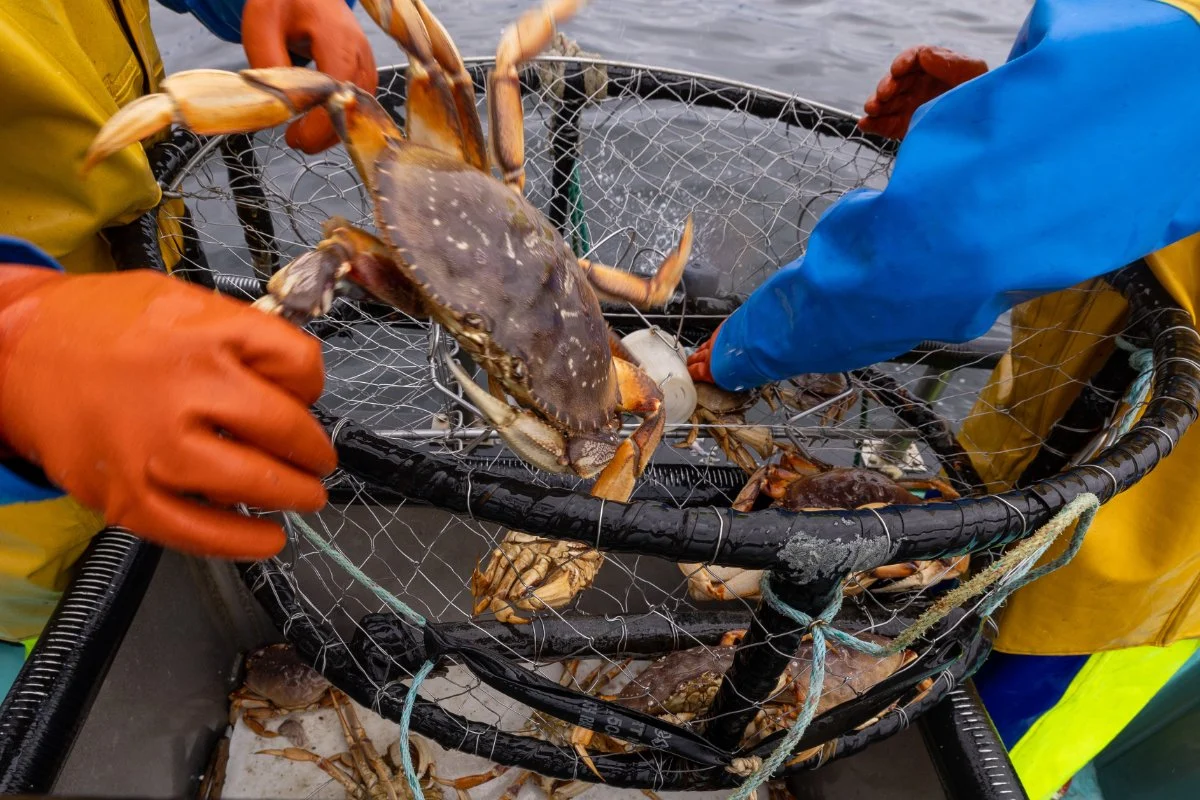
The American fishing industry is bracing for an unprecedented storm season, driven by a looming "super El Niño" that threatens to decimate already vulnerable fisheries, from the Pacific Coast to Alaska. This environmental catastrophe exposes a critical flaw in the nation’s safety net: unlike their agricultural counterparts, fishers nationwide lack access to government-supported insurance, leaving them unprotected against climate-induced disasters. Compounding this vulnerability, federal disaster relief, when it finally arrives, is often too little, too late, forcing a growing number of family-owned fishing businesses out of operation and accelerating industry consolidation.
The Looming "Super El Niño": A Forecast of Havoc
The rapid intensification of Hurricane Polo into a Category 5 storm off Mexico’s coast earlier this week serves as a stark precursor to the violent weather expected from the "super El Niño" currently gathering strength in the tropical Pacific. This meteorological phenomenon, characterized by unusually warm ocean surface temperatures in the equatorial Pacific, is predicted to be one of the most powerful ever recorded. Projections indicate sea surface temperatures could rise by an alarming 3.4°C through February 2027, triggering erratic and extreme weather patterns across the United States, particularly along the Pacific seaboard. California Governor Gavin Newsom has already proactively declared a state of emergency, mobilizing state resources to bolster preparedness and safeguard vulnerable coastal communities against anticipated heavy rains, strong winds, and extensive flooding.
However, the most profound and immediate impacts of this "super El Niño" are expected to ripple through the marine ecosystems that sustain commercial fisheries from California northward to Alaska. While El Niño is a natural climate cycle, its severity and the frequency of its occurrence are being significantly amplified by anthropogenic climate change. The warmer ocean surface temperatures and weakened trade winds disrupt the fundamental processes of the marine food chain. Nutrient-rich waters, typically brought to the surface through upwelling, are instead trapped at cooler depths and closer to shore. This scarcity of essential nutrients starves plankton, the microscopic algae forming the base of the marine food web. Consequently, marine species react in varied and often detrimental ways: some face starvation, succumb to disease, or experience reproductive failures, while others migrate to deeper or colder waters in a desperate search for sustenance.
A History of Devastation and Lingering Scars
The devastating potential of a "super El Niño" is not merely theoretical; it is etched into recent memory. The last such event, occurring in 2015 and 2016, inflicted staggering losses across key Pacific fisheries, tallying at least $141 million. Species vital to regional economies, including Pacific Dungeness crab, salmon, red sea urchin, and sardine, experienced significant declines. The economic fallout from these disasters can persist for years, with some fisheries struggling to recover even a decade later. California’s red sea urchin fishery, for instance, has yet to regain its former health, leading to profound ecosystem-level crises.

The Dungeness crab fishery, one of California’s most economically valuable, faced a particularly severe ordeal during the 2015-2016 event. Warmer waters facilitated harmful algal blooms, which produced domoic acid, a potent neurotoxin. Crabs ingested this toxin, rendering them unsafe for human consumption. Concurrently, the scarcity of plankton further offshore compelled humpback whales to forage closer to the coast, dramatically increasing their entanglement risk with crab fishing gear. These combined pressures forced the fishery to close for five of its seven operating months, resulting in an estimated $27.2 million in direct losses. This scenario highlights how intertwined ecological and economic factors can amplify the impact of climate events.
Beyond the direct biological impacts on fish stocks, the intense weather associated with El Niño – including strong winds, massive waves, and coastal flooding – directly impedes fishers’ ability to operate safely and profitably. Dick Ogg, a seasoned crab fisher from Bodega Bay, California, underscores how such conditions can render it impossible to venture out, cutting off their sole source of income. California’s emergency declaration, by preparing for rapid response to flooding and landslides, aims to mitigate some of these broader challenges faced by fishers and the general public, but it cannot address the fundamental lack of income when fisheries themselves are compromised.
The current "super El Niño" is following a pattern disturbingly similar to its predecessor, emerging on the heels of another significant marine heatwave. This sequence of events, where natural Pacific weather patterns layer additional heat onto already warming oceans due to climate change, creates a prolonged period of stress for marine ecosystems. The net effect is often back-to-back years of fishery losses, pushing already strained communities to the brink.
The Inadequate Safety Net: A Tale of Two Industries
A stark disparity exists between the safety nets available to agricultural producers and commercial fishers. Farmers across the nation benefit from comprehensive crop insurance programs, backed by the government, which provide crucial financial protection when their fields are damaged by adverse weather or natural disasters. This framework allows farmers to absorb losses, rebuild, and maintain their livelihoods.
Fishers, however, operate without any comparable government-supported insurance programs to mitigate the financial impact of fishery failures. When fish stocks plummet due to ocean warming, harmful algal blooms, or other climate-driven disruptions, fishers are left exposed, with their entire business model reliant on the unpredictable health of marine ecosystems. This fundamental gap in federal policy leaves a vital segment of the nation’s food producers uniquely vulnerable.

A Broken Bureaucracy: The Federal Disaster Relief System
In the absence of insurance, fishers’ primary recourse for catastrophic losses is federal disaster assistance, administered by the National Oceanic and Atmospheric Administration (NOAA). However, this system is notoriously slow, cumbersome, and often delivers relief years after the initial disaster has occurred. The process itself is labyrinthine: disaster relief requests originate at the state level, are reviewed by NOAA, and then navigate a complex policy chain involving the Commerce Secretary and the Office of Management and Budget. Even after approval, funds cannot be dispersed until Congress appropriates them. Subsequently, states must convene fishery stakeholders to design fair and equitable distribution plans, which then require further federal sign-off.
This protracted bureaucratic journey means that relief can take anywhere from three to six years to reach the pockets of struggling fishers. For many small, family-owned businesses, such delayed assistance is tantamount to no assistance at all. It arrives long after they have incurred insurmountable debts, sold off assets, or been forced to abandon their profession entirely.
The inadequacy of the current system is underscored by the dramatic increase in disaster relief requests to NOAA. From 1985 through 2015, the agency received an average of just two requests per year. Since then, that average has skyrocketed to ten requests annually, a clear indicator of accelerating climate impacts on marine resources. Despite this surge, the federal response remains sluggish. For example, while the Trump administration allocated $124 million in disaster funds this year for crises that occurred in 2022 and 2023, nearly 30 claims for environmental disasters dating as far back as 2019 are still pending review and funding.
Economic and Social Fallout: Losing Family Legacies
The human cost of these delayed payments and the lack of a robust safety net is profound, leading to severe economic hardship and accelerating consolidation within the fishing industry. The collapse of Alaska’s crab fishery provides a poignant case study. Beginning in 2019, the Bristol Bay red king crab fishery experienced its first closure in 25 years, potentially due to ocean acidification. This was followed by the catastrophic collapse of the snow crab fishery in 2021, attributed to a marine heatwave that triggered a mass starvation event.
Jamie Goen, executive director of Alaskan Bering Sea Crabbers, recounts the devastating impact: "We lost roughly $250 million in ex-vessel value [the amount fishers receive for their catch] in a year." She notes that it took a grueling four years for crabbers to begin receiving federal relief, with two other disaster requests still awaiting resolution. Such prolonged periods without income are unsustainable for small businesses.

Gabriel Prout, a third-generation crab fisherman and president of Alaskan Bering Sea Crabbers, vividly describes the personal toll. "When your revenue basically disappears overnight for multiple years, it gets extremely difficult to stay in business," he explains. "You’re still left with bank loans, quota rights, mortgage fees, vessel expenses, drydocking, and your regular living expenses." His own family survived by drastically cutting costs, reducing crew, performing their own vessel maintenance, and diversifying income streams, including ferrying salmon for other vessels, renting out a room in their home, and even operating a side business through a car rental app.
The consequences extend beyond financial strain. Prout highlights how cost-cutting measures, driven by desperation, often come at the expense of safety in an already dangerous profession. Vessels may not receive critical maintenance, and experienced crew members, unable to weather the closures, may leave the industry, to be replaced by less experienced workers, further compounding safety risks. The ultimate outcome is a loss of independent operators: "A lot of small family businesses have decided to call it quits, and the fishery is continuing to get more consolidated," Prout laments. This consolidation threatens the cultural fabric of coastal communities and concentrates economic power in fewer hands, often those of larger industrial operations.
Calls for Immediate Action and Systemic Reform
Ocean advocates and fishing groups are united in their call for urgent reform, arguing that the accelerating impacts of climate change necessitate a complete overhaul of how disaster relief is delivered. Most immediately, there is a strong plea for Congress to bypass the cumbersome existing process and appropriate funds directly for Pacific fisheries now, in anticipation of the "super El Niño’s" inevitable devastation. Anthony Rogers, senior fellow for Fisheries Economics and Climate at Ocean Conservancy, articulates this sentiment: "Ultimately, they’re going to allocate disaster funds because we know a disaster is going to happen. They should allocate it now so that it’s ready to disperse when people actually need it, rather than five years later."
For the medium and long term, a burgeoning movement is advocating for the creation of a dedicated, government-supported insurance program for fishers, akin to crop insurance for farmers. While a NOAA spokesperson declined to comment on "internal management matters," they affirmed the agency’s dedication to "providing timely information, research and resources that serve the American public and ensure our nation’s economic and environmental resilience." This statement, however, does not directly address the systemic delays in financial relief.
The Promise of Fishery Insurance: Models and Challenges
The concept of fishery insurance has been discussed and researched for decades, but it is now gaining significant traction, particularly with the establishment of USDA’s Office of Seafood. Jamie Goen, a member of the Ocean Modeling Forum, is actively involved in initiatives researching the feasibility of creating such insurance products. Her group aims to pilot a program within the next two years, engaging in ongoing discussions with the Office of Seafood. The vision involves a fully subsidized, multi-fishery program, designed to spread risk for insurers and provide coverage for approximately three years. Mike Illenberg, director of the Office of Seafood, confirmed these exploratory conversations, stating, "We are very much in the ideation stage."

Further momentum for fishery insurance comes from a collaboration between Homarus Strategies, a marine policy consulting group, and the Alaska Longline Fishermen’s Association. This partnership has successfully secured $500,000 in the 2027 fiscal year budget, championed by Senator Lisa Murkowski (R-Alaska), to develop a pilot commercial fisheries insurance program.
Existing models offer promising precedents. USDA’s Office of Risk Management already operates a pilot insurance program for oyster producers, demonstrating the feasibility of insuring aquaculture. Internationally, innovative solutions are emerging. In June 2026, a Caribbean insurance provider (CCRIF) and the United Nations Office for Disaster Risk Reduction launched a pioneering insurance product specifically designed to protect Caribbean fishers from hurricane damages. Similarly, major reinsurers like Swiss Re and Munich Re are collaborating with nonprofits to insure coral reefs in Mexico and Hawaii against hurricane and tropical storm destruction, with payouts earmarked for reef restoration.
These cutting-edge policies often utilize "parametric insurance," where a predefined indicator, such as wind speed or ocean temperature, automatically triggers a payout without the need for a lengthy damage assessment. Chris Anderson, a fisheries economist and professor at the University of Washington and also a member of the Ocean Modeling Forum, suggests that for fisheries, such indicators could include ocean temperature or salinity. He also notes that more traditional forms of insurance, based on lost revenues from diminished catches, might be suitable for certain fisheries. Anderson emphasizes that "now is the window of opportunity for insuring fishers. Climate impacts are happening with enough frequency, but not yet enough regularity, to make insurance feasible."
Learning from Crop Insurance: Avoiding Pitfalls
While the prospect of fishery insurance is hopeful, experts caution against simply replicating the crop insurance model without careful consideration. Anthony Rogers voices a key concern: "My biggest concern is moving to a model that could work for large industrialized fisheries but leave some of the small independent operators high and dry." This concern is valid, as crop insurance programs have historically been criticized for disproportionately benefiting large farms.
Anderson suggests that existing crop insurance products designed for smaller farms, such as USDA’s Whole Farm Revenue Protection and Micro Farm programs, could offer adaptable models for fisheries. However, he points out that the incentive structure for insurers would need recalibration, as brokers typically earn commissions and thus prioritize larger policies. A flat fee structure could address this imbalance. Furthermore, fisheries often resemble tree crops more than annual row crops, with impacts lasting for multiple years. Any effective insurance product would need to account for these extended timelines.

Rogers also highlights the risk of "maladaptive fishing practices." Just as crop insurance can inadvertently disincentivize climate adaptation among farmers, fishery insurance must be carefully designed to avoid locking fishers into unsustainable methods. Many fishers adapt to changing conditions by targeting different species or moving to new areas. Insurance products must incorporate this flexibility, rather than inadvertently restricting adaptive strategies. Other critical considerations include ensuring close coordination with existing fishery management systems to prevent unintended incentives for under- or over-fishing, which could undermine conservation efforts.
The Path Forward: A Hybrid Approach
Despite the promise of insurance, there is a consensus that it should not replace, but rather complement, an improved federal disaster relief program. Noah Oppenheim, founder of Homarus Strategies, succinctly states, "Nobody is saying we need to replace the fishery disaster program. We need to focus on improving it. Fisheries that are uninsurable still need to be able to access disaster funds." Federal relief serves a broader purpose, supporting entire fishing communities by aiding processors, funding vital research, and backing programs aimed at the long-term rebuilding of fish stocks.
As crab fisherman Gabriel Prout, having personally navigated years of climate-related fishery disasters, underscores, the ultimate goal is to safeguard the small, independent fishing families who have dedicated generations to working the sea. "It’s really about protecting their legacy," he concludes, "and being able to have something that’s sustainable for our children." The convergence of a powerful "super El Niño" and the accelerating impacts of climate change demands a robust, multi-faceted approach – one that combines efficient federal disaster relief with innovative insurance solutions – to ensure the survival and resilience of America’s vital fishing communities.