admin
admin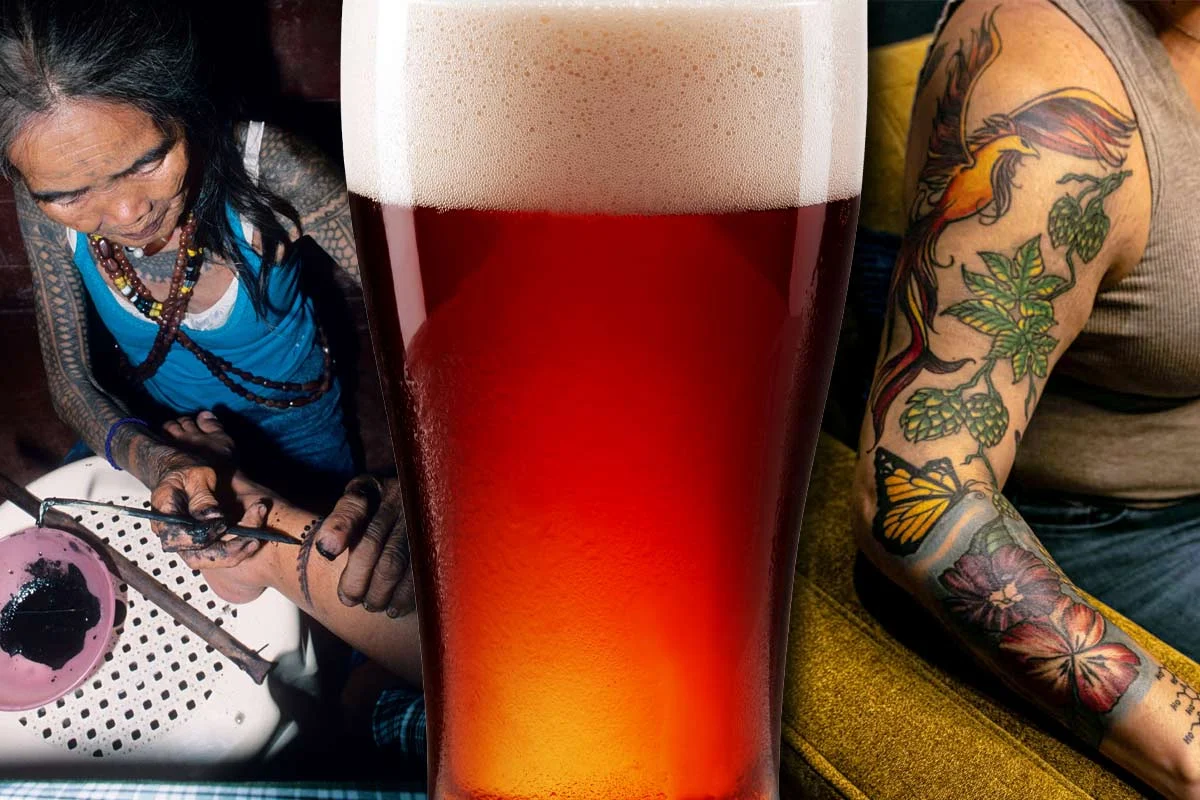
Across the disparate landscapes of the Japanese archipelago, the rugged highlands of the Philippines, the savannas of the Guiana Shield, and the volcanic islands of Hawaii, two seemingly unrelated human endeavors—tattooing and fermentation—share a profound and ancient kinship. While modern observers might view ink and alcohol as separate spheres of recreation, a deep-dive into Indigenous ethnography reveals them as twin technologies of transformation. Both practices involve the deliberate alteration of raw materials—skin and sugar, carbon and starch—through time, ritual, and a meticulous relationship with the land. These traditions serve as more than just aesthetic or culinary choices; they are foundational pillars of identity, acting as conduits for ancestral knowledge and communal resilience. In these cultures, the "grammar of transformation" is inscribed on the body and shared in the cup, creating a living record of continuity that persists despite centuries of colonial pressure and modernization.
The Convergence of Ritual and Materiality: A Historical Overview
The intersection of tattooing and fermentation is not a product of modern subcultures but is rooted in the Neolithic origins of human civilization. Archeological evidence suggests that both practices emerged as ways to navigate the spiritual and physical worlds. Fermentation, the metabolic process by which microbes—such as bacteria and yeast—convert carbohydrates into acids or alcohol, has been a human staple for at least 10,000 years. Similarly, tattooing, the permanent insertion of pigment into the dermis, dates back to at least the 4th millennium BCE, as evidenced by the "Ötzi the Iceman" mummy.
In many Indigenous epistemologies, these are not mere technical skills but sacred responsibilities. The process of fermentation requires "patience and a relationship with the invisible," as microorganisms transform perishable crops into shelf-stable, nutrient-dense, and often psychoactive substances. Tattooing mirrors this; it is a transformative ordeal where the body is "cooked" or "marked" to signal a new status, a protection, or a lineage. Across the globe, the physical tools of these trades often overlap, with the hearth serving as the laboratory for both the brewer’s mash and the tattooist’s ink.
The Ainu of Northern Japan: The Hearth as a Spiritual Nexus
The Ainu, the Indigenous people of northern Japan, Sakhalin, and the Kuril Islands, provide one of the most striking examples of the material bond between tattooing and fermentation. For the Ainu, the center of the universe is the cise (house), and at its heart is the hearth. This domestic fire is the domain of Kamuy Fuchi, the goddess of the hearth, who acts as a mediator between the human world and the kamuy (divine beings).
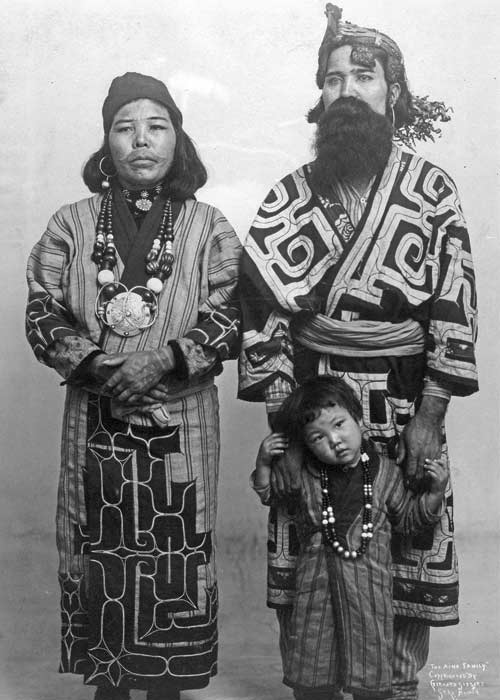
Historically, Ainu women were the primary practitioners of both brewing and tattooing. The chronology of these practices was often tied to the lifecycle of the hearth. To create tattoo pigment, women would meticulously scrape soot from the undersides of earthenware pots used for daily cooking and ceremonial brewing. This soot, a byproduct of the fire overseen by Kamuy Fuchi, was then mixed with water and ash tree bark to create a permanent ink. The application of tattoos, particularly the distinct mouth markings that extended into a smile-like shape, was a rite of passage for girls. It was believed that these markings protected women from malevolent spirits and ensured their passage into the afterlife.
Simultaneously, the production of tonoto, a traditional beer made from rice or millet, was a strictly female-led ritual of fermentation. The brewing process was conducted under the watchful eye of Kamuy Fuchi. Women would offer prayers to the goddess throughout the fermentation period, ensuring the beverage reached the proper potency for ceremonial use. The link here is not merely coincidental; it is cosmological. Both the ink on the skin and the drink in the bowl were "born" of the same fire, consecrated by the same deity, and maintained by the same hands. The suppression of these practices during the Meiji Restoration (1868–1912), through the Hokkaido Former Aborigines Protection Act, sought to sever these ties, yet modern Ainu activists are currently working to revitalize both tonoto production and the art of the tattoo as acts of cultural reclamation.
The Kalinga of the Philippines: Fermented Pigments and Warrior Ethics
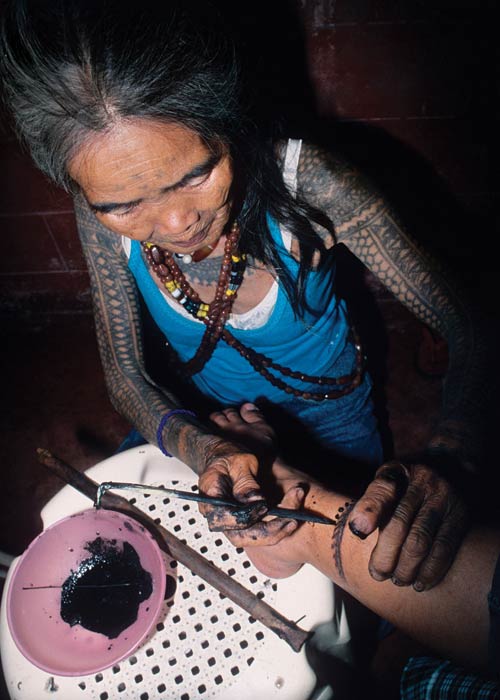
In the Cordillera Central mountains of Luzon, the Kalinga people have maintained a tattooing tradition known as batok for over a millennium. This hand-tapped method, popularized globally by the centenarian master mambatok Apo Whang-od Oggay, represents a different technical intersection with fermentation.
The traditional ink used in batok consists of soot mixed with a liquid carrier. In historical Kalinga practice, this carrier was often sugarcane juice. When mixed and allowed to rest, the natural sugars in the juice would begin a spontaneous fermentation process, turning into a mild alcohol. While the fermentation does not necessarily change the longevity of the carbon pigment, it alters the chemical environment of the ink, potentially acting as a mild antiseptic—a crucial factor in an era before modern sterilization.
For the Kalinga, these tattoos were markers of social achievement. For men, batok was earned through acts of bravery in defense of the village (historically tied to headhunting). For women, it was a mark of beauty and maturity. Parallel to this, the Kalinga social fabric is bound by fermented beverages like tapuy (rice wine) and basi (sugarcane wine). These drinks are essential for bodong (peace pacts) and healing rituals. The presence of the tattoo and the presence of the ferment both signal that a person or a community has moved through a necessary transformation, moving from "raw" to "refined" in the eyes of their ancestors.
The Makushi of Guyana: Tattoos as Brewing Charms
Perhaps the most direct functional link between the two crafts is found among the Makushi people of the Amazonian borderlands between Guyana and Brazil. For the Makushi, the staple crop is cassava, which is processed into parakari, a complex beer involving a dual fermentation process using both mold (Rhizopus) and yeast.
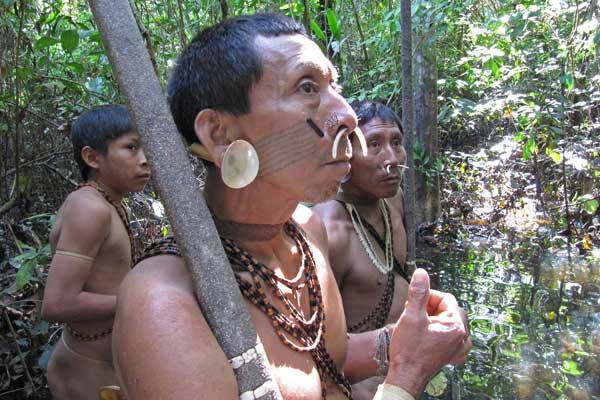
In Makushi culture, the success of a brew was historically believed to depend on the physical and spiritual state of the brewer. This led to the practice of kansku, or tattooing for the purpose of "charming" the fermentation. Women would receive tattoos on their arms and jaws featuring motifs of bees (to ensure sweetness) or scorpions (to give the drink a "sting" or high alcohol content). The Makushi word yekî refers both to a physical sting and the state of being intoxicated, highlighting the linguistic and conceptual overlap.
Anthropological records indicate that these tattoos were not merely decorative; they were functional requirements. According to Dr. Lars Krutak, a leading scholar in the anthropology of tattooing, a Makushi woman was historically expected to have these markings before she could serve fermented drinks to men. The tattoo functioned as a biological and spiritual "seal of quality," testifying that the brewer possessed the ancestral authority to manage the volatile process of fermentation.
Hawaiian Epistemology: Kākau, Poi, and the Lineage of Hāloa
In Hawaii, the relationship between tattooing (kākau) and fermentation (specifically the fermentation of kalo or taro into poi) is understood through the lens of genealogy. Native Hawaiian cosmology traces the lineage of the people to Hāloa, the first-born son of the gods who died in infancy and grew into the first kalo plant.
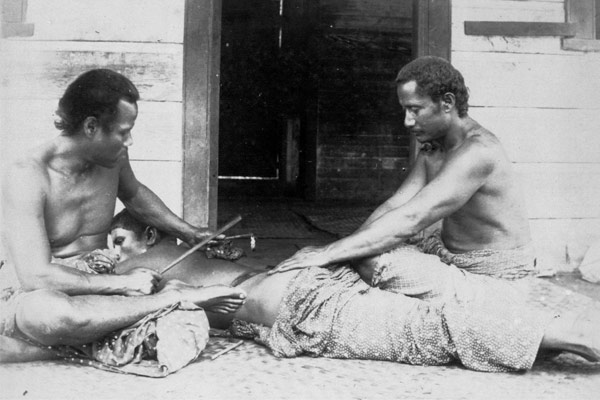
Dr. Lindsay Malu Kido, an expert in Indigenous body sovereignty, notes that feeding on poi is an act of kinship—eating the "elder brother." Similarly, kākau is the inscription of that genealogy onto the skin. The body becomes a living record of one’s ancestors, just as the fermented poi sustains the living body through the essence of those same ancestors. In this context, both practices are forms of "embodied history." The revival of traditional Hawaiian tattooing today is frequently framed as an act of decolonization, mirroring the movement to return to traditional kalo farming and fermentation as a way to reclaim health and sovereignty from Western industrial food systems.
Supporting Data: The Sociology of the "Craft" Identity
The persistence of these links into the modern era can be analyzed through the lens of "Craft Identity." In a 2022 sociological study on artisanal communities, researchers found that practitioners of "slow crafts" (including brewing and tattooing) report higher levels of communal belonging and "narrative identity" than those in mass-production industries.
| Culture | Primary Ferment | Tattoo Pigment Base | Symbolic Intersection |
|---|---|---|---|
| Ainu | Tonoto (Millet/Rice) | Hearth Soot | The Hearth/Goddess Kamuy Fuchi |
| Kalinga | Tapuy (Rice Wine) | Soot + Sugarcane Juice | Warriorhood and Rites of Passage |
| Makushi | Parakari (Cassava) | Plant Pigment/Soot | Brewing Charms (Sweetness/Sting) |
| Hawaiian | Poi (Fermented Taro) | Soot + Kukui Nut Oil | Ancestry and Genealogy (Hāloa) |
Contemporary Echoes in the Craft Brewing Industry
While the ancestral protocols of the Ainu or Makushi are specific to their lands, the "cultural logic" of transformation has found a new home in the global craft brewing industry. Modern brewers often use tattoos to signal their dedication to the craft, though the motivations have shifted from communal mandates to personal narratives.
For Sandra Murphy, owner of Murphy’s Law Brewery in Texas, her tattoos represent a synthesis of scientific knowledge and personal grief. Her sleeve, which features the chemical formula for yeast cell walls alongside birth flowers and a phoenix, illustrates how the "transformation" inherent in brewing—turning sugar to alcohol—became a metaphor for her own transformation after the loss of her daughter.
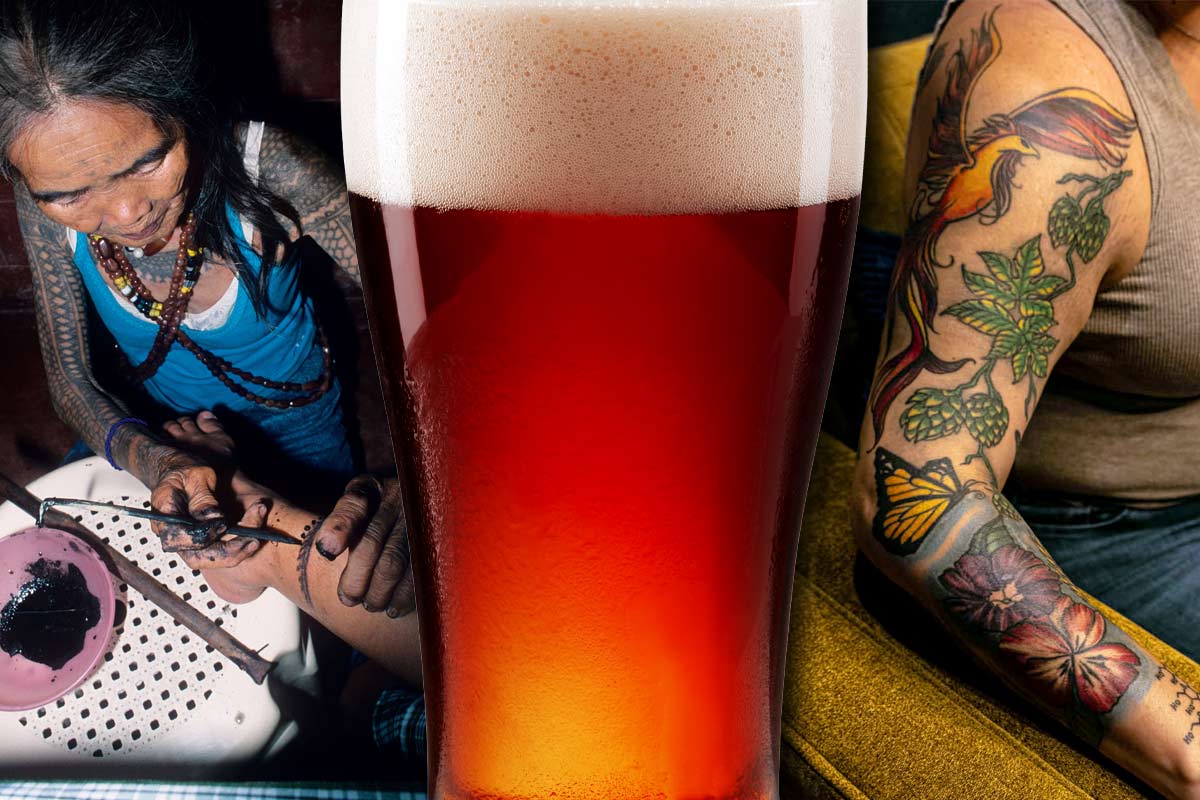
Similarly, Rachael Engel, a brewer at Sound2Summit Brewery, views her tattoos as a reflection of her journey toward self-actualization. For Engel, the "hop sleeve" she acquired after coming out as transgender represents the growth and light required for both a hop vine to flourish and a human to find their true identity. These modern examples demonstrate that even when the specific religious context of the hearth goddess is absent, the underlying human impulse remains: to mark the body in a way that reflects the transformations we facilitate in the world.
Analysis of Implications: Resistance and Reclamation
The intersection of ink and drink serves as a powerful tool for cultural resistance. In the 19th and 20th centuries, colonial powers frequently banned both Indigenous tattooing and traditional brewing, viewing them as "heathen" or "subversive." By outlawing these practices, colonial administrations sought to break the communal bonds and spiritual authorities that these technologies supported.
Today, the revival of these traditions is a form of "Indigenous Futurism." When an Ainu woman brews tonoto or a Kalinga youth receives a batok tattoo, they are not simply "re-enacting" the past; they are asserting their right to a future defined by their own cultural logic. The Brewers Association’s support of these narratives highlights a growing recognition within the industry that beer is not just a commodity, but a cultural artifact with deep roots in human history.
In conclusion, the kinship between tattooing and fermentation reveals a fundamental truth about human culture: we are a species that seeks to make the internal external. We ferment to capture the essence of the land and the spirit of the harvest, and we tattoo to capture the essence of our history and the spirit of our ancestors. Whether it is the soot from an Ainu hearth or the hop-inspired ink on a modern brewer’s arm, these marks of transformation remind us that we are active participants in the shaping of our world. Ink marks the body, and fermentation marks the food; together, they leave an indelible trace of who we were and who we are becoming.