admin
admin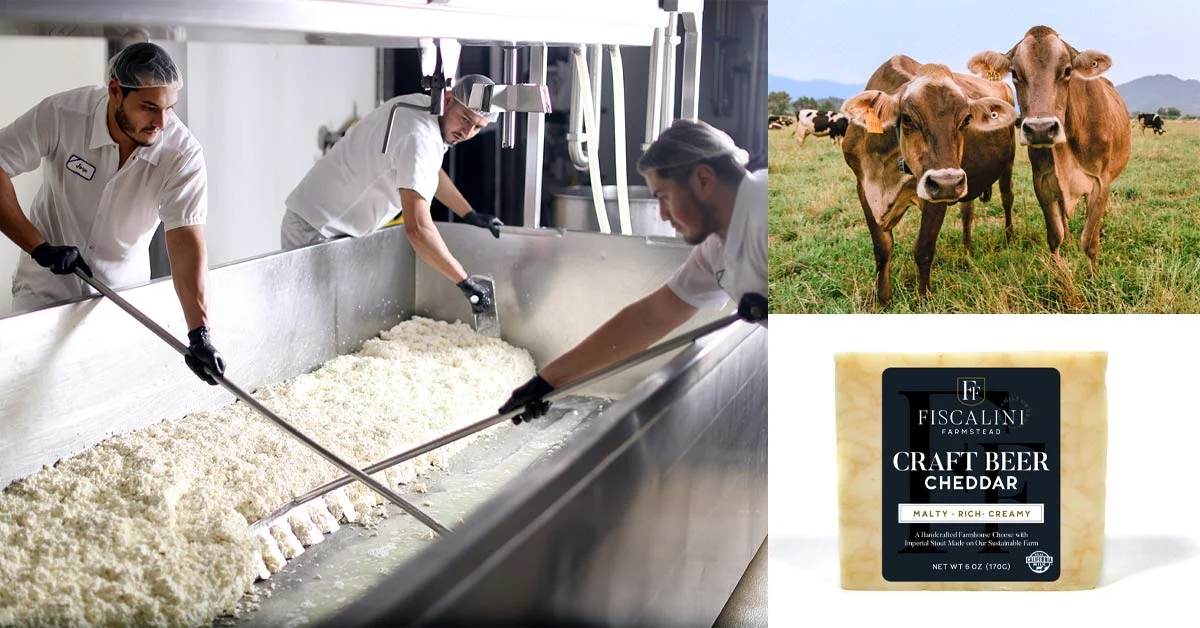
The landscape of American specialty food is currently witnessing a sophisticated transformation of a mid-century staple: beer cheese. While once defined primarily as a processed spread served in the roadside taverns of Kentucky, the product has evolved into a high-end category of artisanal, farmstead cheeses. This shift represents a broader trend in the United States food industry where the boundaries between craft brewing and traditional cheesemaking are increasingly blurred, resulting in a collaborative movement that emphasizes regional terroir, sustainable practices, and biochemical precision.
The Historical Foundations of Beer Cheese
The origins of beer cheese are rooted in the 1940s in Clark County, Kentucky. The product is widely attributed to Johnny Allman, who served a zesty, spreadable cheese at his namesake restaurant on the banks of the Kentucky River. This original iteration, now preserved by Howard’s Creek Authentic Beer Cheese, was born out of a desire for sustainability and flavor experimentation. According to Kathy Gorman Archer, president of Howard’s Creek, the initial recipe utilized leftover sharp cheddar and surplus beer, reflecting a resourceful approach to kitchen waste.
The "Kentucky-style" beer cheese is characterized by a base of processed or sharp cheddar, augmented with garlic, cayenne pepper, and various spices to provide a "kick" that Allman reportedly derived from his interest in southwestern flavors. For decades, this remained the standard paradigm: a cold-processed spread intended for dipping pretzels or vegetables. However, as the American craft beer revolution gained momentum in the 1990s and 2000s, cheesemakers began to rethink how these two fermented products could interact beyond the mixing bowl.
The Pacific Northwest and the Rise of Integrated Cheesemaking
In the Pacific Northwest, Rogue Creamery has been a central figure in redefining the relationship between beer and dairy. Based in Oregon, Rogue Creamery has long been associated with Rogue Ales, though the two are separate entities. The synergy between the two brands established a precedent for cross-industry cooperation. For years, Rogue Ales produced anniversary ales specifically designed to pair with Rogue Creamery’s world-renowned blue cheeses, such as the Oregon Blue—the first cave-aged blue cheese produced west of the Mississippi.
The innovation reached a new level with the development of the Chocolate Stout Cheddar. Unlike traditional beer cheese, where beer is added to a finished product, Rogue Creamery integrates the beer during the actual cheesemaking process. Marguerite Merritt, brand manager and certified sommelier for Rogue Creamery, notes that the beer is introduced just as the whey begins to separate from the curd. This timing allows the malted flavors of the stout to infuse the milk and curds deeply, creating a marbled aesthetic and a subtle, malty profile.
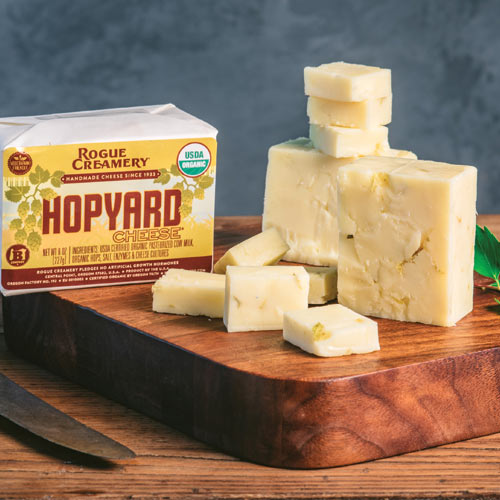
This experimentation led to the creation of "Hopyard," a cheddar that utilizes fresh, local Northwest-grown hops rather than liquid beer. By mixing hops directly with the curds while they set, the creamery produces a cheese that mirrors the citrus, pine, and earthy notes of a West Coast IPA. This approach highlights a transition from using beer as a flavoring agent to using its raw ingredients to influence the biochemical structure of the cheese.
Vertical Integration and Localized Collaborations in California
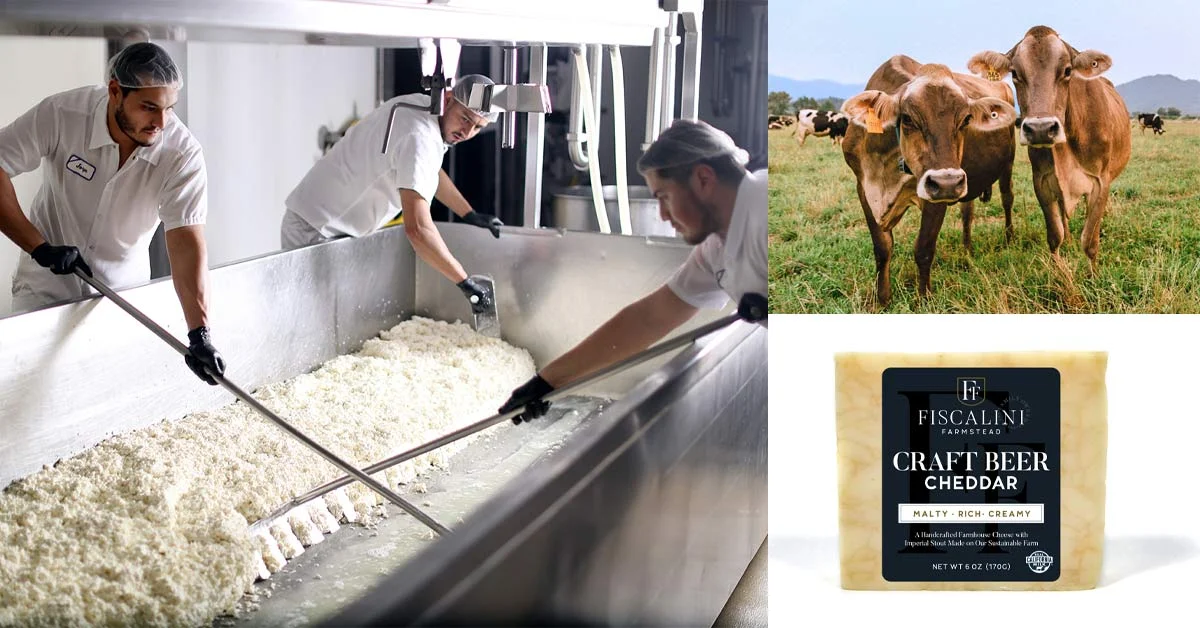
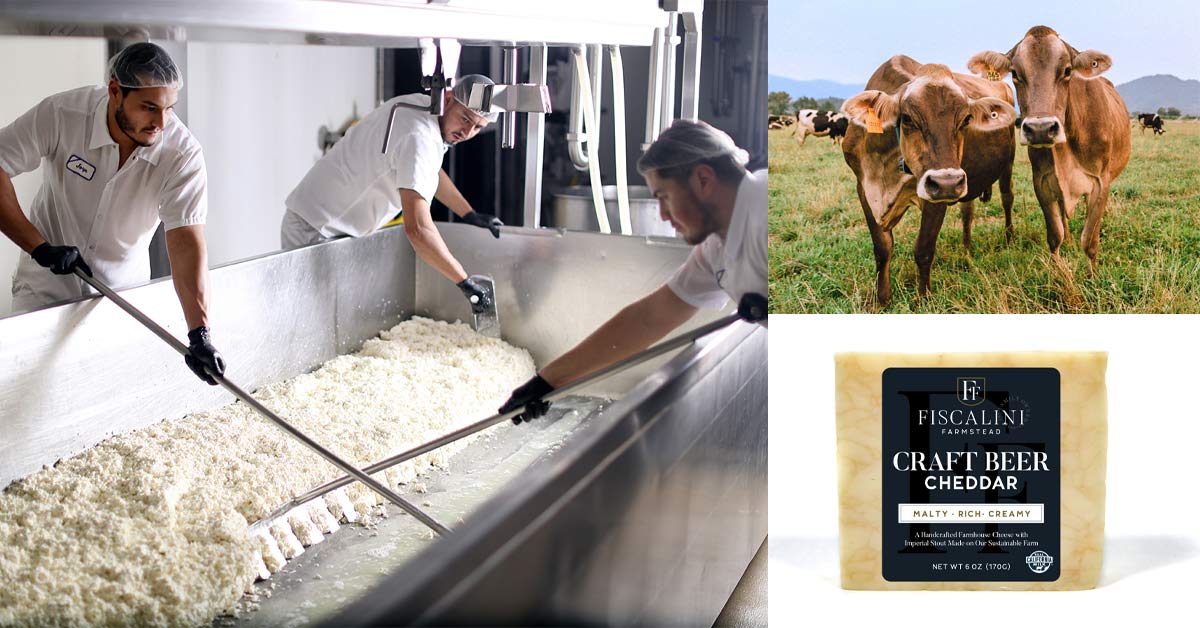
In Modesto, California, Fiscalini Farmstead represents the "farmstead" model of this evolution. Operating as a dairy farm since 1914, Fiscalini added a cheese line in 2000 with a focus on traceability. Because they only use milk from their own cows, the integration of beer becomes a study in local logistics.
Fiscalini’s Craft Beer Cheddar is produced in collaboration with Dust Bowl Brewing, located just 20 minutes away in Turlock. The cheese utilizes Dust Bowl’s Black Blizzard Imperial Stout, a roasty brew with notes of coffee and chocolate. Fourth-generation owner Laura Genasci explains that the beer is mixed with the curds before they are formed into 40-pound blocks. The blocks are then pressed overnight, a process that forces the beer deeper into the cheese’s structure, resulting in a mottled pattern and ensuring that the beer’s profile is present in every bite.
Alex Borgo, Fiscalini’s cheesemaker, views this as a "culinary collaboration" where the expertise of the brewmaster and the cheesemaker intersect. The science of this fusion is significant: while brewers use malted barley and heat to activate grain enzymes, cheesemakers use specific starter cultures and microbial enzymes to separate curds from whey. When a creamy milk stout is combined with a sharp, tangy cheddar and aged for at least three months, the resulting product develops a complexity that neither ingredient could achieve independently.
The Pennsylvania Model: Distribution and Scientific Precision
The evolution of beer cheese is also driven by retail demand and logistical partnerships. In Pennsylvania, the grocery chain Giant Food Stores acted as a catalyst by connecting Caputo Brothers Creamery with Tröegs Independent Brewing. This partnership was strategically designed to support the local dairy industry, which sits geographically between the brewery and the creamery.
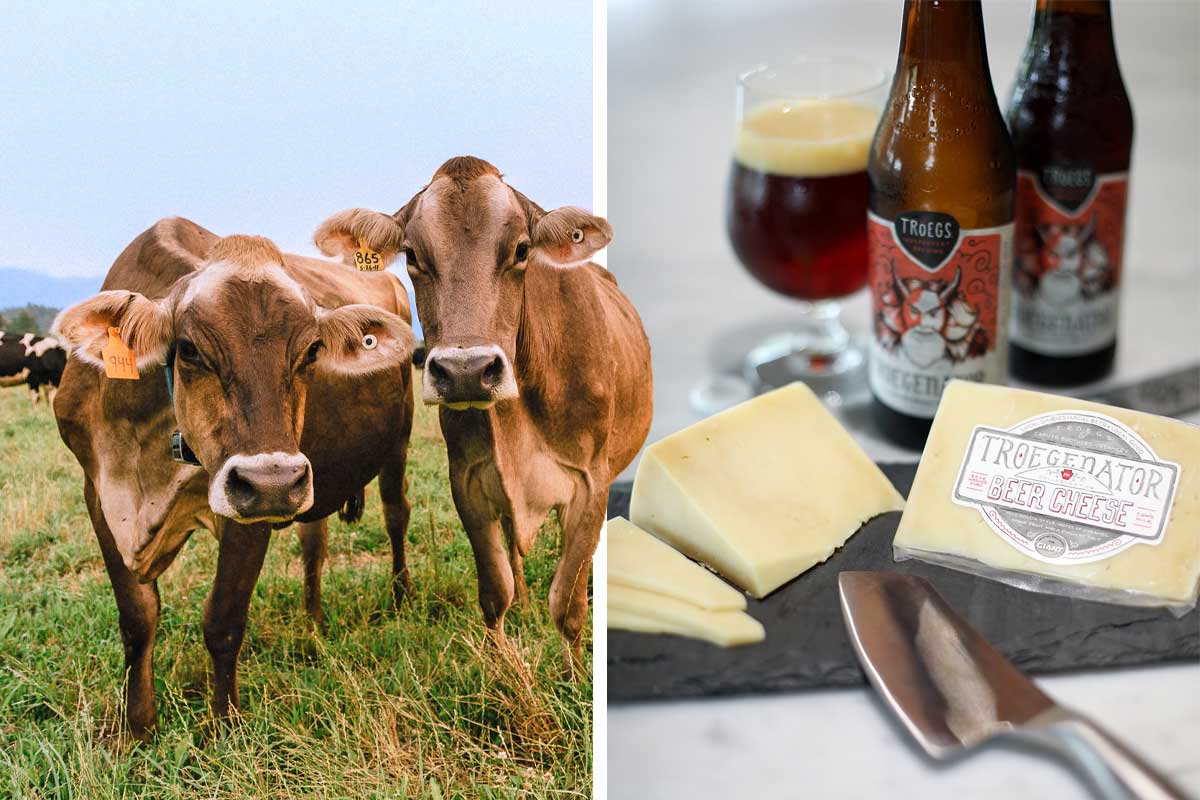
Rynn Caputo, co-founder of Caputo Brothers, initially focused on Italian-style cheeses but adapted to create beer-infused Goudas. The creamery’s "Troegenator" cheese utilizes an entire keg of Tröegs’ signature double bock for every batch. The high malt content of the beer contributes a noticeable sweetness and a golden hue to the cheese.
The technical complexity of this process is governed by pH levels. Milk typically has a pH between 6.4 and 6.8. If the acidity of the added beer pushes the pH too low (below 4.0), the curds become rubbery; if it remains too high, they fail to bind. Caputo’s mastery of this chemical balance led to the creation of "Perpetual Beer Cheese," which uses a "dry hopping" technique. By steeping the milk in Citra hops before the cheesemaking begins, they produce an "intense hop milk" that carries the aromatic profile of an IPA into the final curd.
The Urban Creamery and Fresh Cheese Innovation
While many artisanal beer cheeses are aged cheddars or goudas, the urban creamery movement is exploring fresh cheese applications. Urban Stead in Cincinnati, Ohio, operates in a city with deep German roots and a vibrant brewing scene. To honor this heritage, they developed a Kentucky-style beer cheese using Braxton Brewing’s Storm Golden Cream Ale.
Unlike aged varieties, this is a fresh cheese with a texture described as a hybrid of ricotta and cream cheese. Because it does not require months of aging, it provides a faster "cash flow" for the creamery while offering a versatile culinary ingredient. Andrea Robbins, co-founder of Urban Stead, notes that this fresh beer cheese is used by chefs for stuffing pasta, baking, and even as a substitute for mozzarella in caprese salads. This suggests that beer cheese is moving out of the "snack" category and into the "ingredient" category for professional kitchens.
Similarly, Tulip Tree Creamery in Indianapolis utilizes a "washed-rind" technique. Rather than mixing beer into the curds, they wash the exterior of the cheese wheels with a mixture of bacteria cultures, beer, water, and salt. This process permeates the cheese with the essence of the brew—such as 3 Floyds JinxProof Pilsner—while maintaining the integrity of the double cream style.
Economic Implications and Market Analysis
The rise of artisanal beer cheese is more than a culinary trend; it is a strategic response to market shifts. The craft beer industry and the specialty cheese market both rely on a consumer base that values "localism" and "authenticity." By collaborating, breweries and creameries double their marketing reach and tap into each other’s loyal fan bases.
Data from the Brewers Association indicates that while the overall beer market has faced challenges, local craft breweries continue to thrive through community-focused taproom models. Similarly, the American Cheese Society has noted a steady increase in the consumption of specialty farmstead cheeses. The "beer cheese" category serves as a bridge between these two sectors.
Furthermore, these collaborations provide a safety net for local dairy farmers. By creating high-value, value-added products like beer-infused cheddar, creameries can pay higher premiums for milk than large-scale industrial processors. This helps stabilize local agricultural economies, particularly in states like Pennsylvania and Wisconsin where small dairy farms have faced significant economic pressure.
Conclusion: The Future of Fermentation
The trajectory of beer cheese from a simple 1940s tavern snack to a scientifically crafted farmstead product reflects the maturation of the American palate. Today’s beer cheese is defined by its diversity, ranging from hop-infused fresh cheeses to stout-marbled aged cheddars.
As cheesemakers like Rynn Caputo and Alex Borgo continue to refine the biochemical integration of these products, the category is expected to expand further into the mainstream. The success of these products lies in their ability to tell a story of a specific place—whether it is the hop fields of the Northwest or the dairy pastures of the Midwest—while providing a complex sensory experience that honors the ancient traditions of both the brewer and the cheesemaker. In the modern era, beer and cheese are no longer just a pairing on a plate; they are a singular, unified expression of fermentation science.