admin
admin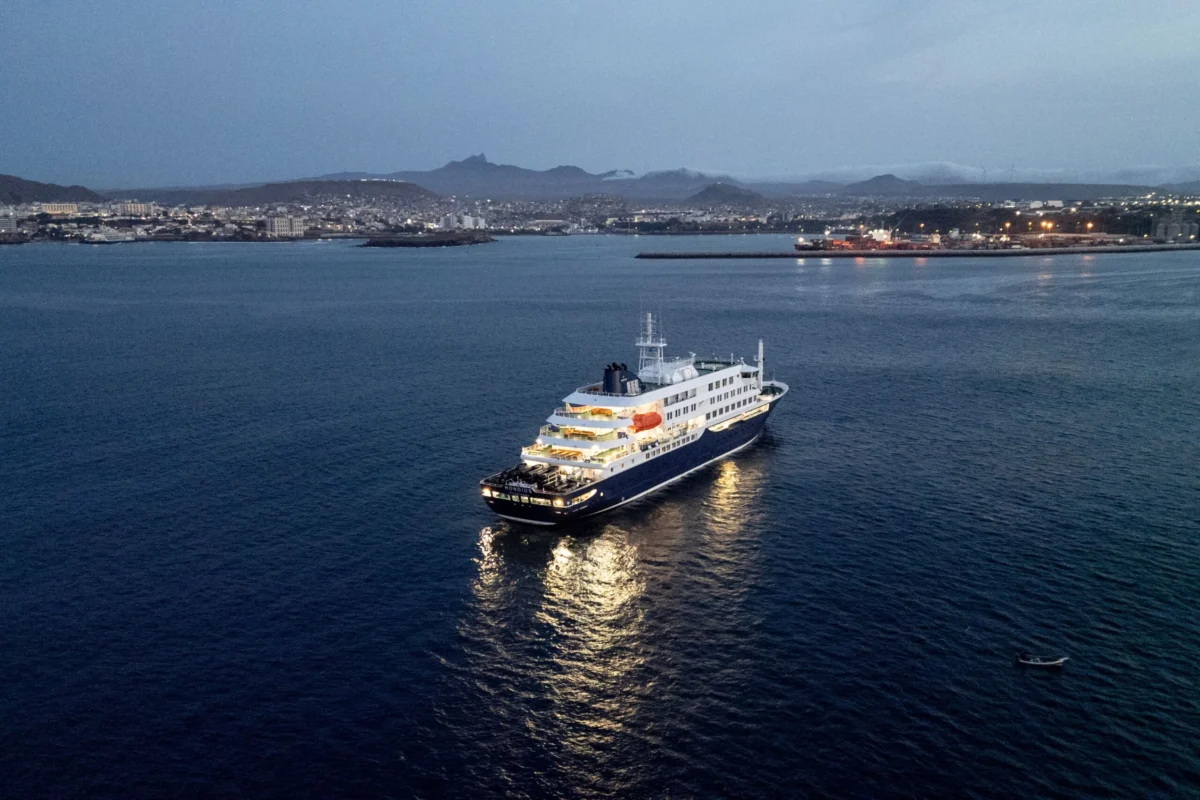
The number of travelers potentially affected by a rare and deadly strain of hantavirus has continued to climb, as health officials grapple with an unprecedented outbreak aboard a Dutch-flagged expedition cruise ship. The cluster of infections, linked to the Andes virus strain, has resulted in multiple fatalities and a widespread contact tracing effort spanning continents, prompting reassurances from the World Health Organization (WHO) that the general public remains at low risk.
The outbreak, which began in mid-April, was first identified on the MV Hondius, an expedition vessel that departed Ushuaia, Argentina, on April 1. Since then, at least three individuals among the ship’s 147 passengers and crew have succumbed to the illness, with at least five more reported to be ill, according to the latest figures from the WHO. The gravity of the situation intensified on May 7 with the reporting of a new suspected case: a flight attendant with Royal KLM Dutch Airlines who had interacted with one of the infected cruise ship passengers. The flight attendant was hospitalized in Amsterdam for testing, though confirmation of her hantavirus status is still pending.
A massive international effort is now underway to monitor approximately 30 passengers who disembarked the MV Hondius on April 24, on the island of Saint Helena in the South Atlantic, before flying to their home countries across 12 different nations. Health officials at the WHO are meticulously tracing these individuals and anyone they may have come into contact with, including fellow passengers on commercial flights.
While the unfolding situation is undeniably harrowing, drawing parallels to the early days of the COVID-19 pandemic when cruise ships became focal points for quarantine and isolation, health authorities are emphasizing a crucial distinction. "This is not coronavirus," stated Dr. Maria Van Kerkhove, WHO’s chief of epidemic and pandemic preparedness and prevention, during a press conference on May 7. "This is a very different virus. This is not the start of a COVID pandemic. This is an outbreak that we see on a ship. It doesn’t spread the same way coronaviruses do." This distinction is vital, as hantaviruses, while dangerous, have distinct transmission patterns and are not as readily contagious between humans as respiratory viruses like SARS-CoV-2.
Officials Confirm the Cruise Ship Outbreak is the Rare Andes Strain of Hantavirus
Dr. Tedros Adhanom Ghebreyesus, Director-General of the WHO, confirmed in the same May 7 press conference that the specific hantavirus strain involved in this outbreak is the Andes virus. "The species of hantavirus involved in this case is the Andes virus," he stated. This particular strain, endemic to Latin America, is notable for being the only known hantavirus species capable of limited human-to-human transmission.
Historically, person-to-person transmission of the Andes virus has been linked to close and prolonged contact, typically observed among household members, intimate partners, and individuals providing direct medical care. Dr. Ghebreyesus indicated that this pattern appears to be consistent with the majority of the reported illnesses within the cruise ship outbreak.
The incubation period for the Andes virus, the time between initial exposure and the onset of symptoms, generally ranges from two to four weeks, though in some instances, symptoms can manifest as late as six weeks after exposure. "Given the incubation period, it’s possible that more cases could be reported," Dr. Ghebreyesus cautioned, underscoring the need for continued vigilance and monitoring.
What Exactly is Hantavirus?
Hantaviruses are a group of viruses carried by rodents that can, under certain circumstances, be transmitted to humans, leading to a range of illnesses. The most severe forms can cause Hantavirus Pulmonary Syndrome (HPS), a potentially fatal condition characterized by acute respiratory distress. According to the Centers for Disease Control and Prevention (CDC), hantavirus infections initially present with flu-like symptoms, which can rapidly progress to severe breathing difficulties. The fatality rate for hantavirus infections is significant, with nearly 40% of infected individuals succumbing to the illness.
The primary mode of transmission from rodents to humans involves direct contact with rodent urine, droppings, or saliva, particularly in the event of a bite. While human-to-human transmission has been documented, it is considered to be exceptionally rare. Dr. Carla McWilliams, chief of infectious disease, quality, and safety for Cleveland Clinic Weston Hospital, elaborated, stating, "Hantavirus is most commonly spread through contact with rodent urine, droppings, [and] saliva in the case of a bite. Though human-to-human transmission has been reported, it is considered to be quite rare."
Currently, there are no specific antiviral treatments for hantavirus infections. Medical management focuses on supportive care, which may include respiratory assistance and mechanical ventilation for individuals experiencing severe symptoms. Early intervention and prompt medical attention are considered critical factors in improving the chances of recovery. Dr. Jay Bhattacharya, acting director of the CDC, emphasized in a public statement on May 6, "Hantavirus is not spread by people without symptoms, transmission requires close contact, and the risk to the American public is very low."
Timeline of the Outbreak and Identified Cases
The genesis of this outbreak appears to predate the boarding of the MV Hondius. International health officials strongly suspect that the initial exposure occurred in South America before passengers embarked on April 1. The first two individuals diagnosed with the virus were a married Dutch couple who had undertaken a birdwatching trip through Argentina, Chile, and Paraguay. Their itinerary included visits to regions known to harbor rodents carrying the Andes hantavirus. From this initial transmission event, the virus is believed to have spread to close contacts on board the ship, including at least one member of the ship’s medical staff.
The subsequent spread and identification of cases have been meticulously tracked:
- Early April: The MV Hondius departs Ushuaia, Argentina, with passengers and crew.
- Mid-April: The first cases of hantavirus are suspected or identified among passengers aboard the vessel.
- April 24: Approximately 30 passengers disembark the MV Hondius on the island of Saint Helena.
- May 6: Three patients are evacuated from the ship and transported to the Netherlands for specialized care and medical screening. Two of these individuals are in serious condition, while the third is asymptomatic but had close contact with a deceased individual. Two infectious disease physicians from the Netherlands join the ship to assist with prevention measures.
- May 6: Swiss authorities identify a man with a confirmed hantavirus case who had traveled on the first leg of the cruise from April 1 to 24. He is receiving treatment in Zurich, and his wife is self-isolating as a precautionary measure.
- May 7: A flight attendant with Royal KLM Dutch Airlines is hospitalized in Amsterdam for testing after interacting with a deceased cruise ship passenger. This passenger was the second confirmed case on board and had attempted to board a KLM flight in South Africa before being deemed too ill to travel.
- May 7: Dutch health officials are in the process of contacting passengers on KLM flight KL592 from Johannesburg to Amsterdam (April 25) to advise them to monitor for potential symptoms.
- Ongoing: Global health officials are monitoring at least seven passengers who disembarked on April 24. This includes two British nationals self-isolating in the UK, three travelers in the US (two in Georgia, one in Arizona), and two men in Singapore who are also isolated and undergoing testing.
How Many People Are Currently Sick with the Andes Hantavirus?
As of the latest reports, the confirmed and suspected cases paint a complex picture of transmission and monitoring. The flight attendant hospitalized in Amsterdam represents a critical point of interest; if her test results are positive, it will mark the first documented instance of the virus being transmitted to an individual off the cruise ship. Health authorities in the Netherlands anticipate receiving her test results on May 7.
Beyond this potential case, one cruise passenger remains in intensive care in South Africa after falling ill onboard. Their condition is reportedly improving, according to the WHO. The Swiss patient in Zurich is being treated, and their spouse is taking precautionary self-isolation measures.
The three patients evacuated to the Netherlands on May 6 highlight the severity of the illness. Two are in serious condition, while the third, though asymptomatic, had close contact with a deceased individual, prompting their transfer for specialized assessment.
Who Else is Being Monitored for Potential Cases of the Andes Hantavirus?
The global reach of this outbreak is evident in the extensive contact tracing and monitoring efforts. At least seven passengers who disembarked on April 24 are under observation by health authorities worldwide. This includes two British nationals who have entered self-isolation in the United Kingdom, as confirmed by the UK’s national health security agency. In the United States, local health officials are monitoring three travelers: two in Georgia and one in Arizona. Singapore is also actively involved, with two male residents who were aboard the ship being isolated and tested for the virus, as reported by the nation’s Communicable Diseases Agency.
What is the Latest Update with Hantavirus on Board the MV Hondius?
While no remaining passengers on board the MV Hondius are currently exhibiting symptoms, all have been instructed to remain in their cabins. This measure is in place to facilitate thorough disinfection and the implementation of other public health protocols. The ship, which had been moored near Cabo Verde off the coast of West Africa, is scheduled to sail to the Canary Islands on Wednesday, with an expected docking date of May 10. Upon arrival, Spanish authorities are slated to conduct a comprehensive epidemiological investigation of the vessel and begin the process of repatriating passengers deemed fit to travel. However, the WHO is still formulating a detailed plan to ensure the safe return of all individuals.
Did the Hantavirus Outbreak Originate on the Cruise Ship?
The consensus among international health officials is that the initial hantavirus infection did not originate on the cruise ship itself but rather occurred prior to passengers boarding in Argentina on April 1. The identified route of initial exposure for the first two infected individuals, a Dutch couple, involved travel through regions known for rodent populations that carry the Andes hantavirus. This suggests that the cruise ship environment, while facilitating the spread to close contacts, was not the primary source of the pathogen.
Should Travelers Be Concerned About Hantavirus Continuing to Spread?
Despite the seriousness of the hantavirus outbreak on the MV Hondius, the WHO has assessed the public health risk to the general population as low. "While this is a serious incident, WHO assesses the public health risk as low," stated Dr. Ghebreyesus.
Experts highlight that close contact, rather than casual encounters, appears to be the primary driver of human transmission for this virus. Dr. Daniel Kuritzkes, a senior physician in the Division of Infectious Diseases at Mass General Brigham, points to studies suggesting that respiratory droplets, rather than airborne aerosols, are more likely involved in the rare instances of human-to-human spread. "The significance being that droplets settle quickly and are less likely to result in infection of people who just happen to be in the same room," Dr. Kuritzkes explained. This understanding suggests that the risk of infection from incidental contact in shared spaces is minimal.
Consequently, experts anticipate that the current situation will largely remain contained within the sphere of the cruise ship passengers and their direct contacts. Past outbreaks of person-to-person hantavirus transmission have typically been brought under control through prompt quarantine measures, a strategy that appears to be effectively employed in this instance. "There is a very low likelihood that the current outbreak will lead to a more generalized epidemic," Dr. Kuritzkes concluded.
Should Travelers Take Any Special Precautions if They’re Visiting Argentina or South America?
Health officials are advising travelers against canceling trips to South America or adopting extreme precautionary measures beyond standard health practices. "There’s no reason for people to be concerned about travel to Argentina, but people should be cautious about visiting places where rodents might be nesting," advised Dr. Kuritzkes. He further clarified that individuals staying in typical hotels, dining in restaurants, and visiting established tourist attractions are likely to face no or minimal risk of acquiring hantavirus.
Dr. McWilliams recommends that travelers adhere to fundamental health guidelines, including avoiding areas with poor sanitation and any locations where rodents are visibly present. "For prevention, we know that having adequate sanitation practices, adequate ventilatory systems, ensuring that rodents are exterminated and eliminated is all very key and crucial to preventing any transmission," she stated.
While health authorities are postulating that the initial cases were contracted in South America, there is no indication of a widespread hantavirus outbreak in the region. "It is important to keep in mind that there is no evidence of a generalized hantavirus outbreak in Argentina, so if the original exposure of the first people to become ill did indeed occur on land it was a very unusual event," Dr. Kuritzkes reiterated.
For those traveling on cruise ships, Dr. McWilliams emphasizes the importance of adhering to best practices for onboard health. This includes maintaining good hand hygiene, washing hands frequently, especially before meals, and seeking immediate medical attention from the ship’s doctor if any symptoms of illness arise. "I think the cruise industry has come a really long way and generally puts so many safeguards into place to ensure that there is safe travel for passengers," she added.
This is a developing news story and will be updated with more information as it becomes available.