admin
admin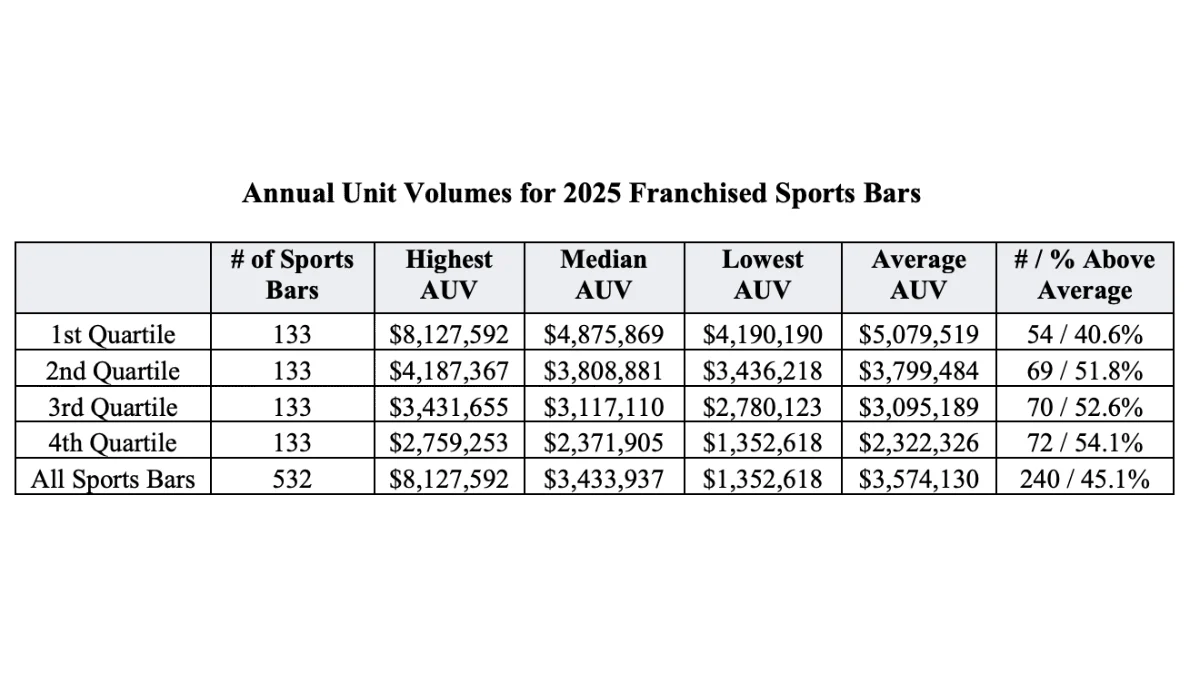
The American casual-dining landscape is witnessing a significant structural transformation as Buffalo Wild Wings, the nation’s preeminent sports-bar chain, continues to pivot its development strategy away from its traditional large-format restaurants in favor of a lean, off-premise-focused model. According to recent year-end data for 2025, the brand’s legacy full-service footprint contracted for the third consecutive year, while its quick-service spinoff, Buffalo Wild Wings GO, achieved record-breaking expansion. This shift highlights a broader industry trend where rising real estate costs, labor challenges, and evolving consumer preferences for convenience are reshaping the priorities of major hospitality conglomerates like Inspire Brands.
The Contraction of the Traditional Casual-Dining Model
Buffalo Wild Wings concluded the 2025 fiscal year with a total of 1,178 traditional U.S. restaurants, representing a net decrease of five locations compared to the previous year. This decline was the result of the company shuttering 16 corporate-owned locations while successfully opening 11 new franchised outlets. This trajectory is not an isolated incident but rather part of a sustained multi-year trend of consolidation.
The brand has struggled to achieve positive net growth in its traditional format for over half a decade. After losing two units in 2024 and four in 2023, historical data reveals that Buffalo Wild Wings has not seen a net increase in its traditional store count since 2018, the same year it was acquired by Inspire Brands. In 2018, the chain managed a modest net growth of eight locations. Since that peak, the strategy has clearly shifted from aggressive physical expansion of 6,000-square-foot dining rooms to the optimization of existing high-performing assets and the exploration of smaller, more efficient footprints.
Despite the shrinking unit count, the financial health of the remaining traditional locations remains robust, albeit with narrow growth margins. Among the 532 franchised restaurants that operated for the full 2025 fiscal year, the Average Unit Volume (AUV) reached $3.57 million. This represents a marginal year-over-year improvement of 0.19 percent. However, the disparity between the top and bottom performers remains vast. The system’s most successful location generated a staggering $8.13 million in annual revenue, while the lowest-performing unit brought in $1.35 million. These figures suggest that while the "sports bar" experience still commands high volume in prime markets, the overhead and operational complexity of the traditional model may be reaching a point of diminishing returns in secondary or oversaturated markets.
The Meteoric Rise of BWW GO
While the traditional arm of the business faces headwinds, Buffalo Wild Wings GO—the brand’s quick-service (QSR) and takeout-heavy spinoff—is experiencing an unprecedented surge. In 2025, BWW GO opened a net of 79 restaurants, marking the most successful growth year in the concept’s short history. The brand ended the year with 219 total units, a significant jump from its humble beginnings. Of these, 194 are operated by franchisees, while 25 are company-owned.
The growth trajectory for BWW GO has been steep and consistent:

- 2023: Net growth of 38 units.
- 2024: Net growth of 61 units.
- 2025: Net growth of 79 units.
The appeal of the GO model lies in its financial accessibility and operational efficiency. The total investment required to open a BWW GO franchise ranges from $375,845 to $919,500. In stark contrast, a traditional full-service Buffalo Wild Wings requires an investment of between $2.464 million and $4.9 million. For franchisees, the GO model offers a faster path to ROI and lower exposure to the volatile labor markets that currently plague the full-service dining sector.
Financially, the GO units are proving their viability. Among the 88 franchised GO locations open for the full 2025 fiscal year, the AUV stood at $928,702. While this is lower than the $3.57 million seen in full-service units, the significantly lower rent, staffing requirements, and utility costs often result in more attractive profit margins for operators. The highest-performing GO unit reached $2.34 million in sales, proving that in high-density urban areas, the "wings-to-go" model can rival the revenue of some full-service competitors.
Strategic Context and Market Relevance
To combat the stagnation of its traditional footprint, Buffalo Wild Wings has leaned heavily into cultural marketing and menu innovation to maintain its status as a "social anchor" for sports fans. The brand’s recent efforts to remain relevant have focused on blending "vibe-led" dining with aggressive value propositions.
One of the more unique marketing maneuvers included the release of the "Espresso Proteini" beverage, an attempt to capitalize on the espresso martini trend while nodding to the brand’s protein-heavy menu. Additionally, the company partnered with Grammy-winning artist T-Pain to develop a new brand anthem, aiming to resonate with a younger, digitally native demographic.
Perhaps most critical to the brand’s 2025 performance was the reintroduction of the "Pick 6" value platform. As consumers faced persistent inflation and tightened discretionary spending, the "Pick 6" deal—and the addition of Spicy Chicken Dippers to the lineup—served as a vital tool for driving foot traffic. Industry analysts suggest that in an era where casual dining is often viewed as a luxury, maintaining a clear value tier is essential for preventing "guest leakage" to fast-casual competitors.
The Inspire Brands Synergy
The pivot toward BWW GO is a direct reflection of the broader strategy employed by its parent company, Inspire Brands. Since acquiring Buffalo Wild Wings, Inspire has sought to leverage its massive portfolio—which includes Arby’s, Dunkin’, Jimmy John’s, and Sonic Drive-In—to create cross-brand efficiencies.
Inspire Brands recently announced that it has commitments for nearly 600 additional BWW GO stores. Notably, more than 85 percent of these commitments come from existing Inspire franchisees. This internal "cross-pollination" allows operators who already own Dunkin’ or Jimmy John’s franchises to add a BWW GO to their portfolio with a familiar corporate support structure, further accelerating the brand’s penetration into suburban strip centers and urban storefronts where a 6,000-square-foot sports bar would be impractical.

2026 Outlook: A Tale of Two Strategies
Looking ahead to 2026, Buffalo Wild Wings’ Franchise Disclosure Document (FDD) outlines a clear divergence in growth plans. The company projects 16 traditional franchise openings in 2026, but notably, there are zero company-owned traditional debuts planned. These openings are slated for a variety of markets, including Texas, Florida, California, Georgia, and Michigan, suggesting a focus on states with high population growth and strong sports cultures.
Conversely, the BWW GO concept is expected to maintain its momentum with 75 franchised outlets planned for this year alone. If these targets are met, the GO concept could represent nearly 25 percent of the total Buffalo Wild Wings domestic footprint by the end of 2026.
Implications for the Casual Dining Industry
The Buffalo Wild Wings story is a microcosm of the challenges facing the broader "Bar and Grill" segment. As the cost of "dinner and a show" (in this case, the "show" being wall-to-wall sports coverage) increases, consumers are increasingly choosing to separate the two. Many fans now prefer to watch games in the comfort of their homes while ordering high-quality, branded food for delivery—a behavior that BWW GO is perfectly positioned to capture.
Furthermore, the labor crisis has hit full-service restaurants harder than almost any other sector. By shifting toward the GO model, the brand reduces its reliance on a large front-of-house staff, including servers, bartenders, and hosts, thereby insulating the bottom line from rising minimum wages and the "tipped wage" debates currently occurring in several state legislatures.
While the "shrinking" of the traditional Buffalo Wild Wings footprint may initially appear as a sign of a brand in retreat, a deeper analysis suggests it is a calculated optimization. By shedding underperforming, high-overhead legacy stores and aggressively scaling a high-margin, low-cost QSR model, Buffalo Wild Wings is attempting to future-proof its business against a volatile economic climate.
Conclusion
Buffalo Wild Wings enters 2026 as a brand in the midst of a successful, albeit painful, identity shift. It is transitioning from a company defined by the size of its dining rooms to one defined by the accessibility of its product. While the traditional sports bar will likely remain the "spiritual home" of the brand, the financial future of the franchise clearly belongs to the "GO" model. For Inspire Brands, the goal is clear: ensure that whether a customer wants a three-hour experience with friends or a 15-minute pickup for a home-viewing party, Buffalo Wild Wings remains the primary destination for American sports fans. The coming year will be a litmus test for whether the brand can balance these two distinct identities without diluting the cultural equity that made it a household name.